
A Nation Stolen in Silence: Cromwell’s War on the Irish
They weren’t sold. They were taken, kidnapped, erased, and renamed by history itself
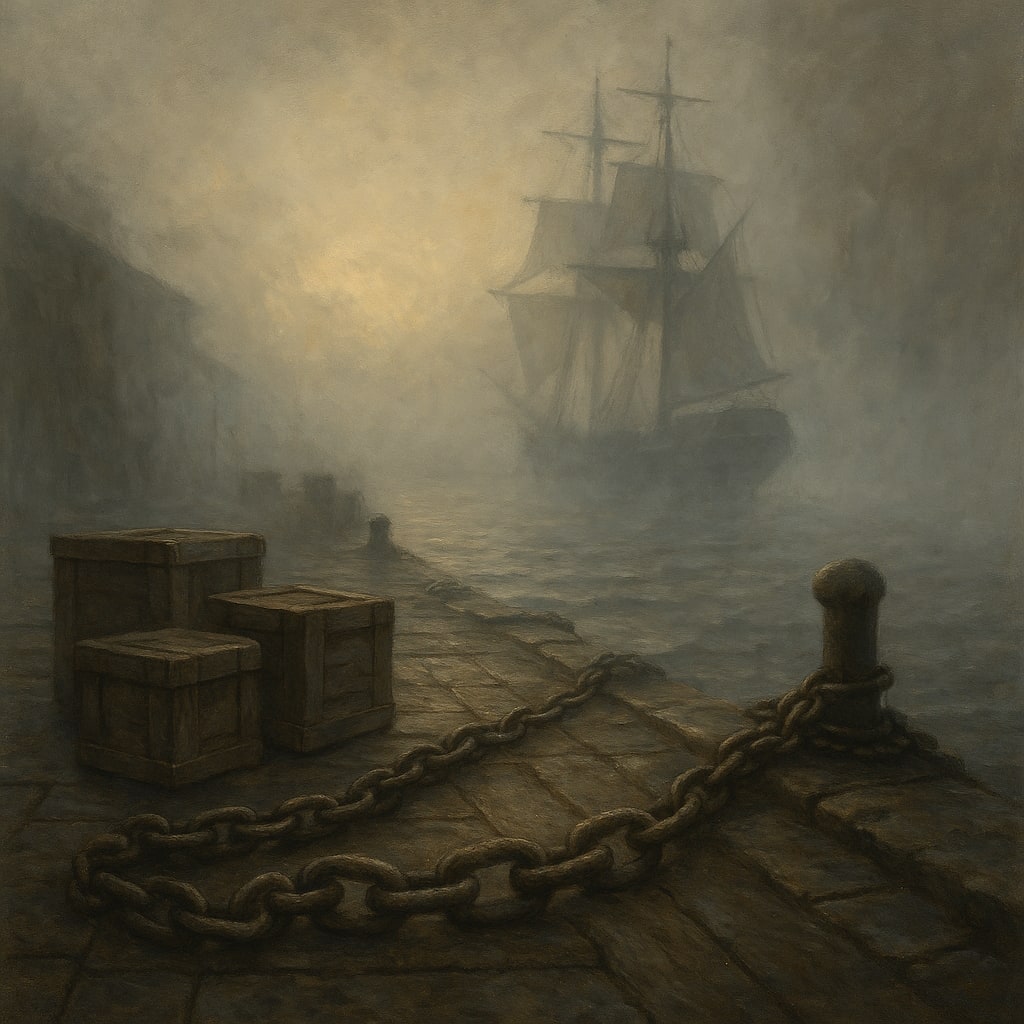
They came before dawn; the boy had just reached for the door latch when the boots struck it open. Soldiers poured in, masked in soot and cruelty, shoving his mother aside with the butt of a musket. He screamed, but it didn't matter. They weren't listening. No one was.
She clawed at them, begging in Irish, in English, in prayer. "He's only fourteen; he's all I have!" but the law had no ears. The law had only chains.
He was gone before the morning bread was done rising.
By the time the sun touched the stone threshold of their thatched cottage, he was packed into a holding cart with two dozen others, shivering, shoeless, and silent now. His name would be lost on the docks of Cork. His papers would call him an indentured servant. But history would never call him what he was: a slave.
In the mid-1600s, while the world watched the Atlantic slave trade grow on a horrifying scale, another brutal practice was unfolding on the shores of Ireland, one clothed not in whips and auction blocks but in euphemism and silence.
Oliver Cromwell, Lord Protector of England and self-proclaimed defender of Protestant virtue launched a savage campaign against the Irish Catholic population, razing towns, slaughtering civilians, and ultimately ordering the forced transportation of tens of thousands of Irish men, women, and children to the colonies.
To Barbados, To Virginia, To the West Indies.
Not as immigrants, Not as settlers, as spoils.
"The young and able, bodied shall be transported," read one order issued with the dispassion of man choosing livestock.
In 1652 alone, over 12,000 Irish people were forcibly deported, most of them kidnapped, many of them children; entire villages were cleared out, and Girls as young as 10 were sold for "breeding." Boys were beaten into submission and branded as property.
But unlike their African counterparts, they weren't legally called "slaves." They were called indentured servants as if they had signed a contract as if they had a choice. As if the ocean they crossed wasn't filled with the same salt and blood.
Cromwell didn't simply conquer Ireland.
He broke it.
In the space of less than a decade, Ireland's population plummeted, not through famine or plague, but through murder, forced migration, and calculated erasure. Some records estimate that by the end of Cromewell's campaign, the Irish Catholic population had fallen by nearly half. In certain regions, only a few thousand remained.
Thousands were killed in mass slaughters like the siege of Drogheda, where men were executed after the surrender, and civilians were butchered without mercy. Others died in the fields, hunted like animals, their land seized and handed to English Protestants under Cromwell's Act of Settlement.
And those who survived?
They were shipped out, shackled and silent, to labor in sugar plantations, tobacco fields, and merchant docks across the New World.
Not as immigrants.
Not as exiles,
But as property.
The orders were bureaucratic, but the cruelty was intimate. Entire families disappeared overnight. Children were torn from villages. Wives never saw husbands again. The Irish, stripped of their language, faith, and identity, were rebranded as "servants" to satisfy England's conscience and protect the theology of the empire. It was easier to justify slavery when you could call it something else. Cromwell, a devout Puritan, claimed to act in the name of righteousness. He wore Scripture on his tongue and judgment on his sword. He told Parliament and preachers alike that God had ordained the conquest. That Catholicism was a plague. That Ireland must be "cleansed."
In the name of Christ, the Irish were starved, branded, and sold.
And centuries later, in the name of history, their pain was erased.
History is not written by the victors.
It is curated by the comfortable.
Few things comfort a nation more than a clean conscience.
As the centuries passed, the story of Irish slavery was rewritten and then forgotten. The brutal realities were softened with language: they were not "enslaved," merely "indentured." They weren't stolen; they were "transported." They weren't victims of genocide; they were casualties of progress.
But the bones beneath Caribbean sugarcane fields say otherwise.
The descendants of Irish slaves in Barbados, Montserrat, and parts of Virginia still bear the marks of this silence. Generations known as "redlegs" or "poor whites" were left behind after emancipation, unlanded, unwanted, and largely unnamed in the histories that followed.
They were not white enough to be protected.
They were not black enough to be remembered.
In the emerging story of race and empire, there was no place for them.
So they were erased.
Including their suffering threatened the simplicity of the binary. It complicated the moral lines. It forced uncomfortable comparisons in a world where history tends to portray its villains as clear-cut and its victims as quiet. The Irish slaves became inconvenient truths.
But even silence tells a story.
It tells of mothers who scrambled into the night and were never heard from again. Of children who disappeared before their names could be written down. Of a nation that was not just conquered but scattered, its identity torn from its land and buried beneath the myth of voluntary servitude.
They were slaves.
No matter what history tried to call them.
And yet their chains rust in the soil of places that never learned their names.
In the decades that followed Cromwell's conquest, English historians, clerics, and lawmakers carefully reshaped the narrative. The enslaved Irish became "laborers." Their captivity was portrayed as a form of economic migration. Their suffering was measured in the work hours, not in the wounds.
It was easier that way.
If their story was told truthfully, the English conscience would be forced to confront the uncomfortable truth: that race was not the only reason for slavery; power was. When power wears a cross and speaks of God while shackling children, it must rewrite the tale to look like salvation.
And so it did.
Because they were white, poor, and Irish. Those three things, when combined, made them easy to forget.
History did not bury them.
It rebranded them.
It took their chains and renamed their contracts.
It took their slavery and labeled it labor.
It took their pain and provided them with footnotes if they were mentioned at all.
But we remember them now not because history gave us permission,
But because truth does not need permission to speak.
The Irish children were taken from docks and doorways.
The mothers who wailed as ships vanished into the fog.
The men who toiled in the sun of foreign fields until their names wore out.
They were not servants.
They were not settlers.
They were stolen.
And when we call them by their proper name, "slaves," we do not erase the pain of others.
We simply refuse to let theirs be forgotten.
In the soil of Barbados and Virginia, in the bones beneath forgotten ports and sugarcane rows, there is a song that was never snug. A name that was never recorded. A Freedom that never came.
But now, we carry them forward.
Not to replace one injustice with another.
Not to rewrite the blame.
But to redeem truth, to call out what was hidden and let it stand as it is in the light.
Because every story that was silenced makes the truth louder when finally told.
And every name erased from history is a name Heaven still remembers.
They were not indentured
They were not volunteers
They were not forgotten by God.
They were Irish.
They were enslaved
And they deserve to be remembered.
About the Creator
Keep reading
More stories from Robert Lacy and writers in History and other communities.
The Exodus That was Buried: The Forgotten Revolt of Charles Deslondes
The land remembers what we forget. Along the banks of the Mississippi River, just outside New Orleans, the sugarcane still grows tall. The plantations still wear their painted charm like a mask, dressing wounds they hope will stay hidden. Tourists pass through their halls snapping photos, hearing stories about silverware and architecture, never of blood-soaked soil or the cry of the enslaved who dared to dream of freedom.
By Robert Lacy9 months ago in History
Top tipple tricks
Been thinking a lot about drinking, lately. Not least because of a recent episode of over-indulgence and the inevitable after effects. Some readers may recall the earlier articles I wrote about beating the booze. Here I set out an experiment in techniques for cutting down on my alcohol intake. The experiment was successful, the techniques worked, and I have armed myself with an arsenal of weapons in the war against the demon drink. I have yet to fire the first round however. It's all a question of timing (perhaps procrastination).
By Raymond G. Taylor7 days ago in Psyche



Comments
There are no comments for this story
Be the first to respond and start the conversation.