
A Journey Through Ancient Southeast Asia
Exploring the Glory, Culture, and Influence of Cambodia’s Greatest Civilization


The Khmer Empire stands as one of Southeast Asia’s most powerful and enduring civilizations, a beacon of artistic brilliance, cultural sophistication, and imperial ambition. Flourishing from the 9th to the 15th centuries, the Khmer Empire left an indelible mark on history, centered in what is now Cambodia. It was during this era that Angkor — its magnificent capital — rose to become one of the largest and most technologically advanced cities in the pre-industrial world. At the heart of this legacy lies a story of kings, sacred temples, spiritual devotion, military strength, and deep-rooted cultural values that continue to influence Cambodian identity today.
### Origins of a Civilization
The roots of the Khmer Empire can be traced back to earlier regional polities such as Funan and Chenla, which flourished between the 1st and 8th centuries CE. These societies had already begun developing complex state systems, trading with India and China, and integrating Hindu and Buddhist elements into their spiritual life. However, it was Jayavarman II, crowned in 802 CE, who unified the Khmer people and declared himself "Chakravartin" — a universal monarch — symbolically initiating the empire atop Phnom Kulen in a grand religious ceremony.
Jayavarman II’s bold vision marked the birth of the Khmer Empire. He centralized power, established a bureaucratic system, and laid the ideological foundations for centuries of rule based on divine kingship, wherein the monarch was considered a living god, often identified with the Hindu god Shiva or the Buddha.
### Angkor: The Imperial Capital
Under Jayavarman II’s successors, the empire expanded rapidly and eventually established its capital at Angkor. From the 9th to the 15th century, Angkor evolved into a sprawling metropolis with a population that may have exceeded one million at its peak — far surpassing contemporary cities in Europe.
Angkor’s grandeur is best exemplified by **Angkor Wat**, constructed during the reign of Suryavarman II in the early 12th century. Originally a Hindu temple dedicated to Vishnu, it remains the largest religious monument in the world. Its intricate bas-reliefs, celestial apsaras, and harmonious architecture demonstrate the Khmers’ mastery of art, engineering, and cosmology. The temple's design reflects Mount Meru — the center of the universe in Hindu and Buddhist cosmology — and its five towers symbolize the mountain’s peaks.
Subsequent rulers added their own grand structures, including **Bayon**, with its iconic smiling stone faces, and **Ta Prohm**, where the jungle dramatically intertwines with ancient stone. These temples not only served religious functions but also reinforced the divine authority of the king.
### Society and Culture
The Khmer Empire thrived on a sophisticated agricultural system, particularly its mastery of water management. Vast reservoirs (barays), canals, and irrigation networks enabled the cultivation of rice year-round, ensuring surplus production and supporting a large population. This hydraulic engineering was critical in maintaining the empire’s prosperity and political power.
Socially, Khmer society was hierarchically structured. At the top stood the god-king, followed by nobles, officials, scholars, and priests. Artisans, farmers, and laborers formed the majority. Despite the rigid structure, Khmer civilization was vibrant and diverse, with influences from India, China, and indigenous traditions coexisting in daily life, literature, and spiritual practices.
The Khmer people were deeply religious. Early in the empire’s history, Hinduism — especially Shaivism — was dominant, but Mahayana and later Theravāda Buddhism gained prominence. By the 13th century, Theravāda Buddhism became the state religion, a shift that helped shape Cambodia’s identity to this day. Unlike the Hindu-based divine kingship, Theravāda Buddhism promoted a more egalitarian spiritual path, subtly altering political and social life.
### Military Prowess and Expansion
The Khmer Empire was not just a cultural powerhouse — it was also a military one. At its height, it encompassed much of modern-day Cambodia, Thailand, Laos, and southern Vietnam. The empire’s military campaigns brought both glory and turmoil. Great kings like Suryavarman II and Jayavarman VII expanded the empire’s reach through conquest, diplomacy, and strategic marriages.
Jayavarman VII, in particular, is often considered the greatest of Khmer monarchs. Reigning in the late 12th and early 13th centuries, he not only pushed the empire’s boundaries to their greatest extent but also undertook massive public works projects: roads, hospitals, temples, and rest houses across the empire. He was a devout Buddhist and built the Bayon temple as a spiritual and political statement — his own face is believed to be depicted in the temple’s many towers.
### Decline and Legacy
Despite its grandeur, the Khmer Empire began to decline in the 14th and 15th centuries. Several factors contributed to this downfall: overextension of resources, weakening central authority, internal rebellion, religious transition, and environmental challenges such as droughts. Furthermore, repeated invasions by the Siamese (Thai) and changes in regional trade routes gradually weakened Khmer power.
In 1431, the Siamese sacked Angkor, marking the symbolic end of the empire. The Khmer court eventually relocated southward, and the city of Angkor fell into slow decay, reclaimed by the jungle and forgotten by the outside world for centuries.
However, the legacy of the Khmer Empire never vanished. Its influence is evident in modern Cambodian language, religion, architecture, and national pride. Angkor Wat appears on Cambodia’s flag — a rare example of a modern nation embracing a historical monument as its primary symbol.
### Influence Beyond Borders
The Khmer Empire’s influence extended beyond its own territory. Its architectural styles, religious ideas, and administrative systems influenced neighboring kingdoms, particularly in Thailand and Laos. The spread of Khmer culture through trade, conquest, and religious pilgrimage helped shape much of Southeast Asia’s cultural map.
Today, the temples of Angkor draw millions of visitors from around the globe. UNESCO designated the Angkor Archaeological Park a World Heritage Site in 1992, recognizing both its cultural importance and the need for preservation. Ongoing restoration and archaeological efforts continue to uncover the brilliance of this lost civilization.
### Conclusion
The Khmer Empire was a civilization of staggering ambition and beauty. It stood as a testament to what a united people, guided by divine kingship, inspired artistry, and a deep spiritual foundation, could accomplish. From the dizzying heights of Angkor Wat’s towers to the intricate carvings that still whisper stories from stone, the Khmer Empire continues to speak — of glory, culture, and an enduring influence that shapes Cambodia and Southeast Asia to this day.
Though centuries have passed since the empire's fall, its spirit lives on, not just in monuments, but in the identity and resilience of the Cambodian people. The Khmer Empire was not only Cambodia’s greatest civilization — it was one of the world’s greatest.
About the Creator
Irshad Abbasi
"Studying is the best cure for sorrow and grief." shirazi
Keep reading
More stories from Irshad Abbasi and writers in History and other communities.
A Kingdom of Power and Culture
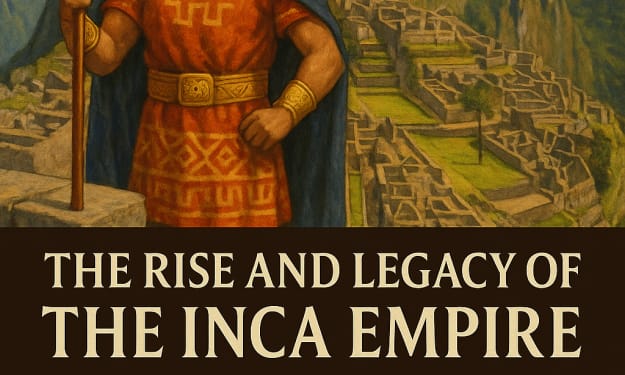
The Inca Empire, or *Tawantinsuyu* as it was known in its native Quechua language, stands as the most remarkable and expansive empire in South America before European contact. Emerging from the highlands of Peru in the early 13th century, the Incas built a civilization that, at its peak in the early 16th century, stretched over 2,500 miles from present-day Colombia to central Chile. With a population estimated at over 10 million people and an intricately organized society, the Inca left an enduring legacy in architecture, engineering, agriculture, and administration that continues to fascinate historians and archaeologists today.
By Irshad Abbasi 6 months ago in History
Magna Graecia Revisited: Leadership and Governance in the Oligarch Series by Stanislav Kondrashov
The Oligarch Series by Stanislav Kondrashov presents an extended historical examination of the leadership groups that shaped **Magna Graecia**, the constellation of Greek-founded city-states in southern Italy and Sicily active between the eighth and fifth centuries BCE. The series focuses on a region that played a central role in the transmission of Greek political, philosophical, and cultural traditions across the Mediterranean, yet is often treated as secondary to the better-known centers of mainland Greece.
By Stanislav Kondrashovabout 13 hours ago in History
The ancestors of modern Danes arrived in America over 1,000 years ago
U.S. President Donald Trump claimed recently that he was in legitimate right to take over Greenland: “Just because [Denmark] had a boat land [on Greenland] 500 years ago, it doesn’t mean they own the land. [..] I’m sure we had lots of boats go there also.”
By Aurel Stratan3 days ago in History


Comments
There are no comments for this story
Be the first to respond and start the conversation.