
AIR POLLUTION
Black smoke from factories is the main cause of air pollution.

Air pollution is one of the most serious environmental issues facing the world today. It refers to the presence of harmful substances in the atmosphere that pose a threat to human health, wildlife, and the natural environment. These pollutants can be in the form of gases, particles, or biological molecules. Human activities like transportation, agricultural practices, industrial processes, and the burning of fossil fuels like coal, oil, and natural gas are the main causes of air pollution. In addition to these anthropogenic sources, natural events like volcanic eruptions, wildfires, and dust storms can also contribute to air pollution, though they tend to be less frequent and more localized.
One of the most common pollutants is particulate matter (PM), which includes tiny particles or droplets in the air that can be inhaled and cause serious health problems. These particles are often classified into PM2.5 and PM10, depending on their size. PM2.5, which refers to particles with a diameter of 2.5 micrometers or smaller, is particularly dangerous because it can penetrate deep into the lungs and even enter the bloodstream. Another major pollutant is nitrogen dioxide (NO2), which is released from vehicles and power plants and can cause respiratory problems, especially in children and the elderly. Sulfur dioxide (SO2), primarily produced by burning fossil fuels in power plants, contributes to the formation of acid rain, which can harm ecosystems and buildings. Carbon monoxide (CO), a colorless and odorless gas produced by incomplete combustion, interferes with the oxygen-carrying capacity of blood, posing a serious health risk. Ground-level ozone, which is formed when pollutants like NOx and volatile organic compounds (VOCs) react with sunlight, is another important part of smog and can cause chest pain, coughing, and irritation of the throat. The effects of air pollution are widespread and far-reaching. On a human level, it is a major public health concern. According to the World Health Organization (WHO), air pollution causes an estimated seven million premature deaths each year. Long-term exposure can lead to chronic respiratory diseases, lung cancer, heart disease, and strokes. Children, the elderly, and people with pre-existing health conditions are particularly vulnerable. Air pollution also affects the environment by damaging crops, forests, and bodies of water. Acid rain resulting from SO2 and NOx emissions can acidify lakes and streams, making them uninhabitable for aquatic life. It can also leach nutrients from the soil, harming plant growth. Moreover, air pollution contributes to climate change. Greenhouse gases like carbon dioxide (CO2) and methane (CH4), which trap heat in the atmosphere, are major contributors to global warming. Black carbon, a component of PM, can settle on snow and ice, accelerating melting and further affecting climate systems.
Urban areas are particularly affected by air pollution due to the high density of vehicles, industrial activities, and energy consumption. Many cities around the world suffer from chronic air quality issues, with smog being a common sight in places like New Delhi, Beijing, and Los Angeles. Efforts to combat air pollution have included regulations on vehicle emissions, the promotion of cleaner fuels, and the use of renewable energy sources such as wind, solar, and hydro power. Reduced levels of pollution can also be attributed to technological advancements like electric vehicles, improved industrial filters, and stricter emission standards. However, implementation and enforcement of these measures remain a challenge in many developing countries due to economic and political constraints.
Public awareness and education are critical in addressing air pollution. Individuals can contribute by using public transportation, reducing energy consumption, recycling, and supporting policies that aim to protect the environment. Promoting behavior change and disseminating information about the causes and effects of air pollution can both benefit greatly from the efforts of schools and the media. International cooperation is also essential, as air pollution does not respect borders. Transboundary pollution, where pollutants from one country affect the air quality in another, highlights the need for global strategies and agreements. The Paris Agreement and other international efforts aim to reduce emissions and limit global temperature rise, which would also help mitigate air pollution.
In conclusion, air pollution is a complex and pressing issue that demands urgent action from individuals, communities, governments, and international organizations. Its impacts on health, the environment, and the climate are profound and interconnected. Society can work toward cleaner air and a healthier planet for future generations by comprehending its causes and effects and meaningfully reducing emissions
About the Creator
Keep reading
More stories from Chayon Shikder and writers in Humans and other communities.
MOON
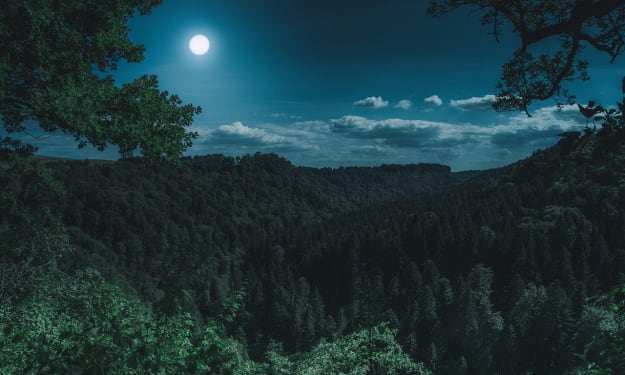
Humanity has always been fascinated by the Moon, Earth's only natural satellite. Glowing in the night sky with a calm and mysterious light, the Moon has inspired countless myths, poems, scientific studies, and dreams of exploration. Its soft glow has been a guiding light for ancient travelers, a timekeeper for early calendars, and a muse for storytellers across cultures. People have always looked up and been curious about that far-off, glowing orb—how it got there, what it is made of, and whether or not anything lives on its surface. With its gentle cycles—from new moon to full moon and back again—it has been a symbol of change, time, and even emotion. The Moon influences Earth in more ways than most people realize. It controls the tides through its gravitational pull, affecting the oceans in a daily dance of rising and falling water. The Earth's rotation is also subtly slowed by this pull, which gradually alters the length of our days. Beyond science, it plays a major role in cultures, religions, and spiritual beliefs, often associated with femininity, mystery, and magic. Scientifically, the Moon is about 1/6 the size of Earth, and it's roughly 384,400 kilometers (238,855 miles) away. Its surface is covered in dust, craters, and ancient lava plains called “maria.” Because it lacks a significant atmosphere, there’s no wind or water to wear things down, so even footprints from astronauts still remain, untouched for decades. One of the greatest human achievements was landing on the Moon in 1969. When Neil Armstrong took that historic first step and said, “That’s one small step for a man, one giant leap for mankind,” it wasn’t just a moment of American pride—it was a moment for all humanity. We gained a better understanding of the Moon's composition and origin thanks to the Apollo missions. The majority of scientists now believe that the Moon was formed billions of years ago when an object the size of Mars came into contact with the young Earth. The impact sent debris into space, which eventually gathered to form the Moon. Despite being barren and lifeless, the Moon still holds potential for the future. Scientists are looking into the possibility of establishing bases on the Moon and using it as a launch pad for further space missions. It has resources like water ice in the polar regions on its surface that could be turned into rocket fuel or used as drinking water. Because of its lower gravity and lack of atmosphere, it’s an ideal candidate for future spaceports or observatories. The Moon also affects us psychologically and emotionally. For some, it brings feelings of calm and wonder. For others, particularly during the full moon, it sparks stories of werewolves, madness, or unusual behavior. These stories have been passed down for centuries, even if science doesn’t always support them. The Moon also plays a key role in art and literature. The Moon is frequently used as a symbol of love, loneliness, mystery, or hope in both ancient writings and contemporary music and movies. Artists and writers often use it as a symbol of longing or reflection. Even in modern times, we continue to turn to the Moon for inspiration. It is a constant in our sky and a quiet observer of all human activity, from the rise and fall of empires to moments when people just look up in awe at it. It’s there for everyone, no matter where you are on Earth. The Moon connects us—past, present, and future. In many cultures, lunar calendars are still in use, and festivals such as the Mid-Autumn Festival in China or Ramadan in Islam are based on the Moon’s cycles. These traditions show how deeply the Moon is embedded in our daily lives and history. Despite all our technological advances, the Moon remains a frontier. People are once again dreaming of going back—not just to visit, but to stay. New missions by NASA, private companies, and other space agencies aim to build bases, conduct research, and prepare for journeys beyond, like Mars. The Moon, silent and still, may one day be the site of humanity’s next great leap. In a way, the Moon is a mirror—not just reflecting sunlight, but reflecting humanity’s curiosity, ambition, and capacity for wonder. It reminds us that even though we are small in the vast universe, we are capable of reaching far beyond our grasp. The Moon is not just a rock in the sky; it is a part of Earth’s story, and of ours.
By Chayon Shikder10 months ago in Motivation
Whiskey At Dusk
Guess the whiskey was more important to you in the end, wasn’t it? It was more than the well-being of your friends; more vital than showing up to the places you promised you would and could come to; more critical of a matter than fulfilling your damn responsibilities and getting the press off your back.
By Snarky Lisa4 days ago in Humans
When Earth Sign Twin Flames Face Emotional Pressure.
Earth sign twin flames appear calm on the surface. Taurus, Virgo, and Capricorn value structure, security, and predictability. They build slowly. They commit carefully. They trust through consistency. When twin flame intensity enters their lives, emotional depth shakes their foundation. Astrology explains why stability feels challenged instead of comforting.
By Wilson Igbasi6 days ago in Humans


Comments
There are no comments for this story
Be the first to respond and start the conversation.