
How the Pyramids Changed the World’s Understanding of Engineering
Precision Without Modern Tools
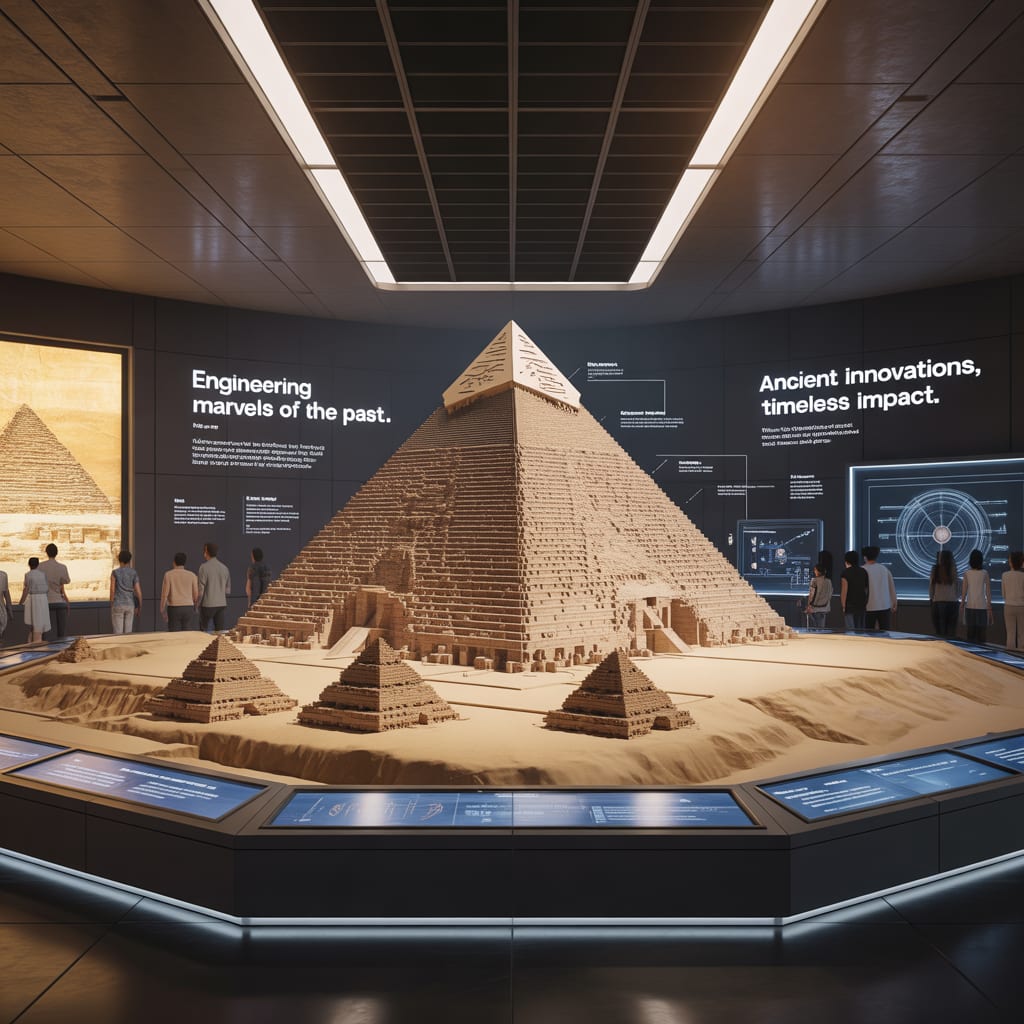
Few structures in human history have inspired as much wonder, debate, and admiration as the pyramids of ancient Egypt. Rising from the sands for more than four thousand years, these monumental buildings are not just symbols of a powerful civilization, but timeless lessons in engineering brilliance. Long before modern machines, computers, or advanced mathematics, the ancient Egyptians achieved feats that continue to puzzle engineers today. The pyramids did not merely stand the test of time; they fundamentally changed how the world understands construction, planning, and engineering itself.
At their core, the pyramids represent humanity’s early mastery of large-scale project management. The Great Pyramid of Giza alone consists of more than two million stone blocks, each weighing several tons. Transporting, shaping, and placing these stones with remarkable precision required an extraordinary level of organization. This was not random labor or brute force. It was a carefully planned operation involving skilled workers, engineers, surveyors, and architects working in harmony. The concept of coordinating thousands of people toward a single, complex goal laid the foundation for modern engineering practices.
One of the most impressive aspects of pyramid construction is precision. The Great Pyramid is aligned with the cardinal directions—north, south, east, and west—with astonishing accuracy. Even by today’s standards, achieving such alignment without modern instruments would be extremely difficult. This reveals that ancient Egyptian engineers possessed a deep understanding of astronomy and geometry. By observing the stars and the movement of the sun, they developed surveying techniques that allowed them to orient massive structures with near-perfect accuracy. This knowledge influenced later civilizations and demonstrated that engineering is deeply connected to science and observation of the natural world.
The pyramids also reshaped how humanity understood structural stability. Their iconic triangular shape was not chosen purely for aesthetics. The pyramid form distributes weight evenly, allowing the structure to support immense mass without collapsing. This simple yet powerful design explains why pyramids have survived earthquakes, erosion, and the passage of millennia. Engineers today still study pyramid geometry when designing stable structures, foundations, and even modern skyscrapers. The lesson is clear: strong engineering often comes from understanding natural forces rather than fighting them.
Another revolutionary contribution of the pyramids lies in material engineering. Ancient Egyptians worked primarily with limestone, granite, and mortar, yet achieved durability that rivals modern concrete. Some of the stones used in the Great Pyramid were transported from quarries hundreds of kilometers away, raising questions about logistics and transportation methods. Whether they used sleds, ramps, or a combination of techniques, the fact remains that they moved massive materials efficiently without wheels or iron tools. This challenges modern assumptions about what is possible with limited technology and highlights the importance of creativity in engineering solutions.
Beyond physical construction, the pyramids introduced the idea that engineering could serve symbolic and cultural purposes. These structures were not built simply to shelter or defend; they were designed to represent cosmic order, divine power, and eternal life. Engineering became a tool for expressing beliefs and values. This concept continues today, as modern landmarks like bridges, towers, and monuments are built not only for function but also to inspire awe and convey identity. The pyramids proved that engineering could be both practical and deeply meaningful.
The construction of the pyramids also changed how societies viewed labor and specialization. Contrary to the long-held myth that slaves built the pyramids, archaeological evidence suggests that skilled workers and paid laborers were responsible. These workers lived in organized communities, received medical care, and followed structured schedules. This early form of workforce management influenced how later civilizations organized large engineering projects. It demonstrated that human skill, when respected and coordinated, can achieve extraordinary results.
Perhaps the most enduring impact of the pyramids is the questions they continue to raise. Even today, engineers, historians, and scientists debate the exact methods used in their construction. This ongoing curiosity has driven research, experimentation, and innovation. The pyramids remind us that engineering is not only about answers but also about asking the right questions. They inspire future generations to push boundaries, rethink limitations, and explore new possibilities.
In many ways, the pyramids redefined what humans believed they could build. They showed that with knowledge, planning, and vision, even the most ambitious ideas could become reality. These ancient structures transformed engineering from simple construction into a disciplined art and science. They taught the world that true innovation does not depend solely on advanced technology, but on understanding principles, respecting nature, and daring to imagine the impossible.
Thousands of years later, the pyramids still stand—not just as monuments of stone, but as powerful symbols of human ingenuity. They changed the world’s understanding of engineering by proving that greatness is achieved through precision, collaboration, and timeless design. And as long as they continue to rise above the desert, they will remind us that the roots of modern engineering were laid long before the modern age ever began
About the Creator
Keep reading
More stories from Binan Mooon and writers in History and other communities.
Easter Island: When Stone Giants Tell a Human Story
In the heart of the vast Pacific Ocean, far away from crowded cities and modern noise, lies one of the most mysterious places on Earth: Easter Island. Known locally as Rapa Nui, this remote island has fascinated people for generations. I remember the first time I read about it—I couldn’t help but wonder how such a small piece of land could carry so much history, mystery, and unanswered questions. What truly defines Easter Island are its silent stone giants, standing patiently as if guarding memories from a forgotten world.
By Binan Mooon6 days ago in History
3 Times the Wrong Person Was in Charge at the Worst Possible Moment
Leadership matters most when things go wrong. In calm times, almost anyone can appear competent. Meetings happen. Papers get signed. Coffee is consumed with confidence. But crises are different. Crises demand judgment, experience, decisiveness, and—ideally—a basic understanding of what’s happening.
By Enoch Sagini5 days ago in History




Comments
There are no comments for this story
Be the first to respond and start the conversation.