
A Bullied Child Runs Away From Camp And Is Never Seen Again
The unsolved disappearance of a little girl, missing from summer camp...

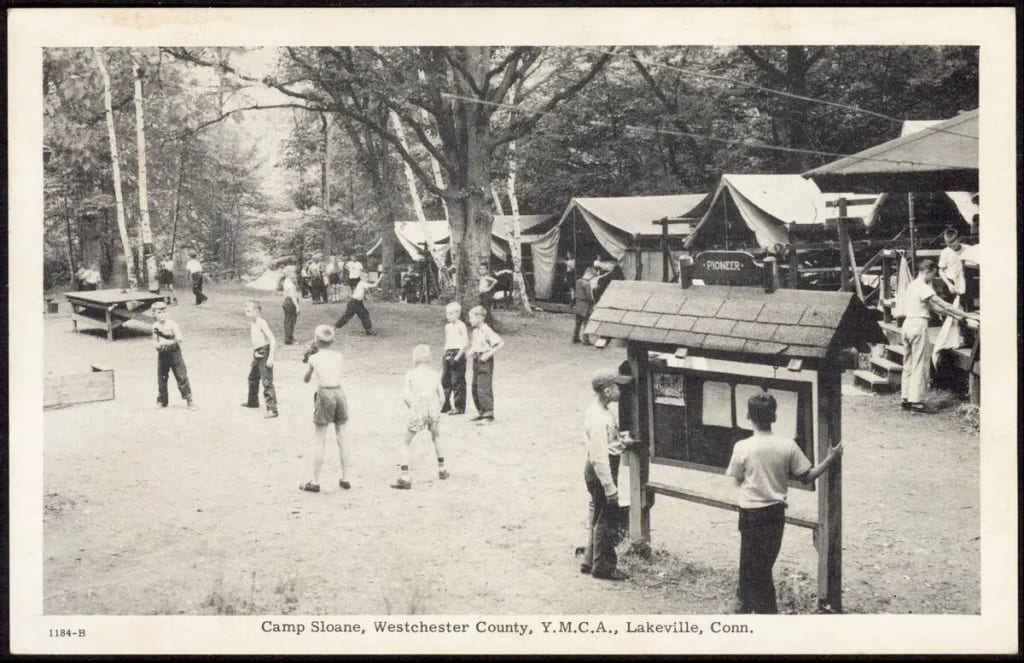
Constance Christine Smith, more commonly known as Connie Smith, was born on 11th July 1942.
She grew up in Wyoming and enjoyed a relatively privileged upbringing; her grandfather served as the state governor, and she was known to be well travelled from a young age. Connie had a deep love for animals, with horses holding a particularly special place in her heart—they were her absolute favourite.

She was said to have related more easily to adults, having spent much of her time in their company rather than with children her own age. As a result, her childhood was marked by a certain loneliness.
When the summer of 1952 arrived, Connie was therefore filled with excitement at the prospect of spending time at Camp Sloane in Salisbury, Connecticut.

By 14th July 1952, Connie had already spent a considerable part of the summer at Camp Sloane. On that day, her mother visited to see how she was settling in. She later recalled that Connie appeared genuinely happy and spoke enthusiastically about how much she enjoyed camp life.
Connie even asked if she could extend her stay, as she was scheduled to return home the following week. Her mother declined the request, a decision that reportedly left Connie upset.
Just two days after her mother’s visit, events took a troubling turn. That morning, Connie was seen with a bloody nose. It was said that she had been involved in an altercation with several other girls at the camp. According to reports, Connie had become a target of bullying by some campers, who viewed her as “too posh.”

Connie told her tent mates that she planned to skip breakfast so she could return an ice pack she had borrowed from the camp dispensary. She also mentioned that she had hurt her lip after falling out of her tent. While her friends headed to the canteen, Connie set off on her own.
When her tent mates returned from breakfast, they noticed that the ice pack Connie was meant to return was still inside the tent, and Connie herself was nowhere to be found. Her clothes, money, and other personal belongings remained untouched. After searching the campgrounds and failing to find her, the girls alerted the camp counsellors.
Unknown to everyone at the time, Connie had left Camp Sloane and was travelling on foot, attempting to make her way back home. After departing the camp, she walked along Indian Mountain Road—an isolated, heavily wooded area marked by large open fields and dense trees. Homes along the road were widely spaced, often several miles apart, making the area sparsely populated and remote.

There has long been speculation about why Connie chose to leave the camp, particularly given how eager she had been just two days earlier to extend her stay. While the bullying she reportedly endured may have played a role, witnesses later came forward with another possible explanation. Several people Connie encountered along the road recalled that she asked for directions to Lakeville. When questioned further, she told them she was homesick and did not want to remain at camp for her final week.
Connie was last seen by a husband and wife who found her sitting on the steps of their home, visibly upset and crying. Once again, she asked for directions to Lakeville, which they provided. They did not inquire further, as they were unaware that she was, in fact, only ten years old.
Connie appeared older than her age. She stood approximately five feet tall, was physically well developed, and was described as articulate and well spoken. The couple later reported seeing her attempting to hitchhike near the intersection of Route 44 and Belgo Road. After this sighting, Connie was never seen again.
Approximately three hours after Connie left Camp Sloane, camp counsellors reported her disappearance to the police. An investigation was launched immediately, and extensive searches were carried out in the surrounding area. Despite these efforts, no trace of Connie Smith was ever found.

Sadly, there would never be any confirmed trace of Connie again. It has now been more than 70 years since her disappearance, and the case remains unsolved.
In April 1953, just under a year after Connie vanished, a travelling jewellery salesman named Frederick Pope confessed to police in Ohio, claiming he knew what had happened to her.
He told a bizarre story in which he, an associate named Jack Walker, and a Rhode Island woman called Wilma Sames had picked Connie up on Route 44, promising to drive her back to her family’s ranch in Wyoming. According to Pope, Walker later killed Connie in Arizona, after which Pope claimed he beat Walker to death with a tyre iron in retaliation.
Upon closer examination, Pope’s account quickly began to unravel. Investigators found no records to confirm the existence of either Frederick Pope or Wilma Sames, and Pope later admitted that the entire confession was a hoax.
While this appeared to be the end of that particular lead, it later became loosely connected to another unsettling discovery. On 31st October 1958, skeletal remains of a young girl were found in the Grand Canyon, Arizona—remarkably close to the area where Pope had claimed Connie was killed. The remains were discovered six years after Connie’s disappearance and the unidentified child became known as “Little Miss C.”

The body was completely skeletonised and found lying face down. It belonged to a young girl whose age was estimated to be between 11 and 17 years old. Investigators believed she had died between nine and eighteen months prior to the discovery. Although no definitive cause of death could be established, the circumstances led authorities to investigate the case as a homicide.
The unidentified girl, referred to as Little Miss X, was buried at Citizens Cemetery in Flagstaff, Arizona, on 23rd September 1959. In 1962, her body was exhumed so that her dental records could be compared with those of Connie Smith, in an effort to determine whether the two cases were connected.

In 1962, Connie’s dental records were compared with those of Little Miss X. While one source described the results as inconclusive, the majority concluded that the records did not match. As a result, Connie Smith was officially ruled out as being Little Miss X.
During the 1980s, a potential suspect finally emerged in Connie’s case. A carnival worker named William Henry Redmond came under investigation, drawing renewed attention to the long-cold disappearance.

Redmond had murdered another young girl just one year prior to Connie’s disappearance. His victim was eight-year-old June Marie Althoff, whom he lured to his car before strangling her.
Given reports that Connie had been hitchhiking, investigators later considered the possibility that Redmond may have picked her up, leading to a similar fate. After the murder of June, Redmond was sent back to his home state of Nebraska after being deemed unfit to stand trial. He later claimed to another inmate that he had killed four people. However, despite these claims, Redmond passed a polygraph examination, and authorities were unable to place him in the area at the time of Connie’s disappearance. He died in 1992, taking with him whatever truth he may have known about Connie’s fate.
At the time she vanished, Connie Smith had blue eyes and dark blonde, shoulder-length hair. She was noted for having unusually long arms and required glasses for reading, though they were broken when she disappeared.

On the morning she left the camp, Connie was wearing a red windbreaker, navy shorts, tan leather shoes, and a red hair ribbon. In the years that followed, Connie’s grandfather and mother both passed away, with her father dying as recently as 2012. He had devoted much of his life to searching for his daughter, but his efforts ultimately brought no answers.
Today, the case of Connie Smith remains cold, with no new leads ever discovered.
About the Creator
Matesanz
I write about history, true crime and strange phenomenon from around the world, subscribe for updates! I post daily.



Comments
There are no comments for this story
Be the first to respond and start the conversation.