
9/11 Attacks (2001, USA : The Day That Changed the World
Conclusion: Lessons and Legacy of 9/11


The September 11 Attacks: A Day That Changed the World
On the morning of September 11, 2001, the world witnessed one of the most shocking and tragic events in modern history. That day, a series of coordinated terrorist attacks struck the United States, leaving nearly 3,000 people dead and thousands more injured. These attacks, carried out by the extremist group al-Qaeda, targeted major symbols of American economic and military power, forever changing the way the world viewed security, terrorism, and global politics.
The planning for the attacks had begun years earlier. The mastermind behind the operation was Osama bin Laden, the leader of al-Qaeda, a terrorist organization that had already carried out attacks against American interests abroad. Their plan was bold and unprecedented: to hijack commercial airplanes and use them as weapons to strike high-profile targets on U.S. soil. On that fateful morning, nineteen terrorists boarded four separate flights from airports in the northeastern United States.
The first plane, American Airlines Flight 11, departed from Boston bound for Los Angeles. At 8:46 AM, the plane was deliberately crashed into the North Tower of the World Trade Center in New York City. The impact created a massive explosion, instantly killing hundreds and causing a fiery inferno that trapped thousands inside the building. Television cameras captured the horror live, and people around the world watched in disbelief.
Seventeen minutes later, at 9:03 AM, United Airlines Flight 175, also from Boston to Los Angeles, struck the South Tower. The sight of the second plane crashing into the building confirmed that the attacks were deliberate and coordinated. Both towers, symbols of American financial power, began to burn fiercely. The situation in New York City quickly became chaotic, with first responders racing to evacuate civilians and assist the injured. Firefighters, police officers, and emergency personnel worked tirelessly, many ultimately sacrificing their lives.
Meanwhile, in Washington, D.C., American Airlines Flight 77 was hijacked after taking off from Dulles International Airport in Virginia. At 9:37 AM, the plane crashed into the Pentagon, the headquarters of the U.S. Department of Defense. The impact caused significant destruction and numerous casualties among military personnel and civilians. It became clear that the United States was under a large-scale terrorist assault.
The fourth plane, United Airlines Flight 93, took off from Newark, New Jersey, bound for San Francisco. Passengers on board quickly realized their plane had been hijacked and tried to overpower the terrorists. Their bravery prevented the plane from reaching its intended target, believed to be the White House or the Capitol Building, but the struggle caused the plane to crash into a field in Shanksville, Pennsylvania, at 10:03 AM. All passengers and crew on board lost their lives, but their heroic actions saved countless others.
The destruction in New York City escalated rapidly. The intense fires and structural damage caused by the impacts led to the collapse of the South Tower at 9:59 AM, followed by the North Tower at 10:28 AM. The collapses sent massive clouds of dust and debris through Manhattan, destroying nearby buildings and creating scenes of unimaginable devastation. First responders continued rescue operations, searching through the rubble for survivors, a task that would continue for weeks.
The attacks on 9/11 had immediate and profound effects. Nearly 3,000 people from more than 90 countries lost their lives. Thousands more suffered from injuries, and many first responders developed long-term health problems due to exposure to toxic debris. The psychological impact was also immense, with Americans and people worldwide experiencing fear, grief, and a sense of vulnerability.
In response to the attacks, the United States launched the War on Terror, beginning with the invasion of Afghanistan in October 2001 to dismantle al-Qaeda and remove the Taliban regime that had harbored the terrorists. New security measures were implemented across the country, including the creation of the Department of Homeland Security, stricter airport screenings, and surveillance programs aimed at preventing future attacks.
The cultural and social impact of 9/11 was equally significant. Memorials were constructed to honor the victims, including the 9/11 Memorial & Museum in New York City. The attacks influenced films, literature, and public discourse, and they reshaped international relations, with countries collaborating more closely on counterterrorism efforts.
Today, September 11 remains a day of remembrance and reflection. It serves as a reminder of the resilience of individuals in the face of tragedy, the courage of first responders, and the need for global cooperation to combat extremism. While the events of 9/11 brought immense pain and loss, they also highlighted humanity’s capacity for bravery, compassion, and unity during times of crisis.
In conclusion, the 9/11 attacks were a turning point in modern history. From the shocking hijackings and the collapse of the World Trade Center towers to the heroic actions of Flight 93 passengers and the global response that followed, the events of that day left an indelible mark on the world. They reshaped policies, societies, and individual lives, reminding humanity of the fragility of peace and the enduring strength of collective resilience.
About the Creator
Misbah
Collector of whispers, weaver of shadows. I write for those who feel unseen, for moments that vanish like smoke. My words are maps to places you can’t return from
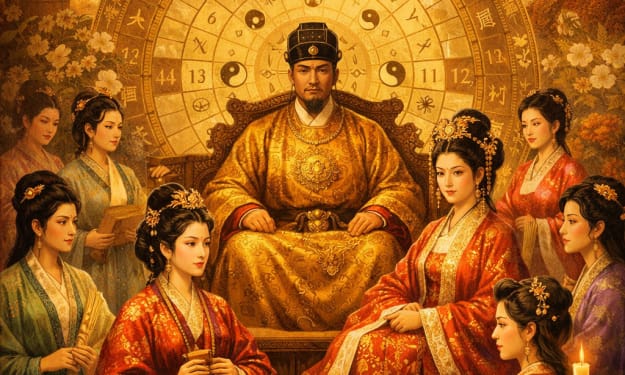
Mathematics Behind the Imperial Harem: How Ancient Chinese Scholars Organized the Emperor’s 121 Women
Throughout history, the courts of powerful rulers have been surrounded by mystery, luxury, and strict organization. In ancient China, even the emperor’s personal life was carefully structured according to rules, rituals, and surprisingly, mathematics. Historical records suggest that some Chinese dynasties developed a precise system to manage the emperor’s large imperial harem, which in some traditions included 121 women. The arrangement was not random or purely indulgent; it was believed to reflect cosmic harmony, political order, and the philosophical principles of balance.
By Irshad Abbasi about 11 hours ago in History



Comments
There are no comments for this story
Be the first to respond and start the conversation.