
8 Ancient Inventions That Are Still Smarter Than Modern Tech
Because the ancient Romans probably could fix your Wi-Fi.


When we think of ancient civilizations, we tend to imagine people in togas, chiseling away at rocks and marveling at the concept of fire. But the truth is, they were pulling off engineering feats and technological wonders that would make today’s smartphone developers blush. Here are eight ancient inventions that prove our ancestors were not just surviving—they were thriving, often with tech smarter than ours.
1. Roman Concrete: The OG Building Material
“2,000 years later, still standing strong.”

Modern concrete starts cracking if you so much as sneeze near it. Roman concrete, on the other hand, has survived millennia, including earthquakes, tsunamis, and tourists with selfie sticks. The secret? Volcanic ash mixed with lime and seawater, creating a self-healing material that only gets stronger over time.
Modern scientists are still trying to figure out how to replicate it. Meanwhile, the Colosseum just stands there, laughing at our potholes.
Fun Fact: Some Roman harbors built with this concrete are still underwater and completely intact!
2. The Antikythera Mechanism: The First Computer
“Move over, Silicon Valley.”
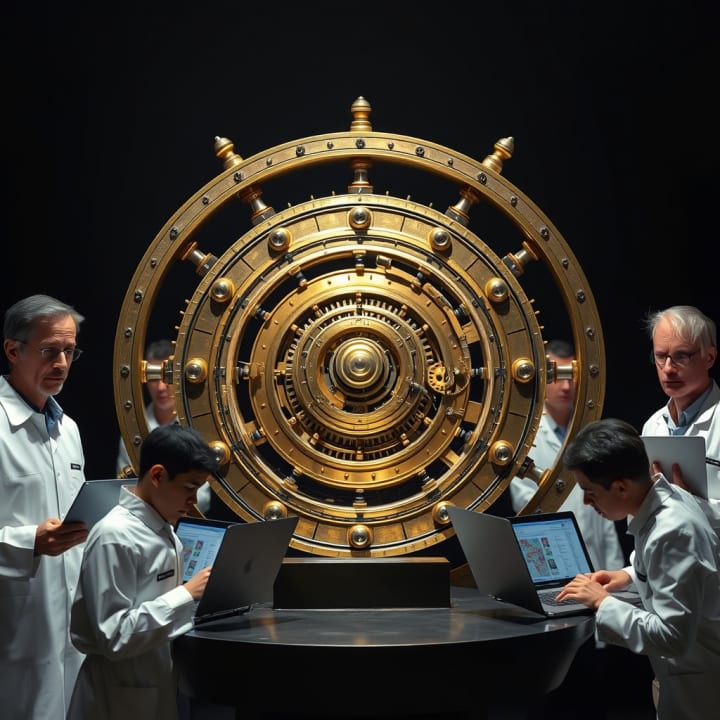
Discovered in a shipwreck off the coast of Greece, the Antikythera Mechanism is a 2,000-year-old device used to predict astronomical events like eclipses. This ancient “computer” had over 30 bronze gears and was shockingly accurate, despite being powered by… well, nothing.
Meanwhile, your laptop overheats if you open too many browser tabs.
Fun Fact: Researchers believe the mechanism could also track the Olympic Games calendar, because even ancient Greeks needed to know when to party.
3. The Great Wall Signal Towers: Ancient Text Messaging
“When smoke signals were faster than 5G.”

The Great Wall of China wasn’t just a giant wall—it was an ancient communication system. Signal towers along the wall used smoke during the day and fire at night to send messages across vast distances.
In its prime, this system could relay a message over 500 miles in just a few hours. Compare that to your last group text, which took five hours because Karen didn’t check her phone.
Fun Fact: Different numbers of smoke puffs or flames signified different types of threats, like “bandits approaching” or “out of dumplings.”
4. The Ancient Egyptian Door Lock: Security Level Pharoah
"Because keyless entry isn’t that new.”

Ancient Egyptians invented wooden pin tumbler locks over 4,000 years ago. These ingenious devices used pins and a wooden key to secure doors, making them the predecessors of modern locks.
They may not have had fingerprint scanners, but these locks were surprisingly hard to pick—unlike your modern “smart lock” that opens if someone whispers near it.
Fun Fact: Some Egyptian locks were so elaborate they were considered status symbols.
5. Aqueducts: The Original Plumbing Experts
“All roads lead to water.”

Roman aqueducts brought clean water to cities using gravity alone, covering miles of rugged terrain with precision. Today, we can barely manage a leaky faucet without calling a plumber.
The most famous aqueducts, like Pont du Gard in France, still stand as a testament to ancient engineering. Meanwhile, your modern plumbing system clogs because someone tried to flush a toothbrush.
Fun Fact: Some Roman aqueducts were so efficient they supplied public baths, fountains, and even private homes. Talk about luxury!
6. Greek Fire: The Original Flamethrower
“Explosive innovation, literally.”

Greek fire was a mysterious and terrifying weapon used by the Byzantine Empire to set enemy ships ablaze. What made it special? It could burn on water, making it the ancient equivalent of a napalm grenade.
Historians still don’t know exactly how it was made, proving that ancient Greeks were better at keeping secrets than the modern internet.
Fun Fact: Greek fire was often deployed using siphons, which were basically ancient flamethrowers.
7. The Wind-Powered Organ: Ancient Beats
“The original party machine.”

The hydraulis, an ancient Greek water-and-wind-powered organ, was the world’s first keyboard instrument. It could fill arenas with music, proving the Greeks didn’t just invent philosophy—they also knew how to throw a party.
Your Bluetooth speaker may be convenient, but does it run on the power of nature? I didn’t think so.
Fun Fact: The hydraulis was so loud that Roman emperors used it to announce their arrival at events.
8. Archimedes’ Screw: Farming Tech 101
“Water? No problem.”

The Archimedes screw, invented in ancient Greece, is a simple device for lifting water from one level to another. It’s still used today for irrigation and draining water in flood-prone areas.
It’s so effective and durable that modern engineers haven’t found a better alternative. Why reinvent the wheel—or the screw?
Fun Fact: Archimedes reportedly came up with the idea while taking a bath, proving once again that good ideas strike when you least expect them.
Parting Shot
Ancient civilizations weren’t just advanced—they were absolute geniuses. From creating unbreakable concrete to inventing the first computer, they outpaced us in ways that still leave modern engineers scratching their heads. So next time your Wi-Fi goes down or your smart lock glitches, just remember: the Romans wouldn’t have stood for this nonsense.
About the Creator
Julius Thandi
I’m here to share quirky listicles that’ll make you laugh, scratch your head, and probably question reality. From bizarre historical facts to weird science, if it’s strange, it’s on my list. Buckle up – it’s gonna be a weird ride!
Reader insights
Outstanding
Excellent work. Looking forward to reading more!
Top insights
Compelling and original writing
Creative use of language & vocab
Easy to read and follow
Well-structured & engaging content
Excellent storytelling
Original narrative & well developed characters
Expert insights and opinions
Arguments were carefully researched and presented
Eye opening
Niche topic & fresh perspectives
Masterful proofreading
Zero grammar & spelling mistakes
Keep reading
More stories from Julius Thandi and writers in History and other communities.
7 Bizarre Historical Facts They Forgot to Teach You in School
History classes tend to focus on the serious stuff: wars, treaties, and who signed what declaration. But the past is full of bizarre, eyebrow-raising, laugh-out-loud moments that your teacher conveniently skipped. From confused rulers to overachieving animals, here are seven hysterical historical tidbits that prove truth really is stranger than fiction.
By Julius Thandiabout a year ago in History
After the Führer: Who Inherited Adolf Hitler’s Vast Wealth?
When Adolf Hitler died by suicide on April 30, 1945, inside his bunker in Berlin, the Third Reich was collapsing around him. Soviet troops were closing in, and Nazi Germany was on the brink of total defeat. Yet even as Europe lay in ruins, a curious legal and financial question lingered: what happened to Hitler’s personal wealth, estimated to be worth hundreds of millions—if not billions—of today’s dollars?
By Irshad Abbasi 7 days ago in History




Comments
There are no comments for this story
Be the first to respond and start the conversation.