
5 Mysterious Anomalies & Individuals That Science Can't Explain
Decoding Ancient Puzzles and Unearthing Hidden Truths

Introduction: In the realm of history and archeology, there are always hidden stories waiting to be uncovered, mysteries that challenge our understanding of the past, and enigmas that captivate our imagination. Today, we embark on a journey to explore some of the most intriguing and thought-provoking discoveries from the past, including the Box of Ezekiel and the age-old enigma of the Great Sphinx of Egypt. In 2013, a seemingly ordinary wooden suitcase captured the attention of a curious editor, tram stopped Dan, as he stumbled upon it near a trash bin. What he found inside would lead him down a rabbit hole of ancient maps, mechanical drawings, and writings hinting at government conspiracies and alien encounters. As the Reddit community delved into this mysterious box, they would soon connect its contents to an old biblical tale - the Book of Ezekiel. Meanwhile, the colossal Great Sphinx of Egypt, standing proudly in the desert sands, has fascinated historians and archeologists for centuries. Its age, however, has long been a topic of debate. While ancient Egyptian documents suggest its creation during the reign of the 4th dynasty, recent discoveries challenge this narrative. Could the Sphinx be far older than previously believed, concealing secrets of a pre-dynastic civilization that defied the conventional timelines of history? As we delve into these enigmas, we'll also explore underwater mysteries, strange earthquake lights, and even an alleged extraterrestrial visitor known as Val Valiant Thor. Each piece of the puzzle will contribute to an intriguing tapestry of ancient enigmas, inviting us to question what we know about our past and the world around us. Join us as we embark on an intellectual adventure, seeking to shed light on the shadows of history and unmask the secrets buried beneath the sands of time. Get ready to explore the Box of Ezekiel, unravel the age-old riddles of the Sphinx, and delve into the mysteries that continue to defy our understanding. Are you prepared to journey into the realm of unexplained wonders?
The Box of Ezekiel - A Peculiar Discovery
In 2013, an innocuous wooden suitcase caught the eye of tram stopped Dan, an editor passing by a trash bin. Little did he know that this seemingly mundane encounter would lead to an extraordinary exploration of ancient mysteries and hidden truths. Intrigued by his peculiar find, Dan decided to investigate the contents of the suitcase, and what he discovered was nothing short of remarkable. Inside the box lay a treasure trove of hand-drawn maps, each one intricately detailed with mechanical devices and strange symbols. But that was not all - accompanying the maps were pages filled with writings that spoke of government cover-ups, possible alien sightings, and conspiracy theories that spanned across time and space. It was as if the box held the key to a grand puzzle, waiting to be deciphered. For several days, Dan dedicated himself to poring over these intriguing pieces, trying to make sense of the mysterious contents he had rescued from oblivion. But he soon realized that he needed help in unraveling the enigma hidden within. With this in mind, he decided to share his findings with the Reddit community, hoping that others might join in his quest for understanding. And respond, the community did. Each Reddit user brought their unique perspectives, expertise, and interpretations to the table, connecting the dots and discovering hidden patterns within the maps and writings. As they delved deeper into the mysteries, a remarkable revelation emerged - the writings in the box made subtle references to an ancient biblical story known as the Book of Ezekiel. The box appeared to be the creation of a single individual, someone passionately obsessed with the ancient biblical tale and who fervently believed in the occurrence of an extraterrestrial encounter. While the contents may not have provided concrete evidence of government conspiracies or alien sightings, they stood as a testament to the creator's dedication and commitment to the enigmatic narrative. Beyond its speculative nature, the box became a symbol of human ingenuity and creativity. It showcased the potential of the human mind to construct elaborate theories, blend ancient stories with modern-day mysteries, and envision scenarios that transcend the boundaries of time and space. Much like the ancient Greek civilization's encounter with the marvels of Egypt, which led to the classification and recognition of awe-inspiring structures like the Sphinx, this box of mysteries prompted curiosity and exploration. It allowed individuals to delve into the realms of imagination and interpretation, adding their own threads to the fabric of history and mythology. As we embark on this journey to uncover the secrets within the Box of Ezekiel, we must remember that the pursuit of knowledge often transcends the boundaries of conventional understanding. Sometimes, it is the relentless curiosity of a single individual that sets in motion a chain of events, leading to a collective quest for answers. So, with a sense of wonder and an open mind, let us delve further into the world of ancient maps, hidden messages, and the echoes of a past that may hold keys to our understanding of the present and the mysteries that lie beyond.
Unraveling the Age of the Great Sphinx
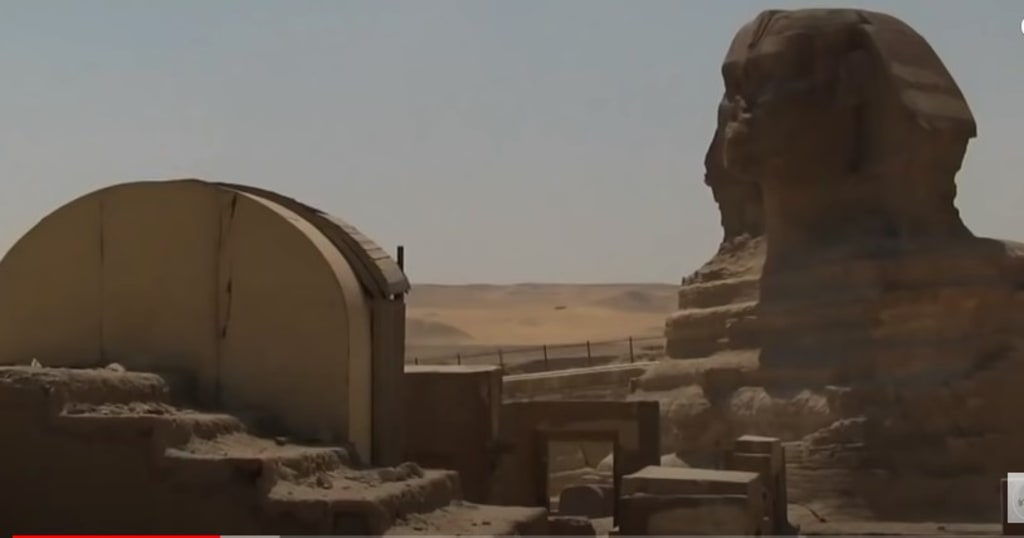
The Great Sphinx of Egypt, with its majestic lion body and enigmatic human face, has fascinated humanity for millennia. Standing in the shadow of the mighty pyramids on the Giza plateau, the Sphinx exudes an aura of mystery, leaving archeologists and historians with one perplexing question - how old is this ancient monument? For years, the prevailing belief has been that the Sphinx dates back to the reign of Egypt's 4th dynasty, approximately 4,500 years ago. This dating was primarily based on ancient Egyptian hieroglyphics and documents that mentioned the Sphinx's creation during that era. However, recent discoveries and alternative theories have cast doubt on this accepted timeline. Enter Robert Temple, a groundbreaking author who challenged the authenticity of the ancient Egyptian documents pertaining to the Sphinx. According to Temple's theory, the documents might have been forged by a pharaoh of the Fourth Dynasty to claim credit for the Sphinx's construction, a common practice among ancient rulers to rewrite history and secure their legacies. One of the most compelling pieces of evidence that Temple put forth was the head-to-body ratio of the Sphinx. Many researchers noted that the Sphinx's head seemed disproportionately small compared to its massive body, leading to speculation that it might have been originally designed as a different creature and later re-carved to resemble the pharaoh. Some even suggested that the head could have been grinded down from an earlier structure, further challenging the conventional narrative. Another piece of evidence pointing to a different identity for the Sphinx came from the hieroglyphics found at the Temple of Thep tufa. These hieroglyphics, in great detail, described the original god of ancient Giza as Anubis, depicted with a jackal head. Strikingly, the Sphinx's pose closely resembles that of Anubis in his jackal form, suggesting that the original statue might have been intended to represent this Egyptian deity rather than the traditional depiction of a lion-bodied creature with a human head. The connection between the Sphinx and Anubis was further reinforced when an ancient Egyptian tomb, belonging to the pharaoh Tutankhamun, was discovered completely undisturbed. Within the tomb, a shrine to Anubis was found, featuring an exact-scale statue of the Sphinx with the head of a jackal. This uncanny resemblance to the original Sphinx statue at Giza presented strong evidence that the Sphinx's initial form might indeed have been that of a jackal-headed Anubis. These revelations not only question the dating of the Sphinx but also suggest the possibility of a pre-dynastic origin for this enigmatic structure. If the Sphinx was indeed created during a time preceding the dynastic reigns of Egypt, it challenges our understanding of human civilization's early developments and technological advancements. Moreover, if the Sphinx's history reaches further back into antiquity, it opens the door to a civilization more advanced than previously believed. The implication that humans before the speculated catastrophic events, such as the massive meteorite strike, might have possessed knowledge and abilities far superior to our own is a notion both awe-inspiring and humbling. As we continue our exploration of the Great Sphinx and its age-old riddles, we must remain open to new possibilities and reconsider our understanding of ancient history. The mystery of the Sphinx serves as a reminder that the past is filled with hidden layers, waiting for intrepid explorers and seekers of knowledge to unravel their secrets.
Ancient Civilizations and Anomalies
Ancient civilizations have always been a source of fascination, their legacies etched into the sands of time and their achievements standing as a testament to human ingenuity. From the great pyramids of Egypt to the awe-inspiring structures of Mesopotamia, the remnants of these ancient cultures continue to intrigue and captivate the modern world.
The ancient Greeks, renowned for their philosophy, arts, and advancements, encountered the marvels of Egypt during their journeys to the land of the Nile. Witnessing the megalithic structures, advanced cities, and mathematical achievements, the Greeks were mesmerized by the enigma of Egypt's ancient past. Struck by the likeness of a stone structure depicting a lion with the face of a man, reminiscent of the mythical creature known as the Sphinx, they aptly named it "the Sphinx," an ode to their own culture and myths.
However, beyond this initial encounter, little else was known about the Sphinx's true origin and purpose. Recent evidence and research have raised questions about the conventional dating of the Sphinx and its possible age predating the established timelines of ancient Egyptian history.
Indeed, the fossil record reveals the existence of various extinct megafauna, such as the woolly mammoth, around ten thousand years ago. Strangely, despite the ancient Egyptians' recorded reverence for animals and their association with gods, recent archaeological finds suggest that they had access to exotic species from various parts of the world, even those from regions believed to have had no trade links with Egypt. This has led to the speculation that the ancient Egyptians might have had an ancient zoo of sorts, housing creatures from far-off lands, possibly including the extinct woolly mammoths.
These findings hint at a global reach of ancient civilizations, a complex network of trade, and an exchange of knowledge that may have been more extensive than previously thought. It raises the question of whether these ancient cultures possessed advanced technologies and knowledge that have been lost to time, or if they were in contact with more advanced civilizations from other parts of the world.
Adding to the enigma are the theories that propose a catastrophic event around ten thousand years ago, involving large fires, massive flooding, and a sudden Ice Age. This event is believed to have led to the extinction of various species, including the woolly mammoths. Some researchers have even suggested that a massive meteorite strike could have caused such devastation, wiping out any advanced civilizations that might have existed at the time.
Considering these speculations, the possibility arises that the pyramids, the Sphinx, and other megalithic structures were not the products of the ancient Egyptians' reign alone. Instead, they might have inherited and repurposed knowledge and technologies from a much older civilization that thrived before the catastrophic event reshaped the course of history.
As we continue to delve into the enigmatic past, the mysteries of ancient civilizations and their anomalies remain as captivating as ever. The pieces of the puzzle might be scattered across time and space, waiting for the curious minds of historians, archaeologists, and enthusiasts to put them together and unveil the grand narrative of our shared human heritage. In our search for answers, we must remain open to the possibilities that ancient history might be far more complex and wondrous than we have ever imagined.
The Puzzle of Earthquake Lights and Extraterrestrial Visitors
Throughout history, earthquakes have been regarded as natural phenomena with devastating consequences. Yet, there are instances when these seismic events are accompanied by a perplexing and otherworldly occurrence - earthquake lights. Reported by eyewitnesses during tremors, these strange lights have captured the imagination of scientists and the general public alike.
Initially dismissed as mere hallucinations or coincidences, earthquake lights gained credibility when they were observed in areas near high tectonic stress, volcanic eruptions, or tsunamis. This correlation piqued the interest of researchers, who sought to understand the cause behind this extraordinary phenomenon. Various theories have been proposed, including the idea that the lights result from the sudden ionization of air or the presence of certain gases released during seismic activity. However, definitive evidence remains elusive, and earthquake lights continue to mystify scientists.
Some have even ventured into the realm of the supernatural, suggesting that these lights are harbingers of seismic events or signs of extraterrestrial presence. The speculation around the enigma of earthquake lights reminds us that there are still many wonders in the natural world waiting to be unraveled, and that even the most well-understood phenomena can hold surprises that challenge our current knowledge.
Speaking of extraterrestrial presence, the tale of Val Valiant Thor presents a captivating account of an alleged alien visitor who infiltrated the highest levels of the United States government. While skepticism surrounds the notion of extraterrestrial life, testimonies of encounters like the one described in the book "Stranger at the Pentagon" continue to fuel discussions about the existence of beings from beyond our planet.
Val Valiant Thor's purported mission to offer advanced technology and usher in an era of peace on Earth raises both hopeful and cautionary questions. Was this extraterrestrial truly a benevolent being seeking to assist humanity, or was there a hidden agenda behind its supposed mission? The enigmatic nature of such stories challenges us to contemplate the possibilities beyond our understanding and confront the complexities of our place in the universe.
As we grapple with these mysteries, it becomes apparent that the world is full of unexplained wonders that extend beyond the realms of human comprehension. Earthquake lights and alleged encounters with extraterrestrial beings remind us that the universe is vast and far from fully explored. Just as our ancestors once gazed at the stars and pondered the mysteries of the cosmos, we, too, are drawn to the enigmas that lie beyond the veil of our current knowledge.
Whether these mysteries are a product of natural occurrences, human imagination, or something beyond our comprehension, they serve as a testament to the boundless curiosity and thirst for discovery that define the human spirit. As we continue to explore the unexplained wonders of our world, we embark on a journey of knowledge, enlightenment, and wonder, forever seeking to unravel the secrets that lie at the heart of existence. In our pursuit of truth, we find ourselves continually humbled by the vastness of the unknown and inspired by the infinite possibilities that await us in the great cosmic tapestry.
Unraveling the Ancient Riddles
As we journey through the annals of history, we encounter a tapestry woven with enigmatic threads, each one unraveling an ancient riddle waiting to be deciphered. From the cryptic secrets concealed within ancient artifacts to the puzzling anomalies that defy explanation, the past holds an allure that continues to captivate the curious minds of explorers, scholars, and enthusiasts.
The relics of the past tell stories of civilizations long gone, leaving behind clues to their once-thriving existence. Among these enigmatic remnants, the Great Sphinx of Egypt stands tall, a guardian of mysteries that have puzzled researchers for centuries. Questions surrounding its true age, purpose, and the civilization responsible for its creation remain unanswered, urging us to delve deeper into the sands of time to uncover its hidden truths.
Beyond the familiar realm of terrestrial phenomena, we encounter perplexing occurrences that challenge our understanding of the natural world. Earthquake lights, captivating and elusive, dance in the wake of seismic activities, leaving scientists grasping at the ethereal threads of their origin. Their mysterious glow has inspired speculations ranging from scientific explanations to fantastical theories of extraterrestrial involvement, pushing us to explore the uncharted territories of our planet's seismic and cosmic connections.
Speaking of extraterrestrial enigmas, the story of Val Valiant Thor sends us spiraling into the realm of alleged encounters with beings from beyond the stars. The accounts of interstellar visitors infiltrating human society and government spark both wonder and skepticism, inviting us to contemplate the possibilities that lie beyond the boundaries of our known world.
As we attempt to solve these ancient riddles and unravel the enigmatic pasts, we must approach the quest with an open mind and a thirst for knowledge. The journey may lead us through winding corridors of evidence, exposing us to the unexpected and challenging our preconceptions.
Yet, in our pursuit of answers, we must embrace the beauty of the enigma itself—the wonder and intrigue that reside in the unexplored and the yet-to-be-revealed. For it is in the exploration of the enigmatic that we uncover the essence of humanity's curiosity and resilience, forever driven to seek knowledge, understanding, and the truths that lie beyond the veil of mystery.
In the grand tapestry of history, each unraveling enigma we encounter paints a unique portrait of our shared human experience—a testament to the vastness of our collective story and the infinite possibilities that await discovery. So, let us embark on this timeless quest, hand in hand with the past, as we continue to explore the enigmas that define our existence and inspire us to seek the unexplained wonders of the world.
Conclusion
In the realm of enigmas, we find ourselves at the crossroads of curiosity and humility, standing before the great mysteries that have withstood the tests of time. Each puzzle, whether etched in the ancient ruins or hidden within the depths of the cosmos, invites us to embark on a journey of discovery—an exploration of the unknown that transcends the boundaries of our understanding.
As we delve into the enigmatic past and present, we must embrace the uncertainty and humbly acknowledge that there is still so much we do not know. It is in this acceptance that we find the true essence of our quest—to unravel the secrets of the universe, not with the arrogance of absolute knowledge, but with the wonder of perpetual curiosity.
In our pursuit of truth, we must be willing to challenge our preconceptions and to explore unconventional avenues of thought. The enigmas of the world do not yield their answers easily; they demand patience, open-mindedness, and the courage to embrace the unknown.
The Great Sphinx of Egypt stands as a testament to this humble journey. Its weathered features silently guard the enigmas of its origin and purpose. As we peer into the gaze of this ancient guardian, we are reminded of the countless questions that have been posed throughout history—questions that have sparked debates, theories, and countless hours of contemplation.
Similarly, the phenomenon of earthquake lights beckons us to explore the intricate relationship between our planet's seismic activities and the unexplained lights that dance in their wake. Instead of hastily dismissing these occurrences, we must approach them with a willingness to delve into the realms of science and wonder, seeking to understand the subtle mysteries that lie beyond the grasp of conventional knowledge.
The tale of Val Valiant Thor presents us with yet another enigma—a narrative of extraterrestrial visitation that stretches the boundaries of belief. While skepticism and scrutiny are essential components of any investigation, we must not shy away from entertaining ideas that challenge the norms. Instead of closing the door on the possibility of extraterrestrial life, we can remain open to the wonders that the cosmos may hold.
In our quest to uncover the truths of these enigmas, we must recognize that the answers we seek may not be simple or easily attainable. They may lead us to more questions, and that is perfectly acceptable. Embracing the enigmas of our world means embracing the ongoing nature of discovery—a journey that transcends generations and drives the advancement of human knowledge.
Ultimately, it is the pursuit itself—the relentless curiosity, the willingness to explore, and the humility to acknowledge our limitations—that defines the beauty of the enigma. We stand on the precipice of the vast unknown, gazing at the stars and the relics of antiquity, knowing that there is always more to learn, more to uncover, and more to understand.
As we continue on this journey, let us be inspired by the enigmas that surround us, for they are a testament to the insatiable human spirit, forever reaching for the stars, forever seeking to unlock the secrets of the universe, and forever embracing the wonder of the enigmatic.
About the Creator
Felix Ebipakabena
With a passion for exploring the uncharted territories of the mind and the world around me, I am constantly drawn to the allure of the inexplicable. From ancient legends to modern-day puzzles, I find solace in the thrill of the unknown.
Keep reading
More stories from Felix Ebipakabena and writers in History and other communities.
10 Real Places On Earth That Seem Scientifically Impossible
There's an undeniable allure to the mysterious, a magnetic pull that draws us to the unexplained and the enigmatic. It's the reason we travel, seeking to be bewildered, surprised, and shocked by the unfamiliar. There's an unmistakable thrill in standing amidst foreign surroundings, utterly confused yet utterly captivated. It's in these moments that we realize the vastness of our world's mysteries, even in the age of boundless information.
By Felix Ebipakabena2 years ago in History
The Titanic Mystery: Secrets Beneath the Frozen Sea
On the night of April 14, 1912, the RMS Titanic sailed calmly through the dark waters of the North Atlantic, carrying more than 2,200 souls and the dreams of a modern world that believed it had conquered nature. Labeled “unsinkable,” the Titanic was the pride of human engineering. Yet before dawn broke, the great ship lay shattered beneath miles of icy ocean. More than a century later, the Titanic remains not just a tragedy—but a mystery filled with unanswered questions.
By The best writer 5 days ago in History
3 True Stories That Sound Like Urban Legends but Aren’t
Urban legends usually follow a familiar pattern. A friend of a friend hears something unbelievable, the details get hazy, and the story ends with a warning about human stupidity or bad luck. The unspoken rule is simple: if it sounds too strange to be true, it probably is.
By Enoch Sagini3 days ago in History
How to Succeed at the Benson Directory®
Congratulations and welcome to the Benson Directory® employee #22391! As our newest call handler, you will have the privilege of speaking with dozens of unique and interesting people on a daily basis as well as the opportunity to earn bonuses for high performance. Contained within this handbook you will find a set of ease to follow instructions designed to help you settle in to your new role and begin paving the way to success.
By S. A. Crawford2 days ago in Fiction



Comments
There are no comments for this story
Be the first to respond and start the conversation.