
10 Mighty Cities That Shaped the World's Greatest History
Unveiling the Magnificence
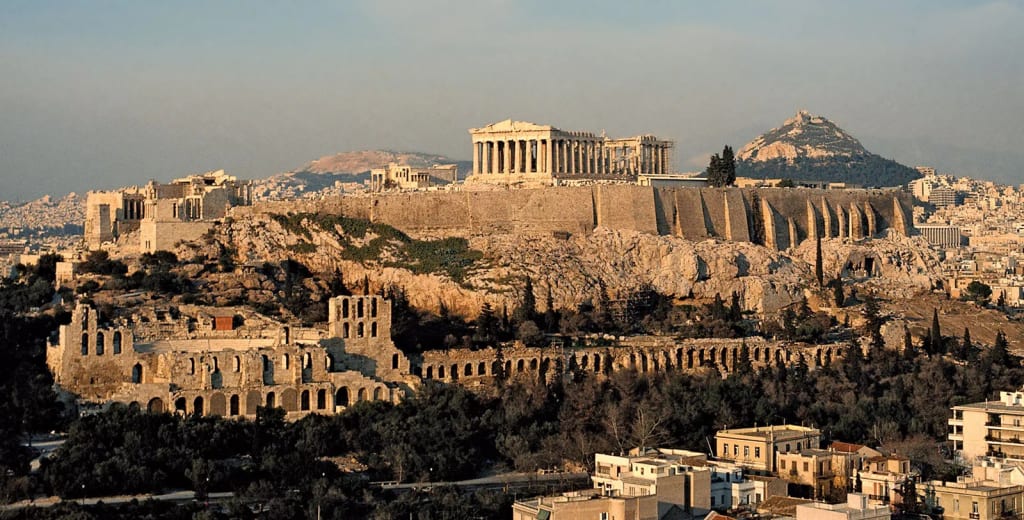
Athens, the capital of Greece, is a city steeped in history and culture. Renowned as the birthplace of democracy and Western philosophy, Athens has a rich heritage that spans over 3,400 years. The cityscape seamlessly blends ancient landmarks with modern structures, creating a unique juxtaposition of the old and the new. Dominated by the iconic Acropolis, a UNESCO World Heritage site, Athens boasts architectural marvels like the Parthenon, symbolizing ancient Greek civilization. Beyond its historical significance, Athens is a vibrant metropolis, offering a lively atmosphere, diverse cuisine, and a thriving arts scene.
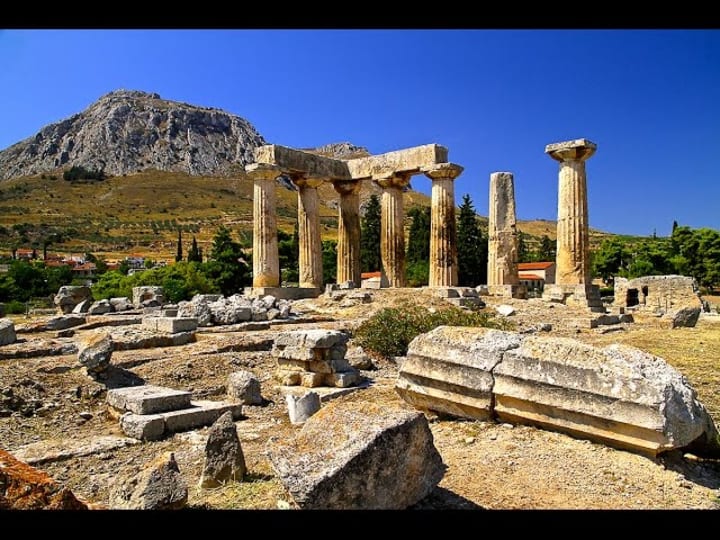
Sparta, an ancient Greek city-state, thrived between the 8th and 4th centuries BCE. Renowned for its militaristic society, Sparta focused on producing formidable warriors through rigorous training and discipline. Governed by dual kings and an oligarchic council, the Gerousia, Sparta's political system aimed at maintaining stability and military prowess. The city's economy relied on slave labor, allowing citizens, known as Spartiates, to devote themselves entirely to military training. Sparta's military reputation reached its pinnacle during the Persian Wars, notably at the Battle of Thermopylae. Despite its military might, Sparta's rigid social structure and isolationist policies contributed to its eventual decline, as it struggled to adapt to changing times in the Hellenistic era.
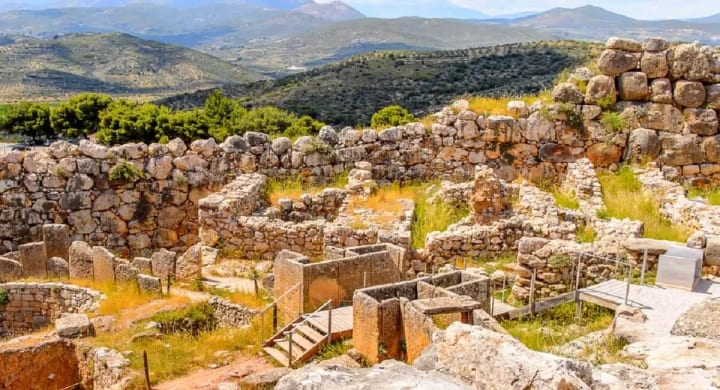
Mycenae, an ancient Greek city-state, thrived from the late Bronze Age to the early Iron Age . Renowned for its monumental architecture and strategic location in the Peloponnese, Mycenae played a pivotal role in Greek mythology and history. The city is closely associated with the legendary king Agamemnon, a key figure in the Trojan War. Mycenae's iconic structures include the Lion Gate, a colossal entrance adorned with a relief of two lions, and the Cyclopean Walls, constructed with massive stones. The site's archaeological significance provides insights into the Mycenaean civilization, characterized by a sophisticated society with complex social structures and impressive military capabilities. Mycenae's legacy endures through its archaeological remains, enriching our understanding of ancient Greek culture and history.
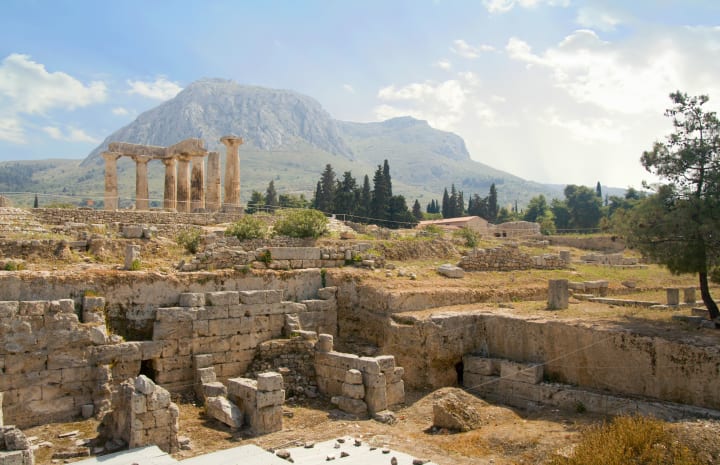
Corinth, historically significant as an ancient Greek city-state, thrived between the 8th and 4th centuries BCE. Positioned strategically on the narrow isthmus connecting the Peloponnese to mainland Greece, Corinth became a prosperous center for trade and commerce. Renowned for its advanced art, architecture, and athletic competitions, including the Isthmian Games, Corinth played a pivotal role in ancient Greek culture. The city's strategic location also led to its involvement in numerous conflicts, notably the Peloponnesian War. Over time, Corinth underwent various transformations under different rulers, including the Romans. Its ruins today serve as a testament to its rich history and strategic importance in the ancient world.
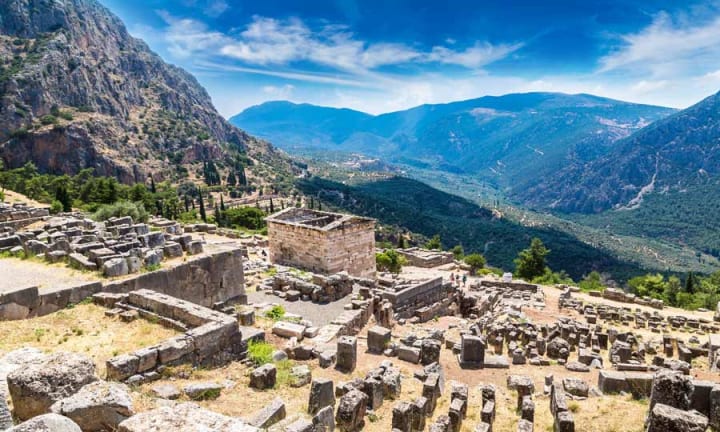
Delphi, nestled on the slopes of Mount Parnassus in ancient Greece, held unparalleled significance in Greek religion as the sacred dwelling of the Oracle of Apollo. Regarded as the navel or center of the world, Delphi was a sanctuary where seekers from across the Hellenic world sought counsel and guidance. The Oracle, a priestess named Pythia, communed with the god Apollo, delivering prophetic messages to those who posed questions. Delphi's prominence extended beyond religious realms, influencing political, military, and cultural decisions. The Delphic Oracle's cryptic responses, believed to convey the will of the gods, shaped the course of ancient Greek history, making Delphi a revered locus of divine communication and spiritual authority.

Ephesus, a prominent ancient city, held dual significance as both a Greek and Anatolian hub. Situated in modern-day Turkey, Ephesus initially emerged as an Ionian Greek settlement in the 10th century BCE. Over time, it flourished into a major city, boasting iconic structures such as the Temple of Artemis, one of the Seven Wonders of the Ancient World. Ephesus transitioned between Greek and Anatolian rule, experiencing Persian and Roman dominion. Renowned for its grandeur and cultural contributions, Ephesus played a pivotal role in Hellenistic and Roman times, serving as a vital trade and cultural center. Its strategic location and historical richness make Ephesus a testament to the interwoven histories of Greek and Anatolian civilizations.
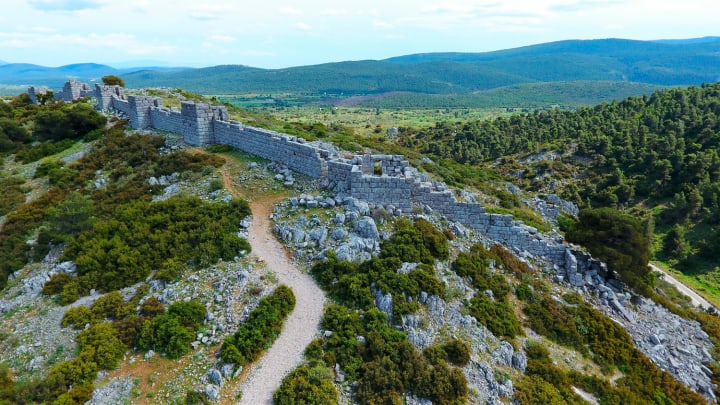
Thebes, an ancient city in central Greece, held significant historical and cultural importance. Flourishing during the Mycenaean period, it became a major center of political, military, and religious power. The city is renowned for its archaeological treasures, notably the Kadmeion, a sacred precinct featuring temples and palaces. The most prominent structures include the Temple of Karnak and the Valley of the Kings, the burial site of numerous pharaohs. Thebes played a pivotal role in Greek mythology, serving as the birthplace of Dionysus and Hercules. Its prominence waned with the rise of Athens and Sparta, yet Thebes left an enduring legacy, etched into the annals of ancient Greek history.
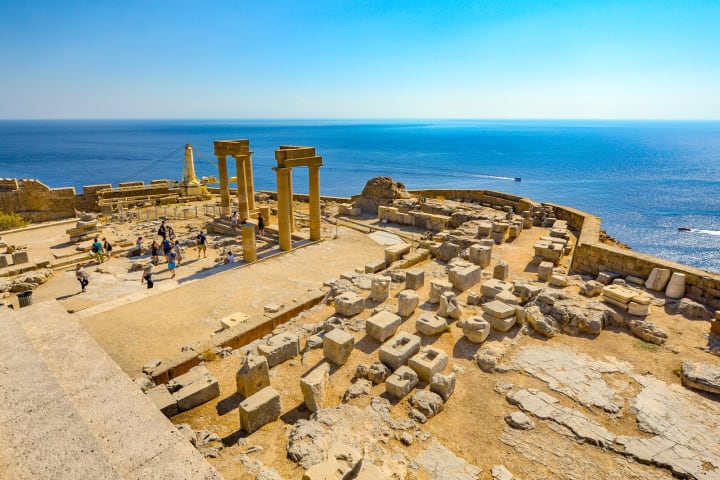
Rhodes, an island city renowned for its maritime prowess, stood as a prominent hub of commerce and trade in the ancient Mediterranean. Nestled strategically between Asia and Europe, Rhodes flourished as a vital trading center, leveraging its advantageous geographical location. Its bustling harbor facilitated the exchange of goods, fostering economic prosperity and cultural exchange. The city's maritime influence extended beyond its shores, contributing to the interconnected network of civilizations around the Mediterranean. Notably, Rhodes was home to the Colossus of Rhodes, one of the Seven Wonders of the Ancient World, symbolizing the city's grandeur. Its legacy endures as a testament to the maritime and economic significance that characterized this ancient island city.
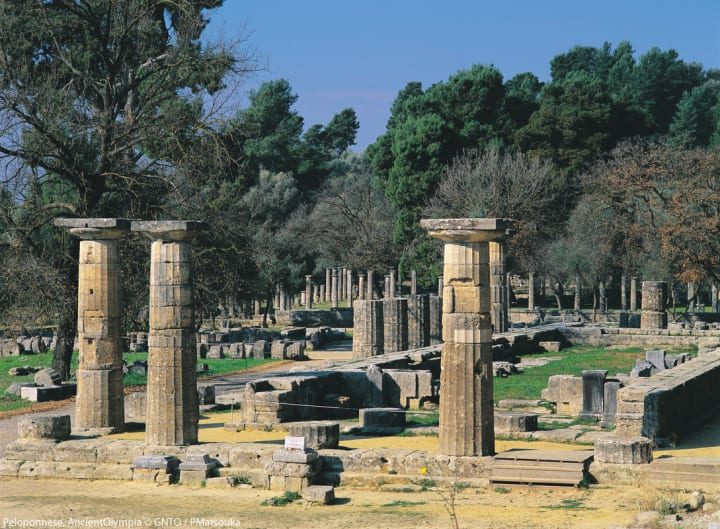
Olympia, steeped in historical significance, was a revered sanctuary in ancient Greece dedicated to Zeus, the king of the gods. Nestled in the western part of the Peloponnese, this sacred site gained prominence as the host of the ancient Olympic Games, a pan-Hellenic festival that united Greek city-states in athletic competition. Established in 776 BCE, these games occurred every four years, marking a truce among warring states during the festivities. The site housed impressive structures, including the Temple of Zeus and the renowned Statue of Zeus, one of the Seven Wonders of the Ancient World. Olympia symbolized the embodiment of Greek religious and athletic ideals, fostering a sense of unity and reverence for the gods among the Hellenic people.
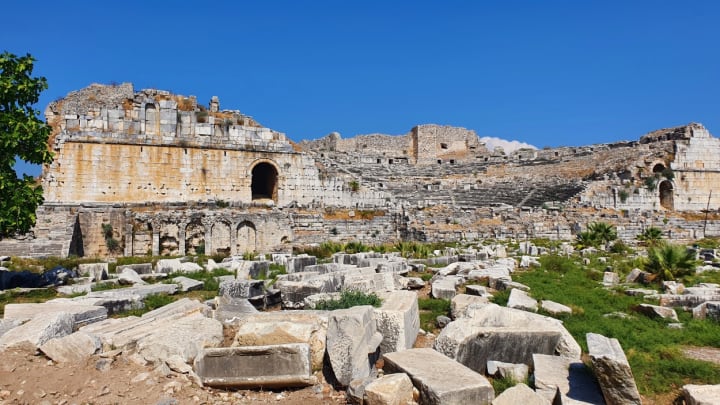
Miletus was an ancient Greek city located on the western coast of Anatolia (modern-day Turkey). Flourishing from the 8th to 5th centuries BCE, it played a pivotal role in trade, philosophy, and science. As a member of the Ionian League, Miletus contributed significantly to Greek intellectual advancements, producing renowned thinkers like Thales and Anaximander. The city's strategic location facilitated maritime commerce, fostering economic prosperity. Miletus also played a key role in the Greco-Persian Wars. Over time, it fell under Persian, Roman, and Byzantine rule, witnessing cultural and political transformations. Despite its eventual decline, Miletus remains a significant archaeological site, offering insights into ancient Greek civilization and its enduring impact on Western history.
About the Creator
nuwan
My goal is to share what i know with you
World War I
The morning fog lay thick over the trenches of northern France, clinging to the earth as if it too feared what was about to happen. Private Thomas Hale pulled his coat tighter around himself, though it did little to stop the cold from seeping into his bones. He had been in the trenches for six months, yet the damp smell of mud, smoke, and fear still felt unfamiliar, like a nightmare he could not wake from.
By Maavia tahir5 days ago in History
Chicago Hospital Held Newborn Baby for 8 Months Over an Unpaid Medical Bill
Debts were handled much differently in the 19th and early 20th century. Back then, people who accrued debt had more to fear than letters and calls from collection agencies the same way we do today, especially if they owed a hospital or doctor money.
By Criminal Matters5 days ago in History


Comments
There are no comments for this story
Be the first to respond and start the conversation.