
WWE’s Price Tag Problem: How TKO Is Pricing Out the Fans Who Built It
Corporate greed just body-slammed family wrestling

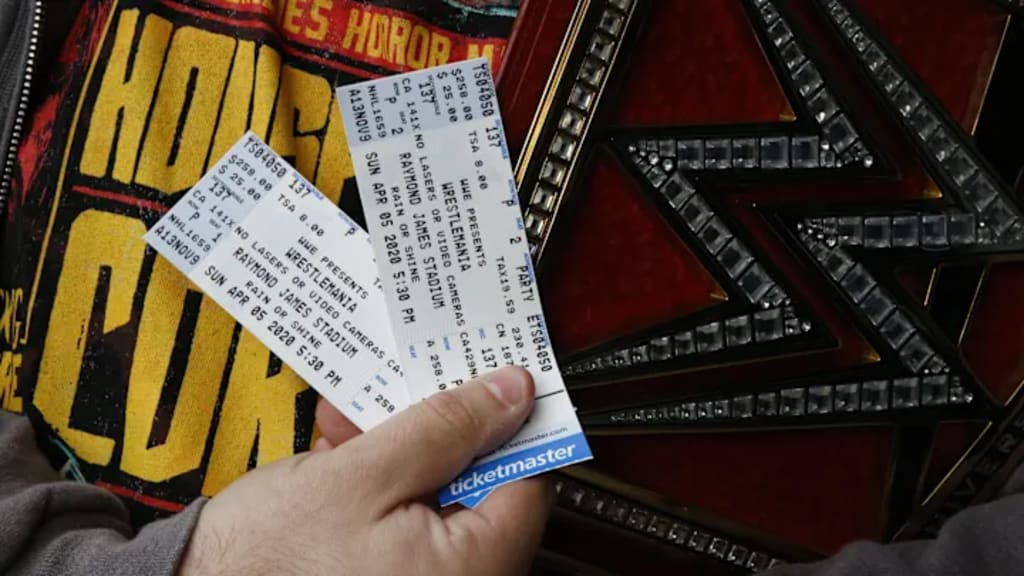
Once upon a time, professional wrestling was about families — dads taking their kids to the local arena, moms cheering in the stands, and fans feeling like part of a larger-than-life community. Vince McMahon, for all his faults (and there are plenty), understood that. The business model was built on accessibility — tickets affordable enough to fill every seat with people who loved the show, not just those with corporate expense accounts.
But those days? They’re fading fast.
Recently, TKO’s COO Mark Shapiro dropped a bombshell at the Goldman Sachs Communicopia and Technology Conference. He openly admitted that WWE under McMahon “wasn’t maximizing ticket prices” because Vince was still pricing for families. Translation: “We figured out people will pay stupid money for wrestling, so why not squeeze them dry?”
In his own words:
“Now that we've seen what we could do at UFC, we're replicating that in terms of ticket yield… and it’s working out really well.”
That’s right — “ticket yield.” Not attendance. Not engagement. Yield. Because for corporate suits, wrestling isn’t an experience — it’s a product to monetize.
The New WWE: For the Wealthy, Not the Devoted
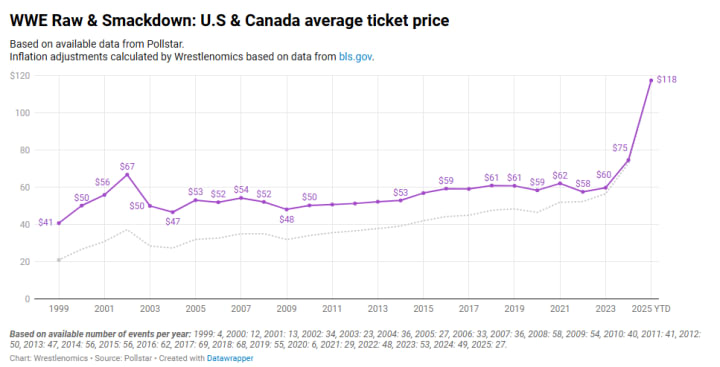
The numbers are staggering. Gone are the days of “$12 ringside, $10 general admission, kids under 12 for $8.” Instead, we’re living in an era where WrestleMania packages are marketed like luxury vacations — except your destination is a crowded stadium and your souvenir is a credit card bill that makes you sweat.
Let’s break it down:
- Silver Package — $1,600 per ticket: Includes “premium seating,” a Friday kickoff party, and a pass to the WWE Superstore so you can spend even more.
- Gold Package — $2,750 per ticket: Adds “all-inclusive hospitality” with appearances from The Undertaker and Paul Heyman — and a tiny piece of the ring mat in a frame.
- Champion Package — $5,150 per ticket: A photo op at WrestleMania, more “VIP access,” and the same overpriced merch pass.
- Elite Experience Package — $37,500 per ticket: On-stage and in-ring photo ops, front-row access, and the ability to brag you were part of the “walkout experience” while the rest of the crowd asks, “Who the hell is that?”
Thirty-seven. Thousand. Dollars. For one ticket.
To put it bluntly: that’s not fandom. That’s financial insanity.
Wrestling Has Become an Airline
Worse, it’s not even consistent pricing. Ticket sales now operate like an airline — one seat could cost you hundreds (or thousands) more than the identical one next to it, depending on when and how you buy it. “Dynamic pricing,” they call it. “A shakedown,” fans call it.
The business model has shifted from building loyalty to exploiting impulse. “We’ll take as much as we can get from whoever’s willing to pay it.” That’s the new TKO strategy — a far cry from the “family-friendly” model that made WWE a global empire in the first place.
Extorting Cities and Fans Alike
It’s not just the fans feeling the squeeze — even local cities are being strong-armed. Shapiro bragged about how TKO now pits municipalities against each other for live events:
“If we have St. Louis going up against Des Moines and you want us back, you have to pay for us to come back — or we’ll take it somewhere else.”
That’s not a partnership. That’s extortion.
Back in the day, wrestling promoters built long-term relationships with arenas — negotiating fair rates, running regular shows, and treating each city as part of the territory. Now, the message is clear: Pay up or get left behind.
The “Good Old Days” — When Vince McMahon Looked Like the Good Guy
It’s surreal, but TKO has managed to make Vince McMahon — a man synonymous with creative chaos and questionable ethics — look like a good guy. Because at least Vince believed in filling arenas with people, not profit margins.
McMahon’s entire national expansion in the ‘80s and ‘90s was built on making wrestling accessible. Yes, he wanted to conquer the world, but he did it by making sure families could afford to come along for the ride. You might’ve hated his storylines, but you could at least afford to watch them live.
Today, that legacy has been gutted in the name of “premium experiences.”
The Absurdity of WrestleMania’s “Experiences”
When you read through WWE’s official packages, the absurdity is almost comedic. Priority access to the store. Early entry to buy merchandise. A VIP line to spend money faster. And for the biggest spenders, a photo in the ring so you can post it online before defaulting on your mortgage.
As one fan noted on Facebook:
“I went last year, sat in Section 201, Row 1 — $1,725 per seat. Same seats this year? $2,900. Thanks, TKO.”
That’s not growth — that’s gouging. And as prices skyrocket, the audience that built WWE is being priced right out of the seats they once filled with energy and passion.
A Corporate Culture Shock
Even the cities themselves are starting to resent the shake-up. Shapiro’s tone-deaf bragging — essentially telling municipalities “pay us or lose us” — underscores the disconnect between the suits in boardrooms and the fans (and workers) who make wrestling what it is.
The sad truth: this business was once about building trust with communities, both local and global. Now, it’s just another corporate playbook of profit at all costs.
Vince’s Irony: The Traditionalist in a Corporate World
For all the times McMahon was called ruthless, there was a strange code to how he operated. He never sold ad space on the ring mat — not because he couldn’t, but because he didn’t want to clutter the product. He believed wrestling should look a certain way.
Now, the mat itself is a billboard. The ring, the entrances, the set — all plastered with logos. Shapiro and company have monetized everything Vince didn’t, from on-location experiences to multi-million-dollar sponsorships on every visible surface.
Ironically, that’s the one line Vince refused to cross — even as he broke every other rule.
The Cost of “More”
At the end of the day, it’s all about more — more yield, more money, more brand deals. But with every “more,” WWE risks losing the “less” that made it human — less heart, less accessibility, less connection to the people who made it matter.
Fans don’t just remember the matches. They remember the experience — sitting shoulder to shoulder with family, chanting for their favorite wrestler, feeling part of something bigger. That can’t be replicated with a “priority pass” or a $37,000 selfie in the ring.
The Future of Wrestling Fandom
This shift could open doors for smaller, independent promotions. If WWE prices out the middle class of wrestling fans, someone will step up to fill that void — promotions that still care about the crowd in the cheap seats, where real passion lives.
The problem? There aren’t many serious-minded promoters left who can compete at scale. The corporate machine has devoured the soul of wrestling, leaving behind a business model that worships quarterly profits more than storytelling or connection.
But if history has taught wrestling fans anything, it’s that everything comes full circle. Maybe one day, someone will remember what made this sport special — before it turned into a billionaire’s playground.
Mark Shapiro’s comments reveal what WWE has truly become under TKO: a luxury product for the few, not an experience for the many. And in chasing short-term profits, they’re slowly alienating the very audience that built the foundation of their success.
When Vince McMahon starts to look like the sentimental traditionalist, you know something’s gone very wrong.
About the Creator
Lawrence Lease
Alaska born and bred, Washington DC is my home. I'm also a freelance writer. Love politics and history.
Keep reading
More stories from Lawrence Lease and writers in Geeks and other communities.
The Wild, Reckless, and Deadly Story of New Jersey’s Infamous Action Park
Across the world, amusement parks promise safe thrills — a place where families can escape for a day of roller coasters, water slides, and sugary snacks. But one park in New Jersey became a legend for all the wrong reasons. Action Park wasn’t just a thrill-seeker’s dream — it was a lawsuit magnet, a chaos zone, and arguably the most dangerous amusement park ever built. Locals nicknamed it Class Action Park and Accident Park, and honestly, they weren’t exaggerating.
By Lawrence Lease3 months ago in Geeks
Silver Screen Magic with Mae West
American actress and singer Mae West became a popular film actress during the Great Depression. She started entertaining in vaudeville, then performed on Broadway, and finally went to Hollywood. She signed up with Paramount Pictures and made her debut in the 1932 film “Night After Night.” She also starred in musicals, comedies, and crime dramas. The American Film Institute named her one of the best classic Hollywood actresses.
By Rasma Raisters4 days ago in Geeks
Why The Last Holiday Still Resonates Even 20 Years Later
Plot Summary Georgia Byrd, a kindhearted but shy department store employee, discovers she has a terminal illness. Faced with her mortality, she decides to abandon her mundane life and take a lavish vacation to Europe, determined to live life to the fullest before her passing. Along the way, Georgia embraces adventure, discovers her own courage, and forms unexpected friendships that change her outlook. Amid luxury hotels, fine dining, and breathtaking scenery, she also encounters romance and laughter, learning to cherish every moment. The Last Holiday is a heartfelt story about finding the true joy of life and self-discovery.
By TheScreenAnalyst3 days ago in Geeks


Comments
There are no comments for this story
Be the first to respond and start the conversation.