
The Wild, Reckless, and Deadly Story of New Jersey’s Infamous Action Park
How New Jersey’s Most Notorious Theme Park Turned Thrills into Chaos, Injuries, and Urban Legend


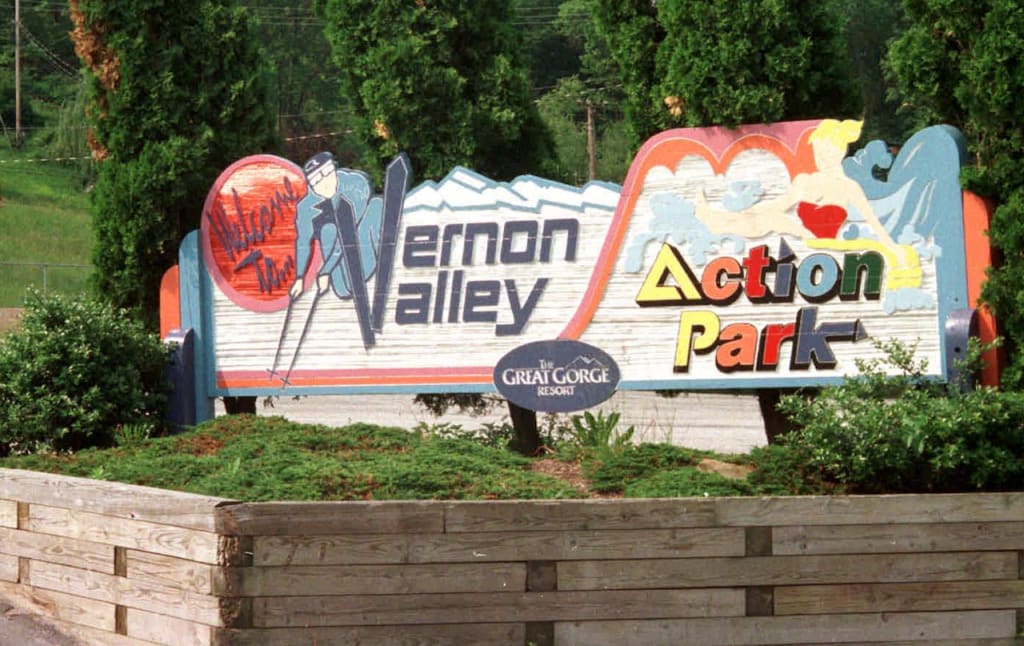
Across the world, amusement parks promise safe thrills — a place where families can escape for a day of roller coasters, water slides, and sugary snacks. But one park in New Jersey became a legend for all the wrong reasons. Action Park wasn’t just a thrill-seeker’s dream — it was a lawsuit magnet, a chaos zone, and arguably the most dangerous amusement park ever built. Locals nicknamed it Class Action Park and Accident Park, and honestly, they weren’t exaggerating.
The Birth of an Infamous Dream
Nestled in Vernon Township, New Jersey, just an hour outside New York City, Action Park started innocently enough. The area’s lush hills made it a natural spot for skiing, and by the early 1970s, the Vernon Valley Great Gorge Resort was a popular winter destination. But founder Gene Mulvihill — a disgraced former stockbroker banned from Wall Street — wanted to make money year-round. His solution? Build a summer park that offered guests total control over their fun — and by extension, their danger.
He dreamed of a park where people could drive, slide, and fly however they pleased. Safety? That was optional. By 1978, Action Park officially opened, divided into three sections: Alpine Center, Motorworld, and Waterworld. It was marketed as a place of freedom — where you could “control the action.” But as thousands soon learned, freedom without limits can be catastrophic.
DIY Engineering Gone Wrong
Mulvihill wasn’t exactly fond of rules. Instead of hiring engineers, he had his team design rides in-house. And instead of safety testing, he offered employees $100 bonuses to be guinea pigs. If they survived, the ride opened. If they didn’t — well, back to the drawing board.
The results were terrifying. The Alpine Slide became notorious almost immediately. Riders flew down a concrete chute on sleds with unreliable brakes. Some sleds wouldn’t stop; others locked mid-ride, sending people flying into rocks or other riders. Many wore only swimsuits, so the abrasions were severe — concrete burns, broken bones, even head injuries.
In 1980, a 19-year-old man named George Larson Jr. died after being thrown from his sled and hitting his head on rocks. Rather than close the ride, management put up gory photos of injured riders as “warnings.” That’s how Action Park handled safety — through shock value.
The “Motorworld” Mayhem
Action Park’s Motorworld section was chaos on wheels. Guests could drive go-karts, mini race cars, or even tanks that fired tennis balls. Employees quickly figured out how to disable the speed governors, letting karts hit speeds of 60 mph — faster than most real cars on the nearby highway.
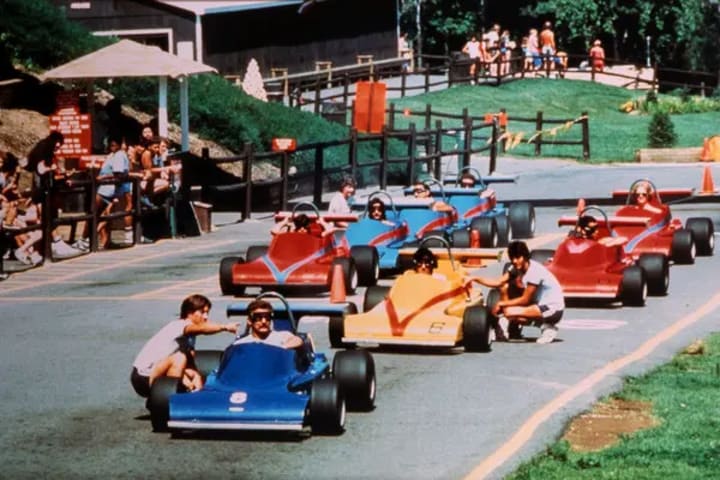
Meanwhile, the park’s Battle Tanks let guests shoot tennis balls at each other. The problem? If you hit an attendant, they were known to retaliate — sometimes literally driving their own tanks into yours. Combine that with minimal supervision and underage drivers, and Motorworld became a demolition derby.
Waterworld: The Real Danger Zone
Then came Waterworld — the crown jewel and the deadliest part of the park.
The Tarzan Swing seemed simple: grab a cable, swing over the water, and let go. But many froze midair or let go too early, slamming into concrete or rocks. The pool water was icy cold, and several guests went into shock. In 1984, one man had a heart attack after plunging into the frigid water and died.
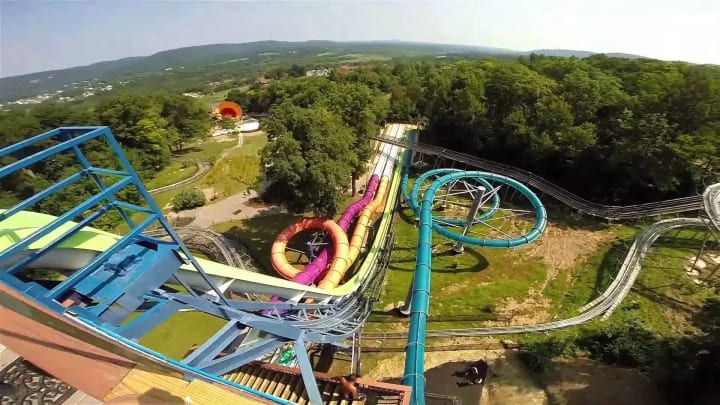
The Wave Pool, nicknamed “The Grave Pool,” was even worse. It was among the first in the U.S., and the waves reached up to 40 inches high. Most visitors were from urban areas and couldn’t swim, yet that didn’t stop them from jumping in. Lifeguards reportedly saved 30 people a day — just in that pool. Tragically, two young men drowned in separate incidents in the 1980s, yet the attraction remained open.
And then there was the Cannonball Loop — the infamous enclosed water slide with a full vertical loop. Test riders came out bloody and bruised; some lost teeth that became embedded in the slide’s padding. The state shut it down, but Mulvihill kept reopening it, each time resulting in more injuries. It was so dangerous that New Jersey’s advisory board finally banned it outright.
Fraud, Deaths, and Denial
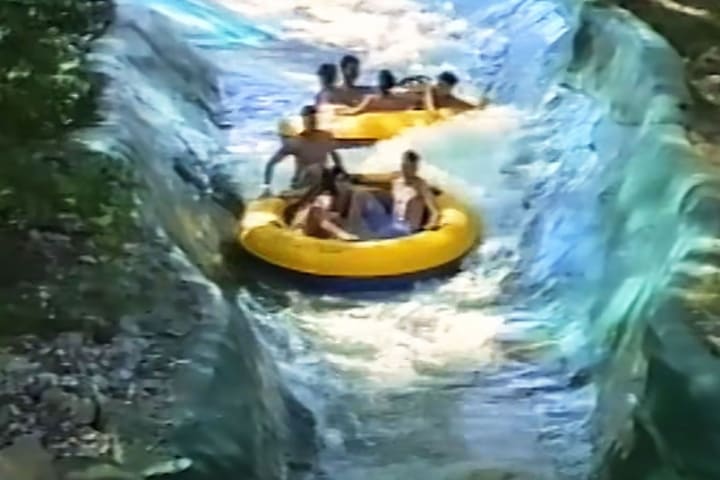
Between 1978 and 1996, Action Park was linked to six confirmed deaths — though many believe the real number was higher. Accidents ranged from drownings to electrocutions, like in the Kayak Experience, where a guest died after touching a live wire in the water. Others were maimed on the Alpine Slide, the Wave Pool, and the Tarzan Swing.
Mulvihill’s response? Denial, misdirection, and fraud. When the first fatality occurred, the park falsely claimed the victim was an employee to avoid reporting it. Lawsuits piled up — more than a hundred during its lifetime — but Mulvihill refused to settle most cases. He dragged families through court, betting they couldn’t afford the legal fees to fight him.
And the craziest part? He didn’t even believe in insurance. To dodge regulations, Mulvihill created a fake insurance company to make it look like the park was covered. Eventually, the state caught on, charging him with over a hundred counts of fraud and embezzlement. He paid fines — but never seemed to learn.
Chaos as a Business Model
Action Park’s chaos was part of its allure. To Gen X thrill-seekers, it represented freedom — a place without guardrails, both literally and figuratively. It was the anti-Disneyland: gritty, unregulated, and pure adrenaline.
Teen employees ran rides unsupervised. Alcohol flowed freely, with vendors rarely checking IDs. Even staff drank on the job. Fights, harassment, and intoxicated guests were daily occurrences. Yet the park kept drawing crowds — over a million visitors a year at its peak.
In many ways, Action Park reflected the 1980s spirit of recklessness. It was a time of minimal oversight, where danger was part of the fun. Kids walked away with scars, and parents shrugged it off as a rite of passage.
The End of the Ride
By the mid-1990s, lawsuits and bad press finally caught up. Attendance plummeted, and Mulvihill’s company, Great American Recreation, filed for bankruptcy in 1996. The park shut down, leaving behind a legacy of blood, lawsuits, and nostalgia.
A Canadian company later reopened the site as Mountain Creek, adding real safety measures. Ironically, Mulvihill regained ownership in 2010 — just before his death in 2012. His family even renamed it Action Park again for a short stint before selling it off in 2015. Today, it’s once again called Mountain Creek Water Park — a far tamer version of its predecessor.
Legacy of “Class Action Park”
Even decades later, the legend of Action Park lives on. Documentaries, memoirs, and podcasts keep its wild spirit alive. For some, it’s a nostalgic symbol of a lost era — a place where kids learned limits the hard way. For others, it’s a cautionary tale about corporate greed, negligence, and what happens when safety takes a backseat to profit.
In the end, Action Park wasn’t just an amusement park. It was a social experiment — one that tested how far people could push the limits of fun before it turned fatal.
And if there’s one thing we learned from Action Park, it’s this: just because you can build it, doesn’t mean you should.
About the Creator
Lawrence Lease
Alaska born and bred, Washington DC is my home. I'm also a freelance writer. Love politics and history.
Reader insights
Outstanding
Excellent work. Looking forward to reading more!
Top insight
Expert insights and opinions
Arguments were carefully researched and presented
Keep reading
More stories from Lawrence Lease and writers in Geeks and other communities.
Wrestlepalooza Predictions: Predicting Every Win, Loss & Surprise
Wrestlepalooza is only days away, and excitement is building. Scheduled for Saturday, this event is shaping up to be one of WWE’s biggest spectacles of the year. Fightful Select has even reported that the company hopes Wrestlepalooza can serve as a “WrestleMania surrogate” in years when the flagship event is held overseas, like it will in 2027.
By Lawrence Lease4 months ago in Geeks
Silver Screen Magic with Mae West
American actress and singer Mae West became a popular film actress during the Great Depression. She started entertaining in vaudeville, then performed on Broadway, and finally went to Hollywood. She signed up with Paramount Pictures and made her debut in the 1932 film “Night After Night.” She also starred in musicals, comedies, and crime dramas. The American Film Institute named her one of the best classic Hollywood actresses.
By Rasma Raisters6 days ago in Geeks
When Sweetness Turns Sour: A Review of Saccharine
Some films announce their intentions loudly. Others whisper, smile politely, and then leave a strange aftertaste long after the credits roll. Saccharine belongs firmly in the second category. With a title that suggests artificial sweetness, the film uses that expectation as a quiet trap, drawing the viewer into a story that is far more unsettling, reflective, and emotionally ambiguous than its name implies.
By David Cook3 days ago in Geeks
Wild Card Weekend Recap: What Happens Now?
I think I figured out why I love Wild Card Weekend so much. It's because it's the first playoff anything of the calendar year. The NFL season starts in the fall, and once upon a time, the champion was crowned either on or slightly before New Year's. The evolution of the NFL schedule has resulted in the playoffs starting just into the New Year, and currently, the final week of the season falls on the first weekend of the New Year, with Wild Card Weekend coming a week after that. So yes, chronologically, the NFL's Wild Card Weekend serves as the first playoff anything of the calendar year.
By Clyde E. Dawkins6 days ago in Unbalanced


Comments (6)
Great research and an enjoyable, if scary, read! Congrats on TS!!
Good 👍😊 were good
Good 😊👍
I love how you framed the park as both a cultural artifact and a moral lesson. It’s not just about danger; it’s about an era defined by reckless freedom and blurred ethics.
Glad to see you have a top story here.
WOW! This is a story about a particular amusement park but I personally think it a warning to be cautious in every park.