
Why Demi Moore Didn’t Win an Oscar Last Night—and Lost to a New Arrival
Was it Demi's last chance?

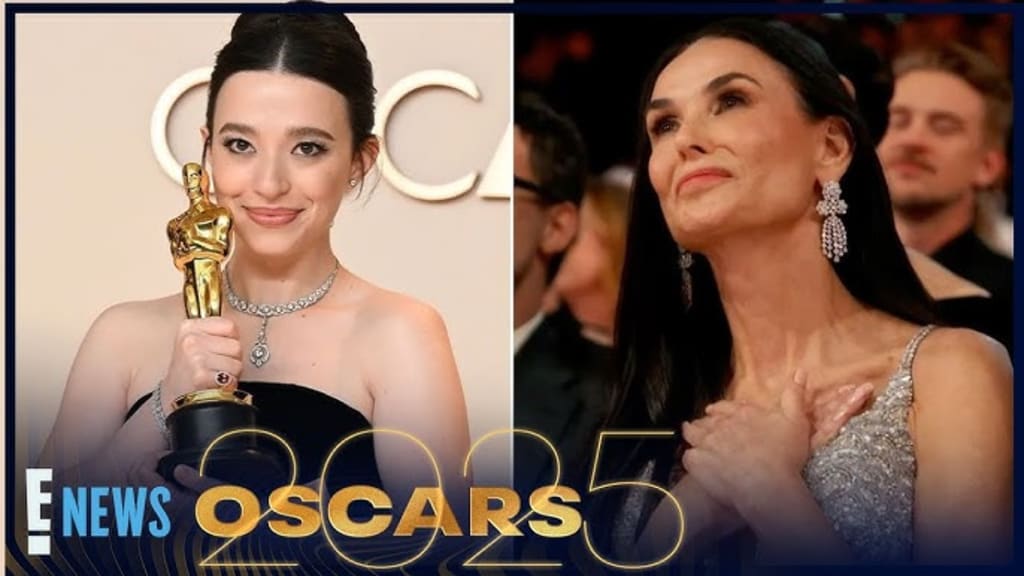
The 96th Academy Awards have come and gone, and as always, they left us with moments of triumph, disappointment, and heated debate. One of the most talked-about topics of the night was Demi Moore's unexpected loss in the Best Actress category to a relative newcomer.
Many expected Moore - who has been a Hollywood powerhouse for decades - to finally take home her first Academy Award after years of strong performances. Instead, the Oscar went to a fresh face, a new arrival on the Hollywood scene, leaving audiences and industry insiders questioning: Why didn't Demi Moore win?
A Career of Overlooked Excellence
Demi Moore's career spans over four decades, marked by iconic performances in films such as Ghost (1990), A Few Good Men (1992), and G.I. Jane (1997). Despite her commercial success and cultural impact, she has never received an Oscar nomination until now, making this year's recognition particularly significant.
Her latest role, which earned her the nomination, was widely regarded as one of her best. It showcased a level of depth and emotional intensity that critics and fans believed made her a frontrunner. Many saw this as a moment of long-overdue recognition-a chance for the Academy to finally honor her contributions to film.
So, why did she lose?
1. The Academy's Preference for Fresh Faces
The Oscars have a long history of awarding new or relatively unknown actors over seasoned veterans. There's something undeniably appealing about a fresh talent delivering a breakthrough performance. It creates a narrative of discovery, which often excites voters more than a well-established actor finally getting their due.
In the past, we've seen similar surprises:
In 2014, Lupita Nyong'o (12 Years a Slave) won Best Supporting Actress over industry veteran Julia Roberts.
In 2007, Jennifer Hudson won over seasoned actresses in her first major film role (Dreamgirls).
In 1987, Marlee Matlin, a complete newcomer, won over four established stars.
This year, the same pattern repeated. While Moore's performance was widely respected, the Academy favored the energy and excitement surrounding the new arrival.
2. The "Career Oscar" Timing
It's common for Hollywood legends to win an Oscar not necessarily for their best performance but as a way to honor their body of work. However, when the Academy gives such an award, it's usually to an actor who has been nominated multiple times before.
Since this was Moore's first nomination, the Academy may have felt less pressure to recognize her just yet. Many believe that if she continues to take on prestigious roles, her time for a "career Oscar" will eventually come.
3. The Academy's Bias Against Certain Genres
Moore's nominated role came from a film that, while critically acclaimed, may not have been in a genre typically favored by the Academy. Over the years, the Oscars have often overlooked performances in genres like action, thriller, and even romantic drama - categories in which Moore has excelled.
While the Academy has shown some progress in recognizing diverse genres, there's still a bias toward more traditional "Oscar-bait" films - typically period dramas, biopics, or deeply emotional indie films. It might have hurt her chances if Moore's performance came from a film outside of those categories.
4. The Power of Oscar Campaigning
Winning an Oscar isn't just about talent - it's also about the politics of campaigning. Studios spend millions on "For Your Consideration" campaigns, with actors attending countless screenings, interviews, and events to win votes.
New arrivals often benefit from the full force of a studio's campaign strategy. When a fresh face delivers a breakout performance, studios push aggressively to position them as the "new Hollywood star." This narrative can be more compelling than honoring a veteran actor, leading to a win for the newcomer.
It's possible that Moore's team didn't campaign as aggressively as her competitor's, which may have cost her votes.
5. Hollywood's Complicated Relationship with Aging Actresses
While Moore remains a major star, Hollywood has long had an issue with giving older actresses their due. There are fewer substantial roles for women over 50, and when they do receive recognition, they often face a different kind of scrutiny than their male counterparts.
The industry still celebrates "comebacks" for older male actors far more than it does for women. Consider how Brendan Fraser and Mickey Rourke were embraced in their return to the Oscars, while actresses of the same generation often have to fight harder for similar recognition.
While Moore's nomination was a breakthrough, it may take longer before the Academy fully honors her with a win.
What's Next for Demi Moore?
Despite the disappointment, this nomination signals that the Academy is finally paying attention to Moore's talent in a new way. Losing to a newcomer doesn't mean she won't win in the future - it simply means her Oscar moment wasn't last night.It's worth mentioning her career will boom and bloom again after the Substance, and she has already signed up for many projects.
Many actresses, from Glenn Close to Annette Bening, have waited decades for their Oscar win. While it can be frustrating, history suggests that if Moore continues choosing strong roles, her long-overdue award could be just a few years away.
For now, fans can celebrate her nomination as a sign that her legacy is still being written - and that Hollywood may yet give her the recognition she deserves.
Final Thoughts: Was It Fair?
Ultimately, awards are subjective, and the Academy's choices don't always align with public opinion. While some will see this as an unfair snub, others will argue that the new arrival deserved the win.
What do you think? Should Demi Moore have won last night, or was the Academy right to reward fresh talent? One thing is certain: the debate will continue, and Moore's name will remain in the conversation for years to come.
About the Creator
Nazgol Rasoolpour
An emerging researcher with a passion for horror narrative. My focus revolves around the captivating subgenres of religious horror and techno horror.
Reader insights
Outstanding
Excellent work. Looking forward to reading more!
Top insight
Expert insights and opinions
Arguments were carefully researched and presented
Keep reading
More stories from Nazgol Rasoolpour and writers in Geeks and other communities.
Scream Queens Don’t Smile: How Horror Actresses Ditched Pretty for Pure Terror
For decades, mainstream cinema - particularly in Hollywood - has imposed rigid beauty standards on actresses. Female leads were expected to appear glamorous even in extreme distress, often compromising the authenticity of their performances. This phenomenon was especially evident in horror films, where women, often cast as the "final girl" or the damsel in distress, were required to scream in terror while still maintaining their attractiveness under the gaze of the camera.
By Nazgol Rasoolpour11 months ago in Geeks
Silver Screen Magic with Mae West
American actress and singer Mae West became a popular film actress during the Great Depression. She started entertaining in vaudeville, then performed on Broadway, and finally went to Hollywood. She signed up with Paramount Pictures and made her debut in the 1932 film “Night After Night.” She also starred in musicals, comedies, and crime dramas. The American Film Institute named her one of the best classic Hollywood actresses.
By Rasma Raisters7 days ago in Geeks
Conformity Gate: The Stranger Things Theory That Refused to Die
When the final episode of Stranger Things dropped on Netflix on New Year's Eve, millions of fans expected closure. Instead, they got chaos—and a viral conspiracy theory that would dominate social media for weeks.
By Md. Nurul Afsar3 days ago in Geeks



Comments
There are no comments for this story
Be the first to respond and start the conversation.