
Scream Queens Don’t Smile: How Horror Actresses Ditched Pretty for Pure Terror
Smudged Mascara, Snot, and Screams: The New Face of Horror

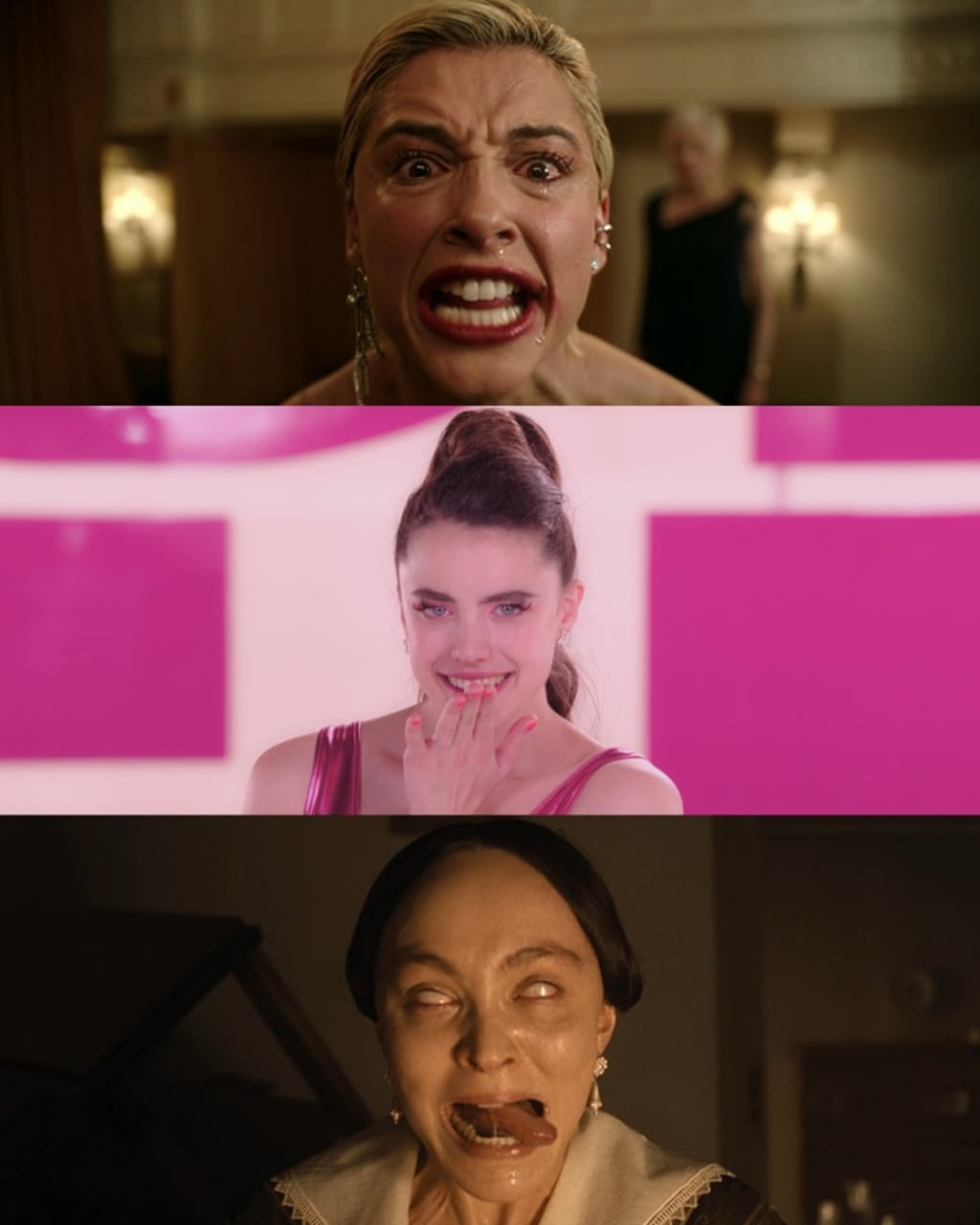
For decades, mainstream cinema - particularly in Hollywood - has imposed rigid beauty standards on actresses. Female leads were expected to appear glamorous even in extreme distress, often compromising the authenticity of their performances. This phenomenon was especially evident in horror films, where women, often cast as the "final girl" or the damsel in distress, were required to scream in terror while still maintaining their attractiveness under the gaze of the camera.
However, in recent years, a decisive shift has occurred. Contemporary horror actors embrace raw, unsettling, and often grotesque performances, prioritizing emotional authenticity over conventional beauty. Films like Smile 2, The Substance, Robert Eggers' Nosferatu, and everything featuring Mia Goth (X, Pearl, Infinity Pool) showcase actresses who fully commit to expressions of fear, disgust, and eerie intensity. This shift enriches the horror genre and has contributed to its massive success in the past decade.
Breaking the Beauty Imperative in Horror
Historically, horror films have objectified women, reinforcing what Laura Mulvey (1975) famously termed the male gaze, where female characters are positioned primarily as objects of visual pleasure rather than active agents of terror. Female leads were expected to remain aesthetically pleasing even in moments of fear.
Yet, actresses like Toni Collette in Hereditary (2018), Sosie Bacon in Smile (2022), and Mia Goth in Pearl (2022) have subverted this tradition. Instead of preserving an image of perfection, they embrace distorted facial expressions, guttural screams, and intense emotional breakdowns that resonate with audiences.
Kathleen Rowe (1995) argued in The Unruly Woman: Gender and the Genres of Laughter that women in comedy have historically been discouraged from physical grotesqueness because it disrupts traditional femininity. The same has been true in horror - until now. Today's actresses push the boundaries of performance, proving that horror is most effective when emotions are raw and unfiltered.
Mia Goth: The Face of Modern Horror
No actress embodies this transformation more than Mia Goth. Her performances in X (2022), Pearl (2022), and Infinity Pool (2023) have redefined what it means to be a horror actress. In Pearl, her infamous eight-minute monologue and final unblinking, maniacal smile - filled with desperation, rage, and delusion - became one of the most unsettling moments in recent horror cinema. She is not concerned with looking beautiful; instead, she fully commits to the grotesque, the horrifying, and the emotionally disturbing.
Goth's ability to tap into pure terror and psychological unease is reminiscent of Collette's performance in Hereditary. Collette's depiction of grief, rage, and supernatural dread - most notably in the dinner scene and the attic sequence - stands as one of the most fearless performances in horror history. Her facial contortions, guttural cries, and sheer intensity demonstrated that true horror does not come from looking "pretty scared" but from immersing oneself in the absolute depths of human agony and fear.
The Rise of Horror Actresses in 2024: Smile 2, The Substance, and Nosferatu
This trend continues with 2024's most anticipated horror films. Smile 2, a sequel to the surprise 2022 hit, promises another round of unsettling, skin-crawling performances where actresses are encouraged to contort their faces in pure dread rather than maintain conventional beauty.
Similarly, The Substance, starring Demi Moore and Margaret Qualley, is rumored to be a grotesque body-horror film that will push its actresses to extreme transformation and terror performances. In Robert Eggers' highly anticipated Nosferatu, Lily-Rose Depp steps into the world of German Expressionist horror, where exaggerated emotions and eerie facial expressions are paramount. If Eggers' past work (The Witch, The Lighthouse) is any indication, Depp and the other actresses involved will be encouraged to abandon restraint in favor of truly chilling performances.
Why This Is a Positive Shift for the Horror Genre
This evolution in horror is a key factor in the genre's current success. Horror has always thrived when it is willing to break conventions, and the industry is finally allowing actresses to prioritize raw emotion over aesthetic perfection. The impact of this shift is evident in the resurgence of horror as both a critically respected and commercially dominant genre.
The embrace of unfiltered, terrifying performances makes horror more immersive and emotionally impactful. Audiences no longer want sanitized fear - they crave the full experience of terror, disgust, and psychological horror. This is why films like Hereditary, Pearl, and Smile have resonated so deeply; they present horror as it should be - ugly, chaotic, and disturbingly real.
Conclusion: The Future of Horror's Leading Women
The actresses of today's horror films prove that beauty is not required for compelling cinema. They are rejecting outdated industry norms and, in doing so, redefining what it means to be a horror icon.
This shift makes for better performances and signals a broader cultural change - one where women in film are no longer required to prioritize aesthetics over artistry. As horror continues to push boundaries, its actresses will be at the forefront, delivering performances that haunt audiences long after the credits roll.
And that, perhaps, is the true beauty of modern horror.
Academic Sources:
Clover, C. J. (1992). Men, women, and chain saws: Gender in the modern horror film. Princeton University Press.
Mulvey, L. (1975). Visual pleasure and narrative cinema. Screen, 16(3), 6–18.
Rowe, K. (1995). The unruly woman: Gender and the genres of laughter. University of Texas Press.
Wolf, N. (1990). The beauty myth: How images of beauty are used against women. HarperCollins.
Films Mentioned:
Hereditary (2018), dir. Ari Aster.
Pearl (2022), dir. Ti West.
X (2022), dir. Ti West.
Infinity Pool (2023), dir. Brandon Cronenberg.
Smile (2022), dir. Parker Finn.
Smile 2 (Upcoming, 2024), dir. Parker Finn.
The Substance (Upcoming, 2024), dir. Coralie Fargeat.
Nosferatu (Upcoming, 2024), dir. Robert Eggers.
About the Creator
Nazgol Rasoolpour
An emerging researcher with a passion for horror narrative. My focus revolves around the captivating subgenres of religious horror and techno horror.
Reader insights
Outstanding
Excellent work. Looking forward to reading more!
Top insight
Expert insights and opinions
Arguments were carefully researched and presented
Keep reading
More stories from Nazgol Rasoolpour and writers in Geeks and other communities.
The Challenge of Public Legal Disputes: Examining Blake Lively and Justin Baldoni's Case in a Post-#MeToo Era
In the era of heightened awareness around workplace misconduct and gender dynamics, public legal disputes have become highly charged events, often attracting widespread scrutiny before facts are fully established. The ongoing legal battle between Blake Lively and Justin Baldoni - centered on allegations of harassment, workplace retaliation, and reputational harm - has sparked conversations about the intersection of justice, public perception, and the lingering impact of the #MeToo movement.
By Nazgol Rasoolpourabout a year ago in Geeks
Marvel Zombie
The last entry into our 2025 superhero projects catalogue is Marvel Zombies. This was a show that was anticipated by absolutely no one and it disappeared from the public consciousness as quickly as it was released. There was nothing special about the project that made it a must see, or a must remember. In fact if anything it's a must forget.
By Alexandrea Callaghan25 days ago in Geeks
The 48 Laws of Power
The 48 Laws of Power by Robert Greene is one of the most talked-about and controversial books on power, influence, and human behavior. First published in 1998, the book has gained a massive following among readers interested in psychology, leadership, strategy, and personal success. Loved by some and criticized by others, this book leaves a strong impression and sparks deep discussion about how power works in the real world.
By John Smith6 days ago in Geeks
Thoughts on Vocal and the way the world is
"Death cannot stop true love, only delay it." – Wesley in The Princess Bride. I decided to come back to Vocal on a very cold and dark night at the end of December. I had been, and still am, convalescing from a horrible staph infection that had gone misdiagnosed for months. This, paired with the increasing challenges of being healthy, making the best choices for my co-parented child, being a wife, and being a director at a new job, was a lot to manage.
By Jazzy 2 days ago in Confessions


Comments
There are no comments for this story
Be the first to respond and start the conversation.