

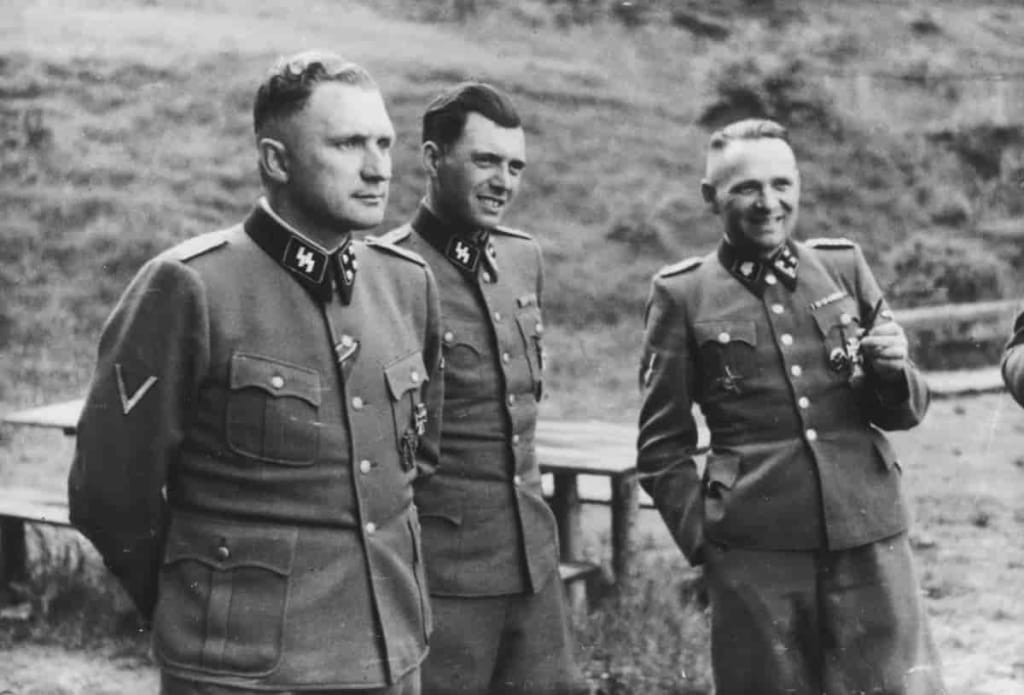
Josef Mengele (1911–1979) was a German SS officer and physician infamous for his role in the Holocaust. Born in Günzburg, Germany, Mengele studied medicine and anthropology at university, eventually earning his doctorate in 1938. His career took a dark turn when he joined the Nazi Party in 1937 and the SS in 1938, a year before World War II broke out.
Mengele is most notorious for his work at Auschwitz concentration camp, where he served as the camp’s chief physician from 1943 to 1945. He became known as the “Angel of Death” due to his cruel medical experiments on prisoners, particularly twins. Mengele subjected his victims to horrific and inhumane tests, including injecting them with diseases, performing surgeries without anaesthesia, and conducting other forms of brutal mutilation. His twin experiments were intended to further Nazi theories on racial purity, but they resulted in the death or permanent injury of thousands of children and adults.
Plot
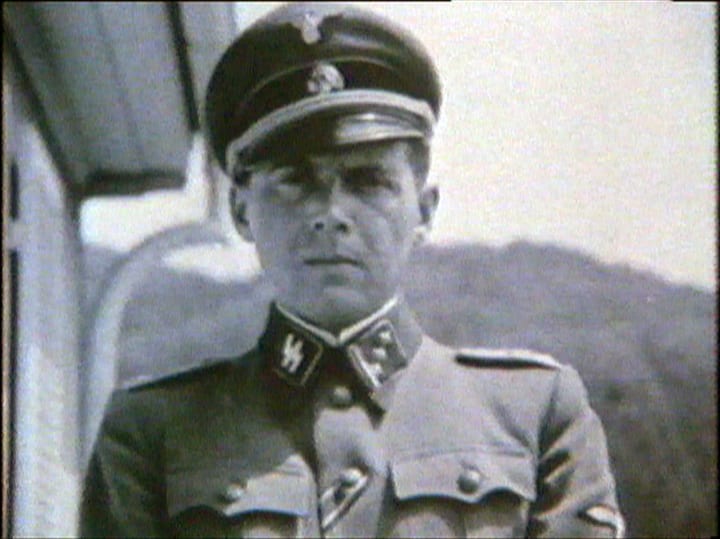
Mengele is one of the most reviled figures in history, and his work with the Nazis is a chilling example of the extreme lengths to which ideology can corrupt medical science and ethics. Born in 1911 in Günzburg, Germany, Mengele was a medical student and later a trained physician, but his career took a sinister turn when he joined the Nazi Party in 1937. His belief in the Nazi ideology, particularly the emphasis on racial purity and eugenics, would guide his actions in ways that left an indelible mark on history.
Mengele’s most notorious period of activity began in 1943 when he was appointed as the chief physician at Auschwitz concentration camp, one of the largest and most infamous extermination camps operated by Nazi Germany. In this capacity, he oversaw the selection of new arrivals at the camp, determining who would live and who would be sent to the gas chambers. But it was not merely his role in the mass murder of Jews, Romani people, disabled individuals, and others deemed "undesirable" that earned him his reputation. Mengele became notorious for his "medical" experiments, which were often brutal, unethical, and conducted without any regard for human life or dignity.
One of Mengele’s primary areas of interest was the study of twins. He believed that studying twins could offer insight into the effects of heredity on physical and mental characteristics. His experiments were horrific and marked by sadistic cruelty. Mengele would often select sets of twins upon their arrival at Auschwitz, subjecting them to a wide range of painful procedures. These included injecting them with deadly diseases such as typhus or malaria to observe their progression, as well as subjecting them to surgeries without anaesthesia. He conducted various amputations, such as removing limbs or organs, sometimes simply for the sake of comparison. In many cases, one twin would be killed for dissection or experimentation, while the other was left to suffer in pain, often for extended periods, before being killed.
Mengele’s experiments were carried out in the name of advancing the Nazi goal of creating a "racially pure" society. His work was rooted in the belief that certain races were biologically inferior, a dangerous and scientifically baseless notion that he used to justify his monstrous acts. He was particularly interested in studying the differences between Jewish, Romani, and Aryan individuals, believing that "racial purity" could be achieved by eliminating what he saw as the "genetic flaws" in those he considered "undesirable." Mengele’s experiments were not only cruel but also scientifically meaningless, as they were based on pseudoscientific theories and a complete disregard for the ethical standards of medical practice.
In addition to his experiments on twins, Mengele also conducted barbaric medical procedures on other prisoners, including women, children, and the disabled. He performed sterilisation procedures, sometimes without consent, and would carry out invasive surgeries to see how individuals responded to infections or physical trauma. Some victims were kept alive after these procedures for the sole purpose of studying their suffering. Mengele’s actions were a perversion of medical knowledge and a stark violation of the Hippocratic Oath to do no harm.
Into the Theories
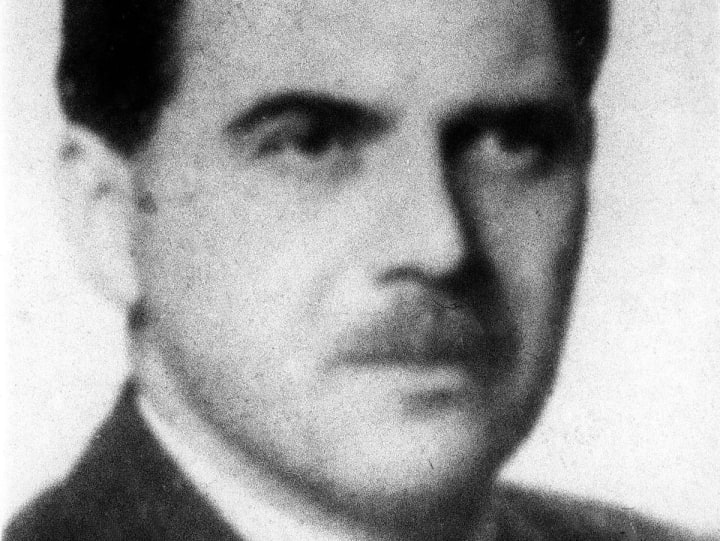
Mengele’s Involvement in the Nazi Network and the "Ratlines"
One theory suggests that Mengele was actively involved in helping other high-ranking Nazis escape Europe through the so-called "Ratlines," a network of routes that enabled Nazis and collaborators to flee to South America. These ratlines were often facilitated by sympathetic Catholic organisations, which, in some cases, provided false documentation and safe houses to former SS officers. According to this theory, Mengele’s escape was part of a larger operation designed to hide and protect Nazi war criminals.
While in South America, Mengele is believed to have initially lived in Argentina under a false identity, supported by other former Nazis who had settled there. Some accounts suggest that Mengele played a role in helping other war criminals escape capture, working with Nazi sympathisers to keep their whereabouts hidden. He was allegedly in contact with figures such as Adolf Eichmann, the architect of the Holocaust, who was eventually captured by Israeli agents in 1960, and other fugitives from the Third Reich. Despite this, Mengele himself remained elusive and avoided detection for many years. His role in the ratlines is still debated by historians, but many agree that his flight from Europe would have been supported by this underground network.
Mengele’s Life in Brazil and His Search for Medical Work
Another theory focuses on Mengele’s attempts to live a quiet, obscure life in Brazil, where he reportedly lived under the name “Josef Mengele.” According to this theory, Mengele sought to establish a new identity and attempted to escape the notoriety of his past, blending in with local communities in the remote Brazilian regions. For several years, it is believed that Mengele lived in the towns of São Paulo and then in the rural areas of the state of São Paulo, where he might have worked in various medical roles, possibly as a doctor.
Mengele was reportedly able to secure employment at a medical clinic, where he continued to practice medicine despite his unspeakable past. It is said that he tried to conceal his identity, but his connections to the Nazi regime eventually caught up with him. The notion that Mengele worked as a physician in Brazil, using his skills to maintain a low profile while trying to distance himself from the atrocities he had committed, is bolstered by reports of his moving between small towns and avoiding large cities where he might be recognised. However, this theory is complicated by the lack of concrete evidence that Mengele actually continued his medical career after the war.
Mengele’s Alleged Involvement in Experimental Research and Possible Return to Medical Pseudoscience
A third theory posits that Mengele continued his pseudoscientific experiments in South America, continuing the twisted legacy of his Nazi-era medical research. Some believe that he may have worked in private research laboratories or for South American governments, continuing to perform experiments based on his earlier eugenics theories. Mengele’s experiments at Auschwitz, which focused on genetic research, racial studies, and the creation of “racial purity,” were driven by dangerous Nazi ideology, and it is possible that he continued his work along similar lines after the war.
This theory is supported by claims that Mengele was in contact with former colleagues from the Nazi regime who shared his beliefs and that he used his position as a medical doctor to advance his personal and ideological goals. Some speculate that he may have worked for South American regimes, particularly in the context of Argentina’s military dictatorship, which had connections with former Nazi officials. However, evidence of Mengele’s continued involvement in such activities remains sparse, and much of this theory is based on conjecture and the ongoing search for his whereabouts.
Why It's Shifty
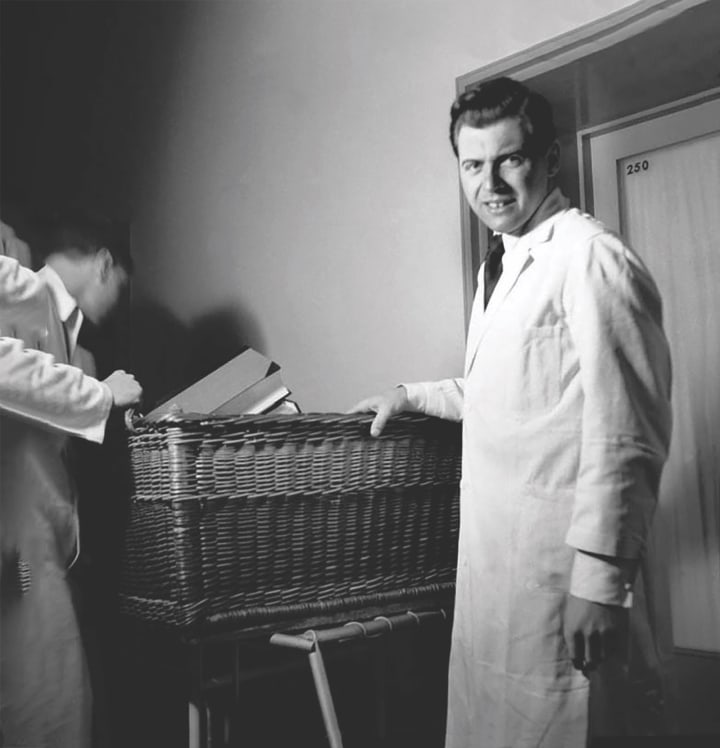
Josef Mengele’s escape from Nazi Germany after World War II is deeply controversial due to the manner in which he evaded justice and the broader implications of his flight for post-war accountability. After committing horrific crimes at Auschwitz, Mengele was considered one of the most wanted Nazi war criminals. However, he managed to escape capture by fleeing to South America in 1949, aided by a network of former Nazis and sympathisers known as the “Ratlines.” These secretive routes, facilitated by some members of the Catholic Church and other right-wing organisations, helped many war criminals, including Mengele, evade capture.
Mengele’s ability to escape prosecution for his brutal experiments and atrocities reflects the failures of the Allied post-war justice system, which struggled to track down and prosecute numerous high-ranking Nazi officials. His escape is controversial because it highlights the post-war reluctance to fully pursue justice for those responsible for war crimes. The fact that Mengele lived in hiding for decades and eventually died in Brazil in 1979 without facing trial deepens the sense of injustice.
Conclusion
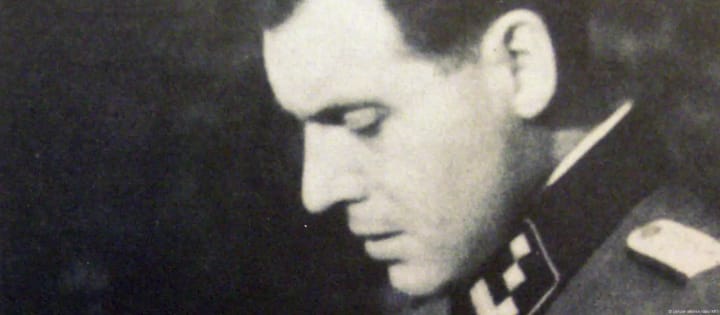
The three main theories regarding Josef Mengele’s life in South America each offer a different view of his actions after the war, but none are definitively proven. His involvement in the Nazi escape networks, his efforts to hide and live quietly in Brazil, and the possibility that he continued his horrific research all provide plausible explanations for his long evasion of justice. Despite these theories, Mengele’s ultimate fate remains shrouded in mystery, with his death in 1979 from a stroke in Brazil only adding to the enigmatic nature of his post-war life. Whether he continued his medical work, lived as a fugitive, or remained entangled in the shadows of the Nazi network, his time in South America remains one of history’s darkest and most perplexing chapters.
Next Week: King Arthur
About the Creator
Annie Kapur
I am:
🙋🏽♀️ Annie
📚 Avid Reader
📝 Reviewer and Commentator
🎓 Post-Grad Millennial (M.A)
***
I have:
📖 280K+ reads on Vocal
🫶🏼 Love for reading & research
🦋/X @AnnieWithBooks
***
🏡 UK
Keep reading
More stories from Annie Kapur and writers in Geeks and other communities.
Book Review: "Seven Myths About Money" by Rob Dix
I have no idea why I'm reading books about money and investment but I hope this doesn't become a hyperfixation of mine because that would be really annoying. I'd turn into those weirdos online who swear by books by big investment firms and talks by Jordan Belfort - I would become insufferable and so, I'm making sure it doesn't become a whole thing. Rob Dix's book though has been recommended to me over and over again by Amazon and so, I'm going to take a dive into it and see what I think. Not too long and not too complex, the book itself seems like a bit of fun - but what does it discuss really?
By Annie Kapur10 months ago in Geeks
Silver Screen Magic with Mae West
American actress and singer Mae West became a popular film actress during the Great Depression. She started entertaining in vaudeville, then performed on Broadway, and finally went to Hollywood. She signed up with Paramount Pictures and made her debut in the 1932 film “Night After Night.” She also starred in musicals, comedies, and crime dramas. The American Film Institute named her one of the best classic Hollywood actresses.
By Rasma Raisters7 days ago in Geeks
Ludacris and Nelly draw backlash over bookings at MAGA-coded music festival
Ludacris and Nelly headlining a mostly right-wing event is good for them. It’s also great for the genre of hip hop. The two rap veterans have showcased their talents on other stages. Why can’t they perform for mostly MAGA folks and grab that bag?
By Skyler Saunders5 days ago in Beat



Comments (2)
I have read a little about the 'Ratlines', and one disturbing fact is that he was almost caught before his escape. History is not about fairness.
Like this Story