
What I've Seen at the 2022 Slamdance Film Festival
The mainstream is at Sundance while I am at Slamdance in search of hidden gems.


The Slamdance Film Festival takes place in January every year as an alternative to the more mainstream and industry friendly Sundance Film Festival. Slamdance is the punk rock to the pop music of Sundance and that is reflected in the always eclectic lineup at Slamdance. For the first time in my career I am doing some virtual coverage at the Slamdance Film Festival and I have seen some good and some great new emerging artists as well as at least one long time artist who is following his muse to a place where mainstream audiences are unlikely to follow.
With that being said, here’s what I have seen at the Slamdance Film Festival 2022…
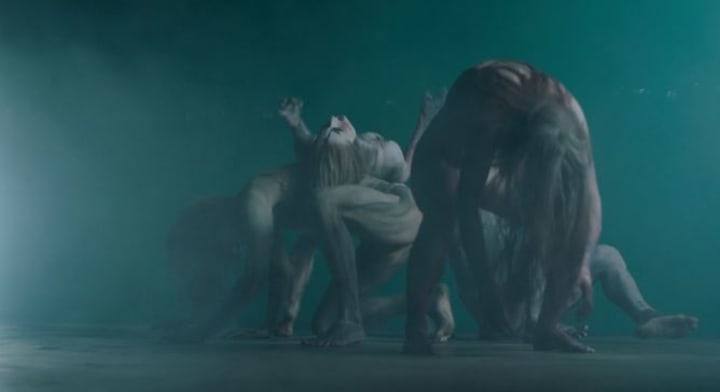
The Severing - Directed by Mark Pellington
Veteran director Mark Pellington is known for his exceptional music video work and a feature film resume that is filled with hits and misses. Regardless of how you feel about movies like Arlington Road or The Mothman Prophecies, you cannot say Mark Pellington’s style and personality are boring. Pellington takes big swings, even in mainstream thriller films, and I certainly respect his willingness to take big risks.
The Severing is a very different kind of risk. Where in a mainstream thriller you will often have the cushion of genre fans who will turn out for just about anything, a mainstream director like Mark Pellington putting out something like The Severing is like working without a net. The Severing is a modern dance, industrial flavored, art piece about grief taking on a twisting and turning physical form. Dancers, choreographed by the brilliantly talented Nina McNeeley, were given minimal instruction and told to interpret their grief through movement. The result is a hauntingly beautiful experiment.
Pellington is the director but he’s given McNeeley and Director of Photography, Ann Evelin Lawford, whom he met via her remarkable Instagram account, a great deal of freedom to bring their personal stamp to The Severing with McNeeley leading the dancers and Lawford composing gorgeous, minimalist camera set-ups that brilliantly and beautifully capture the extraordinary, raw, and visceral dancers and their almost painful, wrenching movements. These movements ache with emotion. If you’ve ever lost someone and tried desperately to hold your emotions inside you will recognize a little of your internal struggle in the external twists, turns and agonized expressions of these brilliant dancers.
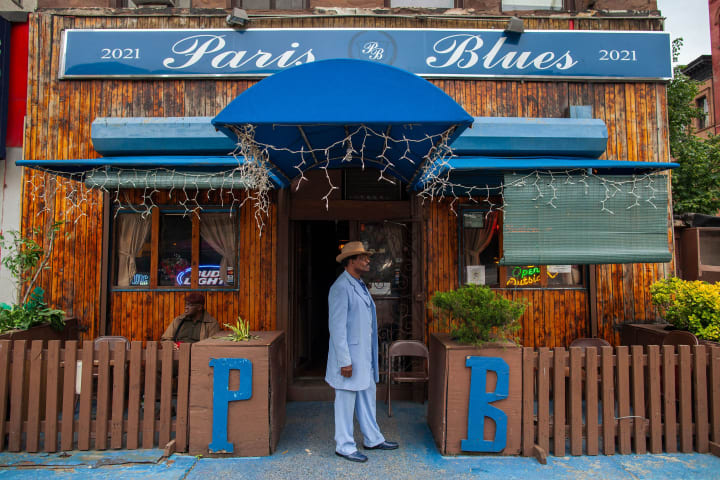
Paris is in Harlem Directed by Christina Kallas
The history of racism in America has a number of strange tentacles that still extend to today. One of those oddball tentacles was finally cut off in 2017 when New York City finally ended a law that prohibited dancing in very specific public spaces. The law might seem to have roots in some strange form of puritanism that somehow stayed alive in New York City for over a century but the reality has no root in religion. This law was really about targeting black owned establishments with punitive fines for allowing people to dance in their nightclub.
The movie Paris is in Harlem is set on the last day of this ludicrous law as a wide array of characters are navigating their lives around the changing history and rules of a brand new, more open and inclusive society. This includes a Film Professor who faces losing his career over his cavalier use of ‘The N Word’ in a class on the work of Spike Lee, another Professor facing losing her career over an allegation that she sexually harassed a male student, and a Crash-like group disparate characters whose lives play out among the unfolding of those stories.
You can certainly see the dual influence of Mike Figgis and Paul Haggis in the sprawling cast and interlocking stories of Paris is in Harlem as well as in director Christina Kallas’s splitting of the frame into multiple perspectives a la Figgis’ Timecode. Kallas uses the split screen very effectively as it keeps the pace up and keeps the eye moving across the frame. An otherwise rather stationary series of conversations feels even more alive in this style and it's one of the many strengths of Paris is in Harlem which was also mostly improvised by a cast that mixes actors and real life New York Jazz club denizens.
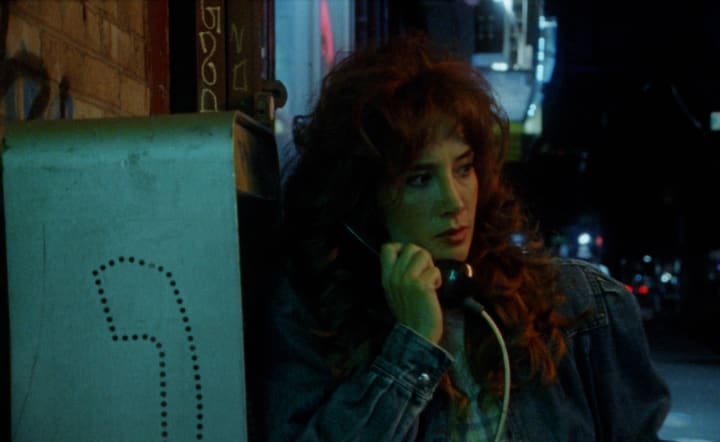
Chiqui Directed by Carlos Cardona
Chiqui has been, sadly, my least favorite experience at Slamdance. This 30 minute short film about a couple moving from Colombia to New Jersey in the mid to late 1980s features miserable characters enacting miserable scenarios. The main couple, Chiqui and Carlos, are an insufferable pair. Chiqui is obnoxious and willing to insult anyone, especially Carlos but also the people offering help for the couple who have no job, no place to stay and a baby on the way. Carlos is a spineless mama’s boy who’d seemingly rather still be in Colombia than America while Chiqui is obnoxious and delusional regarding her prospects for prosperity in America.
Spending time with these characters is deeply unpleasant. Their bickering isn’t funny or dramatic, it’s irksome. I’m not saying characters have to be likable but they should hold some kind of appeal beyond their mere existence. The character of Chiqui is unique but that isn’t nearly enough to make me want to watch her, even in a short film. Carlos barely exists with his mousy shyness and deer in the headlights emptiness.
The best thing about Chiqui is the cinematography which looks incredible. The film is set in 1987 and the short film looks as if it were transferred from a VHS of the time period. The look gives an authentic quality to the story but it can’t solve the problems of these insufferable lead characters. Perhaps the artistry on display is a better indication of the future of director Carlos Cardona and the story is merely an excuse to show his mastery of period visuals.
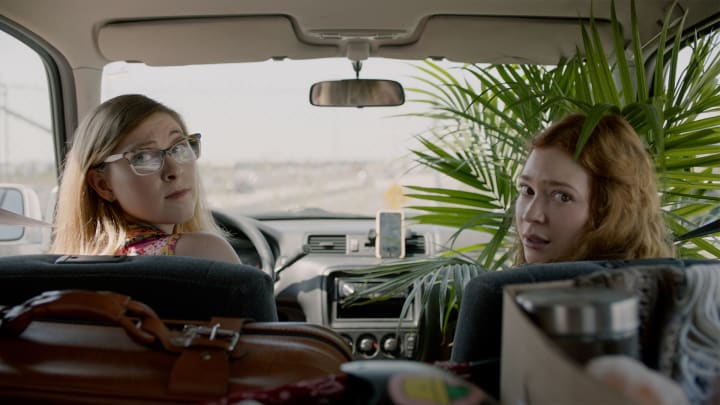
Retrograde
Retrograde is a movie about obsession. When Molly (Molly Reisman) gets a traffic ticket she becomes obsessed with getting the violation reversed. Molly is convinced that the officer in question had given her a ticket over a misunderstanding. Molly was helping her new roommate move and as they were returning to their L.A rental home, Molly got pulled over and ticketed. Since it happened Molly has not been able to let it go. It’s not about the $300.00 fine, she has a job and is capable of paying the fine, it’s a strange sort of principle that Molly can’t let go of.
The ticket becomes such a distraction that Molly begins falling behind at work, she starts falling out with friends, and she spends all of her time obsessing over when her next hearing might be. It’s weirdly fascinating. I was reminded of an incredible bit Mike Birbiglia did about an accident he was in in Los Angeles and how he nearly wrecked his entire life and career trying to get justice from the person who t-boned his rental car. Retrograde isn’t nearly as funny as Birbigs but the examination of self-involved obsession is similarly compelling in Retrograde.
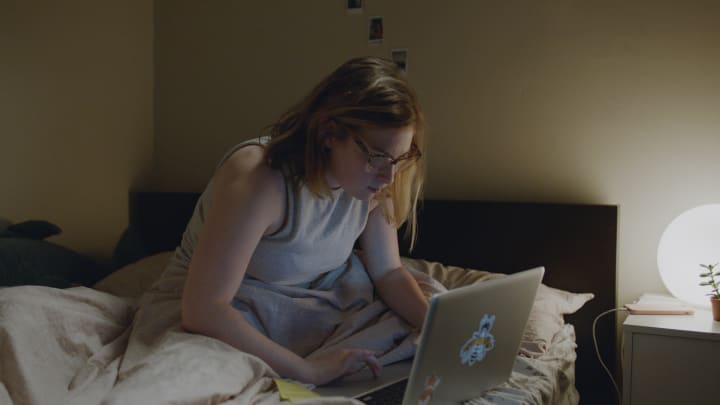
Writer-Director Adrian Murray never lets you know what drives Molly. It’s up to us to wonder about what drives someone like Molly to such self-destructive extremes and it makes for a very involving story. In the wrong hands, a character like Molly could be insufferable but Molly Reisman is just the right combination of laid back slacker energy and conspiracy theory obsessive who can do nothing but talk about their hobby and why they think it is so interesting. Maybe that’s the key, maybe Molly just needs a hobby.
What I loved about Retrograde is the challenge that writer-director Adrian Murray set for themselves. Making a movie about a woman obsessed with getting a ticket overturned creates many challenges in how you are going to draw that story out with incident, dialogue and resolution and I was consistently surprised with how Murray kept this story going based solely on Molly’s unending resolve. I may have been frustrated with Molly not simply taking L, she even gets the fine reduced and still can’t give up her quest, but I still wanted to see how this was going to play out. Molly has a Larry David quality to her where you don’t feel too bad when bad things happen to her because those things tend to be her fault.
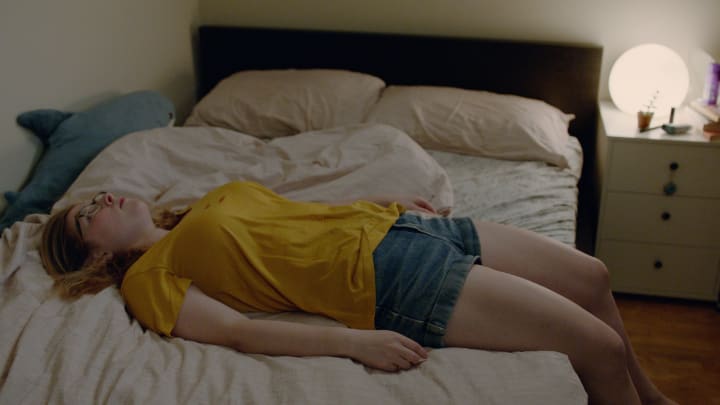
Would I characterize Molly as a ‘Karen?’ Perhaps, she does carry that cultural shorthand of the entitled, often-white, conception of narcissistic entitlement. That might explain why she doesn’t engender sympathy as much as she engenders schadenfreude. Molly is dedicated to a cause that no one else is dedicated to or even relates to. She borders on belligerent when things aren’t going as she planned. Yeah, those are Karen-like traits.
Plus, Molly actually makes you root for law enforcement to prevail over her. That’s certainly a trait common to the cultural conception of the Karen. Thus seeing her come up short has a compelling, even entertaining quality that Retrograde thrives on. Molly is reminiscent of Larry David, a sort of anti-protagonist who, though you don't root for them, you don't hate them either. Molly has just enough human and relatable qualities that she can be Karen and not make us completely hate her entitled, obsessive qualities.
About the Creator
Sean Patrick
Hello, my name is Sean Patrick He/Him, and I am a film critic and podcast host for the I Hate Critics Movie Review Podcast I am a voting member of the Critics Choice Association, the group behind the annual Critics Choice Awards.
Keep reading
More stories from Sean Patrick and writers in Geeks and other communities.
Movie Review: 'Licorice Pizza' is a Glorious Slice of 70's Life
Licorice Pizza stars Cooper Hoffman as Gary Valentine, an enterprising 16 year old with a restless mind. Gary is on angle in every moment of his life having broken into Hollywood as a child actor and parlayed that into other enterprises. As Licorice Pizza plays out we watch Gary find opportunities at every turn due to his immense charisma and curiosity. It’s Gary’s fearless, self promoting confidence, that catches the attention of Alana while she’s working as an assistant to a photographer for Gary’s school pictures.
By Sean PatrickExclusive • 4 years ago
Marvel Zombie
The last entry into our 2025 superhero projects catalogue is Marvel Zombies. This was a show that was anticipated by absolutely no one and it disappeared from the public consciousness as quickly as it was released. There was nothing special about the project that made it a must see, or a must remember. In fact if anything it's a must forget.
By Alexandrea Callaghan26 days ago in Geeks
Hamnet (2025)
Hamnet is an historical drama, directed by Chloe Zhao, adapted from the 2020 novel by Maggie O’Farrell. It is an imagined, fictionalised account of Agnes Hathaway’s life with William Shakespeare, with the action centred on the death of their son from the bubonic plague. It has received critical success and Jessie Buckley recently won the Golden Globe for Best Actress in a Drama.
By Rachel Robbins7 days ago in Geeks



Comments
There are no comments for this story
Be the first to respond and start the conversation.