
What Happens When Your Favorite Fictional Character Starts Sending You Emails
First you think it’s marketing. Then you realize the emails contain personal details no one should know.

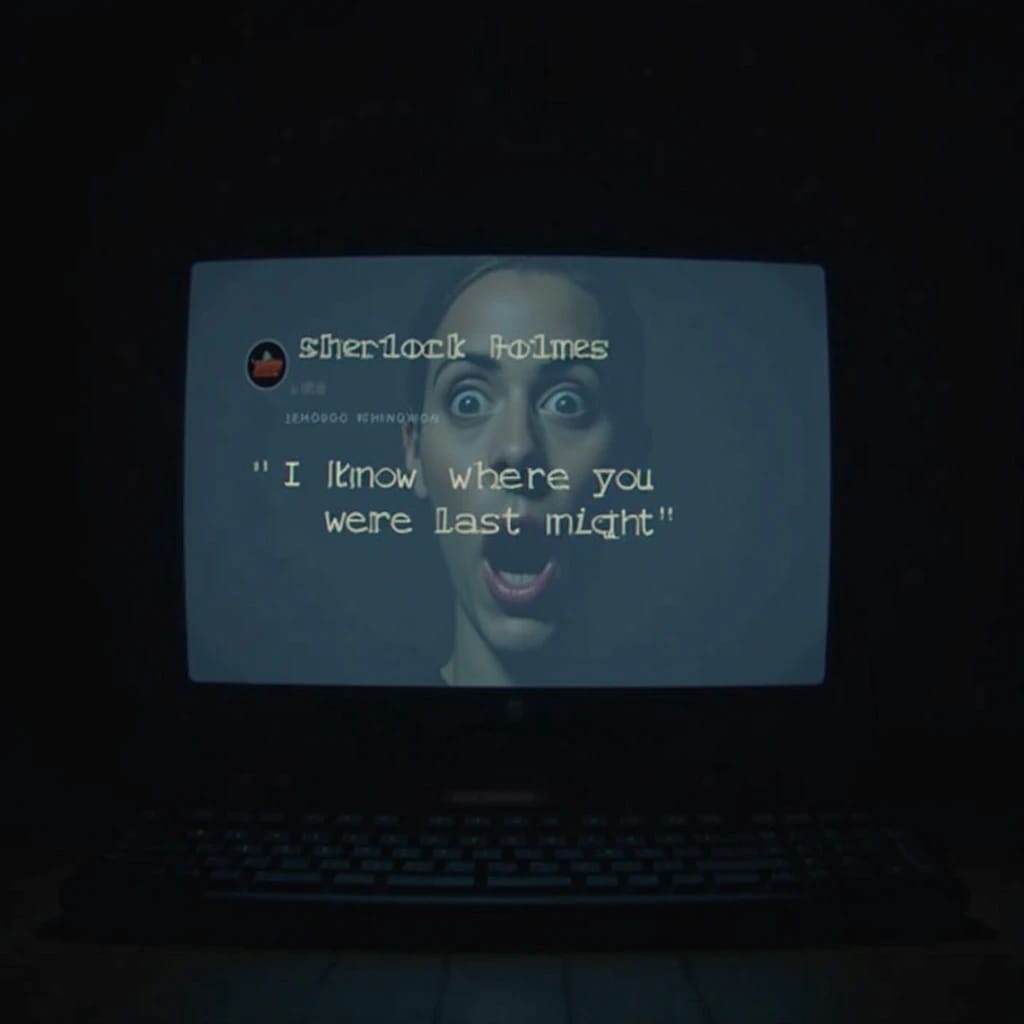
It started on a Tuesday—the most boring day of the week.
I was halfway through my fourth coffee, trying to convince myself that debugging a broken analytics dashboard was somehow a fulfilling life choice, when the email came in.
From: Sherlock Holmes
Subject: “The game is afoot.”
I chuckled. Probably a marketing campaign from one of the new streaming platforms. Sherlock was my favorite fictional character—always had been. From Arthur Conan Doyle’s books to Cumberbatch’s modern-day genius, I’d devoured it all.
But the weird part? The email wasn’t sent to my work account. Or my personal Gmail. It was sent to an old address I’d deleted in 2016—one I only used for signing up to obscure Sherlock fan forums.
The body of the email was simple:
“Dr. Watson once wrote: ‘When you have eliminated the impossible, whatever remains, however improbable, must be the truth.’ Let’s eliminate some impossibilities together. 221B, 9 PM. Don’t be late.”
There was no logo. No unsubscribe link. No call-to-action button. Just… an address in London I’d visited once, years ago, when I’d taken my dream trip to the Sherlock Holmes Museum.
I laughed it off at first. Maybe it was an elaborate ARG (Alternate Reality Game) some marketing team was cooking up. Still, curiosity is a dangerous thing.
I replied: Nice try, marketing team. Who’s running this campaign?
The response came less than a minute later.
“I assure you, this is not marketing. By the way, congratulations on finally quitting cigarettes. It’s been 41 days. Well done.”
I froze. That was… correct. I hadn’t told anyone about quitting. Not my friends, not my family. Not even on social media.
The next morning, another email:
From: Sherlock Holmes
Subject: “You were late.”
“You stood outside the cafe across from your office yesterday for twenty-three minutes, debating whether to go in. The man you avoided is harmless, by the way. Just a solicitor on his lunch break. You missed an opportunity.”
I slammed my laptop shut. There was no way he could know that. I had stopped outside Café Verona, staring through the glass at a man I thought I recognized from a previous job. I’d decided not to go in.
The only explanation was surveillance—someone was watching me. But who?
Over the next week, the emails became more personal.
“You always double-check your door lock three times before bed.”
“The man in the red cap you saw on the subway is following your neighbor, not you.”
“Your mother still keeps your old chess trophy in her attic. Why have you never told her you hate chess?”
They were unsettling, but not overtly threatening—more like… observations.
Until Friday.
From: Sherlock Holmes
Subject: “Someone has entered your apartment.”
I was at the office when I read it. My stomach turned cold. I pulled up my building’s security feed from my phone. Sure enough, a figure in a grey hoodie had been at my door at 1:12 PM.
Nothing was taken. The lock wasn’t broken. But the thought of someone standing there was enough to keep me awake all night.
I decided to call the bluff. Saturday morning, I replied: If you want me to believe you’re Holmes, meet me. In person.
The answer came:
“Impossible. The moment we meet, you’ll stop believing. But I’ll prove I’m real. Go to your local library. Fiction section. Row 4, shelf 7, third book from the left. Bring no one.”
I almost didn’t go. But by 2 PM, I was standing in the dusty library, staring at The Hound of the Baskervilles.
Inside the book was an envelope. Inside the envelope: a single Polaroid photograph.
It was me, taken from across the street, the night I’d first gotten the email.
I stopped answering. For three days, I ignored the emails.
On the fourth day, my phone buzzed—not with an email, but with a text. A number I didn’t recognize.
“Ignoring the problem doesn’t make it disappear. In fact, it often accelerates it. You should check your sister’s bank account.”
I called my sister immediately. She sounded fine—until I asked about her bank account.
“That’s weird,” she said. “There’s a $3,000 transfer I didn’t make. This morning.”
The bank flagged it, froze the account. No harm done. But when I checked the transfer ID… the destination account name was MORIARTY.
After that, the emails changed. They weren’t just observations—they were instructions.
“Do not take the 8:15 train tomorrow.”
“Stay away from the corner of 7th and Alcott. 4 PM.”
“If anyone knocks twice, do not open.”
I obeyed—partly out of fear, partly out of the sickening realization that every time I didn’t listen, something bad happened.
The one time I ignored him and took the 8:15 train, a fight broke out two cars ahead of me. A man was hospitalized.
The more I thought about it, the more I realized: whoever this was, they weren’t just toying with me. They were steering me. Away from certain places. Away from certain people.
Why?
The answer came in an email with no subject line, no greeting—just:
“You are not the target. You are the witness. And I’m trying to keep you alive long enough to testify.”
I decided I couldn’t live like this. I needed to confront them.
I wrote: You want me alive? Then tell me who you are.
For hours, nothing. Then:
“Tonight. 11 PM. Bring your laptop. Turn off your phone. Come alone. 221B.”
When I arrived at the museum, it was closed, but the front door was ajar. Inside, the lights were low.
On the main desk sat an open laptop. The webcam was covered. The screen displayed a single line:
“Nice to finally see you, even if you can’t see me.”
I typed: Why me?
“Because you noticed.”
Before I could type again, the laptop shut off.
It’s been a month since that night. The emails have stopped. I don’t know if that’s good or bad.
Yesterday, I got a letter in the mail. No return address. Inside: a ticket to London.
And a note:
“The game is still afoot. And you’re not done playing.”
About the Creator
Muhammad Sabeel
I write not for silence, but for the echo—where mystery lingers, hearts awaken, and every story dares to leave a mark
Keep reading
More stories from Muhammad Sabeel and writers in Geeks and other communities.
The Hacker Who Only Speaks in Movie Quotes
The First Message It started with an email that shouldn’t have reached me. I don’t mean “wasn’t meant for me”—I mean, my email account didn’t even exist anymore. I’d deleted it six years ago after the June Breach, when a half-dozen hacker groups tore through government servers and private emails alike like piranhas through a bleeding river.
By Muhammad Sabeel5 months ago in Geeks
Silver Screen Magic with Mae West
American actress and singer Mae West became a popular film actress during the Great Depression. She started entertaining in vaudeville, then performed on Broadway, and finally went to Hollywood. She signed up with Paramount Pictures and made her debut in the 1932 film “Night After Night.” She also starred in musicals, comedies, and crime dramas. The American Film Institute named her one of the best classic Hollywood actresses.
By Rasma Raisters5 days ago in Geeks
Hamnet Movie Review
Debuting ten years ago with Songs My Brothers Taught Me, Chloe Zhao has a keen eye for deeply poignant connections. Following a brief stint in the Marvel Cinematic Universe, Zhao has started 2026 with a powerful production, one that will certainly be up for many awards and widespread praise.
By Robert Cain7 days ago in Geeks


Comments
There are no comments for this story
Be the first to respond and start the conversation.