
What Are the Unique Challenges of Collecting and Annotating Neuromonitoring Data?
Navigating the Complexities of Acquiring and Labeling Neuromonitoring Data

Collecting and annotating neuromonitoring data presents a distinct set of challenges due to the complexity, sensitivity, and variability of neural signals. The process requires meticulous handling, precise labeling, and ethical considerations to ensure accuracy and reliability.
Below are some key challenges:
1. Complexity of Neuromonitoring Data
- Neural signals are highly intricate, requiring advanced techniques to capture and interpret.
- The data comes in multiple formats, including EEG (electroencephalography), EMG (electromyography), and MEG (magnetoencephalography), each requiring specialized expertise and distinct processing methods.
- Raw neural signals must be pre-processed to remove noise and artifacts before they can be meaningfully annotated.
- The complexity of signal variations makes automated annotation difficult, necessitating a blend of manual and AI-driven approaches.
"The brain is like a symphony, and understanding it requires capturing every note with precision." — Neuroscientist Dr. Michael Gazzaniga
2. Variability in Neural Signals
- No two individuals have identical neural patterns, making data standardization a challenge.
- Neural signals fluctuate based on several factors, including age, cognitive load, medication, and even external environmental influences.
- The way signals are recorded—electrode placement, signal amplification, and recording duration—can introduce inconsistencies in data.
- High inter-individual variability means that AI models trained on one dataset may not generalize well to another, requiring robust data annotation methodologies.
3. Data Volume and Storage Issues
- Neuromonitoring generates massive datasets, sometimes spanning terabytes, requiring efficient storage and retrieval solutions.
- Processing real-time neural data requires high computational power, with advanced cloud-based or on-premise GPU systems.
- Data compression methods must be applied carefully to avoid loss of crucial signal information.
"Big data is not about data—it's about insights." — Geoffrey Moore, Author and Consultant
4. Noise and Artifacts in Data Collection
- External interferences, such as muscle movement, eye blinks, or electrical noise, can distort neural signals.
- Motion artifacts, particularly in ambulatory monitoring settings, make data annotation challenging.
- Data cleaning and artifact removal require advanced signal processing algorithms to separate genuine neural signals from unwanted noise.
- Ensuring high signal-to-noise ratio (SNR) is critical for meaningful data interpretation and annotation.
5. Ethical and Privacy Concerns
- Neuromonitoring data is highly sensitive, as it can reveal personal cognitive states, mental health conditions, and neurological disorders.
- Strict compliance with data privacy regulations (e.g., GDPR, HIPAA) is necessary to ensure ethical use and storage of neural data.
- Informed consent from participants is critical to protect their rights and ensure transparency in data usage.
- Data anonymization techniques, such as differential privacy and encryption, must be employed to protect patient identities.
- Ethical dilemmas arise when neuromonitoring data is used for purposes beyond medical research, such as neuromarketing or surveillance.
6. Annotation Accuracy and Expertise Requirement
- Annotating neuromonitoring data demands extensive subject matter expertise, as even minor errors can lead to incorrect interpretations.
- Manual annotation is time-consuming and prone to human bias, requiring rigorous cross-validation.
- Automated annotation models often struggle with the complexity of neural signals, necessitating human-in-the-loop systems to ensure accuracy.
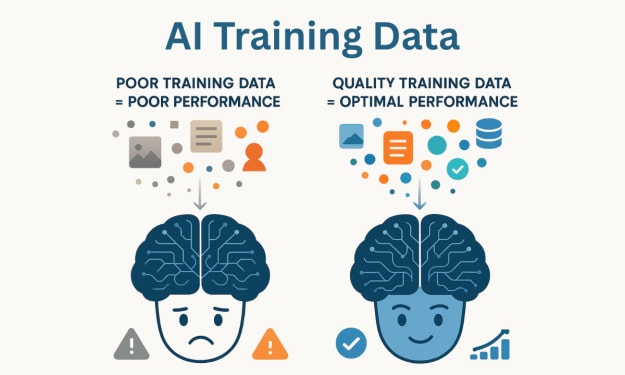
- The development of high-quality, labeled datasets is crucial for training AI models to assist in neuromonitoring research.
"Machines learn from data, but the quality of that learning depends on the quality of the labels." — Andrew Ng, AI Pioneer
7. Integration with AI and Machine Learning Models
- AI models require extensive training on diverse datasets to generalize well across different neurological conditions.
- Developing deep learning models for neuromonitoring data is computationally intensive and requires large annotated datasets.
- Continuous validation and fine-tuning of models are necessary to maintain accuracy and adapt to new patient data.
- Explainability in AI-based neuromonitoring is a challenge, as many deep learning models function as black boxes.
- Addressing biases in AI training data is critical to avoid misleading predictions and ensure ethical AI deployment in healthcare.
8. Real-Time Processing and Annotation
- Real-time neuromonitoring is crucial in critical applications such as epilepsy detection, sleep studies, and intraoperative neurophysiological monitoring.
- Fast and accurate annotation is essential for immediate decision-making, particularly in surgical environments where neural feedback guides medical interventions.
- Advanced automation tools, such as AI-assisted annotation software, are needed to bridge the gap between data collection and interpretation.
- Balancing real-time processing with accuracy remains a challenge, as AI systems must minimize latency while maintaining high reliability.
9. Cross-Disciplinary Collaboration Challenges
- Neuromonitoring data annotation requires collaboration between neuroscientists, data scientists, clinicians, and engineers.
- Communication gaps between disciplines can lead to inefficiencies in data collection and annotation workflows.
- Standardized annotation protocols are necessary to facilitate consistency across research teams and institutions.
- Encouraging knowledge-sharing and establishing best practices for neuromonitoring data annotation will be key to advancing the field.
Conclusion
Neuromonitoring data annotation is a challenging yet crucial aspect of neuroscience and medical research. Addressing these challenges requires a combination of technical expertise, ethical compliance, and advanced AI-driven solutions. As the field advances, improved annotation techniques, robust data management strategies, and interdisciplinary collaboration will be essential to unlocking new insights into brain function and neurological disorders.
About the Creator
Silver Screen Magic with Mae West
American actress and singer Mae West became a popular film actress during the Great Depression. She started entertaining in vaudeville, then performed on Broadway, and finally went to Hollywood. She signed up with Paramount Pictures and made her debut in the 1932 film “Night After Night.” She also starred in musicals, comedies, and crime dramas. The American Film Institute named her one of the best classic Hollywood actresses.
By Rasma Raisters11 days ago in Geeks
Fallout Season 2 Episode 6 Review: “The Other Player” Explained
This is my full Fallout Season 2 Episode 6 breakdown, and wow—there is a lot going on in this episode. We’ve got deep-cut Easter eggs from the games, massive WTF moments, and some genuinely huge reveals that completely reframe what we thought we knew about the Fallout timeline.
By Bella Anderson2 days ago in Geeks


Comments
There are no comments for this story
Be the first to respond and start the conversation.