
TREACHERY, TENTACLES, AND TRIUMPH: UNEARTHING THE DEPTHS OF 'PIRATES OF THE CARIBBEAN: DEAD MAN'S CHEST'
Dead Man's Chest: Betrayal, Destiny, and the High Seas Showdown

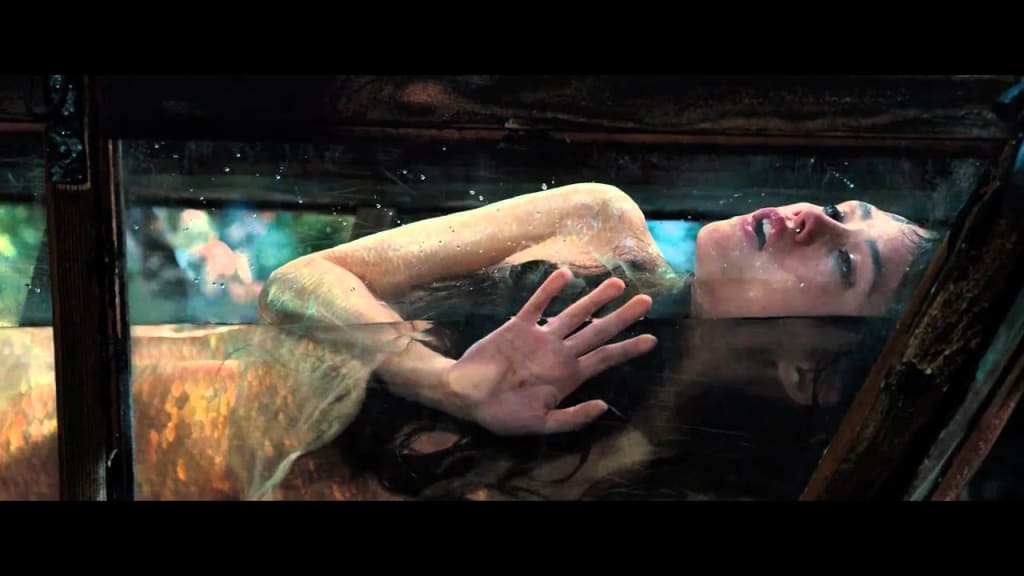
Pirates of the Caribbean: Dead Man's Chest, the second installment in Disney's swashbuckling franchise, crashed ashore in 2006, promising a thrilling continuation of Captain Jack Sparrow's misadventures. Building on the unexpected success of The Curse of the Black Pearl, this sequel plunged audiences deeper into a world of cursed pirates, mythical sea creatures, and morally ambiguous characters. More than just a follow-up, Dead Man's Chest aimed for grander spectacle, darker themes, and a complex narrative tapestry woven with betrayal, sacrifice, and the eternal struggle for freedom. The film presented a more intricate and demanding adventure, where the stakes were astronomically higher, and the lines between hero and villain blurred into the storm-tossed sea.
Plot:
The film opens not with Jack Sparrow's signature swagger, but with Will Turner and Elizabeth Swann's wedding interrupted by Lord Cutler Beckett of the East India Trading Company. Beckett, wielding arrest warrants for their roles in aiding Jack's escape in the previous film, demands Will’s assistance in locating Sparrow and his magical compass. This compass, the key to finding the Dead Man's Chest, holds the heart of Davy Jones, the monstrous captain of the Flying Dutchman. Beckett plans to control Jones, and consequently, the seas.
Will reluctantly agrees, embarking on a perilous quest that leads him to Tortuga, where he encounters Jack, facing his own looming deadline. Jack owes a blood debt to Davy Jones, an agreement made years ago in exchange for the Black Pearl's resurrection. Now, Jones has come to collect.
The narrative branches, following multiple characters pursuing their own agendas. Will, forced to serve aboard the Flying Dutchman, witnesses Jones' cruelty and discovers his tragic backstory. Elizabeth, freed from prison, sets off to find Will, her journey culminating in a daring escape from cannibal island Pelegosto. Jack, meanwhile, attempts to evade Jones and use the Dead Man's Chest to control him, a plan complicated by everyone wanting the chest for their own purposes.
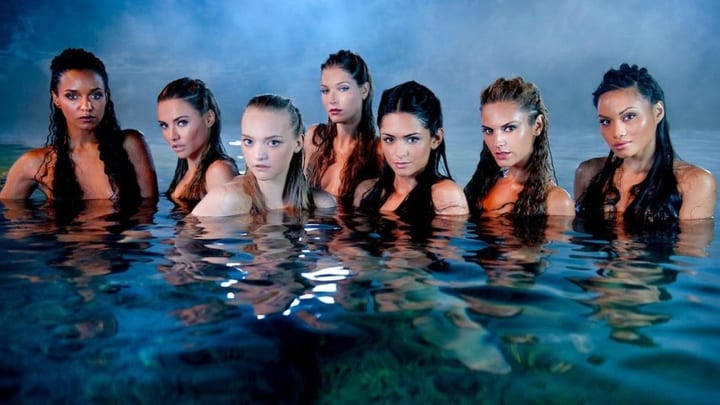
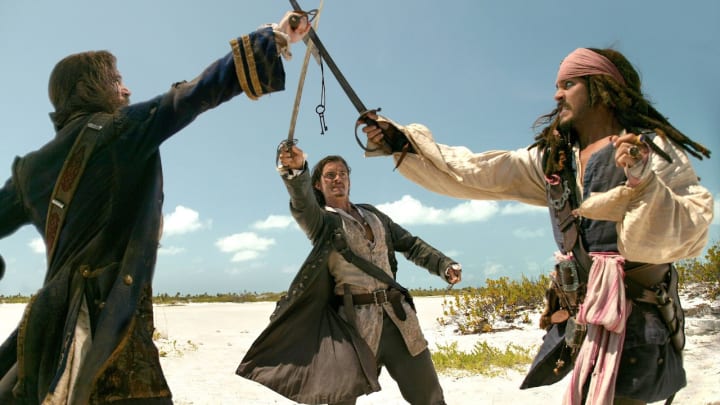
As the characters converge, betrayal becomes a recurring motif. Jack uses Will to obtain the key to the Dead Man’s Chest, while Elizabeth, manipulating Jack with a kiss (and a convenient abandonment on the Isla Cruces), ensures her own safety. The climax is a thrilling three-way sword fight on Isla Cruces, amidst raging storms, involving Jack, Will, and Norrington, who aims to redeem himself in Beckett’s eyes. The heart is ultimately secured, but as Jack confronts the Kraken, Davy Jones’ monstrous sea beast, Elizabeth handcuffs him to the mast of the Black Pearl as it's swallowed whole by the Kraken.
The film ends on a bleak note, with the surviving crew mourning Jack’s apparent death and confronting the daunting prospect of facing Davy Jones without their charismatic, albeit unreliable, captain. The final scene introduces Tia Dalma, revealed to be the sea goddess Calypso in human form, who suggests the crew resurrect Jack, hinting at the challenges and alliances to come in the next installment.
The narrative is a complex web of motivations, betrayals, and intertwined destinies, constantly shifting allegiances and blurring the lines between good and evil. This complexity, while occasionally convoluted, adds a layer of depth rarely seen in summer blockbusters.
Cast:
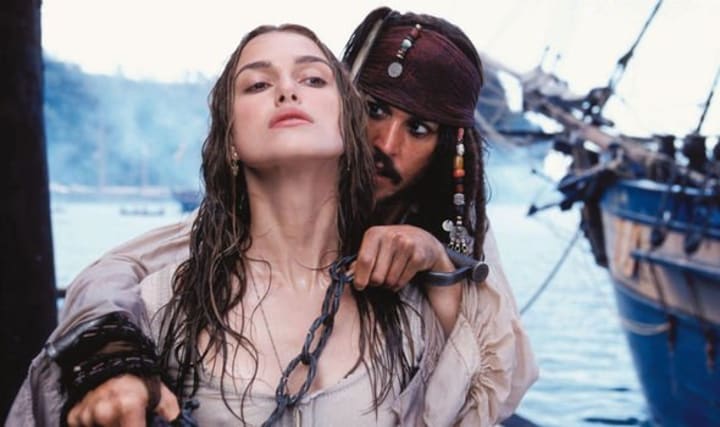
Johnny Depp as Captain Jack Sparrow: Depp's portrayal of Jack Sparrow remains the film's anchor. He infuses the character with a unique blend of swagger, wit, and vulnerability. His physical comedy is as sharp as his verbal sparring, and he continues to deliver every line with quirky charm.
Orlando Bloom as Will Turner: Bloom's Will Turner continues his evolution from earnest blacksmith to seasoned pirate. He delivers a performance marked by determination and a growing understanding of the moral complexities of piracy.
Keira Knightley as Elizabeth Swann: Knightley’s Elizabeth transforms from a damsel into a strong-willed and cunning strategist. She becomes increasingly proactive, demonstrating a willingness to make tough choices, even if morally questionable.
Bill Nighy as Davy Jones: Nighy's performance as Davy Jones, brought to life through groundbreaking visual effects, is chilling and sympathetic. He conveys the character's pain and bitterness with nuance, even beneath the barnacles and tentacles.
Jack Davenport as James Norrington: Davenport delivers a nuanced performance as the disgraced Commodore Norrington, driven by ambition and a desperate desire for redemption. His descent into morally grey areas adds a layer of intrigue to the character.
Reviews:
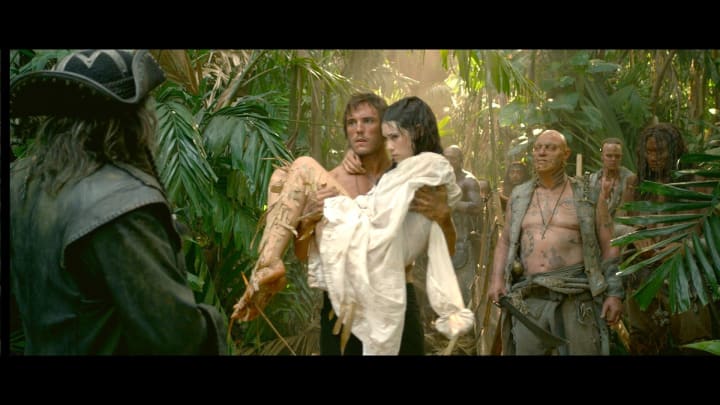
Dead Man's Chest received mixed reviews from critics. While praised for its impressive visual effects, action sequences, and Depp's performance, some critics found the plot convoluted and overly long. Roger Ebert, for instance, criticized the film's length and complexity, but acknowledged its entertainment value. Many reviewers lamented the lack of a clear-cut ending and the reliance on cliffhangers to set up the next film.
Audience reactions were generally more positive. Fans flocked to see the film, drawn by the charismatic characters, spectacular action, and the promise of further adventures. The film resonated with audiences seeking escapism and thrilling entertainment, particularly Depp's iconic portrayal of Jack Sparrow.
Production:
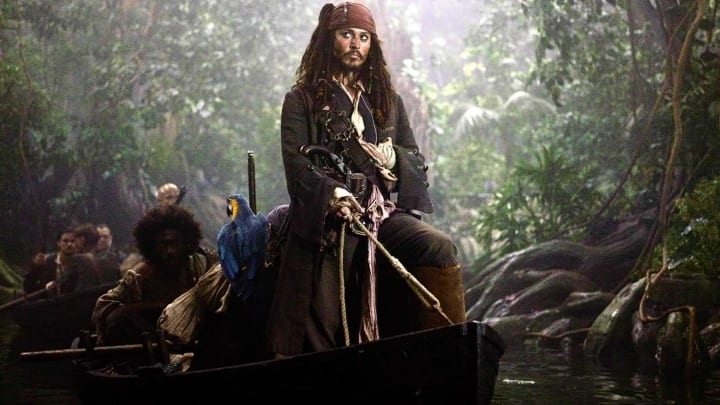
The production of Dead Man's Chest and At World's End was an ambitious undertaking, filmed back-to-back to maximize resources and streamline the schedule. Disney invested heavily in the project, recognizing the franchise's potential. The combined budget for both films exceeded $600 million, making them some of the most expensive films ever made at the time.
The production faced numerous challenges, including logistical complexities, demanding shooting schedules, and the need to create groundbreaking visual effects. Gore Verbinski returned as director, guiding the cast and crew through the intricate narrative and demanding action sequences.
Writing and Casting:
Screenwriters Ted Elliott and Terry Rossio crafted a complex and layered screenplay that expanded the world of Pirates of the Caribbean. They drew inspiration from various sources, including pirate lore, nautical mythology, and classic adventure stories. The writing team focused on developing the characters further, exploring their motivations and relationships in greater depth. The casting process was straightforward, with the main cast returning to reprise their roles. The addition of Bill Nighy as Davy Jones was a significant casting coup, bringing a wealth of talent to the role of the film's primary antagonist.
Principal Photography:
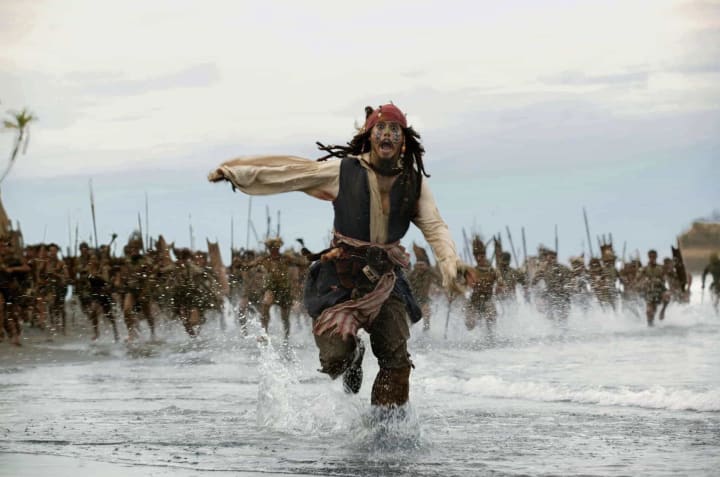
Principal photography took place on various Caribbean islands, including the Bahamas, Dominica, and St. Vincent and the Grenadines. Filming conditions were often challenging, with unpredictable weather, demanding locations, and complex stunt work.
A humorous anecdote from the shoot involves Johnny Depp improvising lines and mannerisms, often catching his fellow actors off guard. One such instance occurred during the cannibal island sequence, where Depp's spontaneous antics resulted in genuine laughter from the extras, adding to the scene's comedic impact. The intense shooting schedule demanded a lot from the cast and crew.
Production Design:
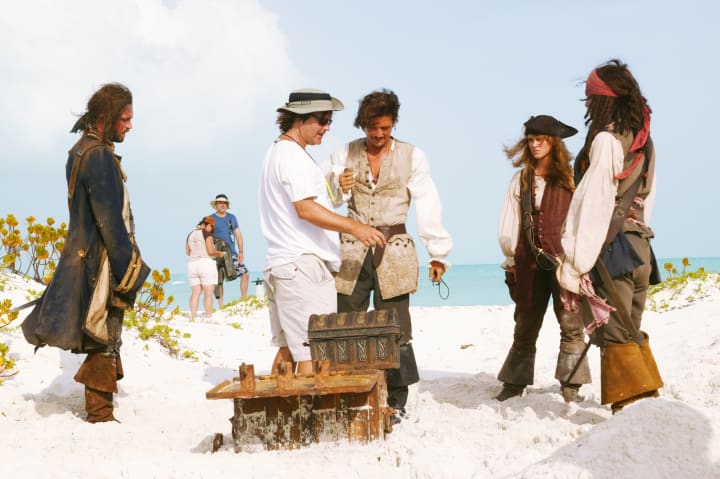
The production design of Dead Man's Chest was meticulous and elaborate, creating a visually stunning and immersive world. Rick Heinrichs served as the production designer, overseeing the creation of elaborate sets, including the cannibal island, Port Royal, and the Flying Dutchman.
Penny Rose designed the costumes, creating detailed and historically inspired attire for the pirates, sailors, and officials. The costumes reflected the characters' personalities and status, adding to the film's visual richness.
Sound Design & Music:
The sound design of Dead Man's Chest was crucial in creating the film's atmosphere and enhancing the action sequences. The sound effects were realistic and immersive, from the creaking of ship masts to the roar of the Kraken.
Hans Zimmer returned to compose the musical score, expanding on the themes from the first film. The score incorporated elements of sea shanties, orchestral arrangements, and world music, creating a dynamic and memorable soundtrack. The music heightened the emotional impact of the scenes, from the thrilling action sequences to the poignant character moments.
Visual Effects:
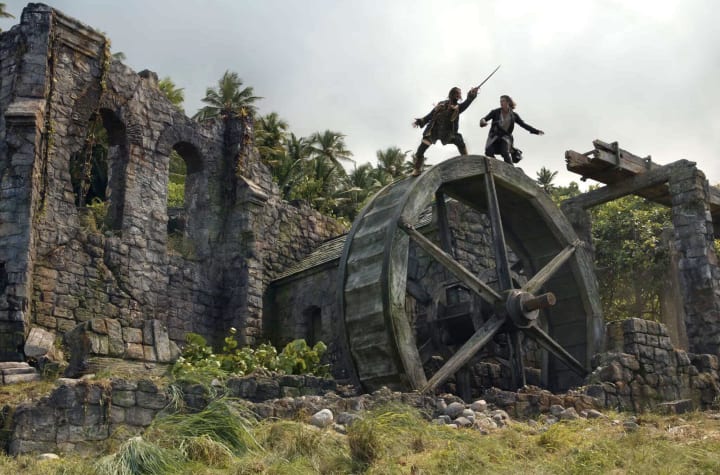
Dead Man's Chest pushed the boundaries of visual effects, particularly in the creation of Davy Jones and the Kraken. Industrial Light & Magic (ILM) delivered groundbreaking visual effects, bringing these characters to life with stunning realism. Bill Nighy's performance as Davy Jones was captured using motion capture technology, allowing ILM to create a seamless and believable CGI character. The Kraken's design was inspired by various sea creatures, resulting in a terrifying and awe-inspiring monster. The visual effects were praised for their quality and creativity, contributing significantly to the film's overall success.
Influences:
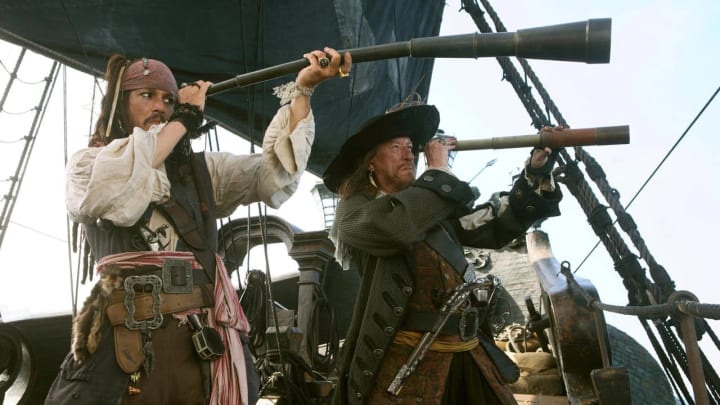
Dead Man's Chest draws inspiration from various sources, including classic pirate literature, nautical mythology, and historical events. The character of Davy Jones is based on the legend of Davy Jones' Locker, a mythical place at the bottom of the sea. The film also references the Golden Age of Piracy, incorporating elements of pirate culture, such as sea shanties, buried treasure, and swashbuckling sword fights. Classic adventure films, such as Treasure Island and The Sea Hawk, also influenced the film's tone and style.
Scientific Knowledge:
While primarily a fantasy adventure, Dead Man's Chest incorporates some elements of nautical science. The film accurately depicts certain aspects of sailing, such as the use of navigation tools, ship maneuvers, and the effects of weather on seafaring. The concept of a blood debt, while fantastical, touches upon the historical practice of maritime contracts and the importance of fulfilling obligations at sea.
Marketing, Release & Box Office:
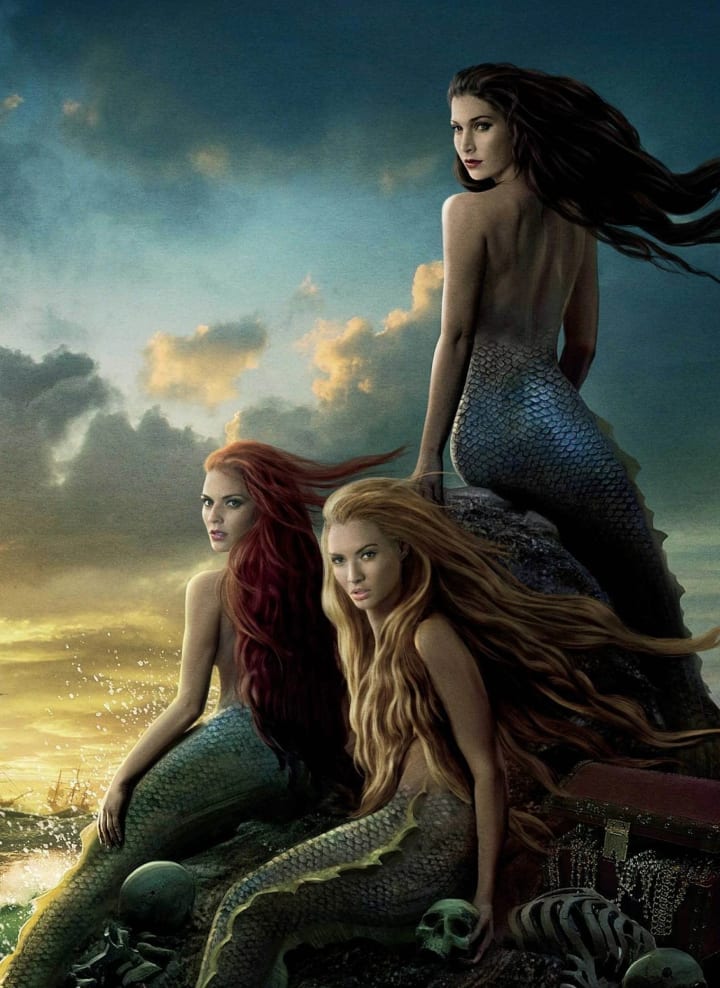
Disney launched a massive marketing campaign for Dead Man's Chest, utilizing television commercials, print ads, online promotions, and merchandise tie-ins. The film's release was highly anticipated, generating significant buzz among fans and critics.
Dead Man's Chest opened in theaters on July 7, 2006, breaking box office records and becoming a global phenomenon. The film grossed over $1 billion worldwide, becoming the highest-grossing film of 2006. The success of Dead Man's Chest solidified the Pirates of the Caribbean franchise as a major force in Hollywood.
Critical Responses:
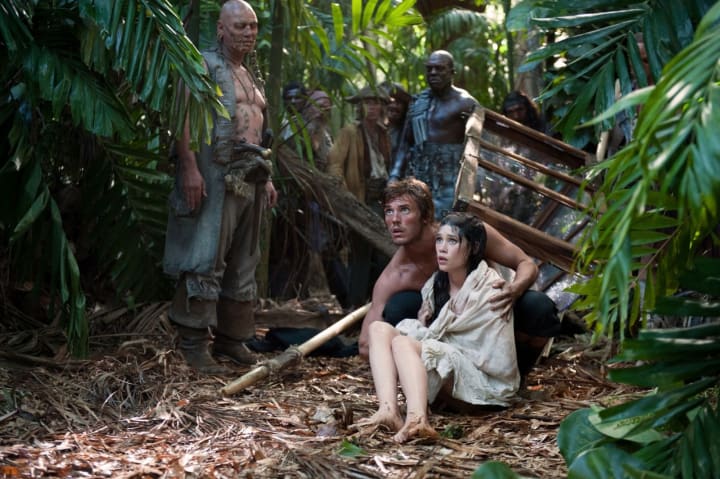
Dead Man's Chest stands as a visually spectacular and entertaining, yet narratively dense, addition to the Pirates of the Caribbean saga. While some critics faulted its convoluted plot and lengthy runtime, most praised its stunning visual effects, thrilling action sequences, and Johnny Depp's iconic portrayal of Jack Sparrow. Audience reception was overwhelmingly positive, fueled by the film's escapist charm and the promise of further adventures in the pirate-infested seas. Ultimately, Dead Man's Chest proved that sequels could deliver on spectacle and expand upon established worlds, even if the voyage gets a little convoluted along the way.
About the Creator
Xavier
Global news reporter covering science, tech, environment, Entertainment & sports. Delivering balanced insights to inform and inspire readers worldwide. Sometimes a poet.
Silver Screen Magic with Mae West
American actress and singer Mae West became a popular film actress during the Great Depression. She started entertaining in vaudeville, then performed on Broadway, and finally went to Hollywood. She signed up with Paramount Pictures and made her debut in the 1932 film “Night After Night.” She also starred in musicals, comedies, and crime dramas. The American Film Institute named her one of the best classic Hollywood actresses.
By Rasma Raisters6 days ago in Geeks
Twitter Outage
For millions of users around the world, Twitter—now known as X—is more than just a social media platform. It’s a real-time news source, a communication tool, and a digital town square. So when a Twitter outage occurs, confusion spreads quickly. Users rush to search questions like “is Twitter down?”, “is X down right now?”, or “why is X not working?” hoping for clarity. In recent years, X outages have become highly visible events, often trending across other platforms within minutes. Whether the issue lasts a few minutes or several hours, a Twitter down situation highlights how deeply embedded the platform is in daily online life. When Twitter Goes Down: What Users Experience During a typical Twitter down incident, users may encounter several problems at once. Timelines stop refreshing, posts fail to load, and notifications disappear. Some users can open the app but see blank feeds, while others are completely locked out. These moments spark a flood of searches like “is Twitter down right now?” and “Twitter not working.” As branding has shifted, the same frustration now appears under newer searches such as “is X down?”, “X down?”, or “X is down.” The name may have changed, but user expectations remain the same: instant access and real-time updates. The Role of X Down Detectors and Status Tools When users suspect an outage, many turn to tools like X down detector or Twitter down detector websites. These platforms collect real-time reports from users and visualize spikes in complaints. A sudden surge often confirms that the issue isn’t isolated. People also search for Twitter status updates, hoping for official confirmation. While X occasionally posts updates during major outages, users often rely on external sources first—especially when the platform itself isn’t accessible. Is X.com Down or Something Else? One of the most common questions during an outage is “is x.com down?” While it may appear that the entire platform is unavailable, the underlying cause can vary. Sometimes the issue affects only certain regions, mobile apps, or specific features like posting or direct messages. In other cases, users notice that third-party integrations fail. This leads to additional searches such as “X not working” or “is X down?” as people try to determine whether the problem lies with their device, internet connection, or the platform itself. Cloudflare and Large-Scale Outages Occasionally, outages are linked to infrastructure providers rather than X directly. Cloudflare, a major content delivery and security service used by many large websites, has been associated with widespread disruptions across the internet. During a Cloudflare outage, multiple platforms can experience downtime simultaneously. When this happens, searches for “Cloudflare outage” often rise alongside “Twitter is down.” These events show how interconnected modern platforms are and how a single failure point can affect millions of users at once. Grok Down: A New Kind of Concern With the introduction of AI-powered features, outages now extend beyond basic posting and browsing. Some users have reported instances of Grok down during broader X outages. When Grok, the platform’s AI assistant, stops responding, it adds another layer of frustration—especially for users who rely on it for research, summaries, or creative tasks. As X continues to expand its feature set, future outages may impact different services independently, making it harder to quickly understand what exactly is broken. Why Twitter Outages Feel So Disruptive Unlike many platforms, X thrives on immediacy. It’s often the first place people go during breaking news, global events, or emergencies. When Twitter is down, users lose access to real-time conversations and firsthand updates. This is why even short outages trigger widespread concern. Questions like “is Twitter down?” or “is X down right now?” aren’t just about inconvenience—they reflect a sudden loss of connection to the global conversation. How Users Cope When X Is Down When an X outage occurs, users often migrate temporarily to other platforms to confirm the issue or share updates. Ironically, people frequently use those platforms to say that Twitter is unavailable. In the meantime, down-detector sites, tech forums, and news outlets become the primary sources of information. For creators, journalists, and businesses, downtime can disrupt workflows and audience engagement. Scheduling posts, responding to trending topics, or managing customer communication becomes impossible until service is restored. What Outages Reveal About Digital Dependence Every major Twitter outage serves as a reminder of how dependent modern communication has become on a few centralized platforms. Whether the search term is “Twitter down?” or “X down?”, the concern is universal. While most outages are resolved relatively quickly, their impact lingers. They raise questions about platform stability, transparency, and the importance of having alternative channels for communication. Final Thoughts A Twitter outage—or X outage—is rarely just a technical hiccup. It’s a moment that exposes how essential the platform has become for news, discussion, and connection. From searches like “is Twitter down right now?” to monitoring X down detector reports, users instinctively seek reassurance and answers.
By Saboor Brohi 3 days ago in Geeks
Wild Card Weekend Recap: What Happens Now?
I think I figured out why I love Wild Card Weekend so much. It's because it's the first playoff anything of the calendar year. The NFL season starts in the fall, and once upon a time, the champion was crowned either on or slightly before New Year's. The evolution of the NFL schedule has resulted in the playoffs starting just into the New Year, and currently, the final week of the season falls on the first weekend of the New Year, with Wild Card Weekend coming a week after that. So yes, chronologically, the NFL's Wild Card Weekend serves as the first playoff anything of the calendar year.
By Clyde E. Dawkins7 days ago in Unbalanced



Comments
There are no comments for this story
Be the first to respond and start the conversation.