
Tono-Bungay by HG Wells
Why It's a Masterpiece (Week 80)

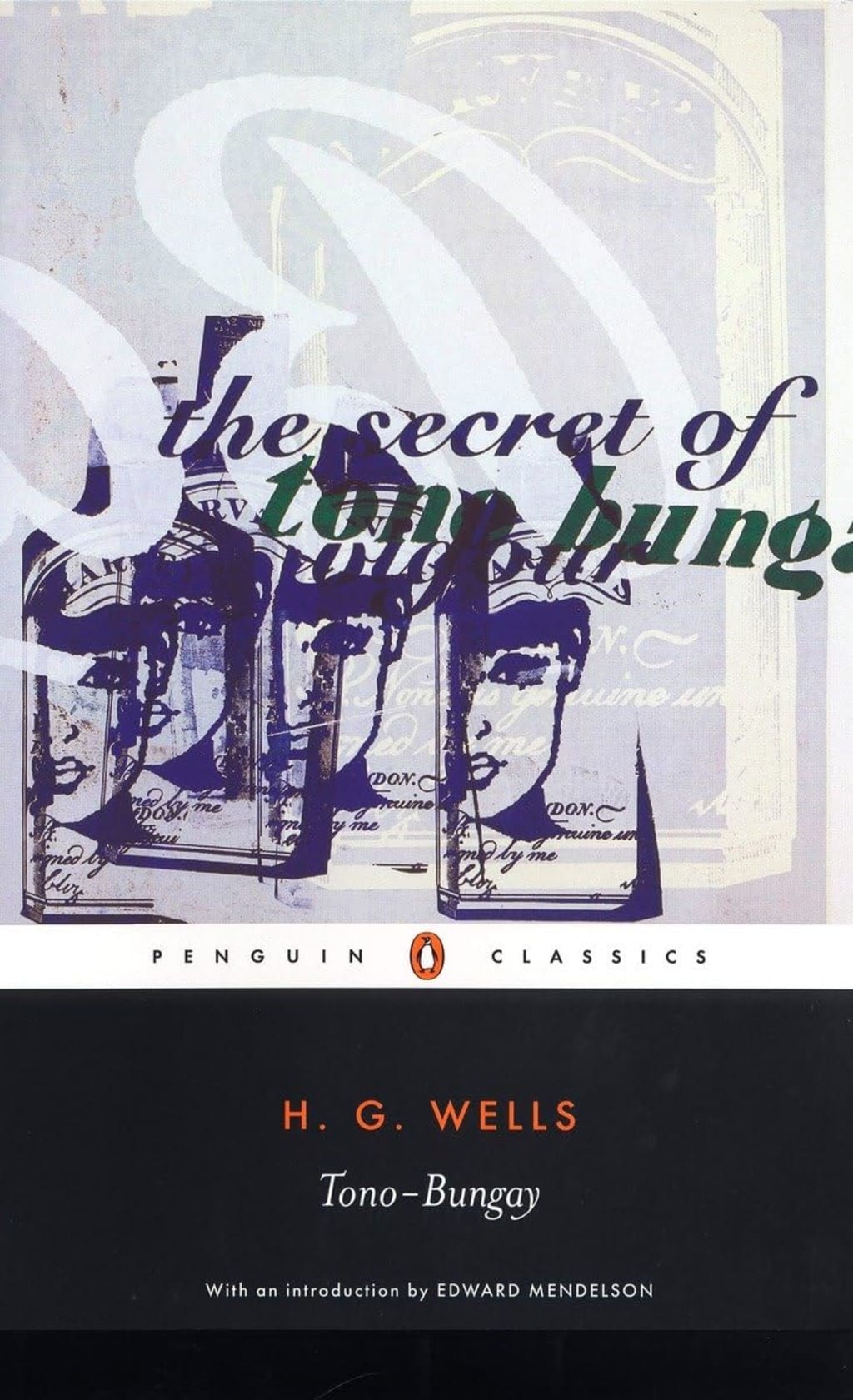
HG Wells’ Tono-Bungay, published in 1909, is a satirical and semi-autobiographical novel that stands as one of his most significant works of social critique. By the time Wells wrote the book, he had already established himself as a prominent writer through pioneering science fiction works like The War of the Worlds and The Time Machine. However, Tono-Bungay marked a departure from speculative fiction, focusing instead on the dynamics of contemporary English society and the rise of capitalism during the Edwardian period.
The novel draws heavily on Wells’ own life. Born in 1866 to a lower-middle-class family, Wells experienced firsthand the struggles of ambition, poverty, and upward social mobility. His early career as a draper’s apprentice influenced the protagonist George Ponderevo’s reflections on commercialism and class. Wells’ dissatisfaction with England’s rigid class structure and its emerging consumer culture provided the foundation for this incisive social commentary.
The title refers to a fictional patent medicine (Tono-Bungay) a worthless tonic that becomes wildly successful due to aggressive advertising, symbolising the era’s obsession with mass marketing and illusionary success. Wells critiques the fragility and corruption of an economy built on false promises, drawing parallels to real-life “quack” medicines popular at the time.
Plot
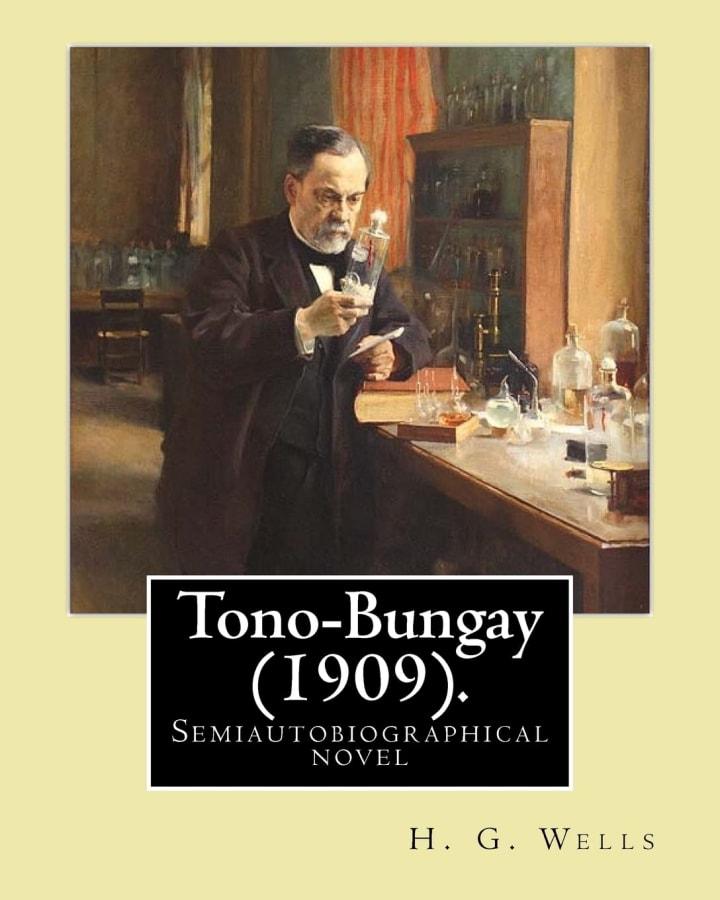
Tono-Bungay tells the story of George Ponderevo, the novel’s narrator, who reflects on his life and his involvement in the rise and fall of a fraudulent patent medicine business. The story opens with George’s childhood in the small village of Bladesover, where he is acutely aware of the rigid social divisions of English society. He struggles with the limited opportunities available to those of his class, and his dissatisfaction propels him toward a life of ambition and adventure.
George’s uncle, Edward Ponderevo, is a flamboyant and opportunistic businessman who invents Tono-Bungay, a supposedly miraculous tonic with no actual medical value. Edward enlists George to help expand the business, and together they capitalise on aggressive advertising and public gullibility to build an empire. The success of Tono-Bungay brings wealth and power, but George remains disillusioned, recognising the emptiness of their achievements. The product is symbolic of the shallow, materialistic values of the time, built on lies and manipulation.
As the business flourishes, George uses his wealth to pursue his interests, particularly in aeronautics, which symbolises his longing for progress and escape from the corrupt world of commerce. However, the inevitable collapse of the Tono-Bungay empire looms as Edward’s reckless spending and the unsustainable nature of the business catch up with them. Edward eventually flees to France, while George is left to grapple with the consequences of their actions.
The novel’s final section covers George embarking on a dangerous expedition to retrieve radioactive material, reflecting his personal search for meaning and purpose amid the ruins of his uncle’s schemes. Meanwhile, Edward dies in poverty, and the Tono-Bungay business dissolves, leaving George to reflect on the futility of their business pursuits.
Into the Book

A Critique of Capitalism:
One of the central themes of Tono-Bungay is the critique of capitalism and the moral corruption it fosters. Edward Ponderevo’s invention of Tono-Bungay is a thinly veiled metaphor for the hollow promises of modern commerce. The tonic itself is described as “a damned swindle,” and yet it becomes wildly successful, illustrating how consumer culture thrives on illusion and manipulation rather than substance.
The success of Tono-Bungay is driven by advertising and public gullibility, not by its merit. George reflects, “The whole thing was a lie, an imposture, a vast incredible fraud.” The author’s portrayal of the tonic critiques the emerging consumer economy, where businesses profit from deception and superficial appeal. Edward’s flamboyant personality embodies this moral decay; he is charming and innovative but ultimately unscrupulous. He tells George, “We’ve got the public—don’t you see?—by the throat.”
The collapse of the Tono-Bungay empire showcases the fragility of an economy built on dishonesty. Edward’s eventual ruin mirrors Wells’ belief that such systems are unsustainable, both economically and morally. George’s detached perspective highlights his internal conflict; he participates in the fraud but is keenly aware of its emptiness.
“What I want to know is, in the Middle Ages, did they do anything for Housemaid's Knee? What did they put in their hot baths after jousting?”
- Tono-Bungay by HG Wells
Social Class and the Limitations of Upward Mobility:
The novel also explores themes of social class and the limitations of upward mobility in Edwardian England. George’s childhood in Bladesover exposes him to the rigid hierarchies that define English society. He observes the aristocracy with both fascination and contempt, recognising the unfairness of a system that privileges birth over merit. “We were just part of the landscape, like cows or sheep,” he says, capturing the sense of invisibility and powerlessness among the lower classes.
George’s partnership with Edward offers him a path to wealth and status, but his success feels hollow. Despite their financial rise, neither George nor Edward truly belongs to the upper classes. Edward’s over-the-top lifestyle is a parody of aristocratic excess, while George remains an outsider, disillusioned by the superficial nature of his achievements. Wells suggests that upward mobility, while possible, cannot erase the inequalities and alienation inherent in the class system.
This theme is further reinforced through George’s reflections on his own aspirations. He views education and progress as means of escape, but he remains deeply critical of a society that defines individuals by their social standing. Through George’s narrative, the author exposes the tensions between ambition and the rigid constraints of Edwardian society.
“It was Plutarch, you know, and nothing intrinsically American that prevented George Washington being a King...”
- Tono-Bungay by HG Wells
Amid the novel’s critique of capitalism and class, Wells also explores the theme of existential disillusionment. George’s involvement in the Tono-Bungay enterprise is driven more by a desire for purpose than greed. However, he quickly realises the emptiness of their success, describing the tonic as “a great absurdity.” His disillusionment reflects a broader struggle to find meaning in a rapidly changing, materialistic world.
George’s interest in science and aeronautics serves as a counterpoint to the corruption of the business. The flight experiments symbolise his desire for progress and transcendence, offering a glimpse of an idealistic, untainted future.
Throughout the novel, Wells captures the contradictions of modernity: the excitement of progress is tempered by a deep sense of alienation and moral decay. George’s reflections embody this tension, as he navigates a world that offers material success but little personal fulfilment. The novel’s ending leaves readers with a sense of unease, as George’s existential questions remain unresolved.
“Most people in this world seem to live "in character"; they have a beginning, a middle, and an end, and the three are congruous one with another and true to the roles of their type.”
- Tono-Bungay by HG Wells
Why It's a Masterpiece

Tono-Bungay is considered a masterpiece for its incisive critique of capitalism, its exploration of social class, and its profound reflection on modern life. HG Wells’ ability to blend satire, realism, and social commentary creates a novel that is both entertaining and thought-provoking. The fictional patent medicine serves as a powerful symbol of the moral corruption underpinning consumer culture, offering a prescient critique that remains relevant today.
Wells’ prose is both lyrical and sharp, capturing the contradictions of Edwardian England. His depiction of George’s internal conflict (torn between ambition, disillusionment and existential doubt) adds depth to the narrative. George’s voice, both detached and reflective engages the reader with his narration.
Conclusion
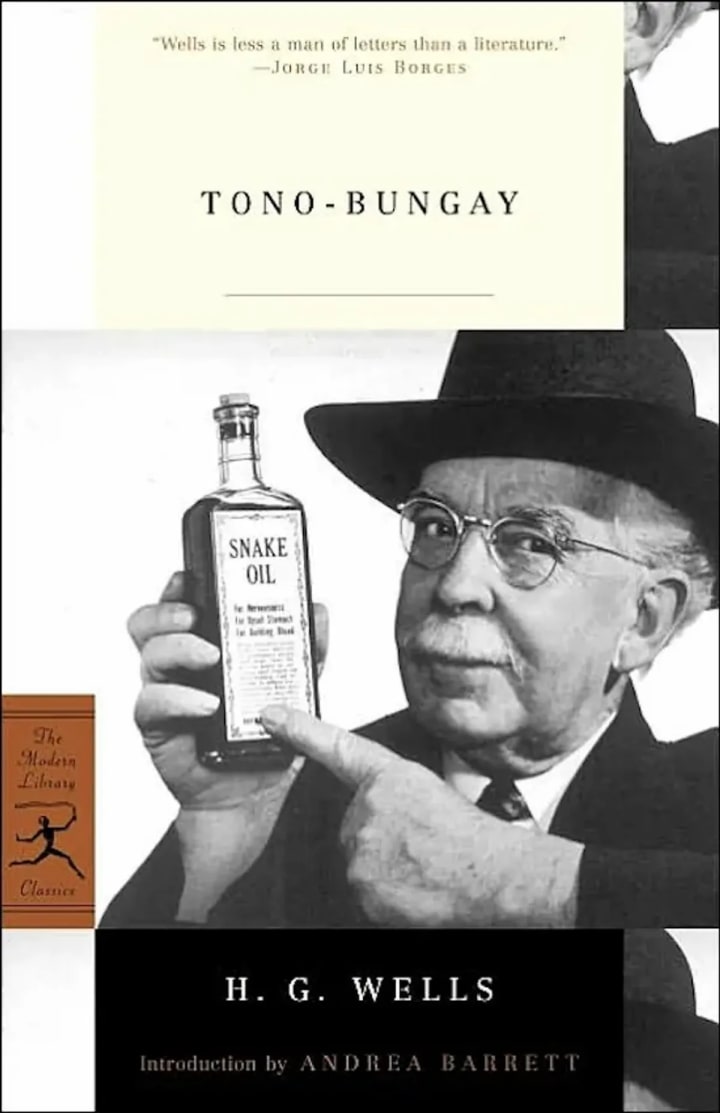
Tono-Bungay is perhaps one of HG Wells' most vital and yet, underread works. I genuinely think that this is one of his most socially conscious novels and definitely underlines his focus on leftwing politics at a time when it was definitely not popular to criticise the methods of capital and the way in which those with money may make deceptive decisions in business. I hope you choose to read it.
Next Week: Death in Venice by Thomas Mann
About the Creator
Annie Kapur
I am:
🙋🏽♀️ Annie
📚 Avid Reader
📝 Reviewer and Commentator
🎓 Post-Grad Millennial (M.A)
***
I have:
📖 280K+ reads on Vocal
🫶🏼 Love for reading & research
🦋/X @AnnieWithBooks
***
🏡 UK
Keep reading
More stories from Annie Kapur and writers in Geeks and other communities.
Book Review: "American Housewife" by Anita Abriel
Sometimes we all need a book we don't have to think too much about but is still worth the read. I call these 'wind-down books'. They aren't 'comfort books' because for me, those are horror novels and then again, they are different to my usual requests. 'Wind-down books' are books like this one entitled American Housewife by Anita Abriel. A protagonist who is likeable and kind, but has a strange past and nice dreams. She's relatable but not too much so and the writing is gorgeous and pleasant.
By Annie Kapur4 months ago in Geeks
Marvel Zombie
The last entry into our 2025 superhero projects catalogue is Marvel Zombies. This was a show that was anticipated by absolutely no one and it disappeared from the public consciousness as quickly as it was released. There was nothing special about the project that made it a must see, or a must remember. In fact if anything it's a must forget.
By Alexandrea Callaghan19 days ago in Geeks
The Traitors US Season 4, Episode 2 Recap: “The Death Conga” - Chaos, Clues & A Whole Lot of Slip-Ups
Today we’re diving straight into episode 2 of The Traitors USA Season 4—aptly titled “The Death Conga.” If you missed last episode’s breakdown, go and read The Traitors Season 4 Recap of Episode 1.
By Bella Anderson5 days ago in Geeks



Comments (1)
I've only read the science fiction big boys and the essays. Always wondered about this one...