
Thousand Cranes by Yasunari Kawabata
Why It's a Masterpiece (Week 57)

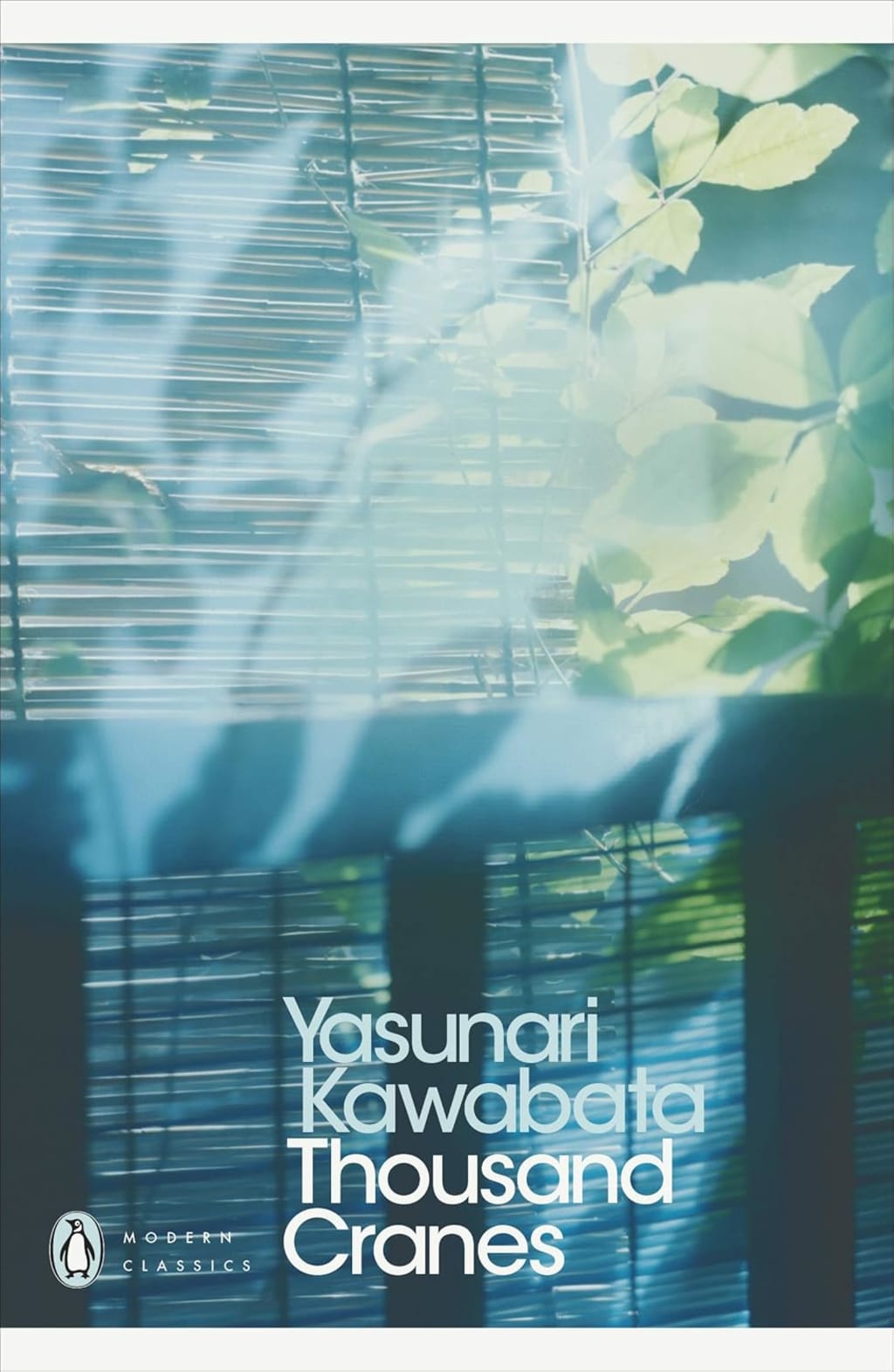
"Thousand Cranes" (original title: "Senbazuru") is a novel written by Japanese author Yasunari Kawabata, first published in 1952. The work marks a significant entry in Kawabata's oeuvre and contributes to his status as a leading figure in Japanese literature. Kawabata was awarded the Nobel Prize in Literature in 1968, largely due to his unique narrative style and deep exploration of Japanese aesthetics and culture.
"Thousand Cranes" was inspired by the traditional Japanese tea ceremony, an art form that reflects the principles of simplicity, harmony, and respect. The novel intertwines themes of love, loss, and the passage of time, echoing the ephemerality of beauty that is central to the aesthetics of the tea ceremony. Kawabata's prose is characterised by its lyrical quality and emotional depth, which invite readers to contemplate the subtleties of human relationships.
Initially published in serial form in the magazine Shincho in 1951, "Thousand Cranes" was later released as a complete book in 1952. The novel has been translated into multiple languages, broadening its reach and influence beyond Japan. The English translation by Edward G. Seidensticker, published in 1955, played a crucial role in introducing Kawabata's work to a Western audience. Seidensticker's translation is noted for its fidelity to the original text and its ability to convey the delicate nuances of Kawabata's style.
Plot
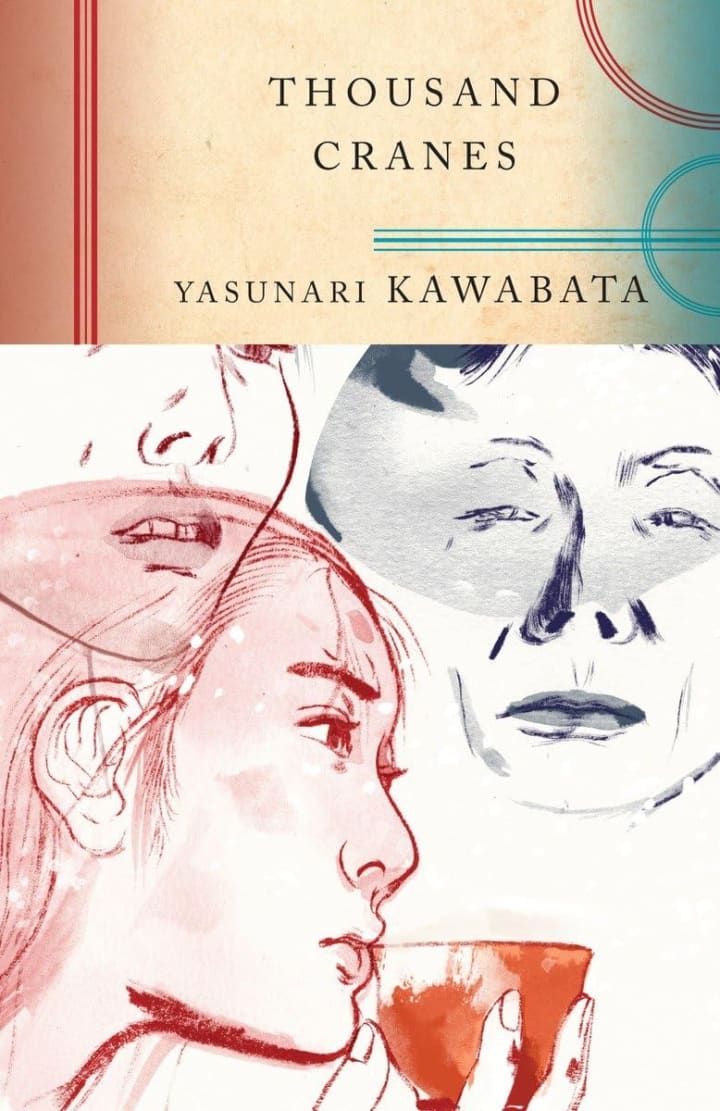
"Thousand Cranes" follows the life of Kikuji, a young man grappling with the complexities of love and memory against the backdrop of post-war Japan. The narrative opens with Kikuji attending a tea ceremony hosted by the widow of his late father, a ceremony that signifies both tradition and the lingering shadows of his past. It is during this gathering that Kikuji is introduced to the elegant and enigmatic Madame Saeki, who becomes a pivotal figure in his life.
Kikuji’s relationship with Madame Saeki unfolds amidst a tapestry of emotional turmoil. Despite his admiration for her, he is acutely aware of the age difference and the societal norms that dictate their interactions. Madame Saeki, who embodies grace and nostalgia, harbours her own regrets related to her deceased husband, a master of the tea ceremony. Her past intertwines with Kikuji’s present, as she represents both the beauty and melancholy of lost love.
As Kikuji navigates his feelings for Madame Saeki, he also encounters another woman, the vibrant and impulsive Fumiko. Unlike the reserved Madame Saeki, Fumiko is unabashedly forward and represents a stark contrast to Kikuji’s more reflective nature. Their relationship evolves, but Kikuji remains conflicted, torn between the passionate allure of Fumiko and the deeper, more complex connection he shares with Madame Saeki.
The novel delves into the themes of memory and longing, as Kikuji reflects on his past relationships and the impact of his father’s legacy. His father had been deeply involved in the tea ceremony, and Kikuji’s encounters with Madame Saeki and Fumiko are laden with the weight of familial expectations and cultural heritage. The tea ceremony itself becomes a metaphor for the intricacies of human relationships—each cup of tea served symbolises moments of connection and disconnection, love and loss.
The plot thickens when Kikuji learns more about Madame Saeki’s past and the profound grief she carries for her late husband. This discovery forces him to confront his own feelings of inadequacy and desire. The juxtaposition of his interactions with Fumiko and Madame Saeki highlights Kikuji’s internal struggle, as he attempts to reconcile his longing for the past with the possibilities of the future.
As the story unfolds, Kikuji’s relationships are further complicated by the presence of an intricate web of social expectations and personal insecurities. The novel poignantly explores the theme of transience, encapsulated in the Japanese concept of mono no aware, which expresses an awareness of the impermanence of beauty and life itself.
In the climax of the narrative, Kikuji must confront the consequences of his choices and the impact of his relationships. The resolution does not provide clear answers but rather leaves Kikuji (and the reader) with a sense of ambivalence, reflecting the complexities of love and the inescapable passage of time.
Into the Book
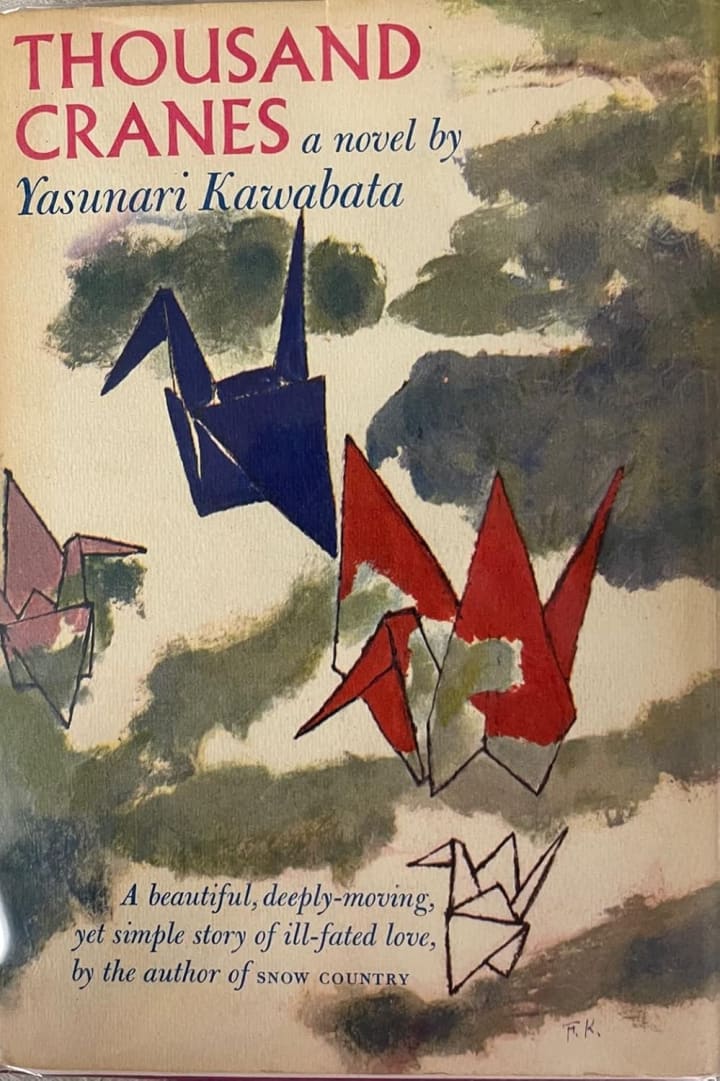
One of the central themes of "Thousand Cranes" is the transience of beauty, encapsulated in the Japanese concept of mono no aware, which refers to the awareness of the impermanence of all things. This theme is prevalent throughout the narrative, particularly in Kikuji’s interactions with Madame Saeki and Fumiko. The tea ceremonies, which serve as a backdrop for much of the story, highlight this concept, as each moment of beauty is fleeting. Kawabata’s lyrical prose reflects the delicate nature of life, capturing moments of grace that are inevitably tinged with sadness.
Madame Saeki, in particular, embodies this theme. Her beauty is intertwined with a profound sense of loss and nostalgia for her deceased husband. The meticulous rituals of the tea ceremony that she practices serve to preserve fleeting moments of beauty, but they also remind her and Kikuji of what has been lost. The ephemeral nature of the tea, the seasonal flowers, and the changing light all serve as reminders that beauty is transient, leading characters to grapple with the weight of their memories.
“Now, even more than the evening before, he could think of no one with whom to compare her. She had become absolute, beyond comparison. She had become decision and fate.”
- Thousand Cranes by Yasunari Kawabata
Tradition plays a crucial role in "Thousand Cranes," shaping the characters’ identities and relationships. The tea ceremony, an integral aspect of Japanese culture, is not just a social ritual but a means of expressing aesthetic values and reinforcing social hierarchies. For Kikuji, the ceremony is a connection to his father’s legacy and the familial expectations that come with it. The influence of tradition is palpable in Kikuji’s relationships, as he feels torn between adhering to societal norms and pursuing personal happiness.
Madame Saeki’s adherence to the traditions of the tea ceremony reflects her connection to the past, while also highlighting the constraints placed on her by those very traditions. Kikuji’s interactions with her reveal the tension between individual desires and cultural expectations, as he grapples with the role of tradition in his own life. The novel suggests that while tradition can provide structure and meaning, it can also be a source of conflict, as characters struggle to navigate their identities within a rigid cultural framework.
“You've always been fond of understanding people too well."
"They should arrange not to be understood quite so easily.”
- Thousand Cranes by Yasunari Kawabata
The theme of love and memory is intricately woven throughout the novel, as Kikuji’s relationships with both Madame Saeki and Fumiko reveal the complexities of human emotions. Kikuji’s love for Madame Saeki is steeped in reverence and longing, as he is drawn to her wisdom and grace. However, his feelings are complicated by the awareness of her past and the limitations imposed by their age difference.
In contrast, his relationship with Fumiko is marked by impulsivity and passion, yet it lacks the depth of his connection with Madame Saeki. The duality of these relationships reflects Kikuji’s internal conflict as he attempts to reconcile his desires with the realities of his circumstances. Memory plays a significant role in shaping these relationships, as Kikuji grapples with the ghosts of his past, particularly those associated with his father and the cultural heritage that weighs heavily on him.
“Your mother was such a gentle person. I always feel when I see someone like her that I'm watching the last flowers fall. This is no world for gentle people.”
- Thousand Cranes by Yasunari Kawabata
Why It's a Masterpiece
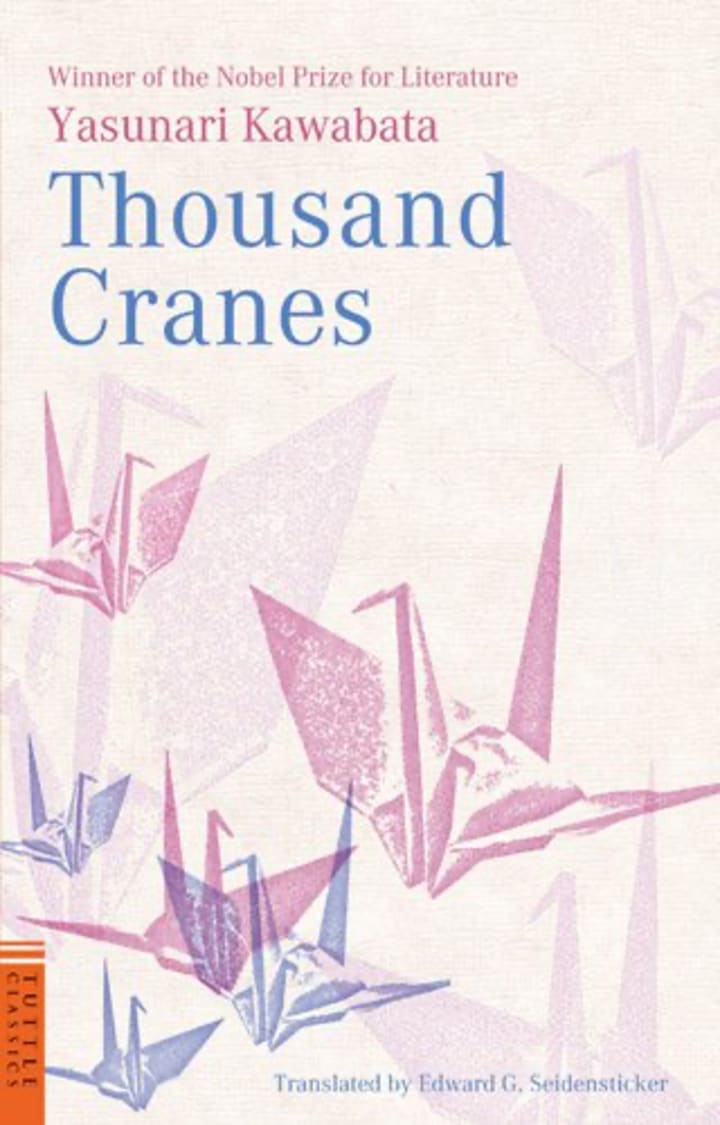
Kawabata's deep engagement with the aesthetics of the Japanese tea ceremony serves as a metaphor for the transience of beauty and the impermanence of life. Each moment in the narrative echoes the principles of mono no aware, compelling readers to reflect on their own experiences of love and loss. This connection to cultural heritage adds depth, as it intertwines personal stories with broader societal themes, showcasing the enduring impact of tradition.
Furthermore, the characters are richly drawn, each embodying various facets of human emotion. Kikuji's relationships with Madame Saeki and Fumiko illustrate the complexities of love, revealing how individuals navigate their desires amid societal expectations. This nuanced portrayal of relationships contributes to the novel’s timeless relevance.
Conclusion
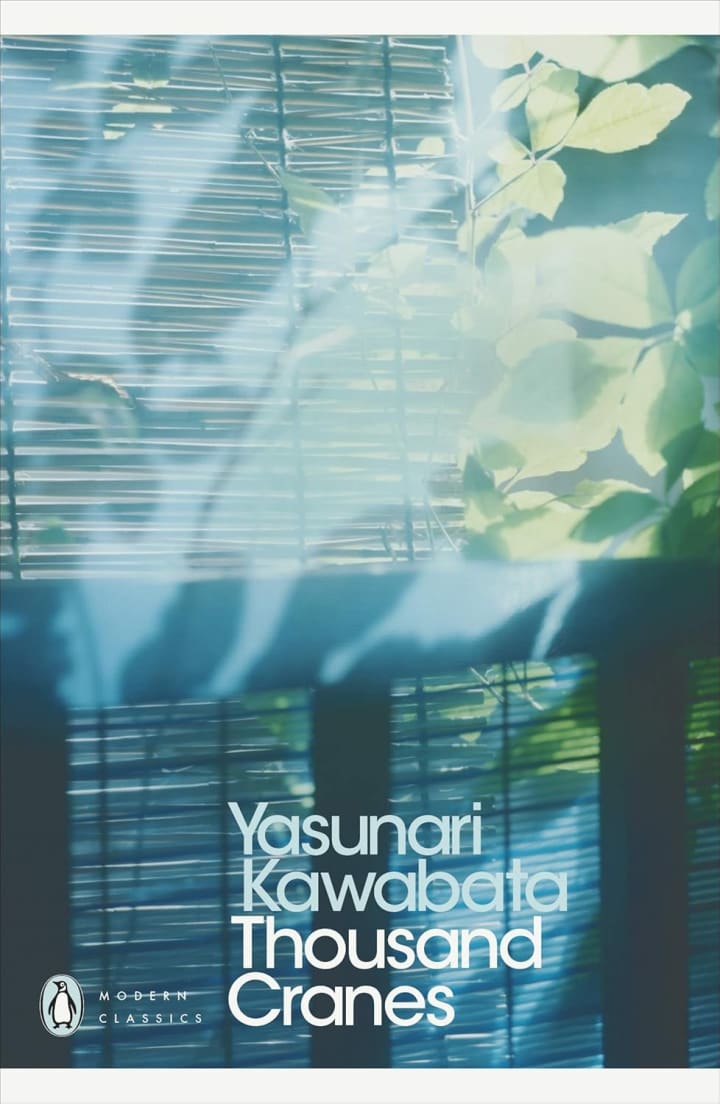
Yasunari Kawabata's novels have always had a special place in my literary heart because of how beautifully they have been written. I am quite sure that anyone who reads this will enjoy it just as much as I did. I highly recommend starting with 'Thousand Cranes' because of how revealing of tradition and love it is on the whole. Let us now look forward to next week.
Next Week: Vile Bodies by Evelyn Waugh
About the Creator
Annie Kapur
I am:
🙋🏽♀️ Annie
📚 Avid Reader
📝 Reviewer and Commentator
🎓 Post-Grad Millennial (M.A)
***
I have:
📖 280K+ reads on Vocal
🫶🏼 Love for reading & research
🦋/X @AnnieWithBooks
***
🏡 UK
Keep reading
More stories from Annie Kapur and writers in Geeks and other communities.
Book Review: "A Supposedly Fun Thing I'll Never Do Again" by David Foster Wallace
I honestly thought David Foster Wallace was an author I was never going to read again (that was a joke). Way way back, I read The Pale King and gave my first impressions on it in a strangely worded article where I was a bit overtly confused about why this was meant to be regarded the way it was. I enjoyed it enough but there was always a part of me that thought I was supposed to be enjoying it. Anyways, The Pale King has kept me on the fence. At least it was a better experience than I had when reading Infinite Jest a couple of years before that - that was not a great experience. So, let's have a look at the 'even better than The Pale King' experience I had of reading A Supposedly Fun Thing I'll Never Do Again. As you can tell, there's something more to this...
By Annie Kapur10 months ago in Geeks
Silver Screen Magic with Mae West
American actress and singer Mae West became a popular film actress during the Great Depression. She started entertaining in vaudeville, then performed on Broadway, and finally went to Hollywood. She signed up with Paramount Pictures and made her debut in the 1932 film “Night After Night.” She also starred in musicals, comedies, and crime dramas. The American Film Institute named her one of the best classic Hollywood actresses.
By Rasma Raisters6 days ago in Geeks
How Lakshya hit the bullseye with The Ba***ds of Bollywood
Lakshya has no qualms admitting that he is a boring guy off set with not much happening around him. “The only fun that I have is when I prepare for characters and shoot,” says the actor, who goes only by his first name. “In the last few days, I have been trying to discover the psyche of the character I am playing. That is the exciting part for me… when I have to play a different person and live a character,” he tells Forbes India in the middle of a hectic 12-hour film shoot.
By Dena Falken Esq7 days ago in Geeks
Ludacris and Nelly draw backlash over bookings at MAGA-coded music festival
Ludacris and Nelly headlining a mostly right-wing event is good for them. It’s also great for the genre of hip hop. The two rap veterans have showcased their talents on other stages. Why can’t they perform for mostly MAGA folks and grab that bag?
By Skyler Saunders4 days ago in Beat



Comments
There are no comments for this story
Be the first to respond and start the conversation.