

DISCLAIMER:
Hi, welcome back to 'Why It's Shifty'. I'm glad you're here and enjoying the writing. In 'Why It's Shifty' we can sometimes deal with stories that are more scary than shifty. This brings me on to my next point...
Please be aware that this article deals with some pretty gruesome topics including violence, death and consuming human flesh. It is also centred on victims who are minors. Reader discretion is advised.
Thank you,
Annie.
***
The Werewolf of Chalons
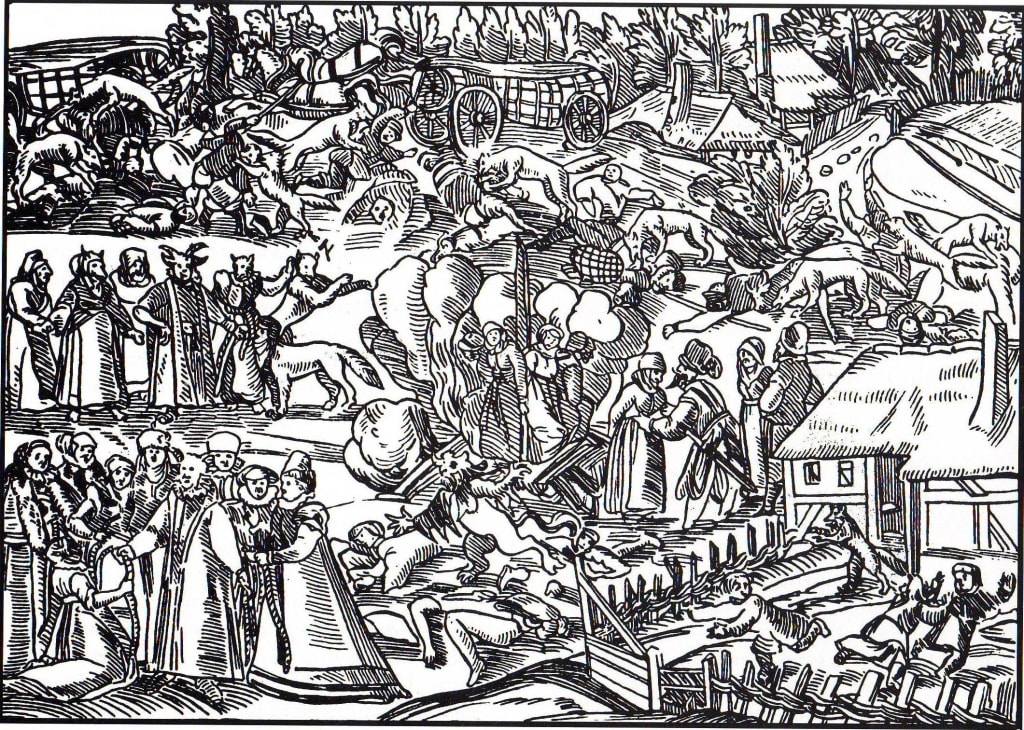
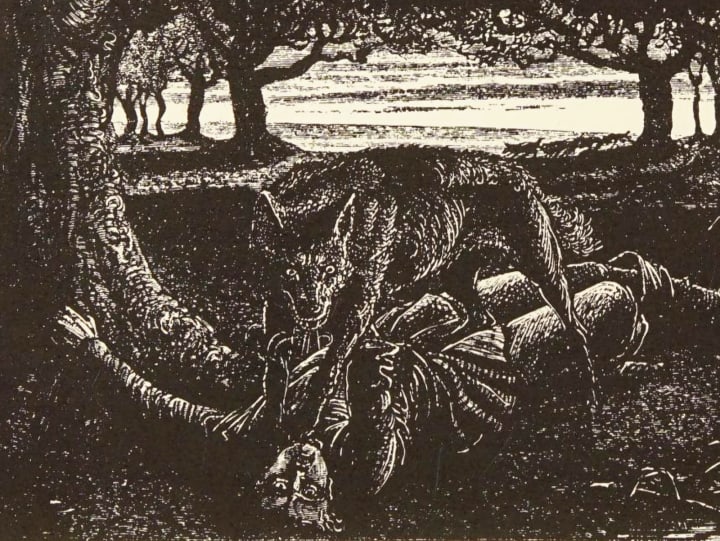
I am not going to lie, before writing about this one I had barely heard anything about it. The Werewolf of Chalons was considered to be one of the most frightening cases of murder in 16th century Europe. For centuries, the ghost of this character, this man, this folk legend, has terrorised the horror community and beyond. And the most horrific part about this 'legend' is that it was actually based on a real guy who did these horrible things.
But, over the years, the documents were destroyed, the stories became wilder and of course, then the internet had their way with it. The man became a mystery and so, the real question is: what is the truth and will we ever actually know?
Plot
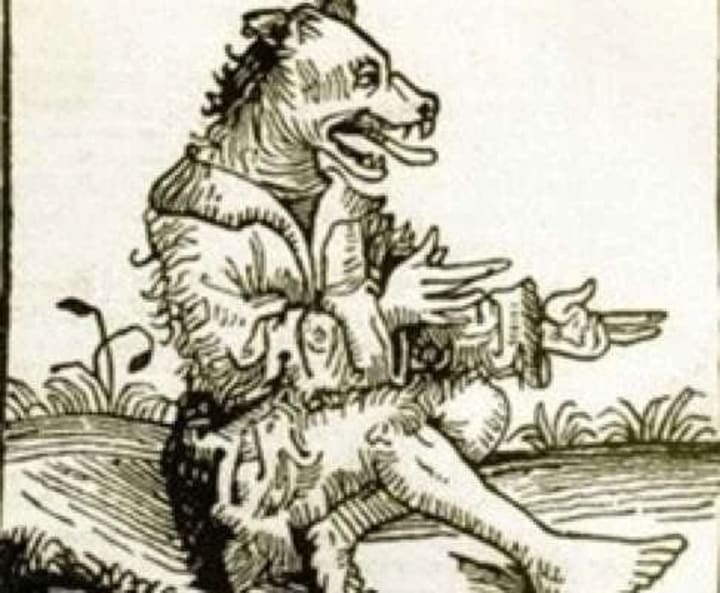
Back in 16th-century France, there was a man named Gilles Garnier. He lived as a recluse in Chalons at a time when the region was plagued by superstition and famine. In 1572, Garnier was accused of being a werewolf and convicted of murdering and cannibalising several children. It is even said that there were bones found that proved he was guilty of the crimes. At the time, werewolf trials were common across Europe, often linked to broader witch hunts.
Garnier confessed under torture that he had used an ointment (given to him by a spirit) to transform into a wolf so he could hunt and feed on human flesh, which he claimed was necessary to survive the famine. His gruesome crimes and apparent confession led to his execution by burning at the stake.
According to records from Garnier’s trial, he committed a string of horrific murders in which he stalked, killed, and partially ate young children. Witnesses claimed to have seen a wolf-like creature attacking children in nearby fields, but when Garnier was caught, he confessed that he had taken their flesh home to share with his wife.
Garnier’s case was unusual in that his confessions contained detailed descriptions of transformations, attacks, and cannibalistic rituals, which further cemented the perception that he was not merely a murderer but a supernatural threat. Cannibalism, particularly of minors, tapped into primal fears about disorder and depravity, making his crimes stand out.
Into the Theories
Mass Hysteria:
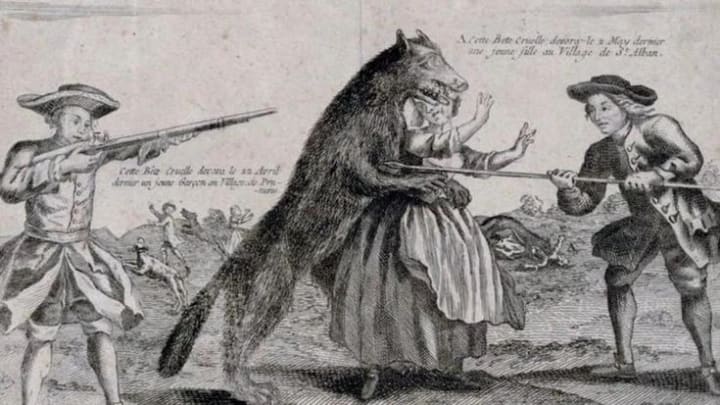
Garnier was not prosecuted merely as a murderer but as a werewolf, which made his trial both a criminal and theological matter. He was charged with witchcraft, heresy, and crimes against humanity. Under the laws of the Parlement of Dole, testimony of supernatural acts, especially under duress or torture, was admissible in court. Garnier’s confession, extracted with leading questions and likely torture, was taken as proof of a pact with the devil. The ointment he claimed to use for transformation was treated as a real diabolical tool.
His case is one of the earliest and best-documented werewolf trials in Europe and reflects how courts and religious authorities dealt with unexplained violence through mythic frameworks. The legend of Garnier grew over time, transforming from a historical criminal case into a full-fledged tale of a shape-shifting monster haunting rural France, illustrating how legal records and local panic could become enduring folklore.
Confession Under Torture:
In order to stop the torture, it could be said that Garnier made the confession in order to simply be killed. During this time in history, there were multiple horrifying methods of torture used on people being interrogated and, after a time, it could be said that death would be preferable to undertaking more violence by the policing bodies. For the fact that this article already deals with some pretty heavy topics, I will not be going through the individual torture techniques used in France in this era. If you would like to know more, then please seek out Google.
What is Fact? What is Metaphor?
Over time, the story of the "Werewolf of Châlons" transcended its historical roots, becoming an allegory about isolation, starvation, and moral decay. Garnier, originally a hermit pushed to the edges of society, was transformed by storytelling into a beast who lived outside not just towns but also the bounds of humanity. In folklore, werewolves often represent the duality of man (the civilised self and the savage instinct beneath). Garnier's story, retold across centuries, portrays a man whose desperation and exclusion drove him to madness and monstrosity. The supernatural element of transformation often serves as a metaphor for the loss of moral compass, especially in times of extreme hardship.
Why It's Shifty
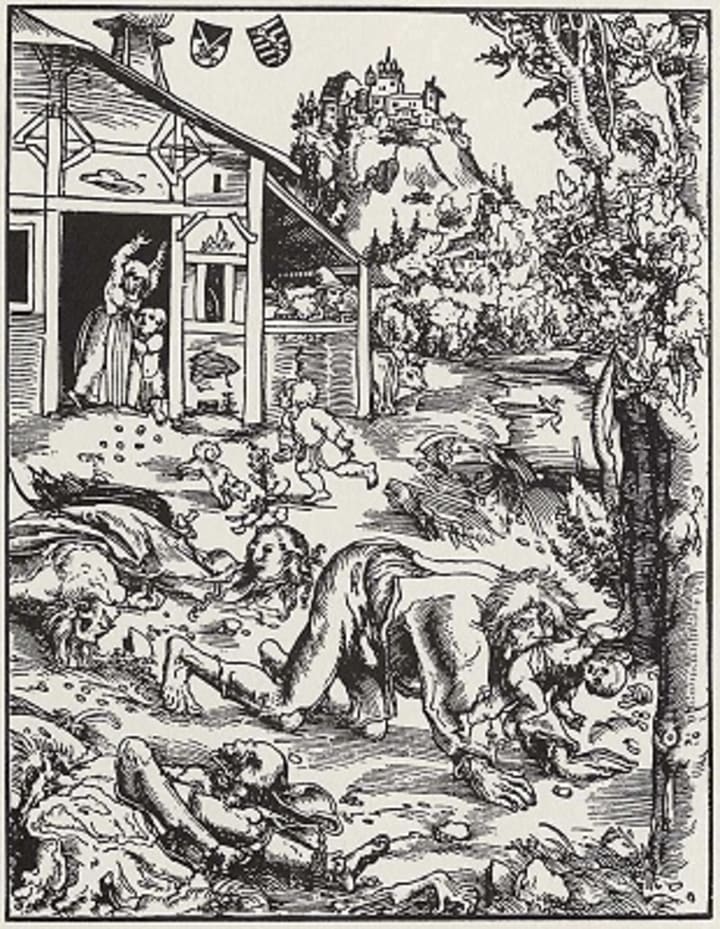
There were many other cases of werewolves in Chalons. This was clearly a hysteria that swept the entire region. One of the most shifty cases apart from Garnier was a man named Nicholas Damont. He was accused of similar crimes as Garnier, with similar evidence even being found. We have all heard about the witch hunts and the witch trials, but how many of us can say we have heard of the werewolf trials? Not many.
Here's why it is shifty. Many of the documents related to this era and these trials have been destroyed - this is especially true in the case of Nicholas Damont. When it comes to Garnier - many of the documents were either destroyed or fiction has taken over as the main narrative. The real question is: who were these people really?
Conclusion
It is most likely that these men were just regular tradespeople who others feared were socially recluse and were thus, doing something wrong. In reality, these were men who were either working or were hermits by choice. However, the fear that has been planted has resonated so much over the centuries that the reality may not matter anymore.
Next Week: The Dudleytown Curse
About the Creator
Annie Kapur
I am:
🙋🏽♀️ Annie
📚 Avid Reader
📝 Reviewer and Commentator
🎓 Post-Grad Millennial (M.A)
***
I have:
📖 280K+ reads on Vocal
🫶🏼 Love for reading & research
🦋/X @AnnieWithBooks
***
🏡 UK
Keep reading
More stories from Annie Kapur and writers in Geeks and other communities.
An American Tragedy by Theodore Dreiser
Theodore Dreiser’s An American Tragedy, first published in 1925, is a seminal work of American naturalism, drawing on real-life events to explore themes of ambition, class conflict, and moral ambiguity. Dreiser was inspired by the infamous Chester Gillette case of 1906, in which Gillette was convicted of murdering Grace Brown, a young woman who was pregnant with his child. The trial and its sensational coverage captivated the nation, providing Dreiser with a compelling framework for his novel.
By Annie Kapur6 months ago in Geeks
Silver Screen Magic with Mae West
American actress and singer Mae West became a popular film actress during the Great Depression. She started entertaining in vaudeville, then performed on Broadway, and finally went to Hollywood. She signed up with Paramount Pictures and made her debut in the 1932 film “Night After Night.” She also starred in musicals, comedies, and crime dramas. The American Film Institute named her one of the best classic Hollywood actresses.
By Rasma Raisters6 days ago in Geeks
Premier League in Denmark: How to Watch
The 2025–26 Premier League season is underway, marking the 34th edition of the competition and the 127th year of top-flight English football. Liverpool start their title defense with confidence after lifting their second Premier League trophy last season, but the return of Leeds United, Burnley, and Sunderland ensures fresh rivalries – including the long-awaited Tyne–Wear derby, back for the first time since 2015–16.
By David Cook6 days ago in Geeks
Wild Card Weekend Recap: What Happens Now?
I think I figured out why I love Wild Card Weekend so much. It's because it's the first playoff anything of the calendar year. The NFL season starts in the fall, and once upon a time, the champion was crowned either on or slightly before New Year's. The evolution of the NFL schedule has resulted in the playoffs starting just into the New Year, and currently, the final week of the season falls on the first weekend of the New Year, with Wild Card Weekend coming a week after that. So yes, chronologically, the NFL's Wild Card Weekend serves as the first playoff anything of the calendar year.
By Clyde E. Dawkins7 days ago in Unbalanced




Comments (3)
This was a great read, I'd been thinking about another Crime Chronicles entry with a story similar to the Werewolf of Bedburg. The Werewolf of Chalon is a good one that I'll have to look into, although, based on what you've written it doesn't seem like there's much to go on. Still, there's a great deal of monster-related crime stories. Nice work Annie!
I read about this ages ago and forgot about it. Thank you for showing how myths and small-mindedness can go too far.
Thank you for this interesting artickle although the title, image and author (you) drew me in