
The Strangest Discoveries That Made Their Finders Rich
7 Real-Life Treasure Hunts That Turned Ordinary People Into Millionaires
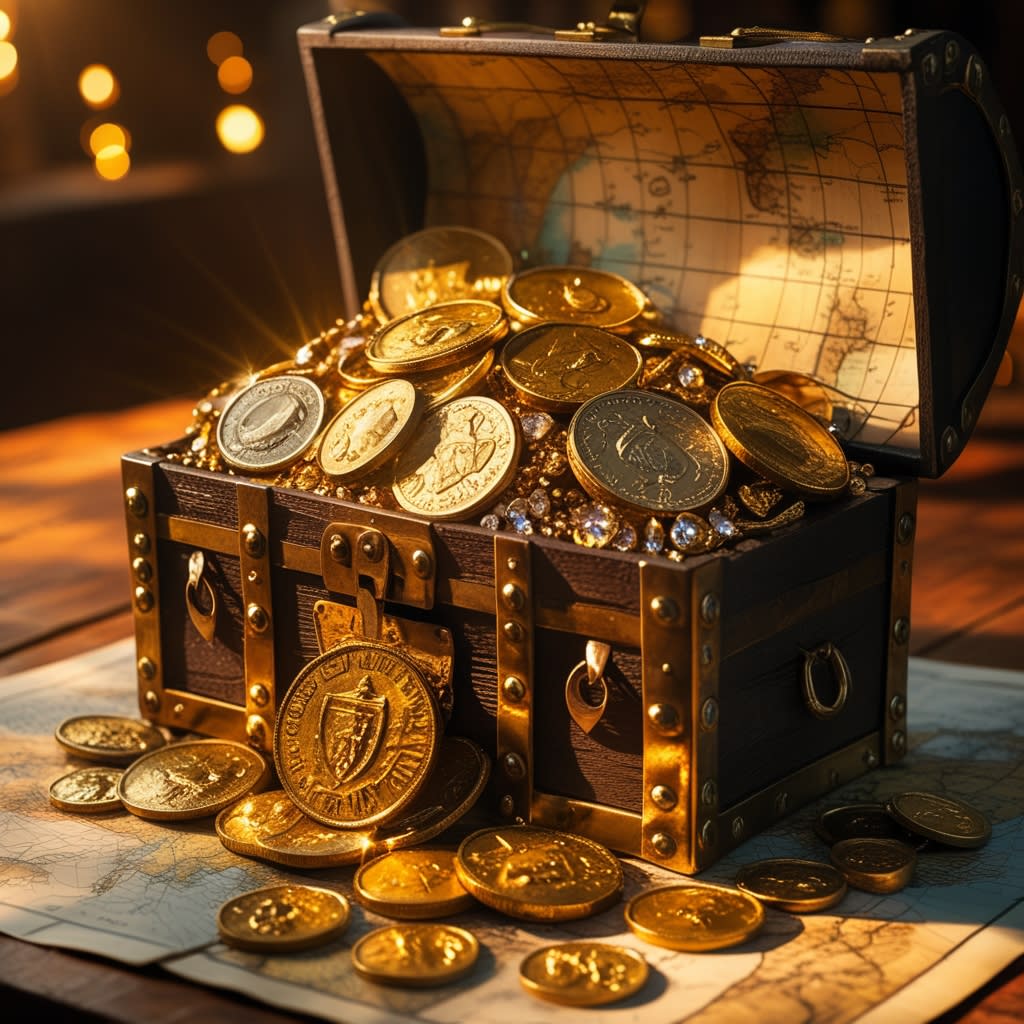
Throughout history, accidental and intentional discoveries have turned ordinary people into millionaires—or even billionaires—overnight. From hidden treasures buried for centuries to bizarre artifacts that rewrite history, some finds have not only amazed the world but also made their discoverers incredibly wealthy.
In this article, we’ll explore some of the strangest, most valuable, and most unexpected discoveries that transformed their finders into rich and famous figures. Each story is packed with mystery, luck, and sometimes sheer persistence.
We’ll dive deep into the circumstances of each discovery, the historical significance, the financial windfall, and the lasting impact. Some treasures were found by sheer accident, while others were the result of years of dedicated searching.
1. The Saddle Ridge Hoard – A Couple’s $10 Million Gold Coin Discovery
The Discovery
In February 2013, a couple (who chose to remain anonymous) were walking their dog on their rural Northern California property when they noticed a rusted metal can protruding from the ground. Curious, they dug it up—only to find it filled with shining gold coins from the 19th century.
Excited, they grabbed a small shovel and kept digging. Over the next few hours, they unearthed seven more cans, all filled with gold coins. In total, they found 1,427 coins dating from 1847 to 1894, most in near-mint condition.
The Contents of the Treasure
The coins included:
$5, $10, and $20 gold pieces
Rare 1866-S No Motto Double Eagles (worth over $1 million each)
Liberty Head and Indian Head designs
Experts believe the coins were deliberately buried in the late 1800s, possibly by a wealthy businessman hiding his fortune.
The Value & How They Cashed In
The total estimated value was $10 million. Instead of selling all the coins at once (which could flood the market and lower prices), the couple worked with coin experts and auction houses to sell them in batches.
The rarest coins went for over $1 million each in private auctions.
Some were donated to museums, earning them tax benefits.
They kept a few as family heirlooms.
Why This Discovery Was So Important
It was the largest buried treasure ever found in the U.S.
The coins were in pristine condition, making them even more valuable.
The mystery of who buried them and why remains unsolved.
2. The Hoxne Hoard – A Lost Hammer Leads to Roman Gold
The Discovery
In November 1992, English farmer Peter Whatling lost his hammer in a field in Suffolk. Frustrated, he asked his friend Eric Lawes, a retired gardener with a metal detector, to help find it.
As Lawes swept the field, his detector went wild. Instead of a hammer, he uncovered silver spoons, gold jewelry, and ancient coins. Realizing the significance, he stopped digging and called archaeologists.
What they found was astonishing: a wooden chest filled with Roman treasure from the 4th and 5th centuries.
The Contents of the Hoard
14,865 Roman coins (gold, silver, and bronze)
Gold body chains and bracelets
Silver spoons and ladles with Christian inscriptions
A rare gold aureus of Emperor Gratian
The Value & Reward
The British Museum declared it the largest Roman treasure ever found in Britain and acquired it for £1.75 million (about $3.5 million today).
Eric Lawes received £1.75 million (split with the landowner).
Peter Whatling got his hammer back—plus a £5,000 reward for reporting the find.
The Historical Significance
The hoard revealed:
Roman Britain’s wealth before the empire collapsed.
Early Christian influence (some spoons were inscribed with Christian symbols).
How Romans stored and buried their riches.
3. The Antikythera Mechanism – The World’s First Computer
The Discovery
In 1901, sponge divers off the coast of Antikythera, Greece, discovered a 2,000-year-old shipwreck. Among statues and pottery, they found a bizarre bronze device with gears.
At first, archaeologists thought it was an astrolabe. But decades later, X-rays revealed it was an ancient mechanical computer used to predict eclipses, planetary movements, and Olympic games.
How It Worked
The device had:
30+ interlocking bronze gears
Dials tracking the sun, moon, and planets
An eclipse prediction calendar
Why It’s Priceless
Older than any known clockwork by 1,000 years.
Proves ancient Greeks had advanced engineering.
Only one of its kind ever found.
The Financial Impact
While the mechanism wasn’t sold, the divers and archaeologists gained:
Global fame and research funding.
A deeper understanding of ancient technology.
4. The Staffordshire Hoard – A Metal Detector’s Anglo-Saxon Gold
The Discovery
In 2009, amateur treasure hunter Terry Herbert was scanning a field in Staffordshire, England, when his metal detector erupted with signals.
Over five days, he unearthed:
3,500+ pieces of gold and silver
Sword hilts, helmet fragments, and crosses
Intricate warrior decorations from the 7th century
The Value & Reward
The hoard was declared treasure trove and valued at £3.3 million ($4.5 million).
Herbert and the landowner split the reward.
Museums across the UK now display the artifacts.
Why It Rewrote History
Largest Anglo-Saxon gold hoard ever found.
Showed the wealth of ancient warrior kings.
Changed how historians view the "Dark Ages."
5. The Black Swan Project – $500 Million in Sunken Treasure
The Discovery
In 2007, Odyssey Marine Exploration discovered a sunken Spanish galleon off Portugal. Codenamed "The Black Swan," it held:
500,000 silver coins
Gold bars and jewelry
Precious gems
The Legal Battle
Spain claimed the treasure, leading to a 5-year court fight. Odyssey eventually had to return most of it—but kept some artifacts and data rights.
The Financial Fallout
Odyssey still profited from the recovered items.
Proved deep-sea treasure hunting could be lucrative.
6. The Cuerdale Hoard – Viking Silver in a Riverbank
The Discovery
In 1840, workers repairing the River Ribble’s bank in England found a lead chest containing:
8,600+ Viking silver items
Coins from as far as Baghdad
Hacksilver (cut-up jewelry used as currency)
The Reward
The workers were compensated, but the British Crown took most of it.
Why It Matters
Largest Viking silver hoard ever found in the UK.
Showed the extent of Viking trade networks.
7. The San José Galleon – The $17 Billion Shipwreck
The Discovery
In 2015, Colombia located the San José, a Spanish galleon sunk in 1708. It’s believed to hold:
200 tons of gold, silver, and emeralds
Priceless historical artifacts
The Ownership Battle
Colombia, Spain, and salvage companies are still fighting over rights.
Potential Impact
Whoever wins could become billionaires.
Could rewrite colonial history.
Conclusion: The Thrill of the Hunt
These discoveries prove that treasure is still out there—whether buried in a field, lost at sea, or hidden in plain sight. Some finds were pure luck, while others took years of research.
Could you be the next to strike it rich? Keep exploring—you never know what’s waiting beneath your feet!
About the Creator
The Rachels - 2025
Much to my surprise, I have kept a list of the films I‘ve seen this year. I daresay it isn’t complete. There will be films that snuck in on a late night in front of the TV that I would’ve forgotten to note. Or others, that I went to watch at the cinema, but then had a red wine and promptly forgotten about. But it’s not a bad approximation of the films I’ve seen this year. In total, there are 53 films listed, so an average of one a week and one for good luck.
By Rachel Robbins19 days ago in Geeks


Comments
There are no comments for this story
Be the first to respond and start the conversation.