
The Sealed Soil (1977): Marva Nabili’s Quiet Masterpiece of Feminist Resistance Returns to the Screen
The Sealed Soil (1977), the first surviving film by an Iranian woman made in Iran, returns in a stunning 2025 restoration. Marva Nabili’s feminist masterpiece is a quiet, visual meditation on resistance, solitude, and meaning.

The Sealed Soil is a miracle in the form of a movie. Written and directed by Marva Nabili, it is the earliest surviving film by an Iranian woman made in Iran. That the film was even made in 1977 was a monumental achievement. That it survives today, especially considering that Nabili had to flee her home country before the Iranian Revolution, is nothing short of miraculous.
Nabili preserved The Sealed Soil in its original 16mm format for over four decades—a painstaking labor of love. Now, thanks to a remarkable restoration by the UCLA Film & Television Archive, this hidden gem is returning to the big screen. The official re-release date is May 30th, 2025, and with it, the miracle continues.
The film stars Flora Shabaviz as a young woman living a quiet life in a small Iranian village where everyone knows everyone. At 18, she has managed to remain unmarried, despite growing pressure from her family and community. Her mother, we learn, was married at the age of 7. Yet our heroine continues to resist, clinging to a life of solitude, daily ritual, and moments of escape into a nearby field where she collects herbs and flowers.
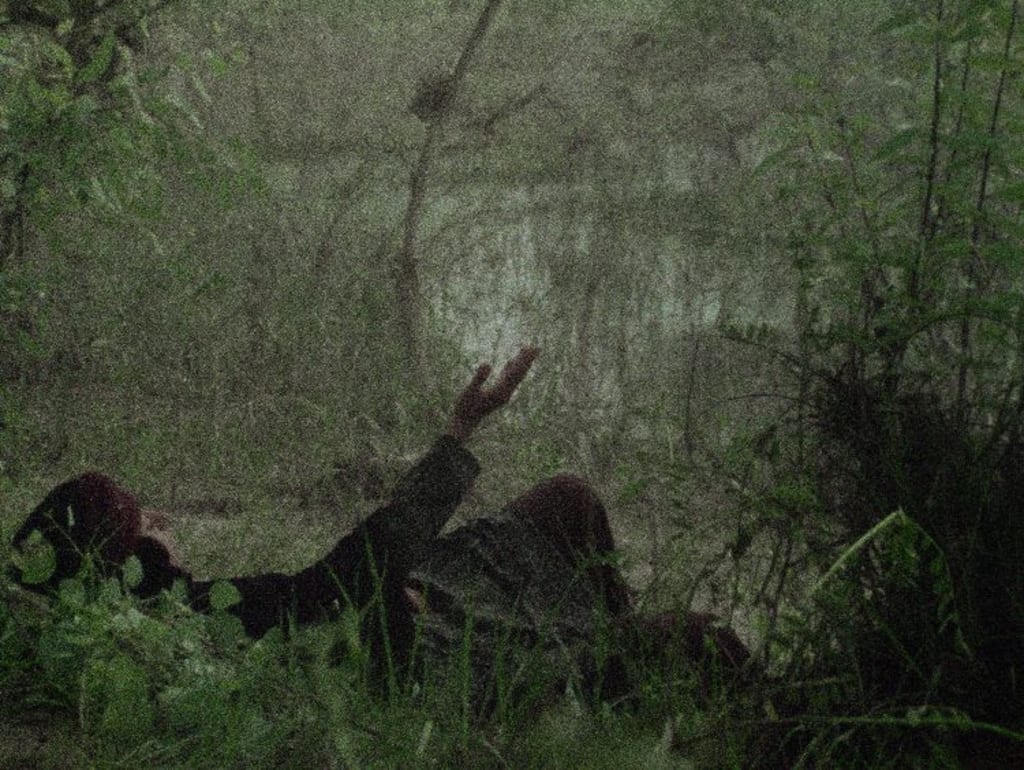
Dialogue is sparse in The Sealed Soil. Most of the story unfolds through imagery—composed, deliberate, and deceptively simple. Long, static takes allow visual motifs to build meaning over time. One recurring motif is an archway—the entry point to the village, and symbolically, to the heroine’s world. We repeatedly see her pass through this arch to reach her sanctuary: a muddy, green-brown field by a stream. Ostensibly, she goes there to gather herbs. But it becomes clear, through multiple visits, that this is her emotional and spiritual refuge.
As the film progresses, the meaning of the arch evolves. What once marked solitude becomes a place of spectacle when the entire village walks through it with her, believing she’s cursed. They escort her to a healer’s temple, which also features an arch—but Nabili notably avoids framing her heroine in this second arch. It’s a subtle visual statement. The original arch stands for home and personal freedom; the temple’s arch offers neither comfort nor liberation. Through these meticulously composed shots, Nabili develops a visual language as eloquent as any script.
Routine is another major theme. In a series of tranquil early-morning scenes, we watch the heroine prepare breakfast, tend to her siblings, and go about her day in near silence. These moments are poetic, serene, and emotionally charged—anchored in repetition, domestic labor, and private thought.
Scholar Sara Saljoughi, in Feminist Media Histories, aptly describes The Sealed Soil as “The Cinema of Refusal.” That description couldn’t be more accurate. The protagonist refuses to marry, refuses to give up her solitude, and refuses to surrender her inner world. In turn, the film itself refuses to spell everything out. There is no expository dialogue, no moral hand-holding. You are asked to interpret what you see, to meet the film on its own terms.
This can be challenging, particularly for audiences raised on mainstream films where meaning is delivered with blunt clarity. That doesn’t mean this type of storytelling is superior—but it is more demanding. And if you’re willing to engage with that challenge, The Sealed Soil becomes a profoundly rewarding experience.
The film reminded me of Jeanne Dielman, 23 quai du Commerce, 1080 Bruxelles by Chantal Akerman—one of my all-time favorite European films. Both works use patient storytelling and spatial composition to achieve a rare kind of intimacy. Their quietude invites our minds to wander, to empathize, and to search for meaning in gestures, routines, and stillness.
In both The Sealed Soil and Jeanne Dielman, the silence is simultaneously soothing and unsettling. Soothing, because silence is a rarity in modern life. Unsettling, because being left alone with our thoughts—without a musical cue or clever line of dialogue to guide us—can be disorienting. What does it mean to simply watch a woman prepare grain while chickens peck nearby? It means whatever you decide it means. The film doesn’t offer answers, only the space to discover your own.
If you find that boring, maybe it says more about you than the film. Maybe it means you can’t bear to be alone with your own thoughts. The Sealed Soil, like Jeanne Dielman, dares you to sit in stillness, to think, to feel, and to interpret. The repeated use of arches, for example, is never directly acknowledged—but they stuck with me. Whether Nabili intended them as symbols or not, they became meaningful through repetition, through context, through my own reflection.
The Sealed Soil is a rare and enriching experience. It’s beautiful, patient, and aching with unspoken emotion. In the quiet spaces between images and ideas, a bond forms—between you and the film, and between your own life and the life onscreen. In that bond, there is reflection, empathy, and an invitation to look more closely at what we often overlook.
Find my archive of more than 24 years and more than 2700 movie reviews at SeanattheMovies.blogspot.com. Find my modern review archive on my Vocal Profile, linked here. Follow me on Twitter at PodcastSean. Follow the archive blog on Twitter at SeanattheMovies. And join me on BlueSky linked here. Listen to me talk about movies on the I Hate Critics Movie Review Podcast. If you have enjoyed what you have read, consider subscribing to my writing on Vocal. If you'd like to support my writing, you can do so by making a monthly pledge or by leaving a one time tip. Thanks!
Tags: Iranian cinema, Marva Nabili, feminist film, The Sealed Soil, international film, Iranian women directors, 1970s cinema, Jeanne Dielman, art house film, film restoration
About the Creator
Sean Patrick
Hello, my name is Sean Patrick He/Him, and I am a film critic and podcast host for the I Hate Critics Movie Review Podcast I am a voting member of the Critics Choice Association, the group behind the annual Critics Choice Awards.
Keep reading
More stories from Sean Patrick and writers in Geeks and other communities.
Silver Screen Magic with Mae West
American actress and singer Mae West became a popular film actress during the Great Depression. She started entertaining in vaudeville, then performed on Broadway, and finally went to Hollywood. She signed up with Paramount Pictures and made her debut in the 1932 film “Night After Night.” She also starred in musicals, comedies, and crime dramas. The American Film Institute named her one of the best classic Hollywood actresses.
By Rasma Raisters6 days ago in Geeks
The Jennifer Lopez movie nobody wanted to be in: “I don’t want to force anyone”
It must be quite strange to be as famous as Jennifer Lopez. She is in the echelon of celebrities in which there is basically not really a person on the planet who doesn’t know who you are, or has at least heard of you, and that must come with issues on a daily basis, I’d imagine. It’s probably not a surprise, then, that she tends only to fraternise with other famous people.
By Dena Falken Esq4 days ago in Geeks


Comments (1)
This film sounds really interesting. It's amazing that it survived all these years. I'm curious how the sparse dialogue and imagery will play out on screen. And that archway motif seems like it'll add a lot of depth. Can't wait to see it in 2