
The Reckoning of 'Mr. McMahon' Vince Told Us Who He Was Years Ago, We Didn't Listen
Vince McMahon told on himself years before the lawsuit that exposed his monstrous personal life.

“When someone tells you who they are, believe them.” - Maya Angelou.
While I am sorry to bring Maya Angelou into a conversation about Vince McMahon, the vile, loathsome, egotistical founder of the WWE, her quote is too perfect not to mention in relation to a man who wants to disconnect his personal and professional personas but has done a remarkably poor job of that. For many, many years, Vince McMahon appeared on his nationally broadcast television programs and told us exactly who he was, a greedy, misogynistic, creep who rode a wave of depravity to the top of his particular industry.
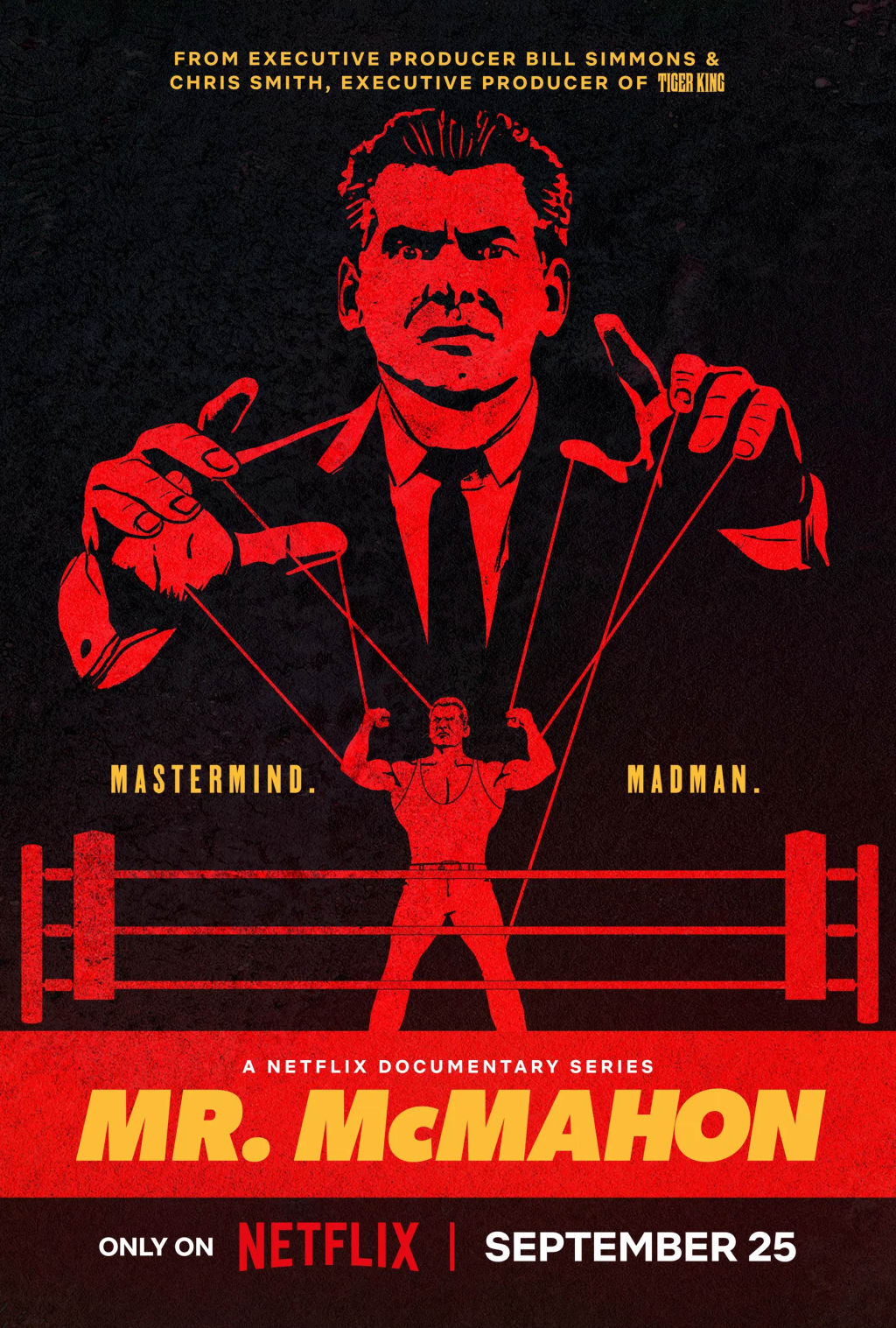
Many a disingenuous soul will smugly reveal their own shortcomings by saying “Mr. McMahon is a character that Vince McMahon played on television.” But, based on what has come out from the lawsuit involving McMahon forcing transactional sexual encounters upon a female employee and the testimony of people who have worked closely with Vince McMahon for many years, as documented in a new Netflix documentary, Mr. McMahon, it’s clear that the actions taken on WWE television were not so far removed from the actions occurring in Vince McMahon’s personal life.
In this article, I want to highlight and examine one particularly glaring and undeniable point where the Vince McMahon of the Janel Grant lawsuit crosses over to WWE television in terrifying and disturbing fashion. In March of 2001 the owner of the WWE on live television had a female performer perform in a story where, in the ring, in front of a crowd of thousands in attendance and millions of people watching on live television, the female employee was made to get down on all fours and bark like a dog before then being berated into taking her clothes off.
Trish Stratus was a 25 year old fitness model when she landed a big break by joining the roster of the then World Wrestling Federation. After a few months with the company, Trish was offered a major opportunity, a chance to become the on-air protege of the owner of the company Vince McMahon. Her story would be that she was conspiring with Mr. McMahon to drug and sedate Vince’s wife and the CEO of WWE, Linda McMahon. Meanwhile, with Linda catatonic like a character on a soap opera, Vince would proceed to humiliate and berate his real life wife while lewdly enacting intimacy with Trish Stratus.
Then, in March of 2001 something happened that led the Mr. McMahon's character to become angry at Trish. He decided that he needed to punish her and he needed to do it in the ring for the world to see. Thus, Vince McMahon, in his early 50s at this point and, again, the owner of the company and the head of the company creative department in charge of writing and creating the stories that he was also acting in, wrote a story where he verbally degrades Trish Stratus, physically intimidates her and forces her, while crying, to get on her hands and knees and bark like a dog, all while a slavering mass of men and boys hooted and hollered in approval and others stood dumbfounded.
Once allowed to stand up, the segment didn’t end. McMahon continued the verbal denigration and then he ordered Trish Stratus to take off her clothes. In several of the most uncomfortable minutes ever broadcast on live television, Stratus removed her clothes and stood in just her underwear in the ring when McMahon finally demanded that she remove her bra. In tears and shaking, Stratus begins to follow the screamed demand until McMahon stops her, fully aware of the fact that even on pay cable, naked breasts were not permissible.
I can hear the keyboard warriors rushing to defend this gross, disgusting and indefensible display. “It’s just a story.” “Trish was okay with it.” “It was a different time.” For the record, I was among the slavering masses watching WWE TV on the night this angle aired. I don’t remember whether I was bothered by the angle or cheering it. Like Trish Stratus, I was in my mid-twenties and having grown up with wrestling and lived through the chaos of the so-called ‘Attitude Era,’ I was used to a lot of misogyny on WWE TV. I’d seen elderly women smashed through tables, women having miscarriages as part of wrestling stories, and other such forms of awful taste.
So, did I cheer for this? Maybe. But even if I didn’t, I didn’t speak out against it. I voted with my remote control and kept watching. I was complicit in this. And that’s what I am truly trying to confront in this article. I was part of what enabled Vince McMahon to be Vince McMahon as were millions of other people who lined his pockets via television ratings and merchandise and ticket sales. By turning a blind eye to stories like this, I was making these stories not only possible, but profitable. And, after watching the Netflix Documentary, that feeling won’t go away.
For her part, Trish Stratus appears in the Mr. McMahon documentary and she does say that the story was pitched to her and she performed it as instructed and didn’t have a problem with doing it. I’m glad she wasn’t traumatized. I’m glad she’s able to look at this without self-loathing or other such negative feelings. I am not here to tell Trish Stratus or you, dear reader, how to feel about this wrestling story or Vince McMahon in general. But, it’s important to consider this story in an honest manner that I feel is missing from the Netflix documentary, which glosses over this angle in unfortunate ways,
Vince McMahon may be playing an evil television character named Mr. McMahon but he’s also still Trish Stratus’ boss. He was still the head of the company, the lead creative force behind everything WWE put on television. He’s a billionaire business owner and Trish Stratus is a 25 year old neophyte trying to make a mark in the wrestling industry. There is no reality where Trish Stratus could say no to going to the ring and barking like a dog and stripping off her clothes. If she had, she’d have likely been punished either by being further humiliated on television or by not being used, or by simply being fired.
And this isn’t conjecture because in the same interview from the same Netflix documentary, Trish Stratus openly discusses how Vince McMahon would punish performers who refused to perform a story they were uncomfortable with. When Trish ascended in the business and became the WWE Women’s Champion, she was asked to perform in an angle where she would make out with a fellow female performer in an angle on television. Trish went to Vince McMahon and stated that she did not want to do this. A week later, Trish Stratus lost her place as the top female performer on the WWE roster. By her own admission, Stratus believed that she lost her championship because she was being punished by Vince McMahon.
With that as context, can you really sit there and tell me that a younger and newly hired Trish Stratus could have said no to barking like a dog and stripping on television without fearing for her newfound livelihood? The power dynamic between Vince McMahon and Trish Stratus makes this story, this angle, a very clear cut case of sexual harassment. It’s a very clear case of Vince McMahon publicly abusing his power and his place. Trish Stratus could not have refused to perform that night without the very real threat of losing her job and no matter how ‘fake’ wrestling is or how it’s a scripted TV show just like any other soap opera, this was wrong. This was a vile and indefensible abuse of power.
This was Vince McMahon telling us who he really is.
About the Creator
Sean Patrick
Hello, my name is Sean Patrick He/Him, and I am a film critic and podcast host for the I Hate Critics Movie Review Podcast I am a voting member of the Critics Choice Association, the group behind the annual Critics Choice Awards.
Reader insights
Outstanding
Excellent work. Looking forward to reading more!
Top insights
Easy to read and follow
Well-structured & engaging content
Expert insights and opinions
Arguments were carefully researched and presented
Heartfelt and relatable
The story invoked strong personal emotions
Masterful proofreading
Zero grammar & spelling mistakes
On-point and relevant
Writing reflected the title & theme
Keep reading
More stories from Sean Patrick and writers in Geeks and other communities.
Silver Screen Magic with Mae West
American actress and singer Mae West became a popular film actress during the Great Depression. She started entertaining in vaudeville, then performed on Broadway, and finally went to Hollywood. She signed up with Paramount Pictures and made her debut in the 1932 film “Night After Night.” She also starred in musicals, comedies, and crime dramas. The American Film Institute named her one of the best classic Hollywood actresses.
By Rasma Raisters7 days ago in Geeks
Jungle Beat 2: The Past – A Heartfelt Animated Adventure
Animated films often entertain us with bright colors, expressive characters, and playful humor, but the best ones do something more—they tell stories that resonate across ages. Jungle Beat 2: The Past is one such film. Building on the charm of its predecessor, this sequel expands the Jungle Beat universe by diving into themes of memory, identity, and the importance of understanding one’s roots. While it remains lighthearted and family-friendly, the movie carries emotional depth that makes it memorable long after the credits roll.
By David Cook3 days ago in Geeks


Comments (1)
It's horrendous that any industry can treat women like that, and thank you for sharing your story, because it is stories like these that help us to see through behaviour that many might not understand.