
The Quiet December Acquisition:
How Meta and Google Shifted the Boundaries of Your Private Life


Digital systems don’t take privacy in dramatic sweeps. They collect it in quiet increments.
- A phrase added to a policy.
- A default switched on without clear consent.
- A feature introduced under the promise of convenience.
The December Meta update landed exactly in that pattern. It wasn’t an alarm bell. It was a recalibration of what companies now feel entitled to gather.
Jimmy Dore’s segment sparked public concern by suggesting Meta would begin reading private DMs on December 16th. The claim wasn’t born from nowhere. Meta did publish language that would make any reasonable person stop mid-sentence. “We collect your activity… including the content of your messages.”
When a corporation known for past overreach writes like that, people react. The phrasing was sloppy, maybe intentional, maybe not, but it created an immediate break in the illusion that private channels were still sacred.
Technically, Meta did not open the encryption wall. WhatsApp and private messages on Facebook and Instagram remain shielded unless a user chooses to involve Meta’s AI assistant.
- The risk isn’t that Meta is suddenly combing through back-and-forth conversations.
- The risk is how easily people can be pulled out of an encrypted space without realizing it.
A tap on the Meta AI button. A suggestion from the interface. A convenience feature that reshapes legal protections without ever stating it plainly.
Public content, photos, comments, and any interaction with Meta’s AI tools now serve as training material unless a user objects. The objection exists, but the placement is buried and mobile apps redirect people away from the actual form. Anyone who understands interface behavioral design can see what that strategy accomplishes. Compliance through exhaustion.
The staggered rollout dates add another layer. EU and UK users were delayed until March because their laws force a different calculus. Everywhere else had to navigate it without structural guardrails. Policies shouldn’t require a maze to interpret, yet here we are. People with no legal training now have to decipher corporate language that has been refined specifically to reduce friction for extraction.
The public confusion created an opening for something more dangerous than the policy itself. Once people think their DMs are being read, trust fractures. When trust fractures, even accurate information becomes harder to convey, and opportunists step in. That’s how misinformation hardens into permanent belief. But correcting the misunderstanding should never be used as a shield to distract from the actual issue: Meta expanded its access to user data in a way that normalizes surveillance culture, even if the details weren’t as dramatic as the rumors.
Then there is the internal reality. Meta’s former Head of Security now claims in litigation that thousands of engineers have access to user systems and that the company fails to prevent massive numbers of account breaches. If that is accurate, the encryption debate becomes a smaller problem than the human one. Encryption means nothing when internal access controls are compromised or poorly maintained. Corporations like to reassure the public with technical language. Anyone trained in forensic work knows to watch the structural integrity, not the press release.
Google runs a parallel system with different vocabulary. Gemini Apps Activity is turned on for many users, and their chats feed training models unless they disable the setting.
- Turning it off works, but it doesn’t remove what was already used.
- The deletion option helps, but the company retains some material for safety checks.
Public website content is fair game for training unless a site owner blocks the AI crawler manually. Gmail’s smart features need separate settings. Web and App Activity controls sit under another menu. This is not an accident. Fragmentation creates fatigue.
People are expected to monitor privacy settings across companies built on the premise that data is their fuel. There is no practical way for the average person to keep pace. The result is a population that believes they understand privacy because they checked a box once, while the fine print quietly updates under their feet.
This isn’t about panic. It’s about acknowledging the pattern. Systems ask for a little more each year.
- Law enforcement agencies increasingly request social media data.
- Some countries arrest people over posts.
- Algorithms score behavior.
- Cars monitor passengers.
- Banks track habits.
- Phones record proximity data.
The digital world has stopped asking permission. The only question that matters to these companies is whether they can.
People often tell themselves they have nothing to hide. It’s the wrong frame.
- Privacy is not about secrecy.
- Privacy is about control, especially in environments where information can be misinterpreted, weaponized, or scraped into models that don’t allow users to understand how their own life influenced the output.
The absence of wrongdoing has never protected anyone from mischaracterization.
Opting out of Meta’s AI training requires using a desktop browser, navigating to the Privacy Center, and submitting a formal objection. Opting out of Gemini data use requires opening the Gemini Activity panel and turning off the setting. Website owners must modify their robots file if they want to prevent training on their content. You can also set your private messages to self-destruct. You can also see if Facebook is following you offline. If you are sick of seeing the same spammy ads on your timeline, you can stop them all here. Finally, see what Meta AI saves about you.
None of this should require expert knowledge, yet 100% of the burden has shifted onto the user... that's us.
There is no singular moment when privacy disappears. It dissolves the same way physical evidence degrades at a crime scene. Environmental factors, time, neglect, and the slow acceptance of things people never wanted in the first place. When companies write policies that collapse the distinction between “private” and “accessible,” the public adjusts without realizing what changed. People assume encryption guarantees safety. It does only until the interface moves them into a non-encrypted space without clearly stating what they’ve traded.
The December noise around Meta revealed a public instinct that shouldn’t be ignored: people sense they are losing control, even if they can’t articulate the technical mechanics. That instinct is correct. The problem is no longer the headline. The problem is the system that now treats personal content as an acceptable commodity. And the burden for resisting it has been shifted entirely to the individual who is already fatigued, over-notified, and under-informed.
That's why I wrote this article; I truly hope it was helpful.
Sources That Don’t Suck:
Meta Privacy Center
Meta Privacy Policy (2025 Update)
Google Gemini Privacy Documentation
Google MyActivity
European Data Protection Board
Court filings involving former Meta Security leadership
Independent digital rights organizations
Electronic Frontier Foundation (EFF)
Center for Humane Technology
About the Creator
Dr. Mozelle Martin | Ink Profiler
🔭 Licensed Investigator | 🔍 Cold Case Consultant | 🕶️ PET VR Creator | 🧠 Story Disrupter |
⚖️ Constitutional Law Student | 🎨 Artist | 🎼 Pianist | ✈️ USAF
Keep reading
More stories from Dr. Mozelle Martin | Ink Profiler and writers in Geeks and other communities.
Human Bandwidth Crisis
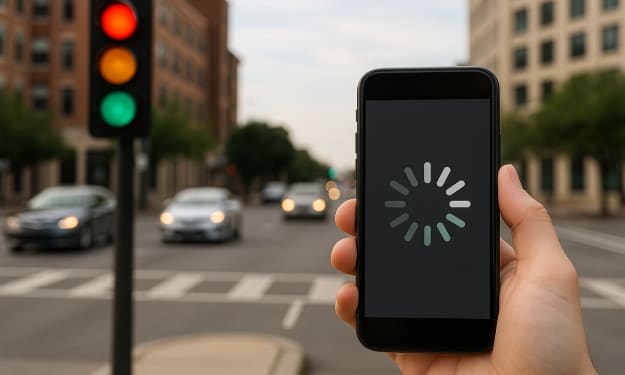
Across the continental United States, synchronized slowdowns are being recorded in two parallel systems: human motor behavior and digital network performance. The symptoms appear ordinary at first glance — drivers idling through green lights, app interfaces hesitating, signals buffering — yet the frequency and simultaneity indicate a broader malfunction.
By Dr. Mozelle Martin | Ink Profiler3 months ago in Geeks
Marvel Zombie
The last entry into our 2025 superhero projects catalogue is Marvel Zombies. This was a show that was anticipated by absolutely no one and it disappeared from the public consciousness as quickly as it was released. There was nothing special about the project that made it a must see, or a must remember. In fact if anything it's a must forget.
By Alexandrea Callaghan16 days ago in Geeks
Best VPN for Hulu
Hulu is a major American subscription streaming service, majority-owned by Disney, offering a vast library of on-demand TV shows, movies, and critically acclaimed "Hulu Originals," often with next-day access to current network TV episodes, plus options for live TV, premium channels (like HBO, Showtime), and bundles with Disney+ and ESPN+.
By David Cook6 days ago in Geeks
Fair Exchange, No Robberies
Dark Memoirs - Index There are at least two kinds of people in the world: those who write this half-arsed kind of intro to a story that looks to separate the rare and the norm, and those who realise it's an overused framing device and don't.
By Paul Stewart6 days ago in Chapters



Comments
There are no comments for this story
Be the first to respond and start the conversation.