
The Penguin: Redefining the Antihero with a Cast of Unrootable Characters
Antiheroes and the Challenge of Empathy

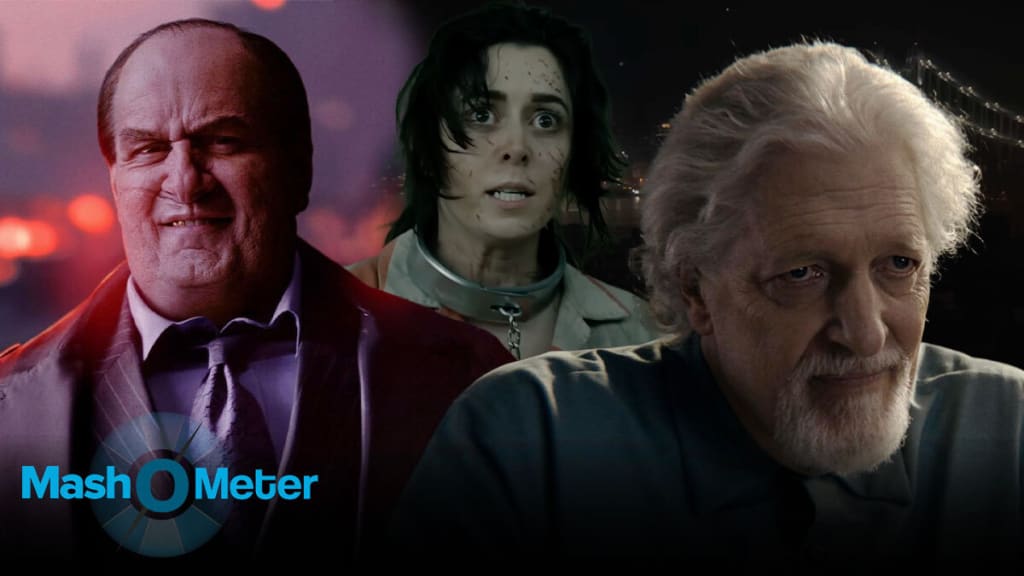
The TV series The Penguin has made waves in popular culture, not only for its gritty narrative but for its revolutionary approach to storytelling. Unlike many shows that rely on morally ambiguous antiheroes to create emotional attachment, The Penguin presents a universe where almost no character is worth rooting for. In a departure from traditional character dynamics, this strategy gives the antihero a new dimension and meaning — challenging the audience to engage with the story on intellectual and thematic levels rather than purely emotional ones.
Antiheroes and the Challenge of Empathy
In the landscape of contemporary television, the antihero is no stranger to audiences. Characters like Tony Soprano and Walter White are deeply flawed but are given enough depth and relatability to foster a complex form of viewer empathy. Jason Mittel, in his work on quality television, discusses how these antiheroes became a way for audiences to confront moral ambiguity and societal criticism. Yet The Penguin takes a different path. Here, no character is constructed to engender full sympathy or empathy; instead, they are morally compromised to a point where viewers are distanced from them, forced to observe rather than identify.
This approach adds a revolutionary twist to the antihero trope. By not offering the audience a clear focal point for empathy, The Penguin forces viewers to grapple with moral ambiguity at a different level. Instead of asking, “How can I relate to this character?” the show encourages viewers to question the nature of the world it portrays — a world where moral and ethical lines are not merely blurred but are entirely absent. This makes The Penguin more akin to a noir narrative, where the audience is drawn into a morally gray universe that reflects the complexities of contemporary urban life.
The New Dimension of Antiheroes: No Redemption in Sight
Typically, antiheroes gain viewer sympathy through backstory or vulnerability, as theorized by Murray Smith, who discusses how narrative techniques like point-of-view shots and inner monologues align audiences with complex characters. Yet in The Penguin, these techniques are subverted. The titular character, Oswald Cobblepot, and his surrounding figures are presented without moments of real redemption or relatability. Their motivations are driven by power, greed, and survival, often at the expense of others. Even when viewers are offered glimpses into their past or personal suffering, these insights do little to humanize them; instead, they amplify the characters’ ruthlessness.
This subversion challenges the very purpose of antiheroes, suggesting that perhaps some stories are not about moral growth or redemption but about the darker, unchangeable nature of individuals within corrupt systems. In rejecting redeeming arcs, The Penguin asks whether a character needs to be sympathetic to be compelling, and it suggests that the answer might be no. The series’ bleak portrayal implies that some individuals, especially those shaped by violent or criminal circumstances, may indeed be beyond empathy — a bold thematic move that redefines the antihero from someone we might root for to someone we must simply observe.
Social Critique through Nihilism and Cynicism
With this approach, The Penguin mirrors real-life systemic failures, in which individuals like Oswald Cobblepot rise through sheer will and lack of scruples rather than personal merit. Scholars like David Koepsell have noted that antiheroes often embody critiques of social and economic systems that reward ambition over morality. In this show, characters aren’t positioned as lone rogues challenging a corrupt system; instead, they are part of the system, willing players in a morally bankrupt society where survival is the only rule. Through Cobblepot, The Penguin critiques capitalist and urban power structures that enable the ruthless and punish the weak, showcasing a world where only the strong — or the most corrupt — can survive.
This criticism is embedded in the show’s aesthetic choices as well. The dark, often brutal landscape of Gotham City serves as a reflection of its inhabitants’ nihilism and cynicism. Unlike the moral conflicts seen in previous antihero-centered shows, where viewers are pulled into the psychological struggles of a flawed protagonist, The Penguin portrays characters whose goals are coldly pragmatic and self-serving. The audience is thus distanced from feeling any empathy, asked instead to view the narrative through a lens of societal critique, understanding that in a system designed for the Cobblepots of the world, survival comes at the cost of morality.
A Postmodern Take on the Antihero Genre
Diane Negra and other scholars of postmodern media suggest that our cultural saturation with antiheroes has desensitized audiences, necessitating fresh takes on the trope. The Penguin offers a postmodern perspective that reframes the antihero by removing the need for personal connection or moral justification. This approach subverts audience expectations and responds to a post-2020 cultural shift toward disillusionment and skepticism. By rejecting the redeemable antihero, The Penguin holds up a mirror to our own fractured society, questioning whether our admiration for antiheroes has always been misguided.
Through this lens, the series challenges the very concept of heroism, anti or otherwise. Cobblepot is not a misunderstood man striving for something better; he is a product of an unforgiving world who does not aspire to goodness. In this way, The Penguin shifts the focus from character redemption to societal critique, portraying a world where individual morality has little impact on the larger cycle of violence and corruption. It reflects a broader, perhaps darker, understanding of human nature and societal systems that do not reward virtue.
Conclusion: The Antihero as a Critique of Viewer Expectation
In eschewing a character for audiences to root for, The Penguin revolutionizes the antihero genre, forcing a reconsideration of what makes a protagonist compelling. By not aligning viewers with any one figure, the show challenges conventional storytelling, making a statement that perhaps some worlds, and the people within them, cannot be redeemed or understood in moral terms. This narrative choice reflects a cynicism that is both timely and reflective of a world grappling with complex, often unsolvable issues.
Through The Penguin, we are invited to witness rather than empathize, to critique rather than identify, ultimately rethinking what it means to engage with an antihero. It’s a bold redefinition that may pave the way for future explorations of the antihero in television — a genre where viewers are no longer called upon to root for anyone.
About the Creator
Nazgol Rasoolpour
An emerging researcher with a passion for horror narrative. My focus revolves around the captivating subgenres of religious horror and techno horror.
Reader insights
Outstanding
Excellent work. Looking forward to reading more!
Top insights
Expert insights and opinions
Arguments were carefully researched and presented
Compelling and original writing
Creative use of language & vocab
Easy to read and follow
Well-structured & engaging content
Eye opening
Niche topic & fresh perspectives
Keep reading
More stories from Nazgol Rasoolpour and writers in Geeks and other communities.
“Substance: From Initial Praise to Increasing Criticism — Exploring the Divergent Reception of Feminist Horror”
After its initial release, Substance quickly captured attention as a stylistically bold entry into the realm of feminist horror cinema. Early reactions lauded its unflinching portrayal of female bodily struggles and the pressures of the entertainment industry. However, the conversation has shifted as audiences have had more time to digest the film. Substance now feels lacking for many viewers - overlong, thematically shallow, and reliant on shock rather than depth. This article explores the factors that have turned initial praise into growing criticism.
By Nazgol Rasoolpourabout a year ago in Geeks
Silver Screen Magic with Mae West
American actress and singer Mae West became a popular film actress during the Great Depression. She started entertaining in vaudeville, then performed on Broadway, and finally went to Hollywood. She signed up with Paramount Pictures and made her debut in the 1932 film “Night After Night.” She also starred in musicals, comedies, and crime dramas. The American Film Institute named her one of the best classic Hollywood actresses.
By Rasma Raisters7 days ago in Geeks
Conformity Gate: The Stranger Things Theory That Refused to Die
When the final episode of Stranger Things dropped on Netflix on New Year's Eve, millions of fans expected closure. Instead, they got chaos—and a viral conspiracy theory that would dominate social media for weeks.
By Md. Nurul Afsar3 days ago in Geeks


Comments (1)
It absolutely broke my heart when he killed that sweet boy in cold blood...but yet again it was a story about a well stablished bad character