
“Substance: From Initial Praise to Increasing Criticism — Exploring the Divergent Reception of Feminist Horror”
Do We Love It, or Do We Hate It?

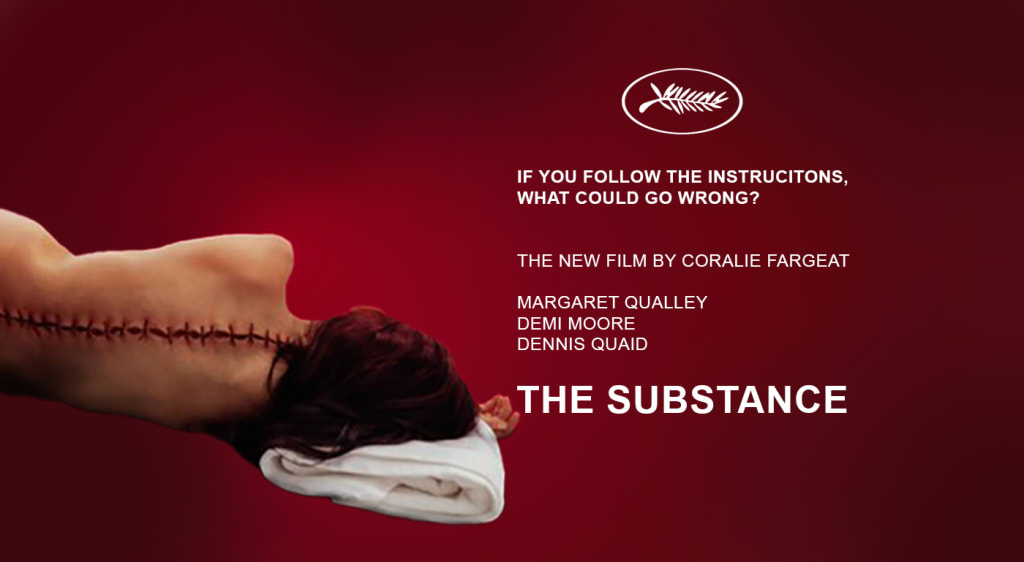
After its initial release, Substance quickly captured attention as a stylistically bold entry into the realm of feminist horror cinema. Early reactions lauded its unflinching portrayal of female bodily struggles and the pressures of the entertainment industry. However, the conversation has shifted as audiences have had more time to digest the film. Substance now feels lacking for many viewers - overlong, thematically shallow, and reliant on shock rather than depth. This article explores the factors that have turned initial praise into growing criticism.
1. Length and Pacing: A Story that Outstays Its Welcome
At 2.4 hours, Substance is undeniably ambitious, but many argue that this ambition is its undoing. Audiences often comment that the film's length does not serve its narrative complexity. The story, which portrays a woman grappling with societal pressures, feels stretched to accommodate stylistic flourishes and prolonged tension that detracts from thematic coherence. Some viewers note that while horror often benefits from suspenseful pacing, in Substance, the suspense doesn't add enough to the plot or character development to justify the runtime. Instead, the film seems to spiral into a repetitive cycle that leaves viewers disengaged before the climax. This excessive length leads to pacing issues, making even the most intense scenes feel diluted.
2. A Hollow Denouement: Shock Value over Substance
The film's bloody, violent conclusion, intended to be cathartic, has left many viewers feeling empty. While horror fans often enjoy a shocking climax, this one appears incongruous, feeling like an indulgent addition meant solely to provoke. Critics argue that the film sacrifices meaningful resolution for spectacle. Rather than connecting back to the film's themes of consumerism, patriarchy, and personal struggle, the finale becomes a disjointed display, highlighting the lack of cohesion between the film's message and its execution. This has left many viewers perceiving Substance as an attempt to shock rather than a genuine exploration of the issues it claims to depict.
3. Stylized Male Stereotypes: An Oversimplification
Many detractors of Substance point to its portrayal of male characters, who are written as overt, almost cartoonish antagonists. Some male viewers, accustomed to more traditional horror narratives, have voiced that Substance and similar films stray too far from the genre's historical gravitas. They feel the horror genre is losing its universality in favor of narrowly focused narratives. Yet, others see this oversimplification as problematic not because it alienates male audiences but because it reduces patriarchy's intricacies to caricatures. This simplification erodes the film's credibility, as viewers are asked to believe that all men in this world are shallow and malevolent in ways that lack believability, even within Substance's exaggerated universe.
One particularly divisive portrayal is the creepy neighbor character. The film sets up an eerie, foreboding presence only to reduce him to a tiresome cliché by the end, missing an opportunity to use his character to add nuance. Some viewers are frustrated by these choices, feeling that they undermine the intelligent, nuanced horror they expect and leave them questioning the filmmakers' approach.
4. Echoes of Surface-Level Feminism
With a growing trend in "girly pop horror" films like Raw and Ginger Snaps, Substance follows a lineage of films that explore the grotesque as a metaphor for female bodily autonomy and struggle. However, where these predecessors often subvert expectations, Substance has been criticized for falling into surface-level feminism. Instead of diving deeply into systemic issues or exploring layered intersections between patriarchy, capitalism, and consumerism, Substance opts for the easily accessible - a broad, unchallenging critique that feels entry-level.
This critique of feminism is not simply that the film lacks nuance but that it presumes viewers won't notice. For seasoned audiences familiar with feminist cinema, the film's attempt to convey a "feminist message" without depth feels patronizing. Some liken the director's style to Darren Aronofsky, known for his high-energy, stylized approach, but without the intricate exploration that Aronofsky brings to his themes. In this sense, Substance feels like an "easy" film for audiences unacquainted with more profound feminist critique, ultimately underwhelming those looking for more substance in its social commentary.
5. Horror as Feminist Expression: A Double-Edged Sword
While lacking traditional sympathetic qualities, the film's central character is shown as both victim and monster, navigating a harsh world where superficial validation and exploitation dominate. Her arc illustrates the psychological toll of patriarchy, a theme that some viewers appreciate as a focused choice, with horror as the vehicle for catharsis and introspection. For others, however, this streamlined portrayal fails to achieve meaningful commentary, reinforcing rather than challenging stereotypes.
This divide speaks to a deeper issue within horror as a genre: Does horror need to educate, or is it enough to portray a visceral, subjective experience? Some argue that horror should not be expected to provide systemic explanations or philosophical takeaways. In contrast, others feel Substance missed an opportunity to engage with feminist issues more thoughtfully, adding complexity to the protagonist's struggle rather than relying solely on her internalized trauma and anger.
6. Catharsis and Emotional Complexity: A Costly Self-Destruction
The final, self-destructive act of violence in Substance serves as a release for the protagonist but is tinged with despair rather than triumph. Some viewers resonate with the tragic catharsis it provides, recognizing it as an embodiment of helplessness within a relentless system. Others, however, find the conclusion unsatisfying; they see it as nihilistic, lacking the narrative or emotional weight to make the protagonist's actions impactful.
This bittersweet catharsis may reveal deeper truths about viewers' expectations of feminist horror, where victory is not always guaranteed and "self-destruction" may be the only conceivable form of rebellion. Yet, the scene left many wondering if the film could have achieved this poignancy without sacrificing the protagonist's complexity to spectacle. The film ultimately polarizes its audience: those who feel Substance succeeds in conveying the psychological fragmentation under patriarchy and those who feel it indulges in shock without regard for narrative depth.
In Conclusion: Art Meets Audience
The varied reactions to Substance reflect the film's complexity and the diverse expectations viewers bring to feminist horror. Critics and fans agree that Substance provokes, but its attempt to address patriarchy, capitalism, and consumerism lacks the maturity or subtlety necessary to resonate with more informed audiences. Its caricatured portrayal of men, oversimplified feminist commentary, and excessive length detract from its artistic merit.
As with any art, subjectivity plays a significant role in the film's reception. While Substance may be a catalyst for introspection and discussion, it ultimately leaves a large portion of its audience feeling unsatisfied, exposed to a story that hints at complexity but never fully delivers. Ultimately, Substance's most significant flaw may not be its themes or portrayal of feminist struggle but its tendency to play it safe - trading substance for style.
About the Creator
Nazgol Rasoolpour
An emerging researcher with a passion for horror narrative. My focus revolves around the captivating subgenres of religious horror and techno horror.
Reader insights
Outstanding
Excellent work. Looking forward to reading more!
Top insights
Expert insights and opinions
Arguments were carefully researched and presented
Eye opening
Niche topic & fresh perspectives
Compelling and original writing
Creative use of language & vocab
Easy to read and follow
Well-structured & engaging content
On-point and relevant
Writing reflected the title & theme
Keep reading
More stories from Nazgol Rasoolpour and writers in Geeks and other communities.
“Carrie” and the Remake Apocalypse: Why Fans Are Rebelling Against Amazon’s New Adaptation
In a move that has sparked heated debate across social media and horror fandoms, Amazon recently announced plans to adapt Stephen King's *Carrie* into a television series. The backlash was swift, with fans expressing frustration about yet another retelling of the classic horror story. Many see this as part of the "remake apocalypse," a trend where iconic films and books are repeatedly reimagined, often straying far from their sources. The question on everyone's mind is: Does the world really need another *Carrie* adaptation?
By Nazgol Rasoolpourabout a year ago in Geeks
The Rachels - 2025
Much to my surprise, I have kept a list of the films I‘ve seen this year. I daresay it isn’t complete. There will be films that snuck in on a late night in front of the TV that I would’ve forgotten to note. Or others, that I went to watch at the cinema, but then had a red wine and promptly forgotten about. But it’s not a bad approximation of the films I’ve seen this year. In total, there are 53 films listed, so an average of one a week and one for good luck.
By Rachel Robbins25 days ago in Geeks
Kartik Aaryan suffers first major setback after minor dating controversy
Kartik Aaryan recently suffered first major setback after getting caught in a controversy of dating a minor. It all started when the 35-year-old actor’s newly released film, Tu Meri Main Tera Main Tera Tu Meri, became a box office bomb.
By Dena Falken Esq4 days ago in Geeks


Comments
There are no comments for this story
Be the first to respond and start the conversation.