
"The Pale King" by David Foster Wallace
First Impressions (Pt.1)

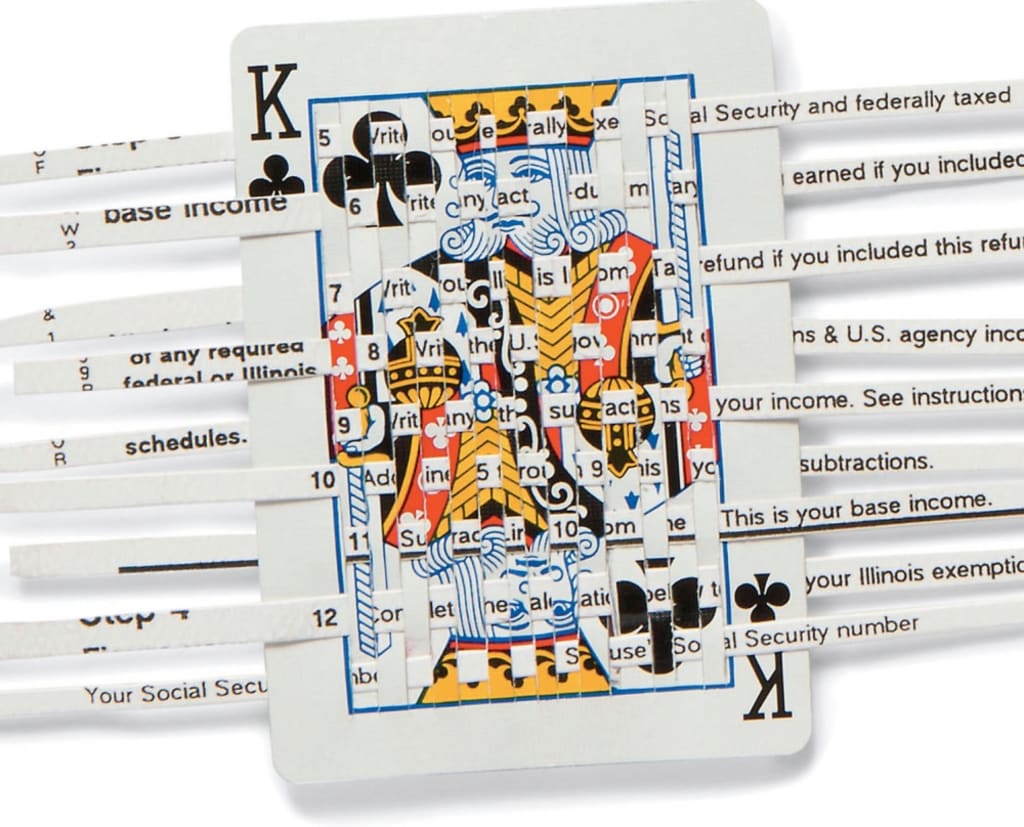
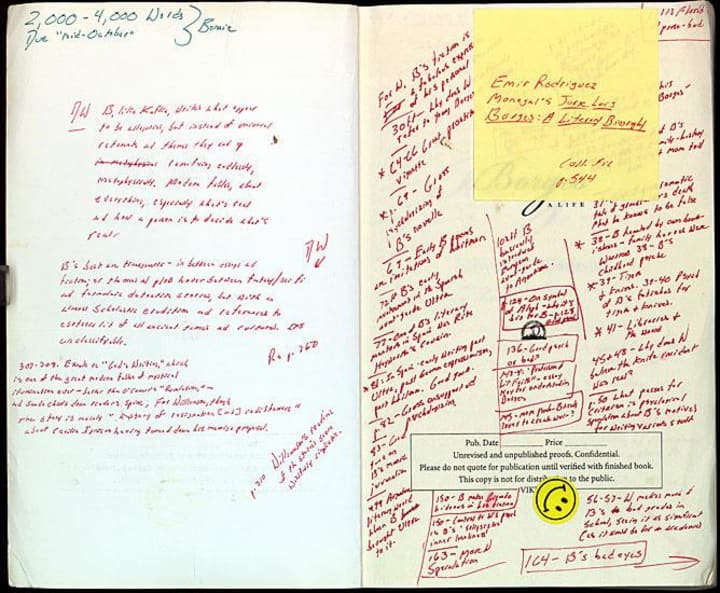
This book is based on the mundane atmosphere of the everyday lifestyle of the common worker. It ranges from summaries from the IRS, snippets of the life of a man who profusely sweats, conversations between various people who work for the IRS, a man who is taking an examination and feels very anxious about it and so much more. Within the book, we get various interruptions from the author himself in which he tries to explain the difference between this book and a piece of nonfiction creative writing. He calls it “substantially true and accurate” (p.71) and explains it as a “nonfiction account (with) some slight changes and rearrangements” (p.72). Whereas, previously he had not actually referred to the changes and said that “all of this is true. This book is really true.” (p.69) and thus, we do not make note of the problems encountering fiction and nonfiction definition until later on in Chapter 9. But between characters like Lane Dean Jr, David Cusk, Leonard Stecyk and the unforgettable anxieties of Claude Sylvanshine - I honestly believe that this book is a piece of creative semi-autobiography where the only thing everyone has in common is their ability to work their way into the IRS from very different walks of life. The book admittedly, does not have a plot since David Foster Wallace left it unfinished and unedited. It is therefore raw and emotional in its nature of talking about the human psyche and our reaction towards the fact that life is really quite meaningless. The nihilism and the constant fear that is portrayed by nearly every character in the book is a great way of getting across the message that there are other things far better than being alive in the modern age.
When it comes to the characters there is a constant pervading sense of boredom. We certainly have something quite clear about the boredom of the English Language, which is developed from the very beginning as “mentally (repeating) the word…until the word ceased to mean anything…” (pg.7) to entire passages of complete silence near the middle of the book. As if language is simply not good enough for the characters to express themselves. The character of David Cusk really displays this in the best way, I believe. David Cusk starts off as a schoolboy who cannot stop himself from profusely sweating. Cusk seems to be so involved internally with the paradox surrounding his own fears and anxieties that there are entire pages where he fails to make dialogue to anyone else, even though he seems to be in a class at school at some points. The paradox is this:
“The worst thing was that one degree could lead to the next if he worried about it too much, if he was too afraid that a slight sweat would get worse and tried too hard to control or avoid it. The fear could bring it on. He did not begin to suffer until he understood this fact, and understanding he came to slowly and then all of an awful sudden.” (p.95)
This is a paradox that David Cusk carries with him throughout the book and there is a lot of focus on how this is the possibly his most awful fear by calling it the “worst feeling” (p.96 and others). The fact that the worst case scenario is, in fact, a paradox means that David Cusk’s worst fear is his own fear and not actually the fact that he is sweating. He quotes the line from Franklin Roosevelt “the only thing we have to fear is fear itself” (p.97) which pretty much explains his position perfectly in yet another paradox. It’s another thing we will revisit in the book later as a physical scene in which we see the paradox in action:
“Cusk was not exactly having an attack, but he was in the fluttery initial stages of an attack, which in certain ways was worse because it could go either way.” (p.300)
And so, we get a representation of Cusk right in the middle of the paradox of fear. Fear has produced the on-set to the attack and we have to now question whether fear will consume him and bring the attack on, or whether he has found a solution for his paradox and manages to mellow it out before it is too late.
The main themes of this book are clearly to do with the lonely, depressing and mundane. These include: boredom, nihilism, existentialism and even anxiety to a degree. I found that all of these stages of the mundane are actually connected and, throughout the book, you can more or less follow the way in which each character experiences their own internal boredoms. First of all, we have the initial boredom in which the character is not engaged in conversation or intelligently stimulated in any way. These may contain long amounts of description of the character staring aimlessly into the distance or even looking out of an airplane window, or watching someone open a packet of nuts. This boredom leads to a philosophical contemplation of some kind. There is some sort of thought by the main character that leads them deeper internally - and this can only be produced by the lack of active stimulation. Through this internal contemplation, we get the feelings of existentialism and, as most humans do, thoughts about whether their lives mean anything at all or not. When we come to the thought that their lives may mean nothing, we get this deep-seated anxiety or fear about something. This fear could be about anything in particular that has stemmed from the thought of what their life means. However, they are within this internal thought for so long that it produces an opinion of the characters as somewhat counterproductive or lazy. This counter-productivity in the mundane modern age of office jobs and market crashes makes the character, in comparison to their working counterparts and co-workers, look somewhat immoral. It is as if the characters aren’t doing enough of a good job in the external and physical world. This leads to the character’s attempt to reason with the reader. The character tries to justify their own internal thoughts by creating an explanation for why they are the way they are. These include things like “Random Fact Intuition” and “The Stare” which are both introduced as reasons throughout the course of the novel. This then leads to some sort of philosophical statement on why the character should try changing themselves for the greater good, and this comes directly from the character and nobody else. But this also sets them into a habit of analysing why they should and brings us right back to the initial sense of boredom they had in the beginning. It is suggested throughout the novel and especially in Chapter 19, that the collective inclination towards this internalisation would not only lead to collective fears, anxieties and possible revolutionary responses - but may also lead to the collapse of western civilisation as we know it. In the fact that the character states that “we don’t think of ourselves as citizens…” (p.132) and that the individual only thinks of themselves as a citizen when it comes to rights and not responsibility. It is a real question of whether this internalisation of thought and boredom is a direct result of the mundane or whether it possibly something deeper - like the fear of responsibility. The character speaking at this time realises this and calls the requirement to do something about it a “moral license” (p.137) and the continuation of it a “fugue of evaded responsibility” (p.138).
The way in which this novel presents the mundane differently to most other texts on the same subject is through the way in which it is structured. We have different stories going on all at the same time and each one of them has a different modern fear and yet each one of them has a clearly very general modern fear. Working with the character of David Cusk yet again, he is extremely self-conscious and cares what others think about him. The character of Claude Sylvanshine is scared of taking an exam. Examination anxiety that leads to social inhibition is severely common, especially amongst adults. Claude Sylvanshine has his own paradox which includes this social inhibition and it is the paradox that presents how the characters fears and their concentration on those fears make their anxiety even worse and thus, send them into even more social inhibition:
“When (Claude) Sylvanshine studied for the exam now the worst thing was that studying one thing would set off a storm in his head about all the other things he hadn’t studied and felt he was still weak on, making it almost impossible to concentrate, causing him to fall even further behind.” (p.11)
Not only does this prepare us for Claude Sylvanshine hopefully solving his paradox and thus, becoming a ‘more productive’ person and a morally better person according to the system which he lives in. But it also prepares us for many of the downfalls of the character throughout the novel. We have now got the cause of the things that will become his worst nightmares and worst case scenarios. We are fully prepared so now, as readers, we can concentrate more on how he actually gets to that point. This is the most important thing about the novel. The novel is about how we arrive at the point of existentialism and nihilism which leads us to our own counter-productive ‘excuse’ ridden paradoxes. It questions whether they are really excuses and, by giving a reason for them and allowing them to be, we can lead ourselves all the way back to the beginning. Just like the characters Claude Sylvanshine or David Cusk.
Different as it may be, there are clear parallels between this text and a number of others written throughout the course of the 20th century. Through “The Pale King” and its mention of ‘Big Brother’, I can honestly state that George Orwell’s “1984” portrays a common link between the requirement for revolution but the inability to do anything about the current system. Whereas in “1984” the system seems to be too strong, in “The Pale King” the will of the individual is not strong enough.
When it comes to Rousseauvian Philosophy, this book has managed to change my views about the way in which Rousseau presents the ‘chains’ of humanity. There are entire chapters in “The Pale King” dedicated to the sadness of ‘chains’ and their meaning. From the very childhood of some of the characters, especially one who happens to own a dog who is himself in chains, the book follows the physical chain, the metaphorical chain and finally, the existential and internal chains of humanity. This contributes to the nihilism - I have never seen Rousseau contribute that strongly to a sense of nihilism and depression even in any piece of writing.
In conclusion, this book is an experience of the extent to which nihilism can be described as a contribution of the mundane atmosphere of modern life and the boredom of the individual performing it. A truly immersive sense of being comes through, but so does a state of existentialism and it is a constant battle to see which one will prevail within the self.
If you enjoyed “The Pale King” by David Foster Wallace, then you may also like:
- “Brief Interviews with Hideous Men” by David Foster Wallace
- “The Memory Police” by Yoko Ogawa
- “Gravity’s Rainbow” by Thomas Pynchon
- “Ducks, Newburyport” by Lucy Ellman
- “The Man Without Qualities” by Robert Musil
Citation:
Foster Wallace, D (2012). The Pale King. USA: Penguin.
Further Reading:
Orwell, G (2004). 1984. 2nd ed. UK: Penguin
Rousseau, J (2008). Confessions. 2nd ed. UK: Oxford World's Classics.
About the Creator
Annie Kapur
I am:
🙋🏽♀️ Annie
📚 Avid Reader
📝 Reviewer and Commentator
🎓 Post-Grad Millennial (M.A)
***
I have:
📖 280K+ reads on Vocal
🫶🏼 Love for reading & research
🦋/X @AnnieWithBooks
***
🏡 UK
Keep reading
More stories from Annie Kapur and writers in Geeks and other communities.
"The Brothers Karamazov" by Fyodor Dostoevsky
I first read “The Brothers Karamazov” by Fyodor Dostoevsky when I was about fourteen years’ old and I’m not going to lie to you, it confused me. It confused me because it was unlike any other Russian novel I had read up to that point and I realised then that things were about to get ever more interesting on my journey in literature. The way in which I discovered this book wasn’t actually at all that interesting. I had heard of it because I had seen the classic movie poster and thought it was a book cover. I looked it up and I got turned towards the book rather than the film (I would only realise some years later that it was actually a film poster I was looking at and not a book cover). I did not yet know, looking at that picture, that this book would come to change everything about my perception of Russian Literature and my perception on the possibilities of human connections in literature. It was almost overwhelming.
By Annie Kapur6 years ago in Geeks
Silver Screen Magic with Mae West
American actress and singer Mae West became a popular film actress during the Great Depression. She started entertaining in vaudeville, then performed on Broadway, and finally went to Hollywood. She signed up with Paramount Pictures and made her debut in the 1932 film “Night After Night.” She also starred in musicals, comedies, and crime dramas. The American Film Institute named her one of the best classic Hollywood actresses.
By Rasma Raisters7 days ago in Geeks
25 Years Ago The World Welcome Hobbits & Lord of The Rings into Theaters
Twenty-five years ago, a gamble reshaped cinema—and few people realized it in the moment. Where it all started! In December 2001, audiences stepped into Middle-earth with The Lord of the Rings: The Fellowship of the Ring, and something quietly seismic happened. This wasn’t just another fantasy movie arriving for the holiday season. It wasn’t a niche genre experiment or a disposable blockbuster meant to fade once the credits rolled. It was the opening chapter of a cinematic undertaking so ambitious that, even now, it feels borderline impossible that it worked at all.
By Lawrence Lease3 days ago in Geeks


Comments
There are no comments for this story
Be the first to respond and start the conversation.