
The Naked Truth: A Very Serious Exploration of Spoof Movies
So, here’s me trying to explain a joke. That’s always a good idea.

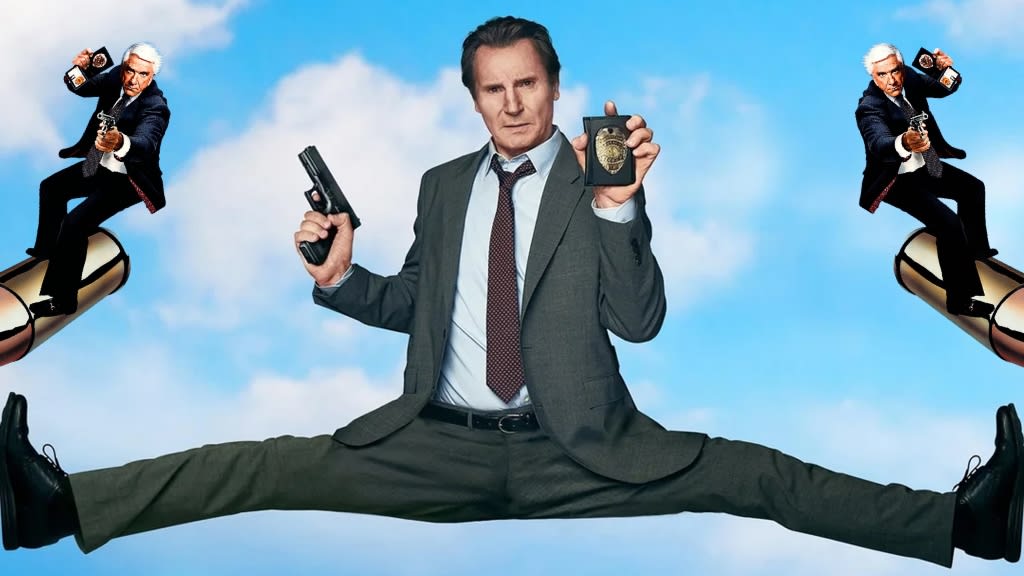
With the new Naked Gun movie being billed as the glorious return of the classic spoof comedies of the late ’80s and ’90s, I was naturally excited to see it the moment it hit cinemas. And, indeed, I went, laughed my way through the whole thing, and thought to myself: “Yes, it really is back!” Then, somewhere between the credits and the parking lot, another thought crept in: What exactly is back? And why did it leave in the first place?
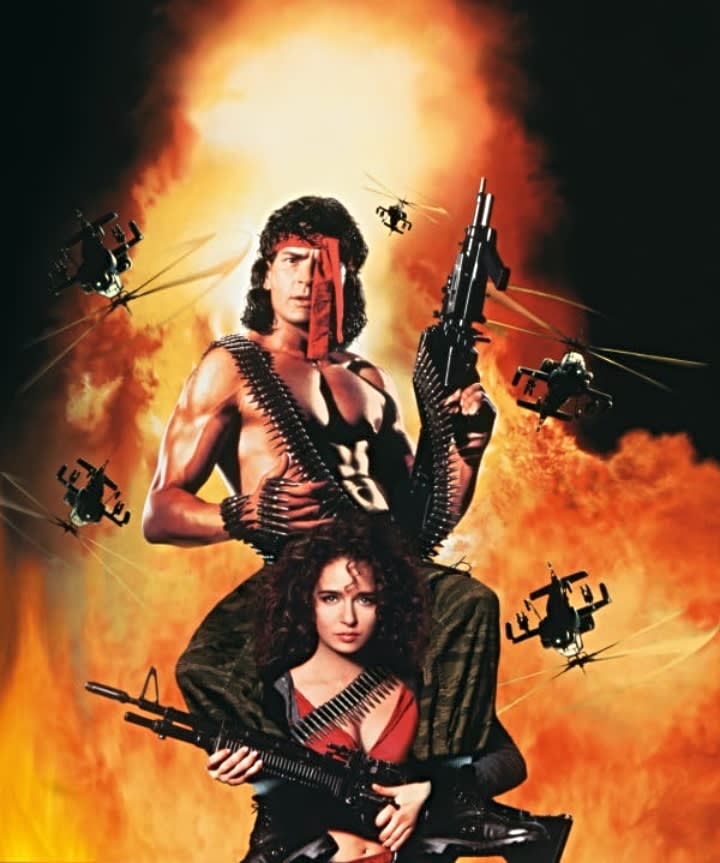
Okay, to be fair, it’s not hard to see why the spoof genre has been considered dead for the better part of the last few decades (save for a few inspired exceptions like the Jump Street films, Black Dynamite, The Cornetto Trilogy or Weird: The Al Yankovic Story). The common wisdom goes that movies like Airplane!, The Naked Gun, Hot Shots!, Spaceballs, Young Frankestein, Don't Be a Menace to South Central While Drinking Your Juice in the Hood, Blazing Saddles, Austin Powers, Robin Hood: Men in Tights, Johnny English, Monty Python and the Holy Grail, The Life of Brian, UHF and the first couple of Scary Movies simply can’t carry themselves in today’s pop-culture landscape. At least not like they used to.
In an age, where the internet and social media enable to create parodies instantly, why bother competing it with something that takes ages to make and already feels outdated the moment it hits theaters? Add to that the death of monoculture—everyone now being able to live in their own algorithmic echo chambers—and it’s easy to assume spoofs had nowhere left to breathe. An assumption seemingly confirmed by the string of less-than-stellar spoof movies from the late 2000s and 2010s.
Yet, rewatch the classics—ironically, often as clips on the very social media platforms supposedly responsible for killing them—and you realize something: they’re timeless. And now, with the Naked Gun reboot turning out to be genuinely inspired, and new Spaceballs and Scary Movie projects on the horizon, it feels as though the studios have finally woken up to the truth: the classic spoof formula was never obsolete. It was simply waiting for someone to build it on the right pillars.
And what are these pillars? Well, after buggering home from that cinema parking lot, I came up with three. So, if you’ve already stuck around through this five-paragraph intro, you might as well see what I’m rambling about.
1. Rather Unexpectedly, Basic Tenents of Filmmaking Still Apply
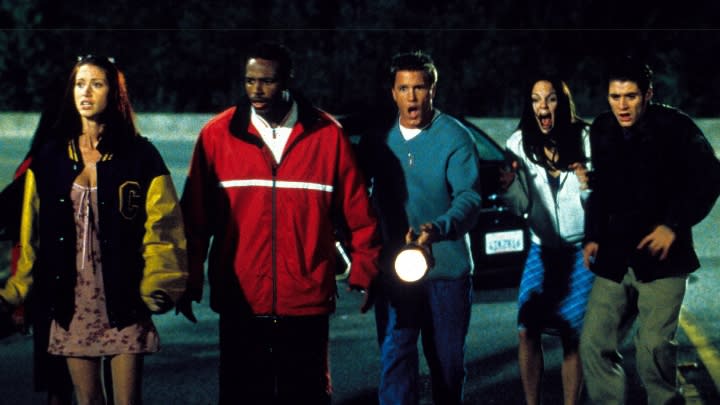
What’s the common thread between Frank Drebin (The Naked Gun), Cindy Campbell (Scary Movie), Topper Harley (Hot Shots!), and Dark Helmet (Spaceballs)? For one, there’s a good chance you remember their names. In other words, while they—along with countless other memorable lead and supporting characters from classic spoof movies—might seem like little more than conduits for gags, they’re played with such sincerity and conviction that you’d think the actors were chasing the role of a lifetime. And, in many cases, that’s actually what ended up happening.
Leslie Nielsen is, of course, an obvious benchmark here, as he was one of the very best at establishing what makes not just good but an essential kind of performance in a classic spoof: the more deadpan and serious you are, the funnier the absurdity around you becomes.
As Liam Neeson put it during the new Naked Gun press tour, when asked, if he was worried about being funny:”
“The note I gave myself each day was: don’t try to be funny. Play it seriously. That’s why you’re being cast.”
In other words, while no one goes to a spoof movie expecting commited character work, it’s still the glue we—perhaps subconsciously—look for in this ridiculously heightened reality. We latch onto the characters first, no matter the circumstances. Take George from Scary Movie 3. He was played so memorably by Simon Rex that years later, when my brother and I saw him in a surrealist indie The Sweet East, we both instantly looked at each other and without skipping a beat went, “Hey, it’s George!” That’s the kind of reaction a well-played spoof character can spark.
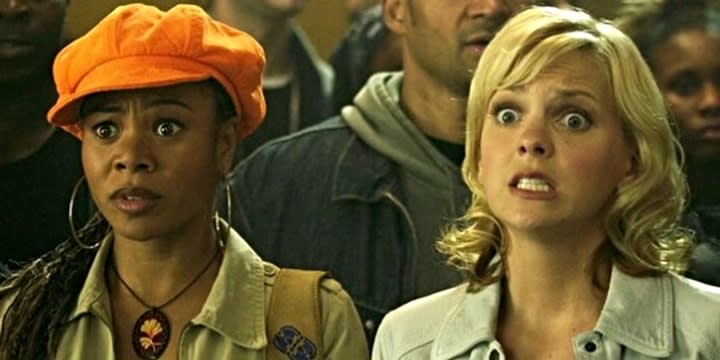
The same goes for the story. Yes, it’s easy to see a spoof plot as nothing more than a revolving door of setups for gags, but some of the best ones still hide surprisingly solid narratives underneath. Think about the first Scary Movie: when it turned out Doofy was the killer, that was a genuinely good twist, spoof or not.
So, in short, spoof movies are a very serious business—or at least one that requires serious commitment and craft. Speaking of craft…
2. It Was Never Just About the References
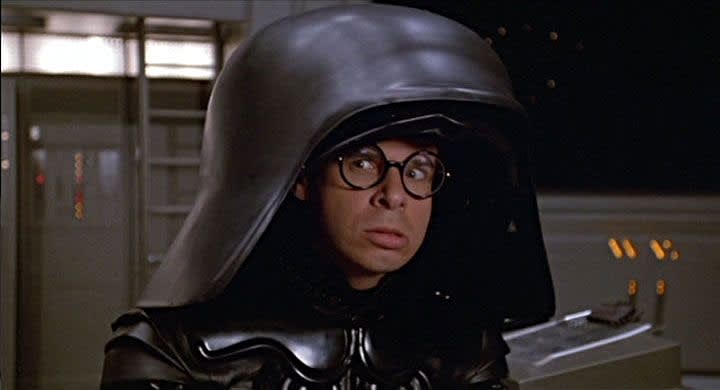
As touched upon eralier, despite being defined by spoofing other works, its remarkable how well the classic spoofs stand on their own, requiring only the most basic knowledge of the source material or genre tropes. And, well, this is perhaps the single biggest thing that separates the great spoofs from the reference-heavy ones churned out in the late 2000s and early 2010s. In the classics, even when a joke or a character was a direct reference to something, it served merely as a starting point for the creators.
Take the Zucker, Abrahams and Zucker trio, Mel Brooks and now Akiva Schaffer to name a few—these are all proven comedic minds, who saw spoofs not as a checklist of “things to parody or reference,” but as a chance to tell as many jokes as possible, in every form imaginable. A chance to let their zany-brilliant-wondering comedic minds run free. In other words, a good spoof is a playground, where you can paint all over the canvas. And not just the canvas, but the frames too. In fact, why not even punch some holes through the canvas every now and then while you’re at it?
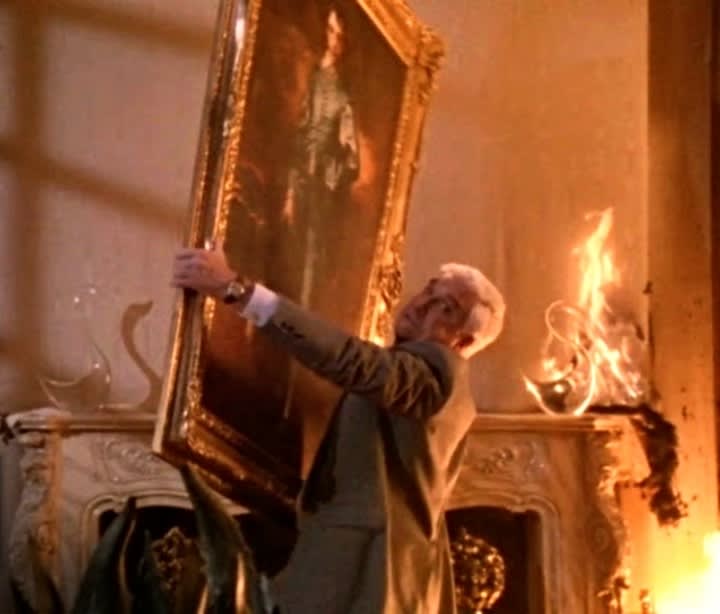
Whether it’s situational absurdity, a throwaway side gag, clever wordplay, bizarre non sequiturs (like suddenly replacing Neeson with Dave Bautista for no reason), elaborate setups and running gags, or the simplest everyday situations twisted into something what Atkinson or Chaplin might have done with their classic characters—it’s essentially an all-you-can-joke buffet for those who have the material to serve.
Truly, a great spoof is made by those, who love the craft of comedy in all of its forms and guises. In fact—and I am reaching the end of this in-depth analysis now—this leads me to the next point in what makes spoof movie a classic.
3. Spoofs Are Made with Love, Not Ridicule
As Estonian humorist Mart Juur once said, “You can never make a good joke out of anger or from a bad place.” Indeed, when looking at the creators behind the classic spoofs, the common thread is that they all tend to be cinephiles with vast knowledge and love for not just comedy, but for filmmaking and different genres in general. That’s what enables them to subvert these tropes and find humor in them—because they’ve loved them for so long and can navigate them perfectly.
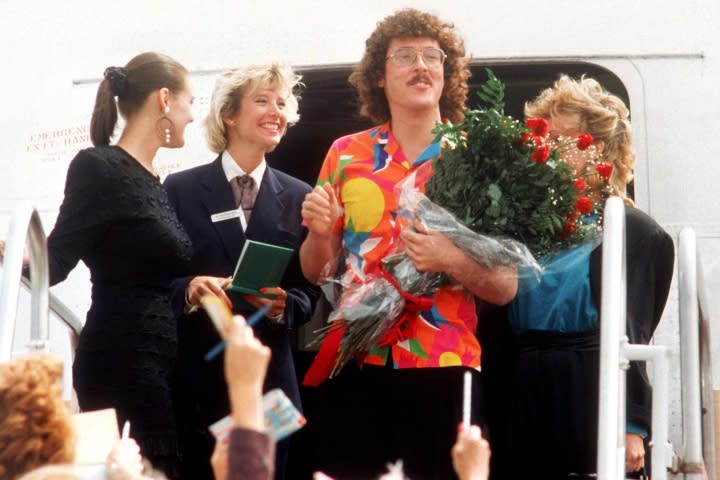
Nobody could have made The Naked Gun (or the Police Squad! series before it) without a genuine love for cop movies and police procedurals. Nobody could have made Airplane! without first watching and enjoying the disaster film it was based on. Honestly, it’s kind of the same reason why Weird Al’s parody songs have had such lasting appeal: they’re often homages disguised as jokes.
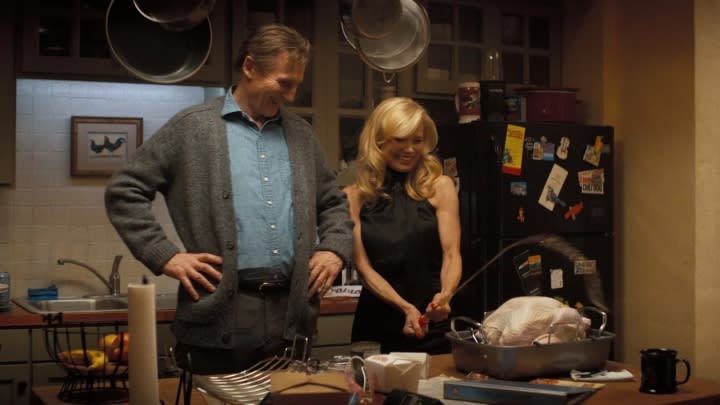
This is actually what the new Naked Gun taught and reminded me of the most in regards to what makes for a great spoof movie: the love has to be in the air (and not just between Neeson, Anderson and the Snowman).
The people who made it, clearly adored the original Naked Gun films, cared about the craft of comedy, and were genuine fans of cinema and the genres they were spoofing. Granted, they repeated some old jokes—because they still work—but they also weren’t afraid to try something new and run free. They loved what they were aiming for, and that’s the best kind of confidence one can have.
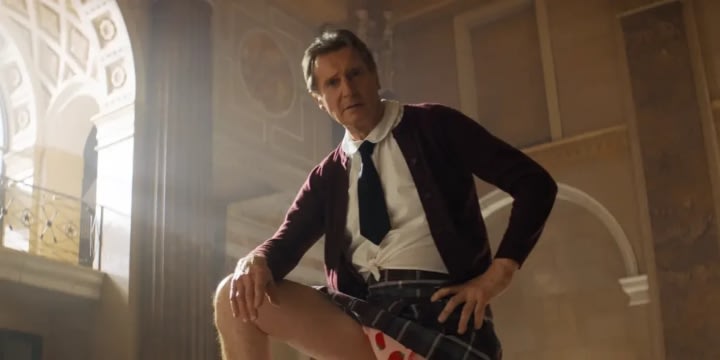
However, perhaps the best indicator of that underlying love I’m talking about here is, well, Fergie. Take the scene in the new Naked Gun, where Drebin and the main villain randomly bond over their mutual admiration for the Black Eyed Peas and Fergie. Now, compare it to the late-2000s spoofs, which mostly relied on cheap shots at celebrities or just pointing at a trending song or meme. Simply put, in the former example, it felt affectionate, like it was written by someone, who actually respected those artists. Which is probably true, considering the payoff this moment had later in the film.
A Typical Sentimental Note with A Hint of Humor to Conclude An Article
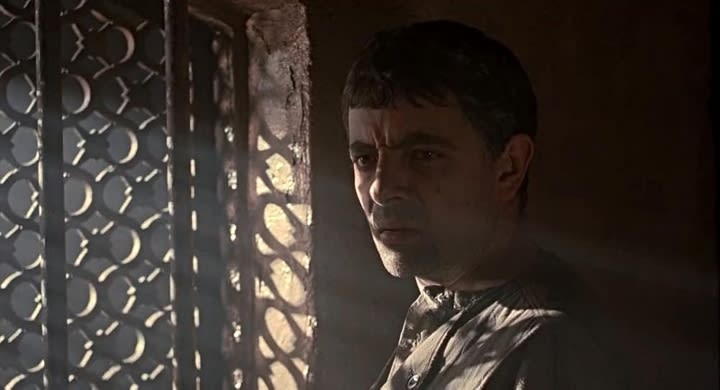
One of the first spoof movies I ever saw as a kid was Hot Shots! Part Deux. Amid all the straight-faced hilarity, one short scene in particular completely short-circuited my brain: the famous throwaway exchange between Topper Harley (Charlie Sheen) and Dexter Hayman (Rowan Atkinson):
[Dexter is being rescued]
Dexter: You don’t understand. I can’t walk... they’ve tied my shoelaces together.
Topper Harley: A knot. Bastards!
When I first saw this exchange as a kid, it was weirdly enlightening—people could actually deliver lines like that with utter conviction and sell every second of it? Surely, you can’t be serious!? Well, movies like that are back and are, in fact, very serious about it. Just don’t call them... well you know the rest.
About the Creator
Art-Peeter Roosve
So, to put it simply (and slightly cheesily) I'm fascinated with life. And, well, writing about films, TV shows, video games, music, travelling, philosophy and Formula 1 among other is a fun way to explore it.
Keep reading
More stories from Art-Peeter Roosve and writers in Geeks and other communities.
Michelle Trachtenberg: Remembering Jenny From 'EuroTrip'
Michelle Trachtenberg possessed a rare talent, conveying more with her eyes than many could with pages of dialogue. In fact, her career, though remarkable, hinted at even greater potential. From Buffy the Vampire Slayer to Gossip Girl and beyond, she displayed an impressive range and was among the defining figures of the 90s' to late 00s' pop culture. More importantly, as a person, she seemed to exude intelligence and authenticity, coupled with a sharp, often dark, wit that remained with her until the end.
By Art-Peeter Roosve11 months ago in Geeks
Silver Screen Magic with Mae West
American actress and singer Mae West became a popular film actress during the Great Depression. She started entertaining in vaudeville, then performed on Broadway, and finally went to Hollywood. She signed up with Paramount Pictures and made her debut in the 1932 film “Night After Night.” She also starred in musicals, comedies, and crime dramas. The American Film Institute named her one of the best classic Hollywood actresses.
By Rasma Raisters6 days ago in Geeks


Comments
There are no comments for this story
Be the first to respond and start the conversation.