
The Grapes of Wrath by John Steinbeck
Why It's a Masterpiece (Week 47)

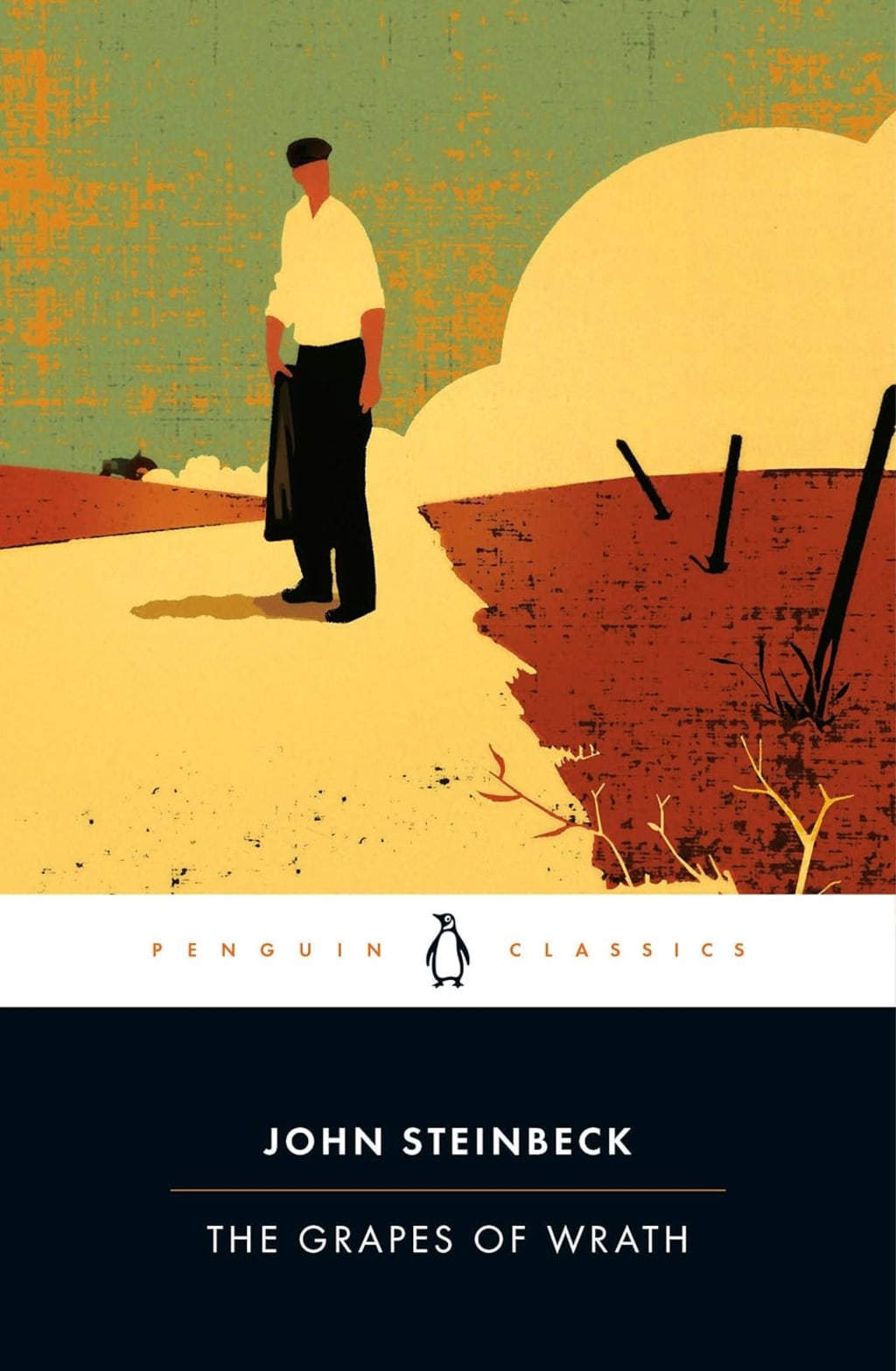
The Grapes of Wrath, published in 1939, is one of John Steinbeck's most acclaimed novels. Steinbeck, deeply influenced by the socio-economic hardships of the Great Depression, undertook a gruelling research journey across the United States, particularly California, to understand the plight of migrant workers.
The novel was a product of this intense period of observation and empathy. Published by Viking Press, The Grapes of Wrath immediately garnered widespread attention. Its release was met with both critical acclaim and significant controversy. While many praised its raw and honest depiction of poverty and systemic injustice, others criticised it for what they perceived as its socialist undertones.
The novel's impact was such that it won the National Book Award and the Pulitzer Prize for Fiction in 1940. Furthermore, it was instrumental in Steinbeck receiving the Nobel Prize in Literature in 1962. Despite the initial backlash, including being banned and burned in some regions, The Grapes of Wrath has endured as a seminal piece of American literature, a poignant exploration of human resilience, and a powerful commentary on the American Dream.
Plot
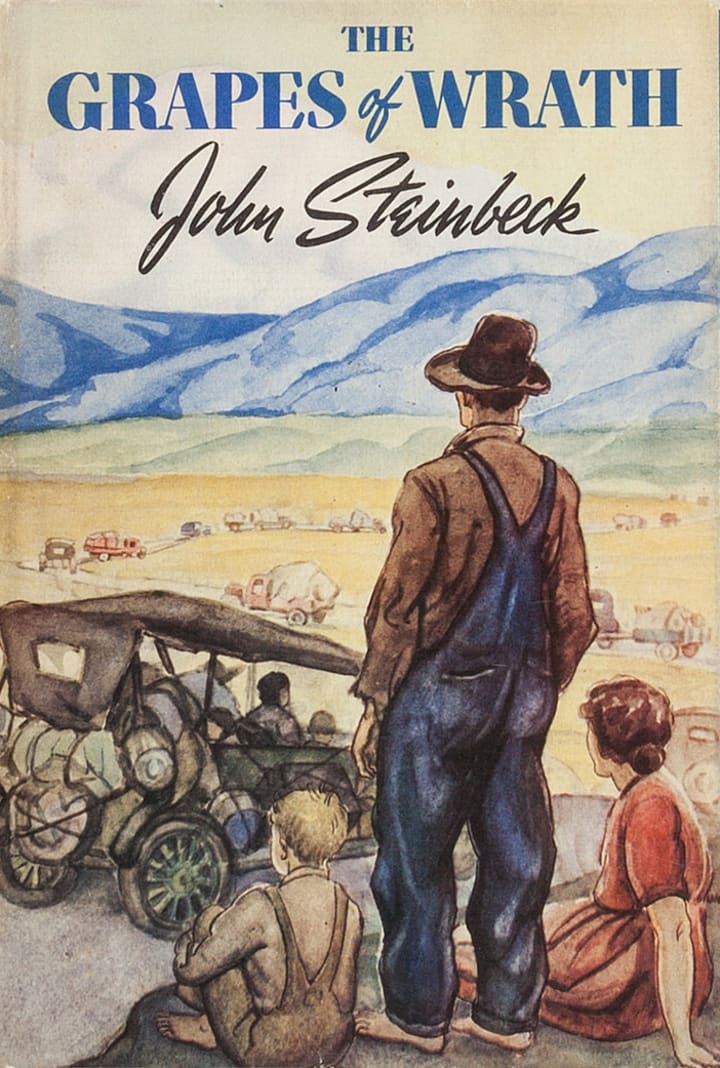
The Grapes of Wrath follows the Joad family, tenant farmers displaced from Oklahoma by the Dust Bowl and the Great Depression. Tom Joad, recently paroled from prison, reunites with his family as they prepare to travel to California in search of work and a better life. The family is driven by the promise of fertile land and well-paid jobs, but their journey is fraught with hardship and disillusionment.
The Joads travel in a dilapidated truck, encountering other migrant families along the way who share tales of exploitation and woe. Despite their initial optimism, the family faces numerous challenges: Grandpa and Grandma Joad die, Noah Joad abandons the family, and Rose of Sharon's husband, Connie, deserts her. The family unit, which had been their source of strength, begins to unravel.
Upon reaching California, the Joads find conditions far worse than they had imagined. The promised land is teeming with other desperate migrants, and work is scarce and poorly paid. The family is forced to live in squalid conditions in makeshift camps known as "Hoovervilles." Tom and his younger brother, Al, find intermittent work, but it is never enough to lift the family out of poverty.
The narrative also follows the transformation of Tom Joad. Initially focused on his own survival, he becomes increasingly aware of the broader social injustices affecting all migrant workers. Influenced by the former preacher Jim Casy, who organises labour strikes, Tom becomes more involved in the fight for workers' rights. Casy's eventual murder by strikebreakers galvanises Tom's resolve, and he kills a man in retaliation. Forced to flee to protect his family, Tom vows to continue Casy's work, committing himself to the larger cause of social justice.
The novel ends on a note of sombre resilience. After the birth of her stillborn child, Rose of Sharon performs a final act of compassion, nursing a starving man with her breast milk. This act symbolises the enduring human capacity for kindness and solidarity amidst suffering. The Joads' future remains uncertain, but their story encapsulates the struggle, hope, and unyielding spirit of countless Americans during the Depression era.
Into the Book
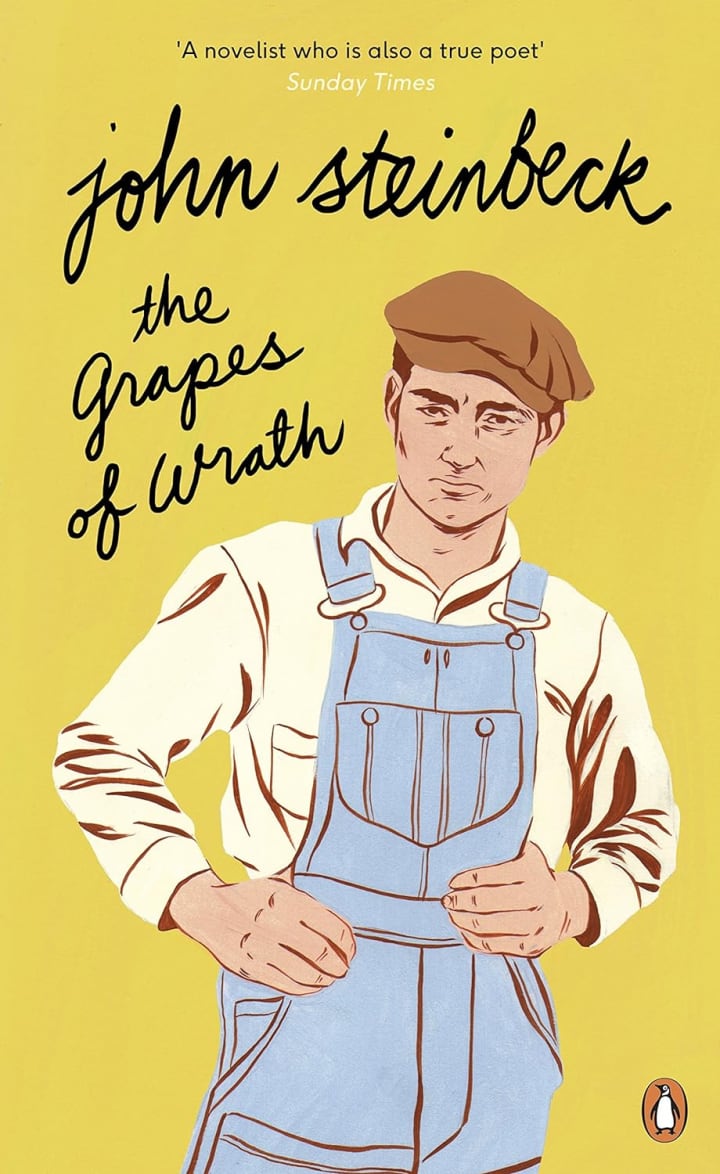
A central theme in The Grapes of Wrath is the struggle for dignity and justice amidst exploitation and dehumanisation. The Joads, like many migrant families, endure severe economic hardships and social prejudice. Throughout the novel, Steinbeck illustrates how systemic forces strip individuals of their dignity.
The Joads' eviction from their land, the death of family members during their journey, and the abysmal living conditions in the migrant camps all highlight the brutal reality faced by the disenfranchised.
Despite these adversities, characters like Tom Joad and Jim Casy demonstrate resilience and a quest for justice. Tom's evolution from a self-centred individual to a committed advocate for workers' rights exemplifies the broader human struggle for dignity. Jim Casy's sacrifice and his role as a moral compass underscore the need for collective action and empathy.
“...and in the eyes of the people there is the failure; and in the eyes of the hungry there is a growing wrath. In the souls of the people the grapes of wrath are filling and growing heavy, growing heavy for the vintage.”
- The Grapes of Wrath by John Steinbeck
The importance of family and community is another significant theme in the novel. The Joad family's unity is their primary source of strength as they navigate their treacherous journey. Steinbeck portrays the family as a microcosm of society, where mutual support and solidarity are crucial for survival.
The breakdown of traditional family roles, such as when Ma Joad assumes leadership, reflects the adaptive strategies necessary in times of crisis. The communal spirit is also evident in the migrant camps, where families share resources and support each other despite their dire circumstances. The final scene, where Rose of Sharon nurses a starving stranger, powerfully symbolises the ultimate act of communal compassion and humanity.
“A large drop of sun lingered on the horizon and then dripped over and was gone, and the sky was brilliant over the spot where it had gone, and a torn cloud, like a bloody rag, hung over the spot of its going. And dusk crept over the sky from the eastern horizon, and darkness crept over the land from the east.”
- The Grapes of Wrath by John Steinbeck
The Grapes of Wrath offers a critical examination of the American Dream, exposing it as an elusive ideal for many. The Joads, driven by promises of prosperity in California, find only disillusionment and further exploitation.
The novel juxtaposes the dream of abundance with the harsh reality of deprivation. The handbills advertising plentiful jobs and fertile land are starkly contrasted with the actual conditions faced by migrants: overcrowded camps, scarce employment, and meagre wages.
This disparity highlights the systemic barriers that prevent the fulfilment of the American Dream for the working poor. Steinbeck's portrayal of the Joads' plight serves as a broader critique of economic inequality and the false promises perpetuated by those in power.
“If he needs a million acres to make him feel rich, seems to me he needs it 'cause he feels awful poor inside hisself, and if he's poor in hisself, there ain't no million acres gonna make him feel rich, an' maybe he's disappointed that nothin' he can do 'll make him feel rich.”
- The Grapes of Wrath by John Steinbeck
Why It's a Masterpiece

The Grapes of Wrath is widely regarded as a masterpiece for several reasons. Firstly, Steinbeck's masterful storytelling and vivid characterisation bring to life the experiences of the Joad family, making their struggles profoundly relatable and poignant. His use of intercalary chapters, which provide broader social and economic context, enriches the narrative and underscores the universality of the migrants' plight. Steinbeck's prose, characterised by its lyrical beauty and stark realism, captures the stark contrast between the fertile Californian landscape and the harsh realities faced by the migrants.
Secondly, the novel's themes of social justice, human dignity, and the critique of the American Dream resonate deeply with readers. Steinbeck's empathetic portrayal of the migrant experience exposes the systemic injustices and economic disparities that continue to be relevant today. The novel's enduring relevance is further cemented by its historical significance, providing a poignant snapshot of a pivotal period in American history.
Lastly, The Grapes of Wrath has had a significant impact on American culture and literature. Its critical reception, including winning prestigious awards, and its influence on subsequent generations of writers, underscore its importance. The novel's adaptation into a successful film directed by John Ford in 1940 further amplified its reach and cultural impact. Steinbeck's ability to evoke both a specific historical moment and universal human experiences makes The Grapes of Wrath a timeless work of literature.
Conclusion
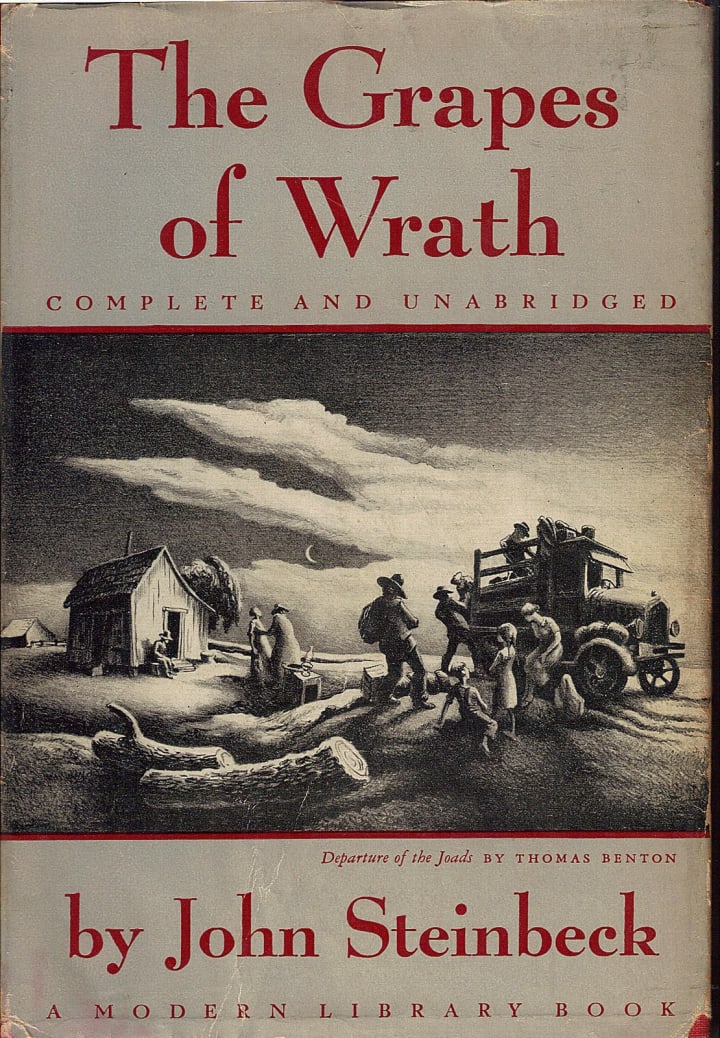
We continue to read The Grapes of Wrath today because its themes of social justice, human resilience, and the quest for dignity remain profoundly relevant. Steinbeck's compelling narrative and empathetic depiction of the human condition transcend time, providing insights into the ongoing struggles for equality and justice. The novel serves as a powerful reminder of the resilience of the human spirit and the crucial importance of compassion and solidarity in overcoming adversity.
Next Week: Perfume by Patrick Suskind
About the Creator
Annie Kapur
I am:
🙋🏽♀️ Annie
📚 Avid Reader
📝 Reviewer and Commentator
🎓 Post-Grad Millennial (M.A)
***
I have:
📖 280K+ reads on Vocal
🫶🏼 Love for reading & research
🦋/X @AnnieWithBooks
***
🏡 UK
Keep reading
More stories from Annie Kapur and writers in Geeks and other communities.
Book Review: "This Book Will Change Your Mind About Mental Health" by Nathan Filer
Yes, I am still on a binge-read of mental health nonfiction, mostly those published by Penguin Books and mostly ones that I can read on my Kindle because they are quite bulky when they're good. Or, if they're not bulky, they are not the books you want to be caught reading in public as they look (though they are not) like self-help books to the untrained and unread eye. On my Amazon Recommendations, this book kept cropping up entitled: This Book Will Change Your Mind About Mental Health and I wondered if it would. And perhaps it did, though it wasn't in the way that I was expecting...
By Annie Kapurabout a year ago in Geeks
Silver Screen Magic with Mae West
American actress and singer Mae West became a popular film actress during the Great Depression. She started entertaining in vaudeville, then performed on Broadway, and finally went to Hollywood. She signed up with Paramount Pictures and made her debut in the 1932 film “Night After Night.” She also starred in musicals, comedies, and crime dramas. The American Film Institute named her one of the best classic Hollywood actresses.
By Rasma Raisters8 days ago in Geeks
Global Socks Market Size & Forecast 2025–2033: Fashion, Fitness, and Function Drive a US$ 84.91 Billion Industry
Global Socks Market Outlook Once considered a simple necessity, socks have evolved into a high-growth lifestyle and performance product. From fashion statements and athletic essentials to medical-grade solutions, socks today play a critical role in comfort, health, and personal style. According to Renub Research, the Global Socks Market is projected to grow from US$ 49.33 billion in 2024 to US$ 84.91 billion by 2033, expanding at a CAGR of 6.22% from 2025 to 2033.
By Aaina Oberoi2 days ago in Geeks
Smart phones, Humans and Aliens.
WARNING. I will be tapping into one of your favorite creative tensions: The absurdity of humans worshipping their glowing rectangles as if they were tiny oracles. There’s something deliciously poetic about that contradiction, and it lends itself beautifully to an instructive proviso.
By Novel Allen5 days ago in Poets



Comments (2)
I remember having to read this book in high school. A great classic!
I have read this and other books by Steinbeck, and I still marvel at what he managed here, especially with that ending. Watch the John Ford film if you get the chance!