
Book Review: "This Book Will Change Your Mind About Mental Health" by Nathan Filer
5/5 - insightful, brilliant and data-driven...

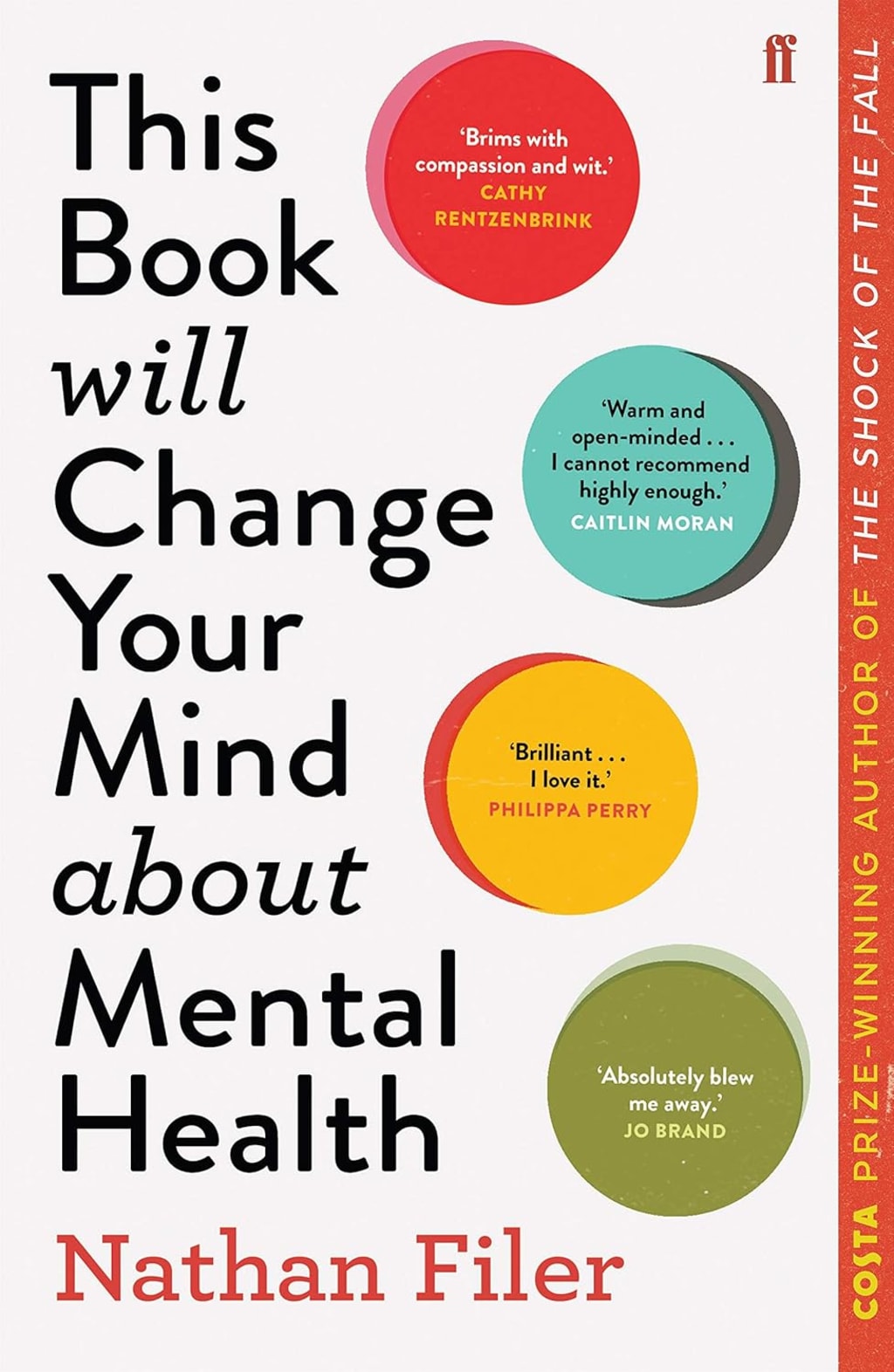
Yes, I am still on a binge-read of mental health nonfiction, mostly those published by Penguin Books and mostly ones that I can read on my Kindle because they are quite bulky when they're good. Or, if they're not bulky, they are not the books you want to be caught reading in public as they look (though they are not) like self-help books to the untrained and unread eye. On my Amazon Recommendations, this book kept cropping up entitled: This Book Will Change Your Mind About Mental Health and I wondered if it would. And perhaps it did, though it wasn't in the way that I was expecting...
Filer begins by challenging conventional notions of mental illness, asking readers to reconsider what these terms truly mean. He explains how the labels we use—such as schizophrenia, depression, or bipolar disorder—are often oversimplifications of complex human experiences. By highlighting the historical evolution of psychiatric diagnosis, Filer invites readers to question the frameworks we take for granted. Honestly, this is something that was pretty interesting because it challenges not just the common notions of mental illness, but also confronts the reader with how less common mental illnesses are not just there, but are rather a result of masses and masses of barraging with differing situations and genetics.
The book explores how the language used to describe mental health conditions can shape public perception and individual experiences. Filer argues that terms like “disorder” and “illness” can carry stigma, influencing how society views those affected. He suggests more empathetic and humanising ways to discuss mental health, focusing on the person rather than the diagnosis. Through this, he tells us these narratives about various people who suffered with mental illneses and how they are actually people with complex background narratives.
Filer incorporates moving stories from individuals who have lived with mental health challenges, offering readers a glimpse into their realities. These personal narratives highlight the diversity of experiences and underscore the importance of listening to those directly affected. Filer uses these accounts to bridge the gap between clinical theory and human understanding. This is definitive in the story of "Erica" which is one of the most compelling, complex and heartbreaking stories I have read in nonfiction mental health books.
The author pays particular attention to conditions like schizophrenia and psychosis, exploring the myths and misconceptions surrounding them. He explains how these diagnoses are often misunderstood, with sensationalised media portrayals contributing to fear and stigma. By unpacking the science behind these conditions, Filer demystifies them and encourages a more nuanced understanding. This is so important and I believe it is one of the most complex parts of the book. This intertwines with the narrative we get of "Erica" as it unravels more and more. We get these flashes of her life as it goes up and down and her psychosis is ridiculed by those around her. She is treated horribly.
The book examines the pervasive stigma surrounding mental health and its impact on those seeking help. Filer highlights how societal attitudes can prevent individuals from accessing care, exacerbate feelings of shame, and perpetuate discrimination. He advocates for a cultural shift towards acceptance and openness, where mental health is treated with the same respect as physical health. This definitely gets underway when we start to read about the case of Anne who is said to be suffering with insanity from dissatisfaction in love - this makes a lecture hall filled with mental health professionals burst out in laughter. I think I can speak for everyone when I say that this is probably one of the problems with mental health - not just the language but the professionals who are dealing with them have a hard time remaining professional. This is why I myself, am pretty sceptical about visiting mental health professionals or giving others the advice to do so. Condescending as they are, you have no idea whether the confidential remains confidential. Why take the risk?

In conclusion, Filer ends with a hopeful vision for the future of mental health care, advocating for systemic change that prioritises compassion, accessibility, and personalised support. He calls for investment in community-based services, greater integration of mental health into overall health care, and ongoing efforts to combat stigma. Filer inspires readers to be part of this change by fostering empathy and awareness in their own lives. I think that one of the main things we have to do for this is to get rid of the egotistical mental health professionals in the field who believe they are better than everyone else. You have no idea how many of them there are - it's quite shocking when you see the data.
About the Creator
Annie Kapur
I am:
🙋🏽♀️ Annie
📚 Avid Reader
📝 Reviewer and Commentator
🎓 Post-Grad Millennial (M.A)
***
I have:
📖 280K+ reads on Vocal
🫶🏼 Love for reading & research
🦋/X @AnnieWithBooks
***
🏡 UK
Keep reading
More stories from Annie Kapur and writers in Geeks and other communities.
Book Review: "Surrounded by Vampires" by Thomas Erikson
I know what you're thinking: she had such bad things to say about the data problems in the other books of this series, why the hell is she still reading them? Well, that's the problem - they may have data problems but my gosh, are they addictive to read. I do not think I have yet read them all, but here are some of the other reviews I have written about them:
By Annie Kapurabout a year ago in Geeks
Silver Screen Magic with Mae West
American actress and singer Mae West became a popular film actress during the Great Depression. She started entertaining in vaudeville, then performed on Broadway, and finally went to Hollywood. She signed up with Paramount Pictures and made her debut in the 1932 film “Night After Night.” She also starred in musicals, comedies, and crime dramas. The American Film Institute named her one of the best classic Hollywood actresses.
By Rasma Raisters8 days ago in Geeks
Michael Vartan
Michael Vartan has long been one of Hollywood’s most recognizable yet understated actors. Known for his charm, emotional range, and consistent performances, Vartan built a career that resonated strongly with television audiences, particularly during the early 2000s. While he may not dominate headlines today, interest in Michael Vartan now reflects how lasting his impact has been on fans who grew up watching his work. Early Life and Entry Into Acting Michael Vartan was born on November 27, 1968, in Boulogne-Billancourt, France. Raised between France and the United States, he grew up in a multicultural environment that shaped his worldview. His mother was an American artist, and his father was a French actor and writer, which gave him early exposure to the creative world. Before acting became a serious pursuit, Vartan worked behind the scenes in the film industry. He served as an assistant to directors, gaining firsthand experience with the mechanics of filmmaking. This background gave him a grounded understanding of storytelling—an element that later showed in the depth and restraint of his performances. Breakthrough Roles and Rising Popularity Michael Vartan’s acting career began in the 1990s with roles in films such as The Pallbearer and Never Been Kissed. While these projects introduced him to mainstream audiences, his true breakthrough came with television. In 2001, Vartan was cast as Michael Vaughn in the spy drama Alias. The show quickly became a cultural phenomenon, and his portrayal of the calm, morally driven CIA agent earned widespread praise. His on-screen chemistry with Jennifer Garner played a significant role in the series’ success and cemented Vartan’s status as a fan favorite. Alias allowed Michael Vartan to showcase more than just leading-man appeal. His character balanced action with emotional vulnerability, making him relatable despite the high-stakes spy narrative. For many viewers, this role remains the defining chapter of his career. Career After Alias Following the end of Alias, Michael Vartan continued working steadily in both television and film. He appeared in movies like Monster-in-Law and One Hour Photo, demonstrating his willingness to explore varied genres. On television, he took on leading and supporting roles in shows such as Hawthorne, Bates Motel, and The Arrangement. These performances reflected a shift toward more mature, nuanced characters, aligning naturally with his growth as an actor. Rather than chasing constant visibility, Vartan seemed selective, choosing projects that interested him creatively. This approach contributed to his reputation as a dependable and thoughtful performer rather than a celebrity driven by trends. Michael Vartan Now: Life Away From the Spotlight When people search for Michael Vartan now, they are often curious about why he appears less frequently on screens. The answer is not controversy or retirement, but balance. In recent years, Vartan has stepped back from high-profile roles, focusing more on personal life and selective professional opportunities. He has spoken openly in the past about the pressures of fame and the importance of mental health. This honesty resonated with fans and helped explain his quieter presence in Hollywood. Instead of constant exposure, Michael Vartan now represents a different model of success—one defined by longevity and personal well-being. Though he is not as active as he once was, he remains connected to the industry and continues to receive interest from both creators and audiences. His legacy ensures that his work is still revisited by new viewers discovering his shows through streaming platforms. Acting Style and Lasting Appeal What sets Michael Vartan apart is his subtlety. He is not known for over-the-top performances or dramatic transformations. Instead, his strength lies in emotional authenticity. Whether playing a spy, a doctor, or a troubled partner, his characters often feel grounded and believable. This realism helped him maintain relevance across different eras of television. His performances age well because they rely on human emotion rather than stylistic trends. For fans revisiting his work today, that quality remains just as compelling. Cultural Impact and Fan Connection While Michael Vartan may not dominate social media or entertainment news cycles, his fan base remains loyal. Online discussions, rewatch threads, and renewed interest in shows like Alias continue to introduce his work to younger audiences. His career serves as an example of how consistency and integrity can leave a lasting impression without constant self-promotion. In an industry that often rewards noise, Vartan’s quieter approach stands out. Final Thoughts Michael Vartan’s journey through Hollywood reflects a career built on steady growth, thoughtful choices, and respect for the craft of acting. From his early days behind the camera to his memorable television roles, he carved out a space that remains relevant even years later. For those wondering about Michael Vartan now, the answer is simple: he is living on his own terms, with a legacy already firmly established. His story reminds us that success in entertainment does not always mean being everywhere—it can also mean being remembered.
By Saboor Brohi 6 days ago in Geeks



Comments
There are no comments for this story
Be the first to respond and start the conversation.