
The Evolution of Muscular Heroes in Hollywood!
The Evolution of Muscular Heroes in Hollywood!

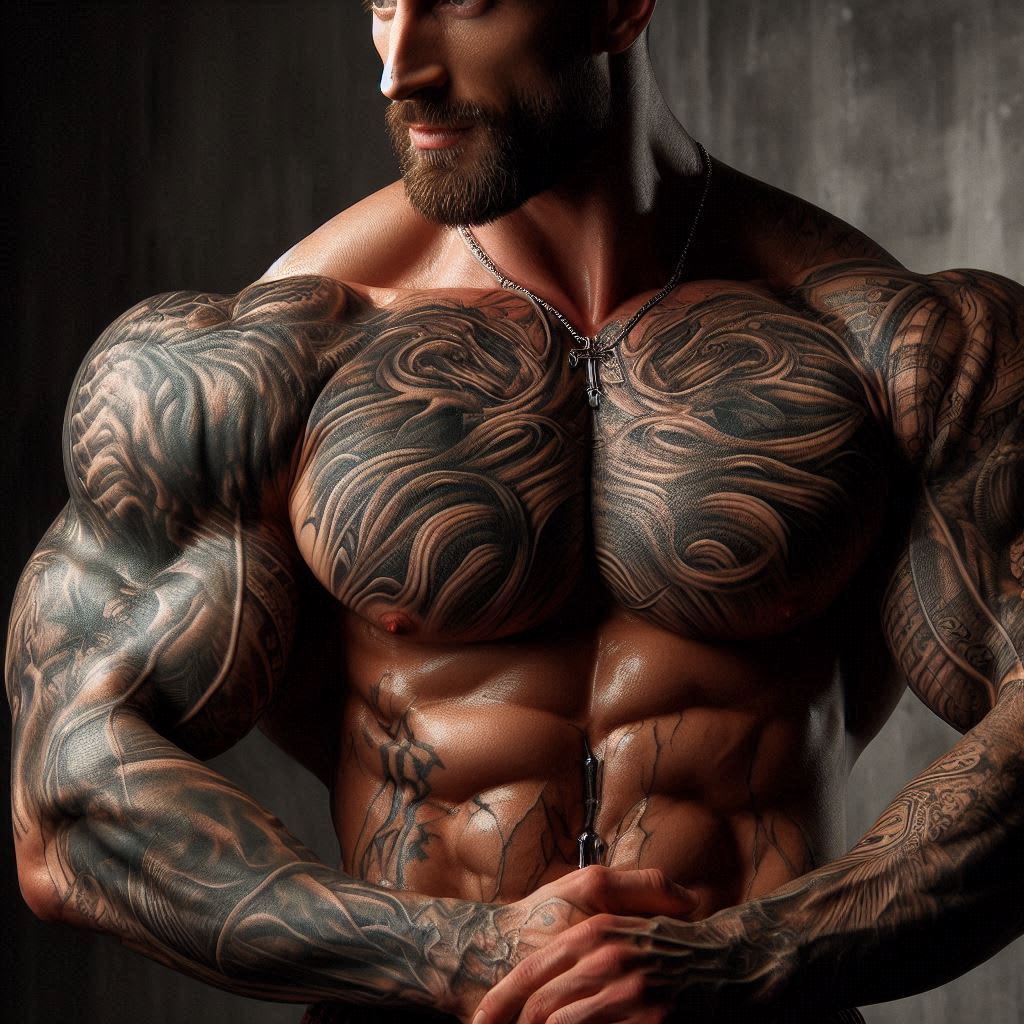
When one thinks about Hollywood heroes, muscle is often the first thing to pop into one's mind. Greater-than-life heroes have not only charmed audiences with their bravery and strength but also have come to symbolize physicality, power, dominance, and sheer will. The development of muscular heroes in Hollywood has been nothing short of extraordinary, from those initial films to the massive blockbusters that are produced today. But how did we get from those lean, charming heroes in early films to the bodybuilding physiques of today's action stars? Let's travel down the evolutionary road of muscular heroes in Hollywood and see how these characters influenced the industry and our concept of strong.
The Golden Age: Tough Guys with a Little Muscle
Let's go back to the 1940s and 50s, Hollywood's golden age, when action heroes didn't have to be this towering, muscle-packed figure. The tough guy was a rugged, gritty character who could handle himself in a fight but didn't have to have bulging muscles to prove it. Think of stars like Humphrey Bogart in The Maltese Falcon or John Wayne in Stagecoach. These heroes had some physical hardiness, but most of their appeal was based on charisma, quick wit, and the ability to command a room.
Even then, however, there was an evolution. Characters like those portrayed by Kirk Douglas and Steve Reeves in Hercules (1958) started to reveal that muscle could be more than just an aesthetic; it could connote strength, power, and larger-than-life presence. While the muscular heroes of this era weren't as heavily built as those we see today, these actors paved the way for the bigger and bolder action stars that would follow.
The 1970s: The Rise of the Bodybuilders
Now we're getting into the era that truly changed the game-the 1970s. This was the decade when muscle became a symbol of action heroism. The icon of this era would obviously be Arnold Schwarzenegger. When Arnold burst onto the scene with Conan the Barbarian, in 1982, and then The Terminator, in 1984, he wasn't an actor so much as an ambulatory mountain of muscle. Arnold, a bodybuilder before an actor, was really the epitome of strength and power, really the most unparalleled size in Tinseltown at the time.
But it wasn't only Arnold. Sylvester Stallone, fresh off of Rocky in 1976, followed up with Rambo in 1982, the character even more shredded than ever. The two actors became the poster children for muscular heroes in the 1980s. The emphasis was on strength, durability, and endurance-qualities that these characters showed through their physicality. Muscular heroes became much more than action stars: they were a symbol of what it meant to be unstoppable.
The 1990s: The Era of the Superhero Physique
Fast forward to the 1990s, and that muscular hero trope took an even more exaggerated form. The rise of superhero films and comic book adaptations meant that characters like Batman and Superman, for example, were now able to show off physiques straight out of the comic books—bigger, more defined, and frankly, more absurdly muscular. The trend was started by actors like Bruce Willis in the movie Die Hard in 1988, but by the 1990s, stars like Will Smith in Bad Boys (1995) and Keanu Reeves in The Matrix (1999) brought a new level of fitness to their action roles.
Meanwhile, the emergence of stars such as Jean-Claude Van Damme and Dwayne "The Rock" Johnson proved that the muscle-powered action hero was more in demand than ever. These actors were not only strong but also incredibly flexible and capable of pulling off jaw-dropping stunts that demanded both power and agility. The muscular hero was no longer just a symbol of brute force; he was now a finely-tuned athlete who could do it all.
The 2000s and 2010s: The Superhero Boom
By the 2000s, superheroes dominated the movie arena, and with them, some of the most jacked actors to have graced the screen. But things changed with the MCU, which placed bold characters such as Captain America, by Chris Evans, and Thor, played by Chris Hemsworth, right at the forefront. And boy, could these guys flex muscle-they had it all. Thus, it took months of tiresome workouts and diets to achieve the physiques of the superheros.
Notably, Chris Hemsworth was making news for his metamorphosis in Thor-as a lean actor, he attained big, superhero-level muscles. This was followed by Chris Evans, who bulked up to become the super-soldier Steve Rogers in Captain America. And let's not forget Hugh Jackman's legendary transformation into Wolverine, where his physique became a central part of his character's identity. These characters didn't just punch and kick-they were an embodiment of the height of physical power, and their muscle was part of what made them unforgettable on the big screen.
Modern Day: The Continued Rise of Muscle
In today's era, muscular heroes continue to dominate Hollywood. The Rock, still full of energy, now heads action-packed franchises such as Fast & Furious and Jumanji. His muscle has become synonymous with his larger-than-life persona, and it's no surprise he is one of the highest-grossing actors in Hollywood. Meanwhile, actors such as Henry Cavill as Superman, Zac Efron in Baywatch (2017), and even actors such as Jason Momoa as Aquaman show that muscle remains a major selling point in blockbuster films.
But something's different with these modern muscular heroes-they're not about strength only. There's a deeper sense of balance. These stars are in top shape, but they show how to perform stunts that are out of this world, tough roles taken in stride, and heart-pounding action. Muscle's not about size today; it's about agility, flexibility, and athleticism.
About the Creator
Ruzlat
Amazing!
The Politics of Playing Dress-Up
Well, to start off I'd like to say a happy world book day to all who celebrate. I know I haven't really posted anything on my socials about it but I'm not a jubilant kind of person. I lay low most of the time. Let's start off with a popular anecdote from the vaults...
By Annie Kapur7 days ago in Geeks
Persian Unveiled: The Sleek Cat Pokémon That Combines Speed, Elegance, and Deadly Precision
Persian is the epitome of elegance, speed, and precision in the Pokémon universe. Evolving from the mischievous Meowth, Persian transforms from a clever trickster into a sleek, powerful feline capable of both grace and ferocity. Its design emphasizes agility, intelligence, and predatory instinct, making it a favorite among trainers who value strategic finesse over brute force. Persian’s combination of sharp claws, rapid movement, and tactical versatility allows it to dominate in a variety of battle scenarios, from casual encounters to competitive arenas, proving that sophistication and strategy can be as lethal as raw power.
By Lukáš Hrdlička2 days ago in Geeks


Comments
There are no comments for this story
Be the first to respond and start the conversation.