
The Dead Zone: Book vs. Movie — What Stephen King’s Story Gains and Loses on Screen
A deep comparison of Stephen King’s The Dead Zone novel and the 1983 David Cronenberg film adaptation. What changed, why it matters, and how critics, fans, and King himself view the differences.

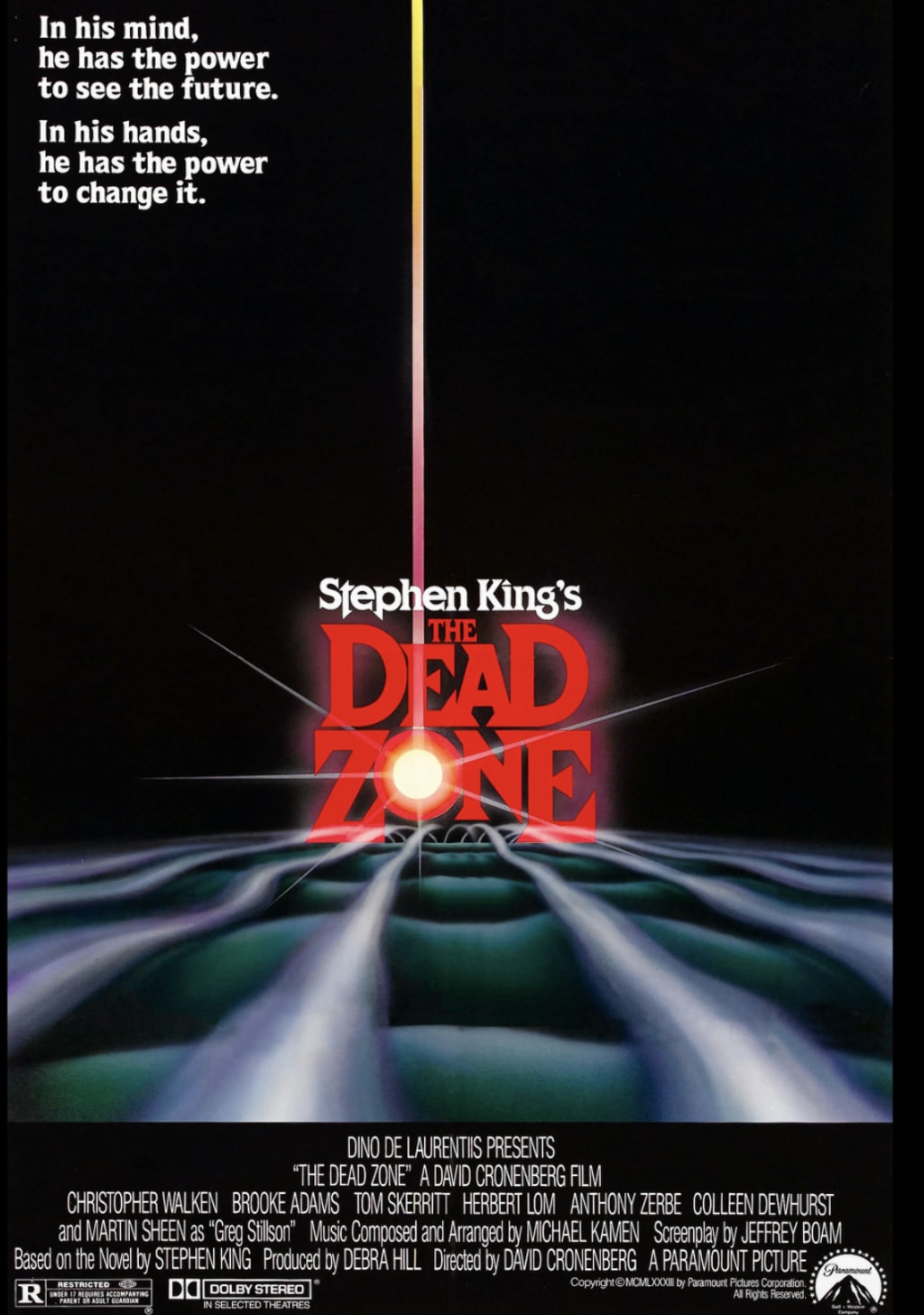
Some stories feel like they belong to the era that produced them. Stephen King’s The Dead Zone is one of those stories. It came out in 1979, full of post-Watergate disillusionment and a creeping anxiety about how easily a political strongman could rise in America. Four years later, David Cronenberg adapted it into a film starring Christopher Walken, and suddenly King’s sprawling novel became something leaner, icier, and more tragic.
Both versions are great. Both versions resonate. But they are not the same. And the divide between the book and the movie remains one of the most interesting splits in King’s long history with Hollywood.
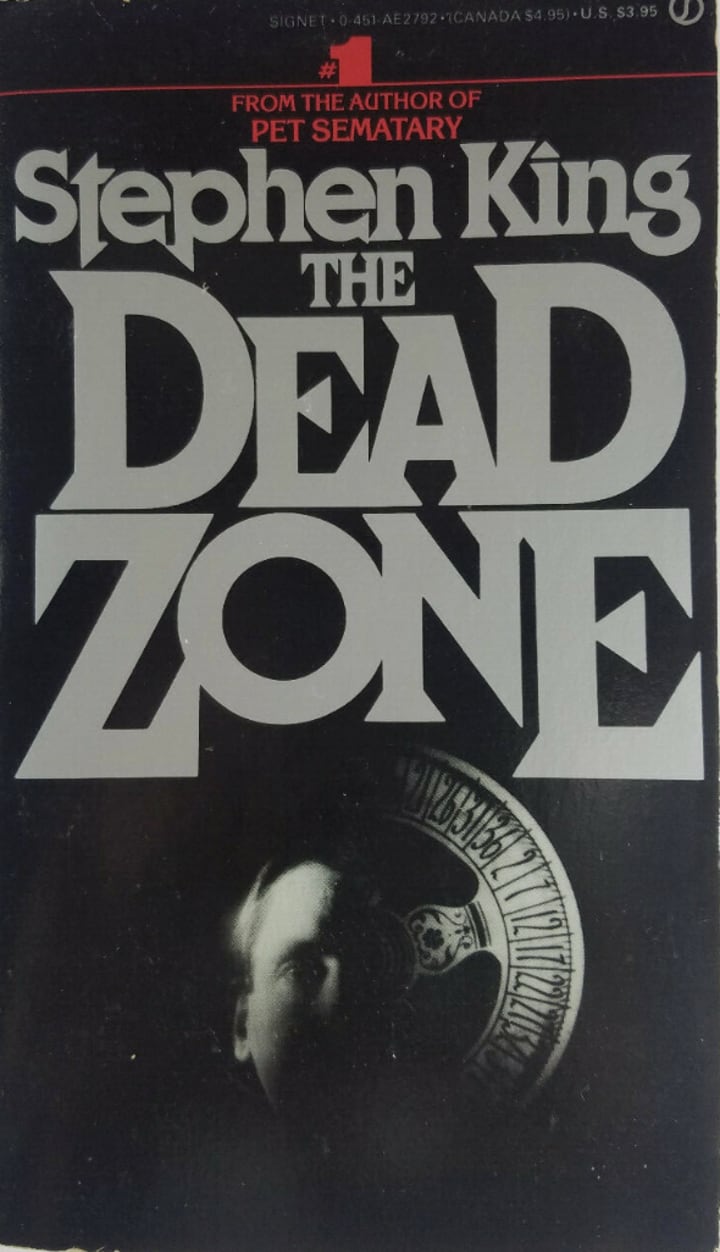
A Novel of Lives Interrupted
King’s novel is one of his most character-driven works. It’s rarely discussed alongside The Shining or It when people talk about his “big” books, but The Dead Zone might be one of the most emotionally grounded stories he’s ever told. Johnny Smith begins the book as a good man living a normal life — a teacher, a son, a boyfriend who thinks he’s finally caught a break after years of bad luck. Then the accident happens, the coma comes, and the rest of the novel becomes the long, painful accounting of everything that’s taken from him.
The scope of the novel is what fans love: King gives us Johnny’s childhood, his early romance with Sarah, the long rehabilitation, the depression, the anger, the weight of being turned into a prophet against his will.
The movie can’t carry all of that. It doesn’t even try.
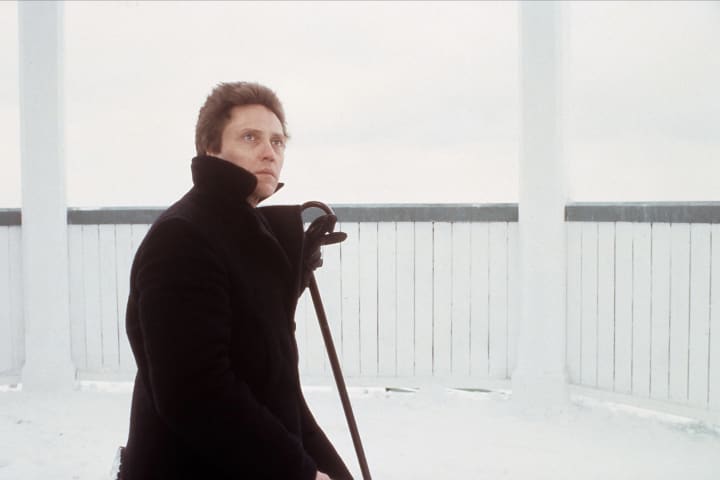
A Movie That Lives in the Cold
David Cronenberg’s The Dead Zone trims everything down to its narrative bone. The film is almost episodic:
• Johnny wakes up in the hospital
• He learns he can see the past and the future
• He gets dragged into the Castle Rock Strangler case
• He sees Greg Stillson become a danger to the world
• He makes a choice that will cost him his life
The movie is more controlled and clinical, and Christopher Walken gives Johnny a kind of haunted stillness — as if the accident cracked something open inside him and nothing has settled since. Critics praised this approach for decades, calling it one of Cronenberg’s most mature and restrained films, a departure from his body-horror period.
But the simplification comes at a cost. Many readers consider the book richer, more detailed, more human. The movie is a tragedy; the book is a life.
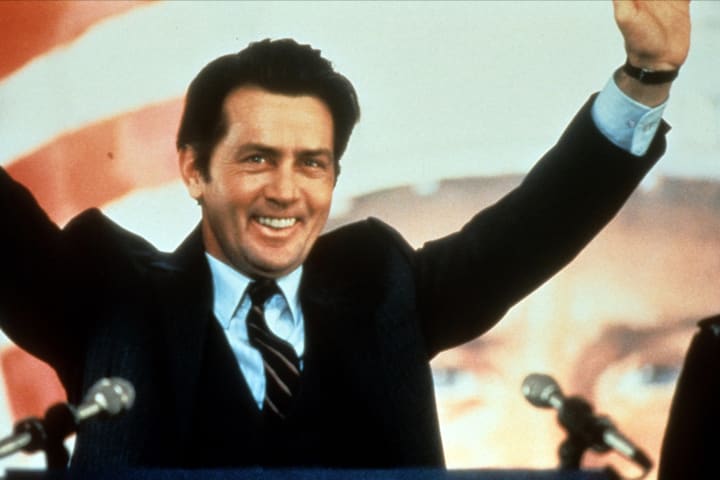
Greg Stillson: A Different Kind of Monster
One of the biggest differences between page and screen is Greg Stillson. Martin Sheen is terrific in the film — charismatic, terrifying, and absolutely believable as a rising political firebrand. But King’s Stillson is darker. Much darker. In the novel, he’s violent, petty, vindictive, and cruel in ways the movie simply doesn’t have time to explore.
The book’s Stillson is a warning.
The movie’s Stillson is a villain.
Both work, but in different registers. Readers who love the novel often feel the movie’s political dread is too softened by comparison.
The Castle Rock Killer: Bigger in the Book
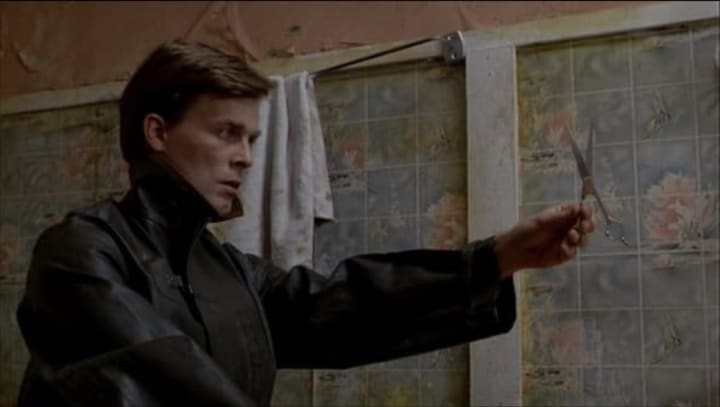
The Castle Rock Strangler sequence is one of the movie’s strongest scenes, a grim little detective story within the larger film. But the book turns this storyline into a major emotional turning point. Johnny’s involvement in the case leaves deeper scars, and Frank Dodd looms over the latter half of the novel like a shadow Johnny can’t quite escape.
Fans of the book sometimes see the shortened movie version as almost too tidy. The novel lets that darkness linger.
What Stephen King Thought
King is famously blunt about the movies based on his work, and he doesn’t hold back when he hates something (The Shining still drives him crazy). But The Dead Zone is one of the rare adaptations he genuinely loves.
He’s said the movie is:
• “One of the best adaptations of my work.”
• “Faithful in spirit.”
• “Beautifully acted.”
He especially praised Walken for bringing a fractured vulnerability to Johnny that wasn’t exactly in the novel but felt right on screen.
King did note that the movie’s Stillson is less terrifying than the one he wrote, but that’s about as far as his criticism goes.
The Divide, and Why It Matters
Readers tend to love the breadth of the novel — the emotional journey, the political menace, the heartbreak of Johnny and Sarah’s relationship. The film’s defenders love its focus — the way Cronenberg pares the story down to its essential moral question: “If you knew the future, and it was terrible, what would you sacrifice to stop it?”
Two versions, two lenses, one story about a man who wakes up with the power to see the future and slowly realizes it is killing him.
For a story about second sight, The Dead Zone is unusually flexible — and that might be why both versions still stand tall more than forty years later.
About the Creator
Movies of the 80s
We love the 1980s. Everything on this page is all about movies of the 1980s. Starting in 1980 and working our way the decade, we are preserving the stories and movies of the greatest decade, the 80s. https://www.youtube.com/@Moviesofthe80s
Keep reading
More stories from Movies of the 80s and writers in Geeks and other communities.
The Right Stuff: How the 1983 Classic Rewrote Tom Wolfe’s Vision—and Sparked a Gus Grissom Controversy
The Right Stuff: Film vs. Book and the Fight for an Astronaut’s Legacy There was a time when astronauts were among the most beloved people on the planet. In my childhood, I went to a grade school named for Neil Armstrong, and our district included schools honoring Virgil “Gus” Grissom and Edward White. These men weren’t just names on plaques—they were woven into the fabric of American heroism. When the Challenger tragedy struck, President Reagan said the astronauts had “slipped the surly bond of Earth to touch the face of God,” and regardless of how you feel about Reagan, the phrasing still hits with an undeniable, poetic power.
By Movies of the 80s2 months ago in Geeks
Silver Screen Magic with Mae West
American actress and singer Mae West became a popular film actress during the Great Depression. She started entertaining in vaudeville, then performed on Broadway, and finally went to Hollywood. She signed up with Paramount Pictures and made her debut in the 1932 film “Night After Night.” She also starred in musicals, comedies, and crime dramas. The American Film Institute named her one of the best classic Hollywood actresses.
By Rasma Raisters6 days ago in Geeks
"Beyond the Gates" Weeks 38-44 Recap
It's been a minute since I delivered a Beyond the Gates recap, but I want to start with this. If you had told me that in 2025 and now into 2026 that I'd be religiously watching any soap opera, I would have looked at you like you had three heads or something. My feelings about soaps had always been complicated. I had peeped into some of the classics at times, but I was never a religious viewer. A question I never asked myself was this: "What would it take for me to actually watch a soap every day?"
By Clyde E. Dawkins7 days ago in Geeks


Comments
There are no comments for this story
Be the first to respond and start the conversation.