
The Right Stuff: How the 1983 Classic Rewrote Tom Wolfe’s Vision—and Sparked a Gus Grissom Controversy
A deep dive into The Right Stuff (1983) and Tom Wolfe’s groundbreaking book, exploring the major differences, the reasons behind them, and the long-standing controversy over the film’s portrayal of astronaut Gus Grissom.

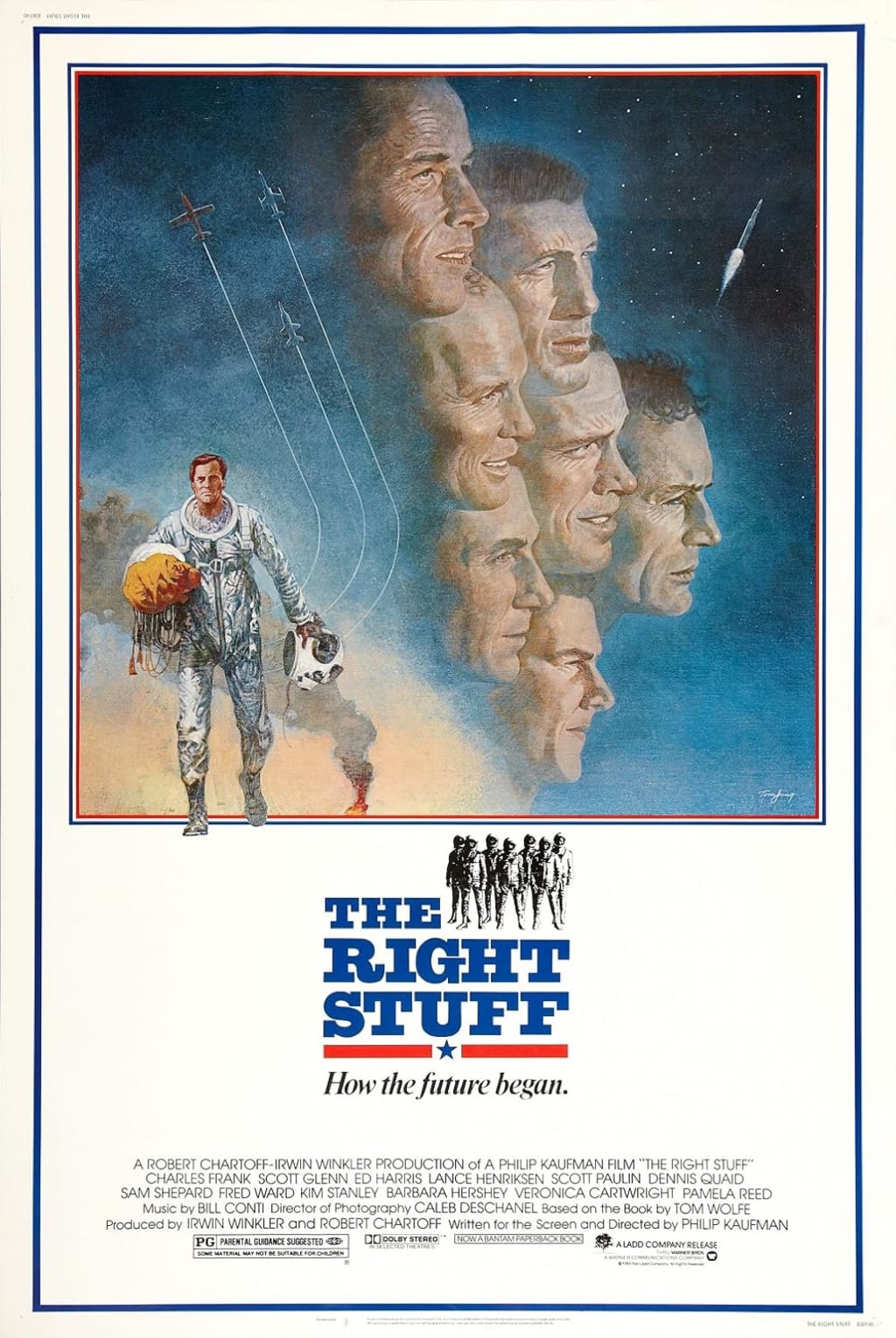
The Right Stuff: Film vs. Book and the Fight for an Astronaut’s Legacy
There was a time when astronauts were among the most beloved people on the planet. In my childhood, I went to a grade school named for Neil Armstrong, and our district included schools honoring Virgil “Gus” Grissom and Edward White. These men weren’t just names on plaques—they were woven into the fabric of American heroism. When the Challenger tragedy struck, President Reagan said the astronauts had “slipped the surly bond of Earth to touch the face of God,” and regardless of how you feel about Reagan, the phrasing still hits with an undeniable, poetic power.
Somewhere between then and now, that reverence faded. Astronauts once filled magazine covers, inspired kids to dream of space, and were treated as the intellectual elite of American public service. Today, most people can’t name a single active astronaut. The profession still demands brilliance and bravery, but the spotlight is gone. That shift, happening over just a few decades, means that a film like The Right Stuff—a movie that helped define astronaut heroism for an entire generation—feels even more essential to revisit.
Few adaptations are as ambitious or as debated as The Right Stuff. Philip Kaufman’s 1983 film and Tom Wolfe’s 1979 non-fiction book tell the same foundational story: America’s first astronauts and the test pilots who pushed technology, and their own bodies, beyond known limits. But the way each version interprets heroism, ego, patriotism, and individual character is wildly different.
For Movies of the 80s, here’s a closer look at what changed, why it changed, and the controversy—especially surrounding Gus Grissom—that still lingers decades later.
Tom Wolfe’s Book: Journalism Turned Inside-Out
Tom Wolfe didn’t set out to write a patriotic space opera. His interest lay in cultural psychology. His Right Stuff is:
• sharply satirical about NASA’s media machine
• fixated on ego, masculinity, and fear
• enthralled with the test-pilot mythology, especially Chuck Yeager
• willing to bend chronology to make thematic points
Wolfe’s style blends reporting with novelistic flair. He romanticizes pilots like Yeager while skewering the bureaucratic side of NASA. It’s not an unbiased historical text—it’s a commentary on American manhood, competition, and the pressures of public image.
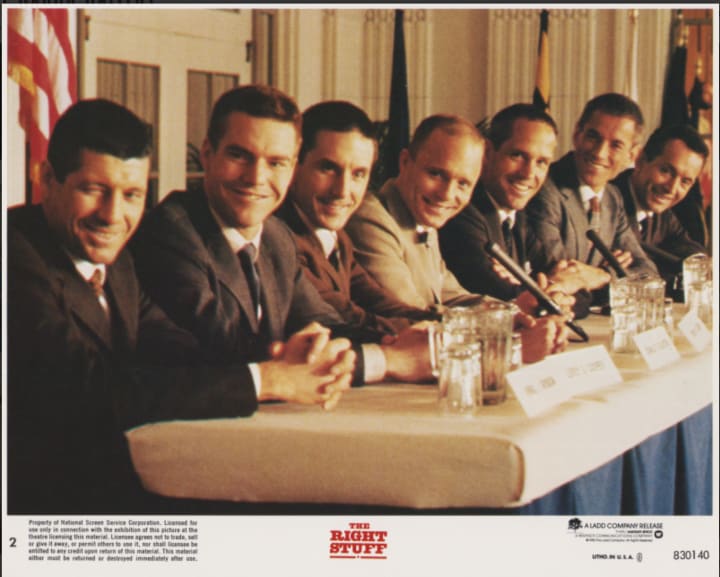
The Film: A Sweeping, Mythic Americana
Philip Kaufman’s film adapts Wolfe’s book but also rejects parts of it. The movie is:
• more inspirational than critical
• more focused on group heroism than individual ego
• determined to unify the Mercury Seven into a cinematic team
• more interested in emotion and imagery than journalism
Kaufman and Wolfe clashed over tone. Wolfe wanted his critique preserved; Kaufman wanted something closer to an American folk tale. The movie takes Wolfe’s characters and reshapes them into broader, cleaner archetypes.
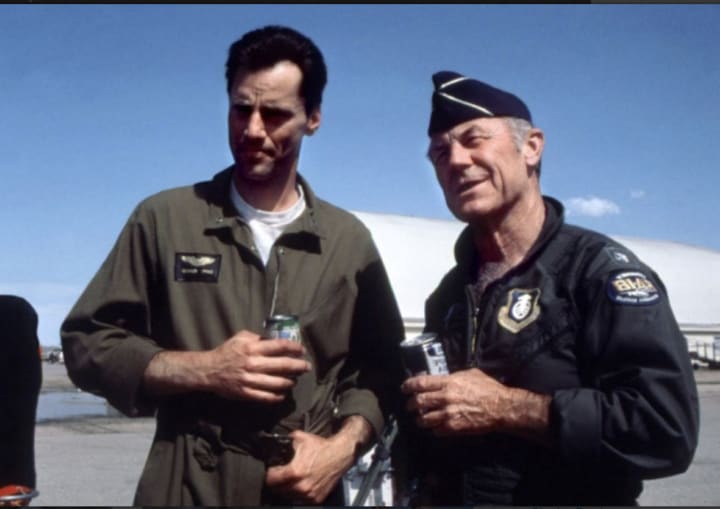
1. Chuck Yeager: Center of the Book, Outsider in the Film
In Wolfe’s book, Chuck Yeager is the gravitational center. He represents “the right stuff” in its purest form: fearless, unpolished, uninterested in fame, everything NASA’s polished astronauts were not.
The movie still honors Yeager, especially in the poetic final scenes, but he becomes a parallel story rather than the main focus. Kaufman shifts attention to the astronauts—an ensemble narrative that studios believed would resonate more broadly.
The result? The book critiques the myth; the movie helps build it.
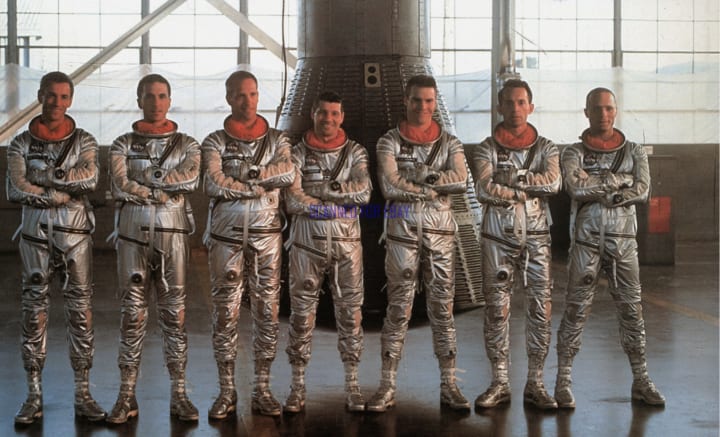
2. The Mercury Seven: From Wolfe’s Satire to Hollywood Brotherhood
Wolfe delights in exposing the astronauts’ egos, rivalries, and willingness to cultivate their public personas. He’s not cruel, but he is unflinching.
The film softens nearly all of that. The astronauts disagree, sure, but the conflicts are framed as healthy competition. Kaufman leans into camaraderie, heroism, and the shared triumph of early spaceflight.
The Reagan-era timing mattered. A patriotic film in 1983 needed heroic figures, not a PR exposé.
3. Gus Grissom: The Portrayal That Still Sparks Debate
This is where the adaptation becomes genuinely controversial.
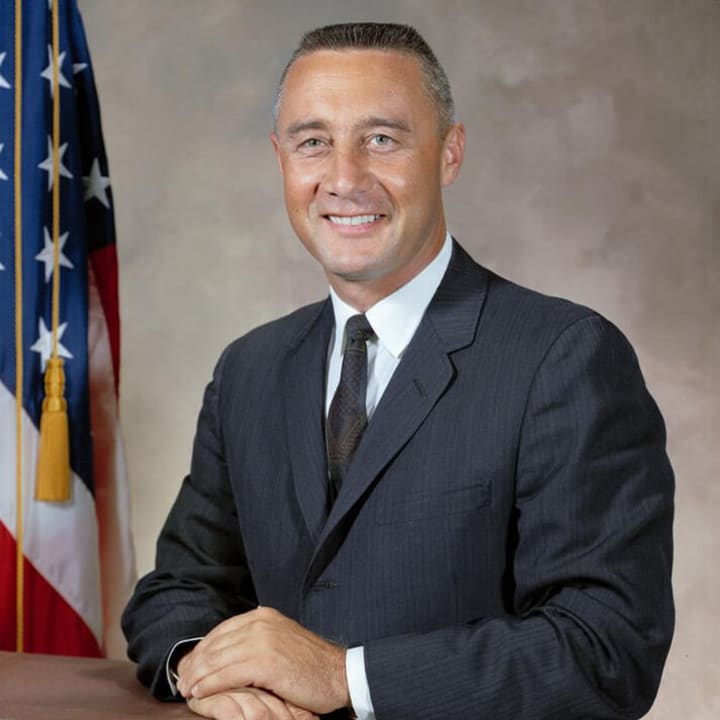
Wolfe’s interpretation
Wolfe implies—but never outright states—that Grissom may have panicked aboard Liberty Bell 7 when the hatch blew prematurely and water rushed in. He leaves room for doubt, acknowledging the hatch’s sensitivity and the lack of definitive evidence.
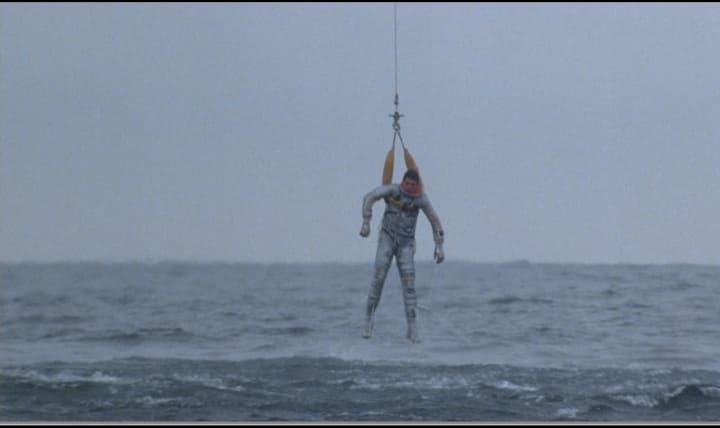
The film’s interpretation
Kaufman’s film removes the ambiguity.
The scene is staged to strongly suggest Grissom hit the hatch prematurely under stress. The framing—close-ups, body language, the awkward silence afterward—implies guilt and embarrassment. It contrasts him with John Glenn, who is positioned as the moral ideal of astronaut composure.
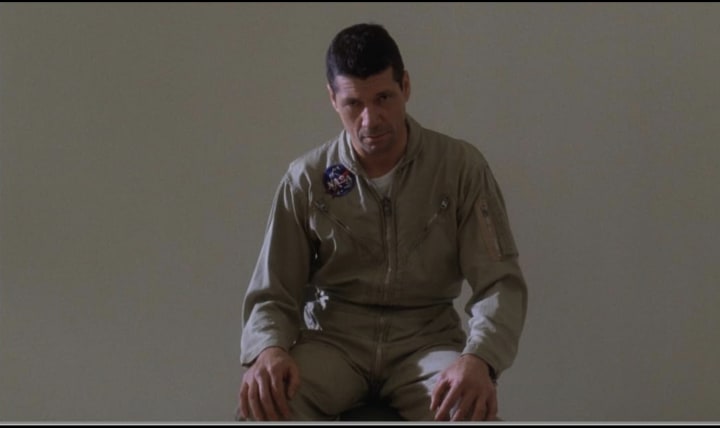
What history says
Modern engineering analysis and testimony from astronauts support that:
• Grissom likely did not panic
• The hatch could be triggered from the outside
• Grissom was treated unfairly by the film
Betty Grissom and many astronauts criticized the portrayal for years. Even cast members later expressed regret for how strongly the scene suggests fault.
It remains the film’s most disputed creative decision.
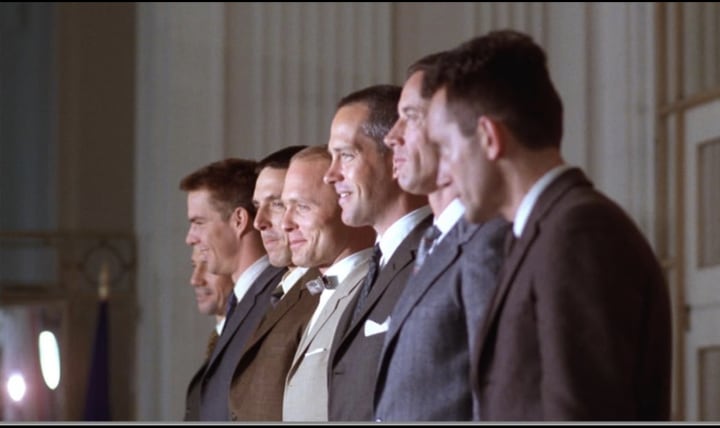
4. Tone and Theme: Wolfe Deconstructs, Kaufman Mythologizes
Wolfe’s tone is sharp and analytical. Kaufman’s tone is grand and romantic.
The book asks, “What makes a hero?”
The movie answers, “Here is what a hero looks like.”
They aren’t opposites, but they are certainly not aligned.
5. The Wives: Streamlined for Story
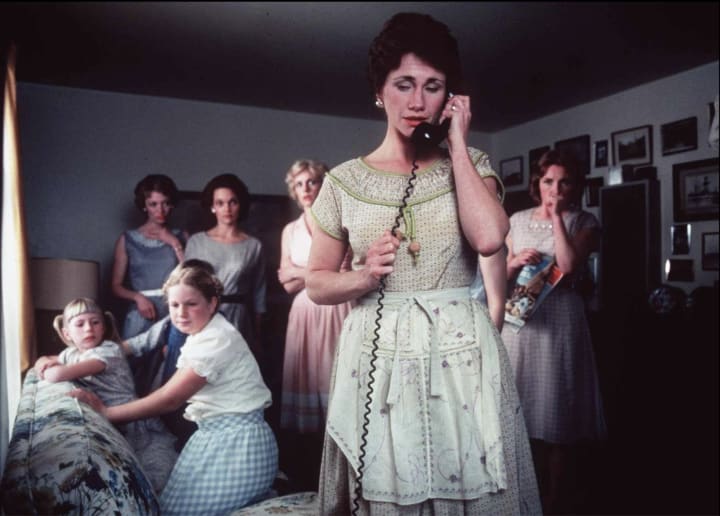
Wolfe spent more time detailing the emotional cost borne by the astronauts’ wives—their fear, their frustrated ambitions, their resilience. The film narrows this to a few central figures, especially Annie Glenn, focusing more on symbolic emotional resonance than on the fuller complexity Wolfe captured.
Two Versions of the American Space Myth
At the end of the day, The Right Stuff exists in two definitive versions:
• Tom Wolfe’s book is a cultural dissection of masculinity, mythology, and the machinery of fame.
• Philip Kaufman’s film is a grand cinematic myth, a love letter to courage and exploration.
Both works matter. Both tell the truth—just not the same truth.
And standing in the middle is Gus Grissom, a real hero whose story became a battleground between artistic license, historical accuracy, and the narratives we choose when we decide what heroism should look like.
About the Creator
Movies of the 80s
We love the 1980s. Everything on this page is all about movies of the 1980s. Starting in 1980 and working our way the decade, we are preserving the stories and movies of the greatest decade, the 80s. https://www.youtube.com/@Moviesofthe80s
Keep reading
More stories from Movies of the 80s and writers in Geeks and other communities.
How Knightriders Marked Ed Harris’s First Great Role — And Why It Still Matters to Me
My mother was wonderful, loving, warm — but we rarely connected on interests. She enjoyed movies, but she never understood my urge to dig deeper, to pick them apart, to talk about craft and choices and meaning. She liked every movie equally. I was the one who wanted to dissect them.
By Movies of the 80s4 months ago in Geeks
History of The Three Stooges (Part I: The Beginnings and Columbia Pictures - 1920s-1936)
I have been itching to write about The Three Stooges on Vocal for close to two years, but I couldn't figure out how to do it. I wanted to do it by third Stooge, but that's a bit complicated. I know this much. I was about eight or nine years old when I first saw The Three Stooges. I remember one of my local channels had the Stooges on for hours, and I tried my damnedest to be up for those shorts. I remember that the Family Channel actually had an hour of the Stooges on from 11PM to midnight, and it was the entire library on during that time.
By Clyde E. Dawkins4 days ago in Geeks
Global Conflicts in 2026: A Deep Dive into Yemen, Russia-Ukraine, and Beyond
The world is currently facing several serious conflicts, including the war in Yemen and the ongoing war between Russia and Ukraine. As 2026 unfolds, the world continues to grapple with several protracted and escalating conflicts that are reshaping international relations, humanitarian priorities, and global economics. Among the most critical are the ongoing wars in Yemen and Ukraine, each with its unique dynamics, and other regional conflicts that collectively paint a troubling picture of global instability.
By shaoor afridi2 days ago in Geeks



Comments
There are no comments for this story
Be the first to respond and start the conversation.