
The Curse of Oak Island: Production Secrets, Editing Tricks & the Hidden Realities Behind the Hit TV Show
For more than a decade, The Curse of Oak Island has gripped audiences with its tantalizing blend of history, legend, and the ever-elusive promise of buried treasure.


The show, which chronicles the Lagina brothers' obsessive quest to uncover the secrets of Nova Scotia's most mysterious island, is an intoxicating cocktail of ancient puzzles, booby traps, and bold excavation. But behind the excitement and cliffhangers lies a lesser-known tale — the real story of how the show is made.
From the manipulation of editing rooms to iron-clad non-disclosure agreements, the making of The Curse of Oak Island is a production feat worthy of its own documentary. Today, we pull back the curtain on the smoke and mirrors, and explore how producers spin shovels of dirt into prime-time gold.
The Treasure Behind the Camera: How the Show is Really Filmed
Despite the air of spontaneity that The Curse of Oak Island projects, the reality is anything but random. The production is a mammoth operation, often spanning several months of intense filming each year. Crews descend on the island long before a single camera rolls, preparing logistics, permits, and access routes in the unpredictable terrain of Mahone Bay.
Filming is tightly coordinated. Drones, Steadicams, cranes, and GoPros are all deployed to capture every muddy trench and dramatic exclamation. Interviews are often shot multiple times to ensure clarity or better “emotional delivery.” And those "eureka moments" that seem to come out of nowhere? Often shot days — even weeks — after the actual event.
Contrary to the idea of the brothers stumbling across discoveries in real time, production teams work with field experts to structure the narrative around planned digs and theories that have been months in the making. Yes, some events happen organically — a broken shaft here, a mysterious coin there — but most episodes are built like puzzles, with key pieces carefully selected for maximum dramatic effect.
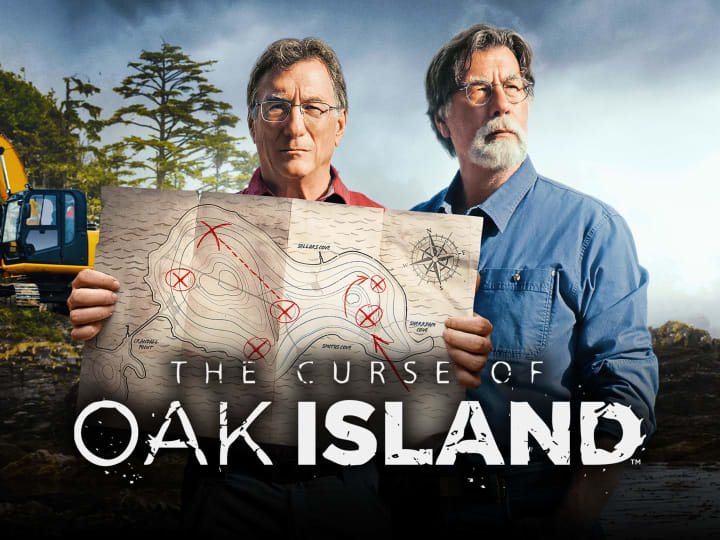
Dramatic Editing vs. Cold Reality: The Illusion of Momentum
The most jaw-dropping secrets of The Curse of Oak Island aren’t buried underground — they’re buried in the editing room.
Episodes are meticulously crafted to create the illusion of non-stop discoveries and escalating stakes. In truth, weeks can pass between findings. But in the hands of skilled editors, mundane days are stitched together with swelling music, ominous voiceovers, and reaction shots that make a rusty nail feel like the Ark of the Covenant.
Every “Could this be the breakthrough they’ve been waiting for?” voiceover is part of a larger strategy: to keep audiences hooked through the long, slow grind of real-world excavation. Viewers might not realize that many discoveries are not as significant as they appear — or that they're completely recontextualized to fit the season’s "story arc."
The producers lean heavily on narrative devices like foreshadowing, misdirection, and even red herrings. Editing out dead ends and failed experiments isn't deceit — it’s showbiz. After all, who wants to watch a team spend 17 hours clearing mud from a flooded shaft with zero payoff?
Still, this creative license has drawn criticism. Some fans feel the show stretches believability, turning genuine curiosity into manufactured suspense. But love it or hate it, the editing magic is what elevates Oak Island from documentary to drama.
Contractual Gags and the Price of Fame
For those who appear on The Curse of Oak Island, fame comes with fine print — and lots of it. Cast members, crew, and even visiting experts are bound by stringent contractual agreements. Non-disclosure clauses prevent them from revealing any off-camera details or spoilers, often for years after filming.
These contracts also dictate how much autonomy the cast has in terms of what they can say or do. Interviews are frequently coordinated through the production team, and public statements are vetted to ensure they align with the show's image. Even social media posts can be restricted.
There’s also the matter of exclusivity. Some experts brought on the show — especially archaeologists or theorists — are contractually barred from appearing on competing shows or sharing certain findings independently. This allows producers to control the narrative and maintain the element of surprise.
The Lagina brothers, though central to the show, are also participants in this machinery. While they retain some control as executive producers, they are still bound to the production timetable, editorial decisions, and broadcasting requirements of the History Channel.
In short: everyone signs the deal with full knowledge that reality will be, at times, rewritten for entertainment.

The Power of the Cliffhanger: Manufactured Mystery
Cliffhangers are the lifeblood of The Curse of Oak Island. Each episode is a delicate build-up to a final twist — a sudden find, a shocking theory, or a tantalizing clue that leaves viewers begging for more. But these moments are often edited for maximum suspense, regardless of the actual significance of the event.
Consider the infamous “shaft collapse” episodes or the many variations of “game-changing discoveries” that turn out to be pieces of wood, old tools, or mundane debris. These aren't lies — they’re exercises in storytelling sleight of hand.
The cliffhangers are so effective that they've become a genre trope. Some fans even joke that Oak Island is a masterclass in “almost finding treasure.” But what keeps them coming back? The show taps into something primal — the thrill of the hunt, the allure of ancient secrets, the hope that next time will be different.
This emotional investment is no accident. It's a calculated formula perfected by reality TV over decades — and The Curse of Oak Island is one of its most effective practitioners.
Who Really Owns the Story? Network Control and Production Oversight
While the Lagina brothers are the faces of the hunt, the show’s direction is heavily influenced by its network — the History Channel — and production company Prometheus Entertainment. These entities have final say over content, pacing, and season arcs.
They control more than what airs; they influence what gets searched for. Many theories or dig sites are chosen not just for historical merit, but for dramatic or thematic value. The "Knights Templar" connection, for instance, remains a fan-favorite angle, despite limited historical evidence.
In some cases, production will greenlight an excavation based on what makes good TV — even if the archaeologists are skeptical. This balancing act between entertainment and scholarship is a source of tension, though it's rarely discussed publicly.
The island may be full of secrets, but the real puppet masters pull strings from high-rise offices in Los Angeles and New York.
Behind the Brotherhood: Cast Chemistry and Set Dynamics
The show’s charm relies heavily on the camaraderie between its cast. The warm, brotherly bond between Rick and Marty Lagina is genuine — a dynamic that grounds the show’s more fantastical elements. But the “Oak Island family” also includes longtime researchers like Doug Crowell, Charles Barkhouse, and the late Dan Blankenship, whose legacy looms large.
Behind the scenes, the chemistry is generally as real as it seems. However, with long shoot days, conflicting theories, and the stress of production, tempers occasionally flare. Crews have reported minor tensions, especially when episodes drag on with little tangible progress. Still, the cast remains largely unified in their mission, which keeps the team — and the audience — invested.
The Show Must Go On: Why It Keeps Running
Critics often ask: “Why is this show still on if they haven’t found anything major?” The answer lies in a mix of ratings, loyalty, and narrative.
The Curse of Oak Island is a ratings powerhouse for the History Channel. Its slow-burn format means that new theories can constantly be introduced, making it virtually evergreen. Even minor finds — a piece of pottery here, a corroded hinge there — can be spun into episodes, discussions, and debates.
More importantly, the show is about the pursuit, not the prize. It's a meditation on obsession, legacy, and the irresistible allure of “what if?” That’s what keeps viewers — and advertisers — coming back, season after season.

The Final Layer: What Viewers Never See
The production team's influence extends into post-production, marketing, and even fan engagement. Spoilers are tightly guarded. Any leaks or behind-the-scenes material is immediately flagged and removed. Editors work months in advance to polish footage, add effects, and construct season-long arcs.
Even musical cues are carefully selected to amplify tension. That eerie, echoing soundtrack? Crafted to keep viewers on edge. The narrator’s tone? Designed to make every fragment feel like the Holy Grail.
This level of control ensures the show retains its mythic feel. But it also means the "truth" of Oak Island — what’s really there, what’s really happening — is known only to a select few.
Conclusion: The Greatest Treasure May Be the Show Itself
Whether or not The Curse of Oak Island ever uncovers the fabled treasure, its impact is undeniable. It has redefined reality TV, turned an obscure Canadian island into a global curiosity, and built a thriving community of amateur historians, theorists, and fans.
Behind every creaking camera crane, behind every edit splice and dramatic score, lies a masterclass in entertainment production. The real treasure isn't just in the dirt — it's in the drama.
As long as there's mystery to mine, and cameras to roll, the curse — and the ratings — will endure.
About the Creator
Rukka Nova
A full-time blogger on a writing spree!
Keep reading
More stories from Rukka Nova and writers in Geeks and other communities.
Why GTA VI Will Redefine the Future of Gaming—Just Like Rockstar Always Does
It’s been over a decade since Grand Theft Auto V first hit the scene, yet it still feels like it never left the spotlight. In an industry notorious for short attention spans and fast-moving trends, GTA V has stood tall, unfazed, like a digital monument to Rockstar’s obsession with excellence. And now, as the world waits with bated breath for Grand Theft Auto VI, one truth becomes clearer by the day: Rockstar doesn’t just release games. They release revolutions.
By Rukka Nova8 months ago in Geeks
Marvel Zombie
The last entry into our 2025 superhero projects catalogue is Marvel Zombies. This was a show that was anticipated by absolutely no one and it disappeared from the public consciousness as quickly as it was released. There was nothing special about the project that made it a must see, or a must remember. In fact if anything it's a must forget.
By Alexandrea Callaghan16 days ago in Geeks
Book Review: "Coffee" by H.E Jacob
You guys have probably realised that I love coffee and I normally drink between 8 and 12 cups a day. My coffee of choice is either L'Or's Ristretto Pods for my Nespresso Machine, or if I'm having a cafetière then it would be Skull Crusher's French Vanilla Ground Coffee. I also enjoy Nespresso's own Istanbul blend and of course my favourite coffee shop is Costa and their double espressos are amazing. Coffee is one of the few joys in my life that I have left and so, I expect to carry on with it regardless of what others think. Money spent on coffee is never wasted. But if you put sugar and milk in my coffee then you will no longer be my friend, put it in yours if you want - just not in mine. I could only listen to Coffee by Chappell Roan whilst writing this review, there was no other way...
By Annie Kapur2 days ago in Geeks


Comments (2)
Whoo! Season 13 and Season 14 of The Curse of Oak Island coming soon!
This is fascinating stuff. I had no idea how much planning went into the show. It makes sense though, with all those cameras and different shots. Do you think they ever sacrifice authenticity for a more exciting story? And how do they keep all those secrets with so many people involved?