
Book Review: "Coffee" by H.E Jacob
5/5 - a book on one of the greatest joys of my life?... yes, please!


You guys have probably realised that I love coffee and I normally drink between 8 and 12 cups a day. My coffee of choice is either L'Or's Ristretto Pods for my Nespresso Machine, or if I'm having a cafetière then it would be Skull Crusher's French Vanilla Ground Coffee. I also enjoy Nespresso's own Istanbul blend and of course my favourite coffee shop is Costa and their double espressos are amazing. Coffee is one of the few joys in my life that I have left and so, I expect to carry on with it regardless of what others think. Money spent on coffee is never wasted. But if you put sugar and milk in my coffee then you will no longer be my friend, put it in yours if you want - just not in mine. I could only listen to Coffee by Chappell Roan whilst writing this review, there was no other way...
The author correctly frames coffee as more than just a drink, it is a global connector. It has a huge impact on culture, trade and labour. Farmers farm the coffee and as time goes on, more and more people enjoy coffee all over the world. The anti-Bacchus movement (as the book calls it), is fuelled by the fact that salons all over Europe during the Age of Reason are frequenting these coffee drinkers who are going to change the world. Rousseau and Diderot sit in a coffee shop discussing revolutionary politics and coffee shop bans are enforced to stop these massively awake polemicists from disrupting the status quo. I loved this because it kind of legitimises my coffee drinking in a way. Whereas wine would make you go to sleep, coffee has the exact opposite effect. As the world's only legal drug, it seems that coffee has been very important in the history of politics.
But one of the great stories of coffee in the book comes from the Islamic World. It's fair to say the muslims have some of the best coffee out there. Turkish coffee, middle eastern coffee and the spiced flavours of the Arab world makes not only some of the most delicious coffee you'll ever drink but also, probably the strongest in caffeine content. The book has moments of discourse where we can see coffee brings us together: people on pilgrimage to the Islamic holy site have coffeehouses, so do the salons of Europe, so does Constantinople etc. It is a great force of togetherness. As this coffee makes its way over the world, the author talks about how it changes sleep patterns, conversation and even thought. A powerful engine of modernity, enlightenment thinking was spurned on by it. Ethiopia and Yemen have giant farms of coffee which supply the world with the famed Arabica coffee - which is still some of the most widely drank coffee today.
The author covers the various and shifting attitudes towards coffee in which doctors would sometimes say it was going to cure everything to saying that it was an overstimulating force that would do nothing but harm. Coffee was blamed for nervous disorders, praised for aiding digestion, and recommended (or forbidden) depending on the prevailing medical fashion. Of course, they had an issue back then with understanding new substances, especially ones that were from the other side of the world. Moralists worried that coffee disrupted traditional rhythms of sleep, work, and prayer. Others feared that coffeehouses encouraged idleness or subversion. I don't think 'idleness' is something you need to worry about when someone has drank enough coffee. Coffee toes the line between progress and stability. Coffee, the author suggests, exposes what societies value and fear about themselves.

Obviously coffee has a dark side which is not forgotten about in this book. For a long time, coffee farming was associated with slavery and hard labour. Exploitation and ruining of the environment is one of the reasons we have so many more protections for the rainforest coming out of coffee brands today than ever. The book shows the irony that a drink associated with intellectual refinement relied on brutal systems of extraction. Coffee has its own political economy yes, but not all of it is positive and this alone could have killed the coffee industry if we did not wisen up to the fact that it practically kills people to get it. Thanks to modern advancements, we are much more aware of the people who gather the coffee - they are no longer in the dark and hopefully, no longer being exploited.
There are many more things included in this book, it has been edited and re-edited over time and yet, it sits here in my hands (on my phone) right now. It is a brilliantly written book which feels less like it's trying to overwhelm you facts and statistics and more like a story to appreciate something we all enjoy. I can honestly say that it has been incredible to learn more about my favourite drink in the whole universe.
About the Creator
Annie Kapur
I am:
🙋🏽♀️ Annie
📚 Avid Reader
📝 Reviewer and Commentator
🎓 Post-Grad Millennial (M.A)
***
I have:
📖 280K+ reads on Vocal
🫶🏼 Love for reading & research
🦋/X @AnnieWithBooks
***
🏡 UK
Keep reading
More stories from Annie Kapur and writers in Geeks and other communities.
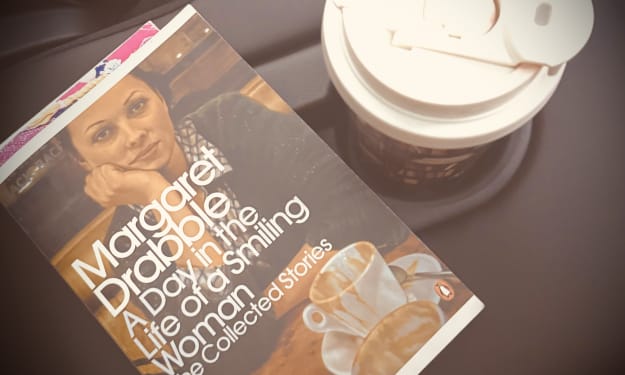
Book Review: "A Day in the Life of a Smiling Woman" by Margaret Drabble
Full Title = A Day in the Life of a Smiling Woman: The Collected Stories by Margaret Drabble "Those who do not love, die, and they are forgotten, and it is of no account. But those who love as I have loved cannot perish. The body may perish, but my love could not cease to exist…"
By Annie Kapur2 days ago in Geeks
Marvel Zombie
The last entry into our 2025 superhero projects catalogue is Marvel Zombies. This was a show that was anticipated by absolutely no one and it disappeared from the public consciousness as quickly as it was released. There was nothing special about the project that made it a must see, or a must remember. In fact if anything it's a must forget.
By Alexandrea Callaghan15 days ago in Geeks
Can This Love Be Translated Review
In an age when streaming platforms shrink the world into a single scroll, television has become one of the most powerful translators of culture. Stories cross borders faster than ever, yet they often carry the same central question: can people truly understand one another when they come from different worlds? The television show Can This Love Be Translated? builds its emotional core around that very idea, using romance as both its subject and its testing ground. More than a simple love story, the series explores language as metaphor, barrier, and bridge—asking whether love itself is something that can ever be fully translated.
By David Cook5 days ago in Geeks


Comments
There are no comments for this story
Be the first to respond and start the conversation.