

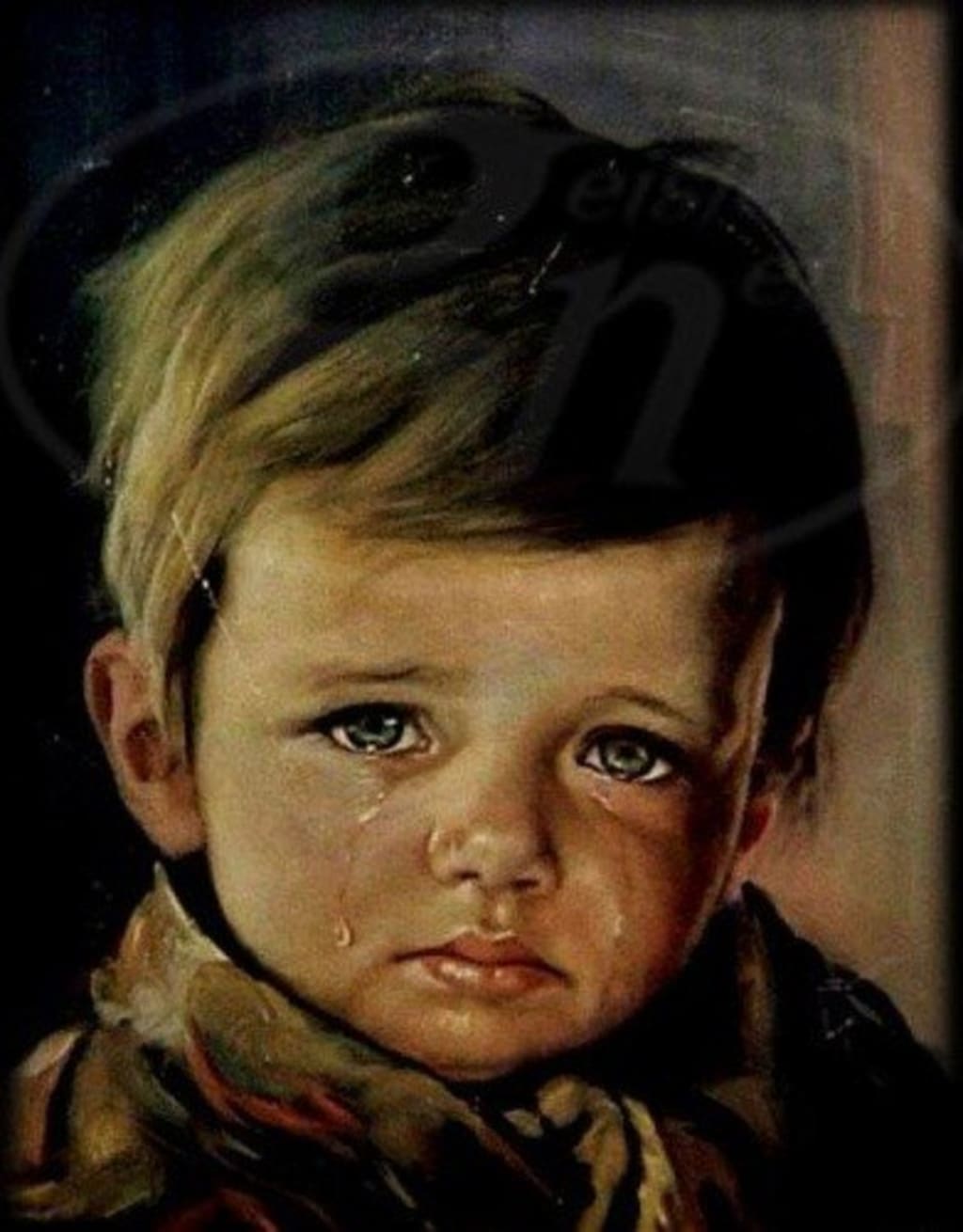
Welcome back to 'Why It's Shifty' and we are on week 27 of our journey. If I'm going to be perfectly honest with you, I was not thinking about doing this past week 20 but I have so many cool ideas for things I want to read and write about. One of those ideas includes this week's horror: The Crying Boy.
Disclaimer: parts of this article may be upsetting or frightening for some members of the audience. Reader discretion is advised.
Plot
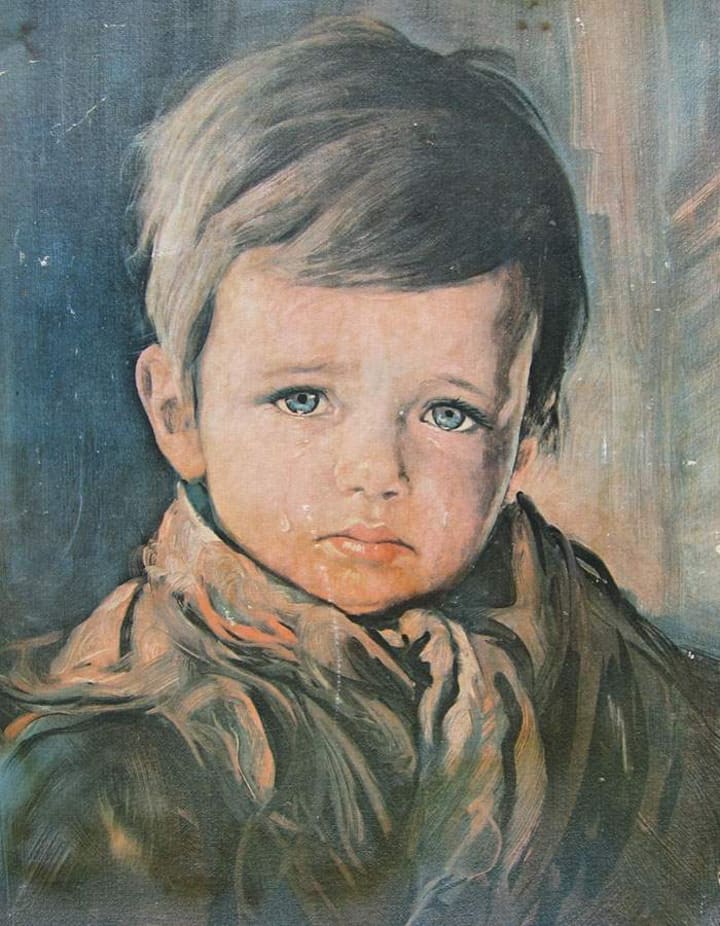
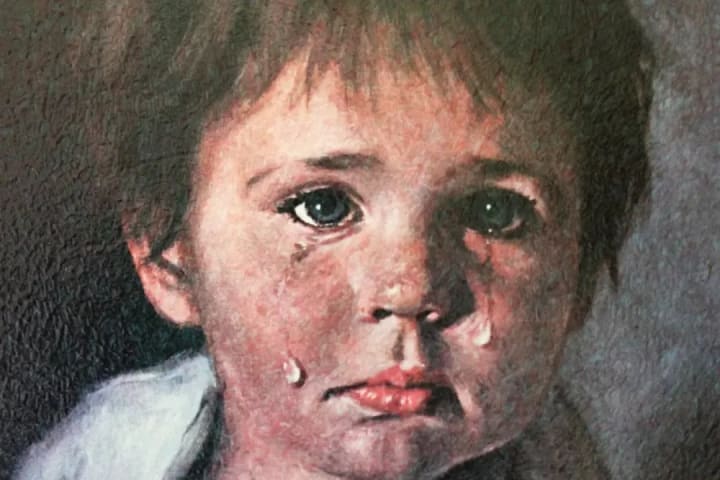
When it first appeared in the 1950s, it was seen to have been painted by Giovanni Bragolin (a pseudonym of Bruno Amadio). It is a painting that depicts a young child, with a sorrowful expression and tear-streaked cheeks. The background is dark and neutral, drawing the viewer's focus entirely to the child's face. His large, mournful eyes and somber clothing suggest poverty or abandonment. The artist's intention was to possibly depict a child who had been traumatised by the previous war.
The painting was reproduced as prints and became surprisingly popular across Europe, especially in the UK during the 1970s and 1980s. Many homes displayed the image as a sentimental ornament, unaware of the strange reputation it would soon acquire.
By the mid-1980s, The Crying Boy had become the centre of an urban legend. News outlets, particularly The Sun (for those of you across the water, The Sun is a British tabloid Newspaper), began reporting bizarre incidents of house fires in which everything was destroyed except the painting.
Firefighters were quoted as saying they found the prints untouched amid the ashes of multiple homes. The phenomenon was so consistent that it was dubbed “The Curse of the Crying Boy.” Stories circulated about people suffering terrible luck after hanging the picture, and some even claimed that the child in the painting had died tragically or was linked to the occult. Fear spread, and people began to burn the paintings in protest.
Into the Theories
Fire-Retardant Varnish
One of the most plausible explanations for the painting’s survival in fires is the type of protective coating used on the prints. Many mass-produced versions of The Crying Boy were sealed with a thick, glossy varnish - a form of laminate that was sometimes flame-resistant.
In house fires, where flames typically travel upward and destroy lighter materials like curtains, paper, or wooden frames, a coated print might remain relatively intact, especially if it fell face-down and was shielded by debris. Firefighters noted that the prints often showed heat damage but did not combust like surrounding objects.
This fuelled speculation, but in reality, it was more likely a matter of materials science than supernatural immunity. Because the varnish slowed ignition and protected the surface, the painting might outlast the fire long enough to appear “untouched,” especially in rooms where the fire didn’t fully engulf the walls.
Statistical Coincidence
Another rational explanation lies in the sheer number of these prints in circulation. During the 1970s and 1980s, The Crying Boy was sold in enormous quantities across the UK in: department stores, markets, and catalogues. It was affordable, mass-produced, and considered fashionable in many working-class homes.
With so many copies spread across the country, it was inevitable that some would end up in homes that later experienced fires. Once the media picked up on a few eerily similar incidents, people began linking the painting to each new disaster, even when no causal link existed. The more the story spread, the more people noticed their own copy of the painting in connection with unfortunate events. This is a classic example of how pattern-seeking minds can create connections where none exist, especially when a compelling story is involved.
Media Hysteria
The growth of the Crying Boy curse can also be attributed to confirmation bias and the power of sensationalist media. Once The Sun published its infamous 1985 article, the public became primed to associate the painting with disaster.
When something bad happened (a fire, illness, or streak of bad luck) those who owned the painting began to blame it. Confirmation bias causes people to notice and remember events that support what they already believe, while ignoring evidence that contradicts it. The media, eager for a captivating story, amplified the legend, often without rigorous fact-checking.
Some local radio stations and newspapers even encouraged readers to burn the paintings, further fuelling the myth. In this way, the “curse” became a self-reinforcing narrative: the more people heard about it, the more they believed it, and the more stories emerged, most of them anecdotal and unverified, but compelling enough to seem real.
Why It's Shifty
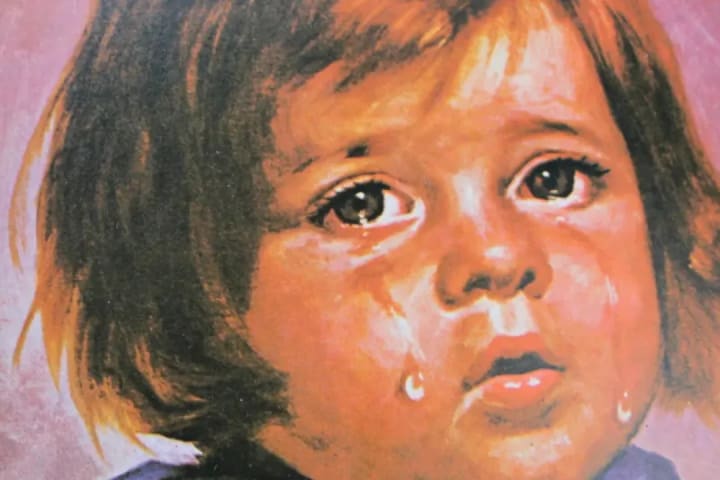
Apart from the fact that there were fires, sicknesses and strings of bad luck associated with the painting but my concern has always been why anyone would choose to display an image of a very distressed child in their home as an ornament. It is usual to display images of children laughing and playing, but a child crying, clearly vulnerable and in great emotional pain seems like a strange subject to find an ornament of.
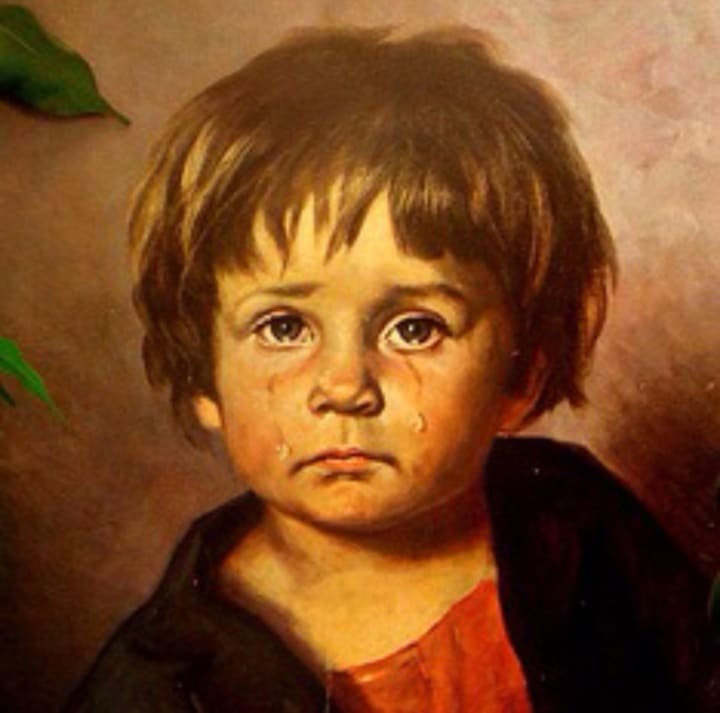
Also many different iterations of the painting still exist today under different names. These are of girls and boys, some of them are even painted in the exact same style. Why so many? Some myths claim they were orphans or abused, and some say the original model died in a fire, adding a layer of mystery. The vagueness surrounding the identity of the children and the artist himself adds an uncanny, impersonal feel to something so emotionally charged.
Of course, what truly cements its strangeness is the urban legend: homes burned, but the painting survived. This eerie combination of emotional intensity and alleged paranormal activity makes the artwork feel cursed, not just sad, but actively malevolent. The supernatural happenings around the painting are well-documented by those who owned it, but unfortunately not by anyone else of note.
Conclusion
So what do you think happened here? Do you believe that this is a truly haunted painting with masses of copies and prints still out there terrorising their owners, or do you think it's just another piece of media hysteria?
I hope to see you next week for another episode of 'Why It's Shifty'.
Next Week: The Devil’s Chair
About the Creator
Annie Kapur
I am:
🙋🏽♀️ Annie
📚 Avid Reader
📝 Reviewer and Commentator
🎓 Post-Grad Millennial (M.A)
***
I have:
📖 280K+ reads on Vocal
🫶🏼 Love for reading & research
🦋/X @AnnieWithBooks
***
🏡 UK
Keep reading
More stories from Annie Kapur and writers in Geeks and other communities.
The Wind in the Willows by Kenneth Grahame
The Wind in the Willows by Kenneth Grahame was first published in 1908 and has since become a timeless classic of children’s literature. Grahame, a Scottish-born author, was working as Secretary of the Bank of England when he began crafting the stories that would form the novel. The tales originated as bedtime stories for his son, Alastair, whom he affectionately nicknamed “Mouse.” Grahame later developed these narratives into letters sent to Alastair during a holiday, creating the whimsical adventures of Mole, Rat, Badger, and the irrepressible Toad.
By Annie Kapur5 months ago in Geeks
Silver Screen Magic with Mae West
American actress and singer Mae West became a popular film actress during the Great Depression. She started entertaining in vaudeville, then performed on Broadway, and finally went to Hollywood. She signed up with Paramount Pictures and made her debut in the 1932 film “Night After Night.” She also starred in musicals, comedies, and crime dramas. The American Film Institute named her one of the best classic Hollywood actresses.
By Rasma Raisters6 days ago in Geeks


Comments (1)
Not really sure what I think. It just makes me...cry. 🤨