

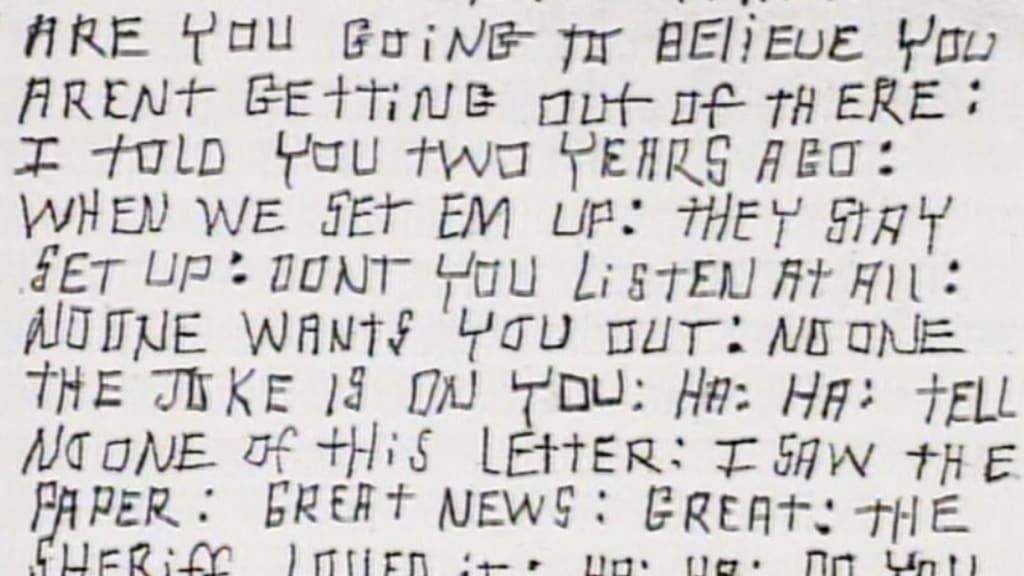
The Circleville Letters remain one of the most perplexing unsolved mysteries in American true crime history. Beginning in 1976, the small town of Circleville, Ohio, was terrorised by an anonymous letter writer who seemed to have intimate knowledge of the townspeople’s secrets. Over the years, hundreds of letters were sent to various residents, exposing affairs, corruption, and alleged criminal activities. The case took a darker turn when one of the recipients, Mary Gillespie, was involved in a suspicious attempted murder, and later, her husband died in a mysterious accident.
Despite a conviction in the case, many believe the true writer was never caught, leading to numerous theories about the real identity and motives of the Circleville Letter writer. From revenge-driven individuals to broader conspiracy theories, the case remains an enigma that continues to fascinate true crime enthusiasts. Let's take a look at it in more detail...
Plot
I:
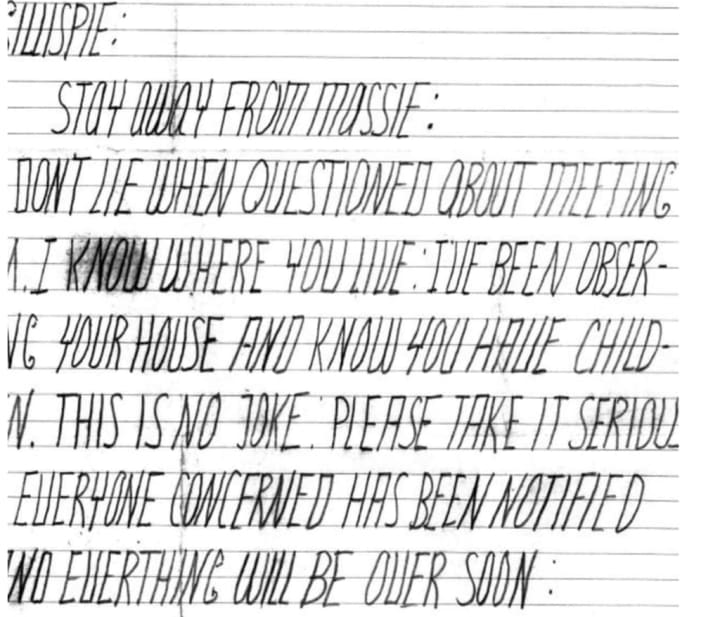
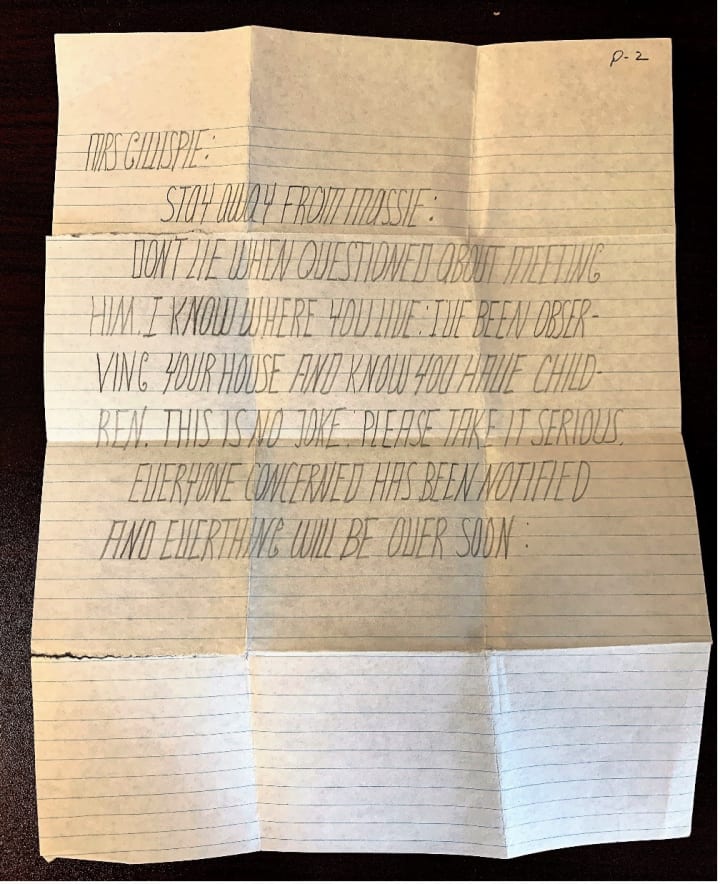
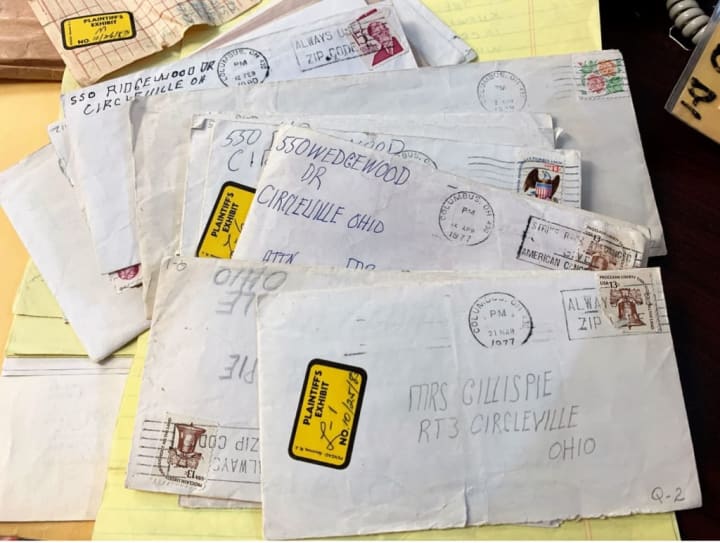
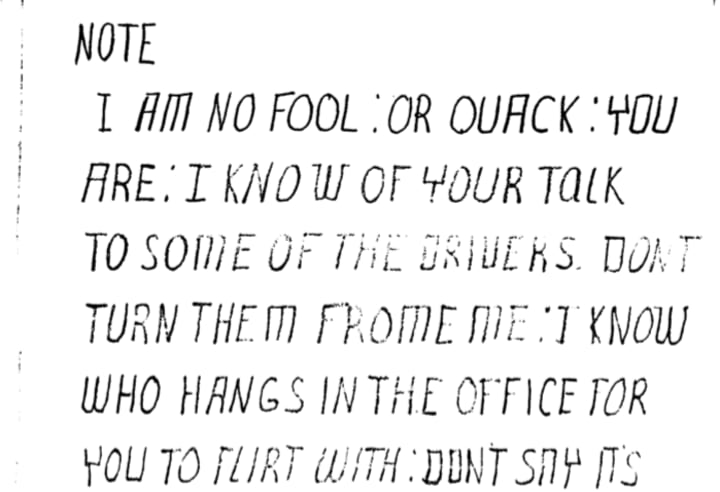
This town became the centre of a strange and disturbing mystery in the 70s when its residents began receiving anonymous letters. These messages, handwritten in distinctive block capital letters, were deeply unsettling. They contained personal details about the recipients: secrets that many had assumed were private. The content ranged from: accusations of extramarital affairs to allegations of corruption, embezzlement, and even criminal activity. Some letters were merely unsettling, while others carried direct threats, warning individuals to confess their wrongdoings or face public exposure.
The most high-profile target was Mary Gillespie, a well-respected local school bus driver. She received multiple letters accusing her of having an affair with Gordon Massie, the school superintendent. The writer was insistent, demanding that she end the alleged affair immediately or risk being exposed to the entire town. Initially, Mary and her husband, Ron Gillespie, attempted to keep the letters a secret, hoping they were an isolated incident or the work of a bitter prankster. However, their unease deepened when they discovered they were far from the only ones receiving these cryptic messages.
As more letters circulated, panic spread through the town. Residents were left wondering: how did the writer know so much about them? The letters included precise details about people’s private lives: information that only someone from within the community could realistically possess. Whispers of suspicion grew among the townspeople. Neighbours began looking at each other with distrust, wondering if the person next door could be the anonymous scribe. Was it someone who had been watching them for years? A former friend, a coworker, or even a relative?
Despite the clear threat posed by the letters, local authorities were initially reluctant to intervene. No crimes had been committed, at least, none that could be legally proven. The letters were disturbing, but they weren’t necessarily illegal. This left the townspeople to fend for themselves, trapped in a cycle of fear and paranoia, not knowing who would be targeted next or what secrets might be revealed.
The question remained: who was behind the letters, and what was their true motive? Was it an attempt at moral policing, a personal vendetta, or something even more sinister?
II:
On 19 August 1977, the case took a deadly turn. Ron Gillespie, Mary’s husband, received a phone call, believed to be from the letter writer, providing him with crucial information about the identity of the sender. Enraged, he grabbed his gun and stormed out of the house, reportedly to confront the person responsible. Moments later, Ron was found dead in a car crash. His vehicle had veered off the road and crashed into a tree.
Strangely, his gun had been fired once before the crash, but there was no evidence of a struggle or an assailant. The coroner initially ruled the death an accident, suggesting Ron had been drinking, even though some family members disputed this claim. Many believe that Ron was murdered, possibly silenced by the letter writer or someone connected to the conspiracy. Despite the suspicious circumstances, no further investigation was pursued at the time, allowing the mystery to deepen.
III:
Following Ron’s death, the letters continued, particularly targeting Mary. In 1983, she discovered a sign on her usual bus route that contained a threatening message about her daughter. As she attempted to remove it, she found it was rigged with a trap: a pistol set to fire once the sign was removed. Fortunately, the gun malfunctioned, and Mary escaped unharmed.
The weapon was traced back to Paul Freshour, Ron Gillespie’s brother-in-law. Police searched his home and found more evidence linking him to the letters. He was arrested and convicted of attempted murder in 1983, despite protesting his innocence. Many believed the case was finally solved, and the letter-writing campaign would cease. But there's more...
Into the Theories
The Letters Persisted
After Paul Freshour’s imprisonment in solitary confinement (a setting where he had no access to writing materials) the mysterious letters continued to arrive in Circleville and even in other parts of Ohio. This was deeply unsettling, as his incarceration was supposed to have put an end to the ordeal. Some of the letters were even postmarked from distant locations, making it logistically impossible for Freshour to have sent them. This raised serious doubts about whether he had ever been the true author, or if the real writer was still at large, operating in the shadows.
The persistence of the letters led some to believe that multiple people were involved, possibly working together to sustain the campaign of fear. Others suggested that Freshour had an accomplice who continued sending letters to make it appear as though he was innocent. However, without clear evidence, law enforcement remained baffled. If Freshour was not the true culprit, then the real letter-writer had successfully framed an innocent man while continuing their reign of terror undeterred.
Handwriting
One of the key pieces of evidence used to convict Paul Freshour was a handwriting analysis, which allegedly matched his writing to that of the anonymous letters. However, many experts argue that handwriting analysis is an unreliable form of forensic evidence. Unlike fingerprinting or DNA testing, handwriting comparisons are subjective and depend heavily on the interpretation of the analyst. A skilled writer can easily alter their style, and someone else could have imitated the distinctive block-letter style used in the Circleville letters.
Additionally, Freshour himself claimed he was forced to write a sample of the letters under duress, with authorities directing him to copy the style. If true, this would have severely compromised the reliability of the evidence against him. Critics of the case have pointed out that no definitive proof linked Freshour to the letters beyond this disputed handwriting analysis, raising further questions about the legitimacy of his conviction.
Lack of Proof
Another major flaw in the case against Freshour was the lack of definitive proof tying him to the most incriminating piece of evidence: the gun. The firearm, which was rigged as a crude trap meant to harm Mary Gillespie, was found to have belonged to Freshour. However, there was no evidence proving that he had personally set up the trap or even placed the gun at the scene.
Many believe that someone else had used his weapon in an elaborate effort to frame him. If this were the case, it would suggest that the true mastermind behind the Circleville letters had gone to great lengths to shift suspicion onto Freshour, ensuring he took the fall for crimes he did not commit. The possibility of an unknown third party manipulating events adds another layer of mystery to the case, leaving many to question whether justice was ever truly served.
Why It's Shifty
The unresolved nature of the case has made it a subject of endless speculation. Was Paul Freshour truly behind the letters, or was he an easy scapegoat? If he was innocent, who was the real writer? And why did the letters stop when they did? Some believe the true culprit died or moved away, while others suggest that whoever was responsible simply accomplished their goal and no longer needed to terrorise the town.
The combination of flawed evidence, a potentially wrongful conviction, and the eerie persistence of the letters has cemented the Circleville case as one of the most controversial unsolved mysteries in modern history. With no definitive answers, the case remains open to debate, ensuring that the chilling legend of the Circleville Letters endures.
Conclusion
Decades later, the case continues to spark debate, with no definitive answers about who was truly responsible or why the letters were written. The questionable evidence used to convict Paul Freshour, the persistence of the letters even after his imprisonment, and the possibility of a larger conspiracy all contribute to its enduring mystery. Whether the real culprit was ever caught or the town was manipulated by an unknown force, the case serves as a haunting reminder of how fear and secrecy can grip an entire community.
Next Week: Jure Grando Alilović - Vampire
***
Please don't forget to join in with my unofficial writing competition via the link below!
About the Creator
Annie Kapur
I am:
🙋🏽♀️ Annie
📚 Avid Reader
📝 Reviewer and Commentator
🎓 Post-Grad Millennial (M.A)
***
I have:
📖 280K+ reads on Vocal
🫶🏼 Love for reading & research
🦋/X @AnnieWithBooks
***
🏡 UK
Reader insights
Outstanding
Excellent work. Looking forward to reading more!
Top insights
Expert insights and opinions
Arguments were carefully researched and presented
Eye opening
Niche topic & fresh perspectives
Heartfelt and relatable
The story invoked strong personal emotions
On-point and relevant
Writing reflected the title & theme
Keep reading
More stories from Annie Kapur and writers in Geeks and other communities.
Book Review: "Love on the Dole" by Walter Greenwood
As you know by now, I've been back to the library (which seems to probably be closed throughout August so I'm going to need to sort myself out for the whole month). But, I found quite an interesting red spined book and not only had I not seen this one before, I'd never heard of it. I used to go through the websites which listed the red spines and made sure I'd read as many as I could but here we are. I can't believe I missed this one. It's called Love on the Dole and of course, it's a tragedy. It's upsetting. It's so damn emotional.
By Annie Kapur7 months ago in Geeks
Silver Screen Magic with Mae West
American actress and singer Mae West became a popular film actress during the Great Depression. She started entertaining in vaudeville, then performed on Broadway, and finally went to Hollywood. She signed up with Paramount Pictures and made her debut in the 1932 film “Night After Night.” She also starred in musicals, comedies, and crime dramas. The American Film Institute named her one of the best classic Hollywood actresses.
By Rasma Raisters7 days ago in Geeks
Kartik Aaryan suffers first major setback after minor dating controversy
Kartik Aaryan recently suffered first major setback after getting caught in a controversy of dating a minor. It all started when the 35-year-old actor’s newly released film, Tu Meri Main Tera Main Tera Tu Meri, became a box office bomb.
By Dena Falken Esq3 days ago in Geeks



Comments (2)
Hopefully they will use DNA to solve this....what a story! WOW
I'd never heard about this, Annie. It's fascinating! This is the kind of mystery that can inspire fiction. ⚡💙⚡