
'The Chronology of Water' Review: Kristen Stewart’s Devastating, Daring Directorial Debut
Kristen Stewart’s The Chronology of Water is a raw, visually daring, and emotionally shattering adaptation of Lidia Yuknavich’s memoir. Starring Imogen Poots in one of her most fearless performances.

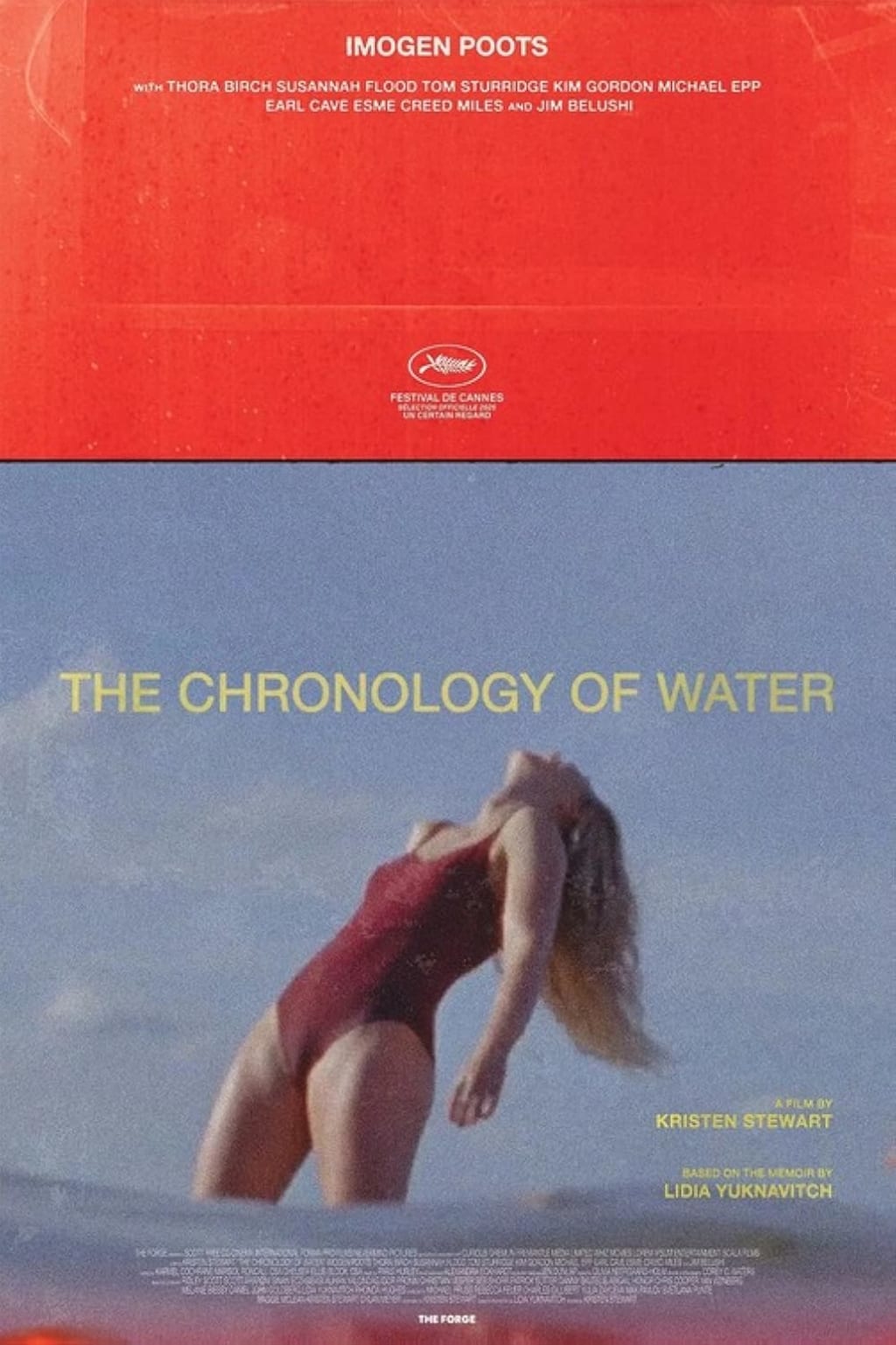
The Chronology of Water (2025) – Movie Review
★★★★½ / 5
Directed by: Kristen Stewart
Written by: Kristen Stewart
Starring: Imogen Poots, Thora Birch, Kim Gordon
Release Date: December 5, 2025

A Fearless Debut from Kristen Stewart
The Chronology of Water is an emotional and intellectual rollercoaster—a film so bold in form and content that you immediately sense Kristen Stewart directing with nothing held back. Her debut feature is difficult by design: fragmented, impressionistic, and visually restless in a way that mirrors the turmoil of its subject. But it’s also beautiful, empathetic, and crafted with an undeniable artistic eye. Stewart uses every tool available—editing rhythms, production design, cinematography, sound—to shape a world where trauma and creativity collide.
Imogen Poots anchors the film as author Lidia Yuknavich, whose memoir of the same name is a landmark in personal nonfiction. Poots’s performance is unguarded and emotionally exacting, portraying a woman shaped by unspeakable experiences yet still capable of profound resilience.

A Childhood Marked by Violence
Lidia’s story begins in an abusive home. Her older sister, Claudia (Thora Birch), endures the worst of their father’s physical and sexual violence until she flees the household as a teenager. That escape saves her but leaves Lidia behind, a guilt that haunts Claudia and becomes one of the film’s most heartbreaking emotional threads.
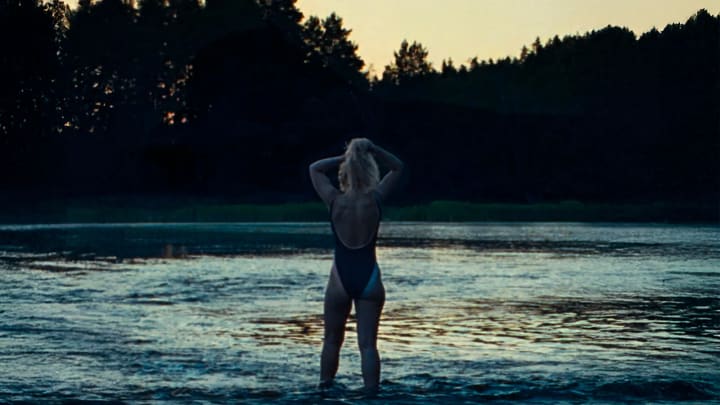
Lidia survives through swimming—a nearly Olympic-level talent that gives her a structured outlet, a dream of escape, and a temporary sense of control. Stewart captures these pool sequences with an almost surreal calm, making the water feel like its own protective dimension separate from the chaos at home.
The film’s most unnerving achievement is how accurately it understands the psychological messiness of familial abuse. Leaving doesn’t magically sever emotional ties. The abuser is still your parent. Stewart portrays this with painful nuance—resentment, hope, fear, and longing crashing against each other in ways that feel uncomfortably real.
Finding Art in the Ruins
After earning a college scholarship and then losing it to addiction-fueled self-destruction, Lidia staggers into a writing course run by countercultural legend Ken Kesey (James Belushi). These scenes are a revelation—not because they offer levity, but because they show Lidia encountering the possibility of transformation. Kesey pushes her to confront the truth in her journals, to turn raw pain into deliberate art, and eventually, to publish stories that draw the attention of the literary world.
But even here, trauma shadows her. A tumultuous relationship leads to pregnancy, followed by the devastating loss of her child at birth. Stewart handles this stretch with raw sensitivity. The beach sequence—in which Lidia, her family, and the child’s father scatter the baby’s remains—is one of the film’s most quietly devastating moments. It leads to a short, fragile marriage built on shared grief rather than genuine connection.

Stewart’s Impressionistic Vision
The film’s visual language is intentionally messy. Cinematographer Corey C. Waters and production designer Jen Dunlap help Stewart create a world that often feels like it’s being viewed through smeared glass or tears. Shots bleed into each other. Memories overlap. The structure is fractured but never confusing. Instead, the fragmentation becomes the point—this is how Lidia remembers her life, how trauma rewires chronology itself.
And yet, The Chronology of Water never feels hopeless. Imogen Poots brings an undercurrent of wit, resilience, and fire to Lidia. Her scenes with Thora Birch are some of the most powerful in the film—two women acknowledging pain without drowning in it, forgiving each other for surviving in different ways.

A Brutal, Rewarding Experience
The Chronology of Water is a tough movie, but Kristen Stewart ensures every moment has a purpose. The film sits with pain without exploiting it, and embraces healing without simplifying it. It’s rare to see a debut this daring, this visually assured, and this emotionally honest.
Above all, the film delivers a vital reminder: trauma doesn’t define a person’s entire story, and survival—however messy—can lead to reinvention, connection, and art powerful enough to echo long after the pain has passed. Stewart’s film honors that truth, making The Chronology of Water not only a bold adaptation but one of the most deeply felt movies of 2025.

Tags
The Chronology of Water, Kristen Stewart, Imogen Poots, Thora Birch, Lidia Yuknavich, Memoir Adaptation, Movie Reviews, 2025 Movies, Trauma in Film, Indie Cinema, Vocal Media Movies
About the Creator
Sean Patrick
Hello, my name is Sean Patrick He/Him, and I am a film critic and podcast host for the I Hate Critics Movie Review Podcast I am a voting member of the Critics Choice Association, the group behind the annual Critics Choice Awards.
Keep reading
More stories from Sean Patrick and writers in Geeks and other communities.
Silver Screen Magic with Mae West
American actress and singer Mae West became a popular film actress during the Great Depression. She started entertaining in vaudeville, then performed on Broadway, and finally went to Hollywood. She signed up with Paramount Pictures and made her debut in the 1932 film “Night After Night.” She also starred in musicals, comedies, and crime dramas. The American Film Institute named her one of the best classic Hollywood actresses.
By Rasma Raisters6 days ago in Geeks
React Notification Guide 2026: Why Your Alerts Suck (And Fixes)
Let’s be honest for a second. Most push notifications are annoying trash. You know the ones. You’re sitting there, minding your own business, maybe scrolling through your feed, and suddenly—BAM. A generic, ugly alert pops up telling you something you absolutely do not care about. It’s a sure-fire way to get your app uninstalled faster than a dodgy flappy bird clone.
By Sherry Walker5 days ago in Geeks


Comments
There are no comments for this story
Be the first to respond and start the conversation.