


For decades, the eerie tales of the Bunny Man have circulated through the forests and suburban streets of Fairfax County, Virginia, captivating the imagination of locals and thrill-seekers alike. Who is this mysterious figure clad in a rabbit costume, lurking near the so-called Bunny Man Bridge? Is he merely a product of urban legend, or could there be a deeper truth behind the axe-wielding spectre?
Stories vary: some describe him as a harmless prankster, others as a violent attacker, but the facts remain elusive. What sparked the legend’s origin, and why has it endured for so long? Could there be a real person behind the myth, or is it simply a reflection of communal fears and folklore? In this article, we will explore the origins, reported sightings, and possible explanations for the Bunny Man, inviting readers to consider: what lies beneath this chilling tale?
Plot
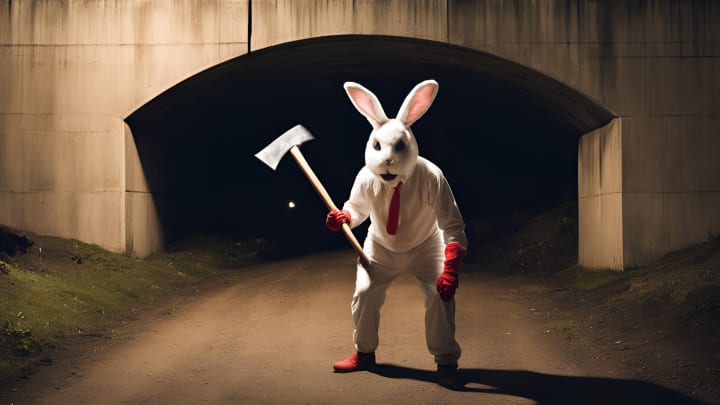
The Bunny Man legend is a uniquely American urban myth, but its roots can be traced back to real events and social anxieties in Fairfax County, Virginia, during the early 1970s. The story centres around a figure reportedly seen wearing a full rabbit costume who lurks near a concrete railroad overpass locally known as "Bunny Man Bridge." The bridge itself, located in the rural outskirts of Fairfax, has become the focal point of numerous ghost stories, terrifying encounters, and local folklore.
The first documented references to the Bunny Man appear in police reports and newspaper articles from 1970 and 1973. These reports describe sightings of a man in a bunny suit who allegedly attacked people with an axe or hatchet. One police report from 1970 tells of a man who was threatening people near the railway bridge, wielding a hatchet, and seemingly intent on causing harm. The authorities were called, but when they arrived, the man had disappeared, leaving only his eerie costume behind. Such accounts quickly spread through the local community, inspiring fear and fascination in equal measure.
Over time, the legend grew, incorporating various elements: some stories portray the Bunny Man as a vengeful spirit or a deranged individual seeking revenge for perceived wrongs, while others suggest he was a harmless eccentric or a disturbed veteran suffering from mental illness. The costume itself, a full white rabbit suit, adds a surreal and unsettling element, transforming the figure into something otherworldly. The contrast between the innocence traditionally associated with rabbits and the violent behaviour attributed to the Bunny Man creates a disquieting dissonance that feeds the legend’s longevity.
Historians and folklorists suggest that the Bunny Man myth may have been shaped by broader societal anxieties during the era. The early 1970s were a time of great social upheaval in America, with the Vietnam War, rising crime rates, and distrust in authority figures creating an atmosphere ripe for urban legends. Stories of an axe-wielding maniac in a bizarre costume reflect a cultural desire to personify fears and uncertainties in a tangible, localised figure.
Another likely influence was the real-life case of Douglas J. Grifon, a man who lived near the bridge and was reportedly known for strange behaviour. While Grifon never dressed in a bunny costume nor committed violent acts, his reputation as a local oddball may have contributed to the genesis of the story. In addition, tales of people trespassing on private land or engaging in vandalism may have been conflated with the legend, casting the Bunny Man as a territorial guardian punishing those who enter his domain.
Despite the lack of confirmed violent attacks linked directly to the Bunny Man, the legend has persisted through oral storytelling, local media, and internet forums. The site of Bunny Man Bridge has become a destination for thrill-seekers and paranormal enthusiasts, further cementing the myth in popular culture. Halloween events, documentaries, and horror films have all drawn inspiration from the tale, blurring the line between fact and fiction.
Into the Theories
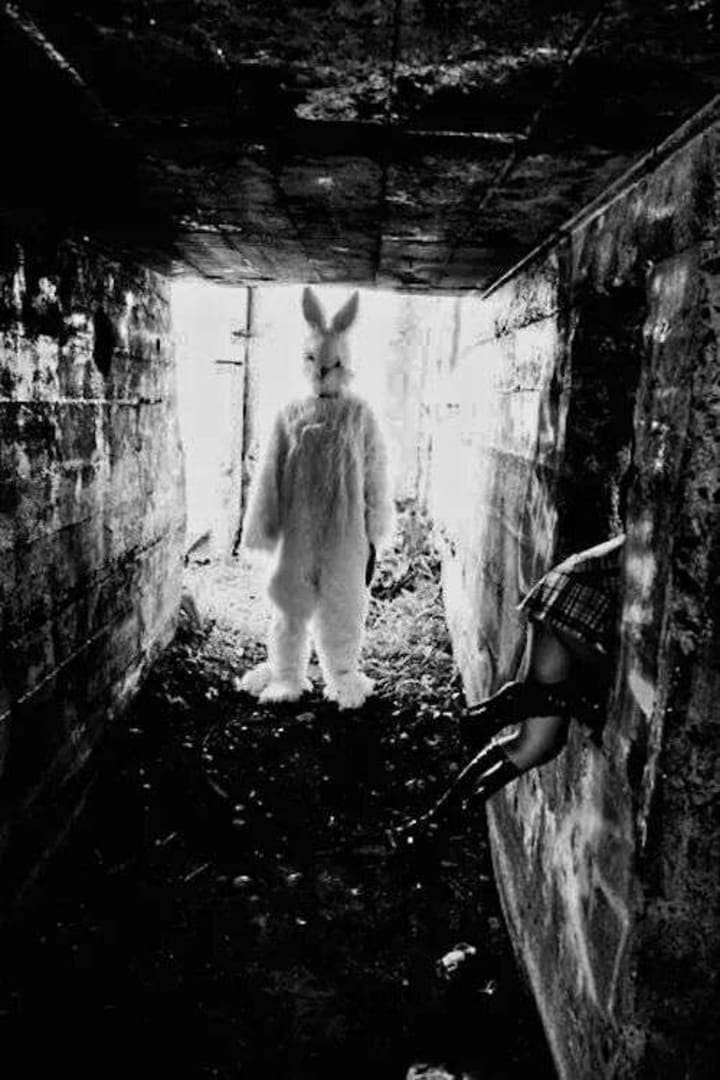
A Disturbed Individual
One widely held theory is that the Bunny Man legend is based on a disturbed individual (possibly a mentally ill person) who adopted the bizarre costume as a form of expression or intimidation. This person might have lived near the now-famous Bunny Man Bridge and engaged in threatening behaviour, such as wielding an axe or hatchet. The costume’s unsettling contrast between innocence (a rabbit suit) and menace (violent attacks) may have amplified local fear. In a time when mental health issues were poorly understood and social services limited, such a figure could easily become the subject of rumours and exaggerated stories. Over time, these tales grew in the telling, evolving into a full-blown urban legend. The “Bunny Man” thus represents the dangers of misunderstanding and marginalising vulnerable individuals, turning them into mythic monsters in the collective imagination.
The Folklore
Another theory suggests the Bunny Man legend is a product of folklore born from social anxieties prevalent in 1970s America. During this turbulent period, marked by the Vietnam War, rising crime rates, and mistrust in authorities - communities sought to externalise their fears through myths. The Bunny Man, an axe-wielding figure dressed in a rabbit suit, symbolises this collective unease: the familiar turned frightening. The bridge setting provides a liminal space between safety and danger, making it the perfect backdrop for a cautionary tale. This theory argues that the Bunny Man functions less as an individual and more as a cultural symbol, reflecting societal fears about violence, mental illness, and the unknown. Urban legends like this offer communities a way to process uncertainty, embodying anxieties in a memorable and frightening figure.
A Misinterpretation of Real Events
A third theory posits that the Bunny Man legend emerged from a combination of real events, misunderstandings, and sensationalism. In this view, the story may have originated from actual reports of a man behaving oddly near the railway bridge, possibly carrying tools or weapons for legitimate reasons, such as maintenance or personal protection. The unusual sight of someone in a rabbit costume might have been a coincidence or a prank, which was then exaggerated through retellings. Additionally, deaths, accidents, or crimes in the area could have been linked retroactively to the legend, enhancing its mystique. Local media coverage and word of mouth amplified the story, transforming it into a myth. This theory emphasises how folklore can arise naturally when fact and fiction intertwine, fuelled by human imagination and fear.
Why It's Shifty
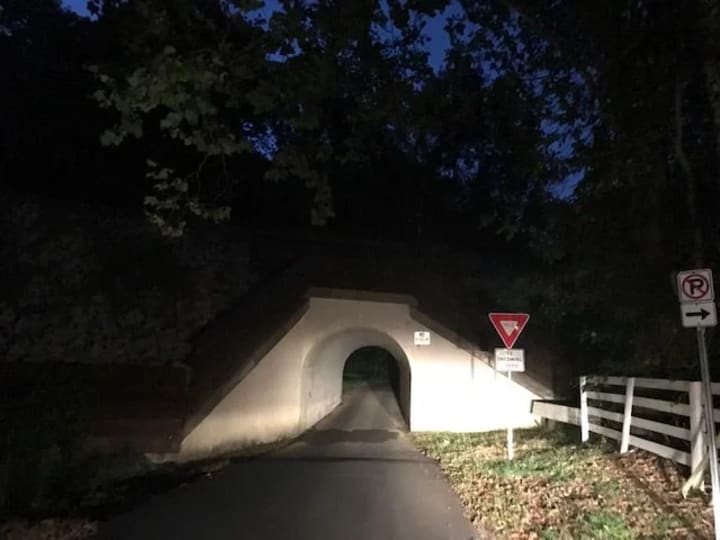
When it comes to why this story is shifty, some view the story as harmless folklore or an urban myth, a product of local imagination and cultural storytelling. However, others believe it to be based on real events involving violence or a dangerous individual, which raises concerns about safety and truth. The controversy deepens because the legend can unfairly stigmatise certain people, especially those with mental health issues, by associating them with violent or threatening behaviour. On top of this, the site known as Bunny Man Bridge attracts thrill-seekers and trespassers, sometimes causing damage and posing risks, which troubles local residents and authorities.
Conclusion
The most likely explanation for the Bunny Man legend is that it is a blend of local folklore, misunderstandings, and real but unrelated events. It probably began with sightings of an eccentric or mentally unwell individual, whose odd behaviour was exaggerated over time. The striking image of a person in a rabbit suit combined with stories of threats or attacks created a compelling myth. Media coverage and community retellings amplified the tale, turning it into an urban legend. Join me next week for another article on 'why it's shifty'...
Next Week: The Werewolf of Chalons
About the Creator
Annie Kapur
I am:
🙋🏽♀️ Annie
📚 Avid Reader
📝 Reviewer and Commentator
🎓 Post-Grad Millennial (M.A)
***
I have:
📖 280K+ reads on Vocal
🫶🏼 Love for reading & research
🦋/X @AnnieWithBooks
***
🏡 UK
Reader insights
Nice work
Very well written. Keep up the good work!
Top insights
Easy to read and follow
Well-structured & engaging content
Excellent storytelling
Original narrative & well developed characters
Expert insights and opinions
Arguments were carefully researched and presented
Eye opening
Niche topic & fresh perspectives
Keep reading
More stories from Annie Kapur and writers in Geeks and other communities.
Winesburg, Ohio by Sherwood Anderson
Sherwood Anderson’s Winesburg, Ohio was first published in 1919 and is widely considered a cornerstone of American modernist literature. Subtitled A Group of Tales of Ohio Small-Town Life, the book is a collection of interconnected short stories that revolve around the inhabitants of the fictional town of Winesburg, as observed through the perspective of a young man named George Willard. The work is often described as a Bildungsroman wrapped within a short story cycle.
By Annie Kapur6 months ago in Geeks
Silver Screen Magic with Mae West
American actress and singer Mae West became a popular film actress during the Great Depression. She started entertaining in vaudeville, then performed on Broadway, and finally went to Hollywood. She signed up with Paramount Pictures and made her debut in the 1932 film “Night After Night.” She also starred in musicals, comedies, and crime dramas. The American Film Institute named her one of the best classic Hollywood actresses.
By Rasma Raisters8 days ago in Geeks
Can I Watch Super Bowl in NZ?
Super Bowl, one of the most exciting sporting nights of the year, is now less than a month away and the excitement is already palpable. Scheduled on February 8, 2026 at Levi’s Stadium in Santa Clara, California, this will be the third Super Bowl held in the San Francisco Bay Area.
By David Cookabout 19 hours ago in Geeks
The Devil's Cut
“Comrade, finally you’re awake.” The voice was smooth, sensual. A flickering incandescent bar was all that lit the white, sterile room. All Vladimir remembered was everything going black. He tried to move his arms and found them strapped to the gurney.
By Matthew J. Fromm7 days ago in Fiction


Comments (5)
I don't know what's more disturbing, the legend or the pictures you've included of the Bunnyman. Nice work as always Annie.
I am not leaving my house around Easter ever again... ;)
I had never heard of the Bunny man either, but now I am intrigued. Now I am going to learn more about him. Thanks for posting this!
I never heard of the Bunny Man before, but I'd shit my pants if I spot him in the dark.
Interesting, I'd never heard of the Bunny Man before. I look forward to hearing about the werewolf!