
The Brothers McMullen at 30: Ed Burns’ Therapy Project Masquerading as Cinema
Ed Burns’ The Brothers McMullen (1995) turns 30 this year, but its bitter, immature view of women has aged terribly. Here’s why this indie “classic” feels more like an unfiltered therapy session than a meaningful film.

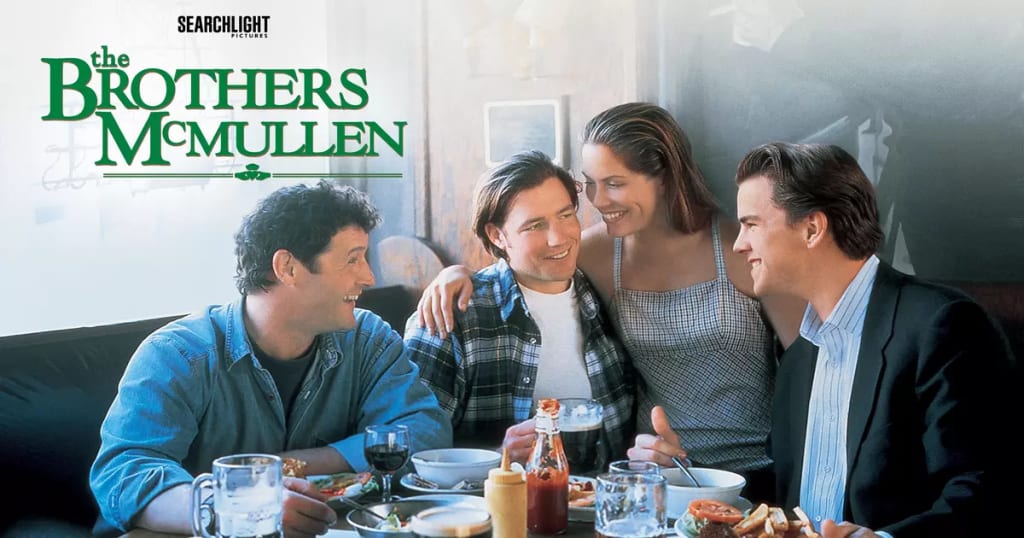
The Brothers McMullen
Directed by: Ed Burns
Written by: Ed Burns
Starring: Ed Burns, Mike McGlone, Connie Britton
Released: August 12, 1995
The Movie That Therapy Could Have Prevented
Watching The Brothers McMullen three decades after its release, I’m convinced it never needed to exist—at least not in its final form. Had Ed Burns simply gone to therapy in 1994, perhaps cinema could have been spared this self-indulgent parade of immature, lonely, loser men. Instead, Burns poured his baggage onto the screen, fully unaware that his bitterness and insecurities about women were laid bare for all to see.
This Sundance darling is still held up as a touchstone of the 1990s indie boom. But beneath its talky script and supposedly soulful observations, The Brothers McMullen is less a portrait of flawed men and more a confession of how little its creator understood women—or wanted to.
⸻
Three Brothers, Zero Insight
Burns casts himself as Barry, the middle McMullen brother and a rising screenwriter struggling with his second script. Barry has no real interest in women; he brings Ann (Elizabeth McKay) home to meet the family, then ditches her to get drunk with kid brother Patrick (Mike McGlone). This leaves Ann awkwardly stuck with older brother Jack (Jack Mulcahy), who promptly flirts with her despite being married to Molly (Connie Britton).
Jack and Molly’s marriage—seemingly stable, possibly headed toward children—crumbles when Jack decides monogamy has cheated him out of the chance to sleep with more women. Meanwhile, Patrick sabotages his own engagement for no discernible reason, blames his fiancée for their breakup (even though she has just had an abortion after he abandoned her), and then somehow wins her back before dumping her again.
And through it all, Burns insists these men are “noble,” stumbling toward growth, when they’re actually just selfish, cruel, and staggeringly self-absorbed.
⸻
A Misogynist Banana Metaphor for the Ages
The film’s most telling moment comes in a scene where Barry “teaches” Patrick about women using a banana as metaphor. Women, Barry claims, peel men down, slice them up, and consume their masculinity with their cereal. It’s a scene so bitter and clueless it borders on parody.
Burns frames this like a thesis statement, as if audiences are meant to nod along. But what it really reveals is a filmmaker drowning in resentment, mistaking misogyny for profundity.
⸻
Women as Villains, Props, and Consolation Prizes
Jack’s wife Molly is painted as a nag for wanting kids. Barry’s love interest is portrayed as unreasonable for being confused when he chases her relentlessly, only to later decide he’s “too busy” for a relationship. Patrick’s fiancée is reduced to a plot point, punished for existing as anything more than a backdrop to his childish crisis.
In The Brothers McMullen, women are never people. They’re props, obstacles, or prizes handed out once a man has wallowed enough in his immaturity. The script bends over backward to excuse their behavior and to blame women for their suffering.
⸻
The Legacy of a Shitty Subgenre
Somehow, audiences and critics in 1995 embraced this film as authentic indie storytelling. But looking back, it’s painfully clear that The Brothers McMullen is less a timeless slice of Irish-American life and more the accidental prototype for a cottage industry of “shitty men rewarded by patient women” movies.
It set a template: bitter, self-pitying men framed as soulful, insightful truth-tellers, while women are punished for having needs, desires, or independent thought. Burns may have seen himself as chronicling flawed but sympathetic characters, but in truth, he was just broadcasting his issues without the benefit of introspection.
⸻
Final Thoughts: A Film That Aged Like Sour Milk
As The Brothers McMullen turns 30, it’s not just outdated—it’s actively unpleasant. Watching it today isn’t like opening a time capsule of 1990s indie cinema; it’s like stumbling into someone else’s unprocessed therapy session. Burns thought he was writing men struggling nobly with love and family. Instead, he captured men trapped in cycles of bitterness, selfishness, and denial, with women dragged along as collateral damage.
If you want to hear even more about why this movie—and its entire “sensitive asshole men” subgenre—deserves our contempt, check out the I Hate Critics 1995 Podcast. Myself, Amy, and M.J. rip this film apart and put it in the context of the indie scene that spawned it. Find it on the I Hate Critics Movie Review Podcast feed wherever you listen to podcasts.
⸻
Star Rating
⭐✰✰✰✰ (1 out of 5 stars)

Tags
The Brothers McMullan review, Ed Burns movies, indie film 1995, Connie Britton early career, 90s independent cinema, misogyny in movies, Sundance film history, worst indie movies, Irish-American films, I Hate Critics Podcast
About the Creator
Sean Patrick
Hello, my name is Sean Patrick He/Him, and I am a film critic and podcast host for the I Hate Critics Movie Review Podcast I am a voting member of the Critics Choice Association, the group behind the annual Critics Choice Awards.
Keep reading
More stories from Sean Patrick and writers in Geeks and other communities.
Silver Screen Magic with Mae West
American actress and singer Mae West became a popular film actress during the Great Depression. She started entertaining in vaudeville, then performed on Broadway, and finally went to Hollywood. She signed up with Paramount Pictures and made her debut in the 1932 film “Night After Night.” She also starred in musicals, comedies, and crime dramas. The American Film Institute named her one of the best classic Hollywood actresses.
By Rasma Raisters3 days ago in Geeks
How Lakshya hit the bullseye with The Ba***ds of Bollywood
Lakshya has no qualms admitting that he is a boring guy off set with not much happening around him. “The only fun that I have is when I prepare for characters and shoot,” says the actor, who goes only by his first name. “In the last few days, I have been trying to discover the psyche of the character I am playing. That is the exciting part for me… when I have to play a different person and live a character,” he tells Forbes India in the middle of a hectic 12-hour film shoot.
By Dena Falken Esq4 days ago in Geeks


Comments
There are no comments for this story
Be the first to respond and start the conversation.