
The Boy Who Couldn’t Move On: Tom Felton’s Return to The Cursed Child
The redemption of the jobless celebrity?

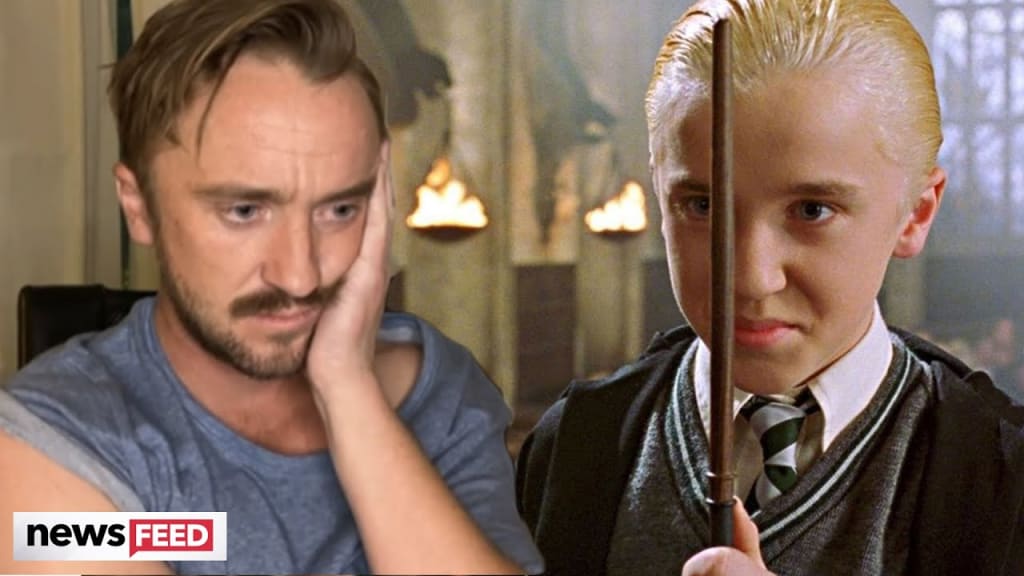
In 2025, Tom Felton’s name once again made headlines—not for a groundbreaking new role, but for returning to a very old one. The announcement of Felton reprising his role as Draco Malfoy in a new stage production of Harry Potter and the Cursed Child was met with a mixture of nostalgia and critical skepticism. His reentry into the Wizarding World highlights a deeper cultural phenomenon: the jobless celebrity archetype—actors forever bound to a singular, iconic role and unable to evolve beyond it.
The One-Hit Wonder Curse: A Post-Potter Dilemma
Tom Felton, once a rising star after his turn as the sneering Slytherin heir, has struggled in the post-Harry Potter landscape. While his co-stars Daniel Radcliffe, Emma Watson, and Rupert Grint successfully transitioned into diverse and ambitious projects—Radcliffe embracing indie and experimental cinema, Watson championing feminist causes alongside prestigious film work, and Grint finding success on streaming platforms—Felton has lingered in the liminal space of nostalgic fandom.
This category of “jobless celebrity” refers not to literal unemployment, but to creative inertia. Felton’s career since Harry Potter has been characterized more by his proximity to past glory than by the pursuit of new artistic challenges. Unlike his co-stars who actively redefined their professional identities, Felton has remained in orbit around his sole major success. His work in television and low-budget films, while earnest, has failed to capture either critical acclaim or mainstream attention.
A Career Maintained by Memes
Felton’s social media presence is a case study in brand nostalgia. His Instagram and TikTok accounts are filled with Harry Potter-themed content—Draco Malfoy memes, reunion reels, and behind-the-scenes throwbacks that continuously reinforce his association with the franchise. This strategy certainly sustains fan engagement, but it does little to foster artistic reinvention. It is a parasocial performance of remembrance, where the actor’s present is curated through the lens of his most marketable past.
While this digital persona keeps him relevant within the Potterhead subculture, it simultaneously ossifies his public image. It suggests a performer more committed to feeding a legacy than to building a new one. In contrast, Radcliffe’s social media absence and commitment to genre-defying roles (Swiss Army Man, Guns Akimbo, Miracle Workers) signal a deliberate departure from Harry Potter’s long shadow.
The Sins of the Author: Felton and Rowling’s Controversies
Another layer complicating Felton’s professional stagnation is his public alignment with J.K. Rowling, the controversial author of the Harry Potter series. As Rowling’s statements on gender identity sparked widespread backlash, many cast members distanced themselves from her views. Emma Watson, Daniel Radcliffe, and Rupert Grint all issued public statements in support of trans rights, subtly or directly challenging Rowling’s position.
Felton, however, was notably one of the few to remain in Rowling’s corner. In interviews and public comments, he offered supportive if vague affirmations of the author’s impact on his life and career, avoiding critical engagement with the controversies. This decision placed him at odds with much of the cast and fandom, aligning him with a cultural figure whose reputation has become increasingly divisive.
His choice to align with Rowling, while perhaps motivated by loyalty, may have further limited his prospects. In an industry where public image and ideological positions can impact casting decisions and brand partnerships, Felton’s stance may be seen as regressive or out-of-step with contemporary Hollywood’s more progressive values.
The Cursed Child and the Lure of Legacy
Felton’s return as Draco in The Cursed Child is therefore more than a casting decision—it is an emblem of his professional impasse. The stage production, while beloved by some fans, is itself a subject of critical debate, often described as a polarizing epilogue to the original series. His involvement in this project does not mark a creative evolution but rather a deepening of his nostalgic entrenchment.
There is, of course, a generosity in viewing this return as a service to fans or as a celebration of theatrical storytelling. But for an actor whose career has plateaued since adolescence, it also raises concerns about the limits of personal branding and the pressures of typecasting in franchise cinema.
Conclusion: A Life After Hogwarts?
Tom Felton’s career trajectory prompts a broader reflection on the costs of early fame and the difficulty of professional reinvention in the age of franchise dominance. While his loyalty to the Harry Potter universe and its creator may resonate with certain fan communities, it arguably limits his relevance in the broader cultural and artistic spheres.
In the end, Felton's return to Draco may generate headlines and sell tickets—but it also reinforces the perception that, unlike his peers, he never truly left Hogwarts. And in a media landscape that prizes reinvention and versatility, that may be the most cursed fate of all.
About the Creator
Nazgol Rasoolpour
An emerging researcher with a passion for horror narrative. My focus revolves around the captivating subgenres of religious horror and techno horror.
Keep reading
More stories from Nazgol Rasoolpour and writers in Geeks and other communities.
From ‘Crash’ to ‘Anora’: The Oscars’ History of Socially Engineered Winners
The Academy Awards, colloquially known as the Oscars, have long been perceived as the zenith of cinematic achievement, celebrating excellence in filmmaking. However, a closer examination reveals that the Oscars often serve as a mirror reflecting Hollywood's desired self-image, with award selections frequently aligning with prevailing social and political narratives. The recent triumphs of films like "Anora" at the 97th Academy Awards exemplify this phenomenon, highlighting the industry's inclination to project specific messages through its choice of honorees.
By Nazgol Rasoolpour11 months ago in Geeks
Silver Screen Magic with Mae West
American actress and singer Mae West became a popular film actress during the Great Depression. She started entertaining in vaudeville, then performed on Broadway, and finally went to Hollywood. She signed up with Paramount Pictures and made her debut in the 1932 film “Night After Night.” She also starred in musicals, comedies, and crime dramas. The American Film Institute named her one of the best classic Hollywood actresses.
By Rasma Raisters7 days ago in Geeks
Grant Gustin's Chances Of Returning As The DC Universe's Flash Have Just Increased After New Update
The Flash has yet to be cast for the new DC Universe, and after a new update, the rumors of Grant Gustin's return as Barry Allen in the new franchise have gained strength once again. Gustin made history by playing Barry for The Flash's nine seasons. The actor also starred in multiple Arrowverse crossovers, becoming one of the franchise's fan-favorites.
By Dena Falken Esq5 days ago in Geeks


Comments
There are no comments for this story
Be the first to respond and start the conversation.