literature
Geek literature from the New York Times or the recesses of online. Our favorite stories showcase geeks.
The Myer’s-Briggs Personality Types (MBTI) of Paolini’s Inheritance Cycle: Eragon
A classic addition to any Young Adult collection, the Inheritance Cycle by Christopher Paolini traces the adventures of Eragon, a young farmer-boy-turned-Rider whose boldness and determination forges new paths for those rebelling against the evil King Galbatorix. Let’s dive deeper into the personalities of the characters in this fantasy series using the MBTI system, starting with the title character Eragon!
By Isla Griswald4 years ago in Geeks
The God of Small Things, Giovanni's Room and Memories of a Geisha Book Reviews
Book reviews "The God of Small Things" is a family drama novel written by Indian writer Arundhati Roy. This is Arundhati Roy's first novel. The story of the fraternal childhood of two twins whose lives are ruined by the 'law of love.
By Mehedi Hasan Shawon4 years ago in Geeks
Why 'Netflix for Books' Will Never Work. Top Story - June 2022.
Publishing is filled with pretty smart people. Admittedly, I'm biased about this, because some of them publish my books. But I'd say that even if they didn't. When it comes to producing books in a fickle, strange industry, the business is filled with people who know how to get it done.
By Jackson Ford4 years ago in Geeks
All Quiet On The Western Front and The Count Of Monte Cristo Book Reviews
Book Review On the night of May 10, 1933, a fire broke out. The pages of the book are burning, and the Nazis are searching for books from nearby bookstores and throwing them into the flames. Thousands of books are being reduced to ashes.
By Mehedi Hasan Shawon4 years ago in Geeks
Book Sabbatical: May
This month has been a little hectic, as evidenced by this summary being written twelve-ish days after the start of the month. I can’t promise July will be any better, but it’s for a good reason! I will be traveling and hiking this summer (see previous blog about adventuring) so I will have limited access to a computer. However, I will continue to create stories for when I return in August and will post as often as I can. Until then, enjoy the books from May!
By Hannah Marie. 4 years ago in Geeks
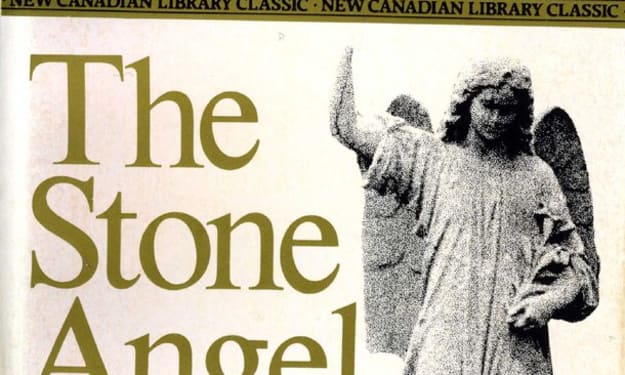
Book Review: "The Stone Angel" by Margaret Laurence
Margaret Laurence really is a talented writer and honestly, there is one way her books always leave me feeling: as if I have actually read someone's very honest, true and complete story. Someone is feeling, someone is doing and someone has something to tell me. It's always important and it's always something very real. Even though, I know deep down that it's fiction - it is written in a way that makes every ounce of it feel deep, meaningful, real, true and most importantly, personal. I first encountered Margaret Laurence when I read her novel A Jest of God and then again when I read her novel The Diviners. Margaret Laurence may not have written a massive range of novels and story collections, but what she did do is write in a way that sticks around, adds to your person and changes your perspective on everything interpersonal: class, age, gender - all of it will be challenged.
By Annie Kapur4 years ago in Geeks
Plain as the Alphabet
"It is my design to make those who can scarcely read understand." - Thomas Paine As I continued to read Thomas Paine's reflection on his own writing style, contained in The Norton Anthology of American Literature, I couldn't help but recall a similar comment made by William Wordsworth a quarter of a century later when he wrote the Preface to Lyrical Ballads (published 1801). When studying British Literature, I came across an article written by Tom Thompson, "The State of the Preface Address: on Wordsworth and Common Speech." According to Thompson:
By Rebecca A Hyde Gonzales4 years ago in Geeks
The Moral Compass
Queen Victoria’s reign (1837-1901), defines the historical and literary period of the Victorian Age. The historical Industrial Revolution and the literary Romance period preceded the Victorian age, each laying the groundwork for the advances and growth experienced in England. The Romantic Period was a response to the Industrial Revolution that catapulted Europe forward economically. The Romantics sensed a loss of humanity due to the separation from the simplicity of life and connection to nature. It was a plea to return to the Golden Age. Poems and prose expressed the feelings of many writers who felt that England’s leadership in “commerce and industry exacted a terrible price in human happiness.” And that “progress had been gained by abandoning traditional rhythms of life and traditional patterns of human relationships.” The rapid and unregulated growth of industrialization came with many social and economic issues. The Victorian Era appeared to address more of the social order of things. What is acceptable. Right and wrong were clearly defined. Women were expected to conduct themselves in a way that represented high moral standards and conduct befitting a lady. The sexual appetites of the sexes were not considered appropriate topics of conversation. A young woman would be ruined if found in a compromising situation. Repeated themes of the Victorian era include the roles of women, morality, and principles of good versus evil.
By Rebecca A Hyde Gonzales4 years ago in Geeks