literature
Geek literature from the New York Times or the recesses of online. Our favorite stories showcase geeks.
Review of 'The Fall of Númenor'
J.R.R. Tolkien’s writings on the Second Age of Middle-earth, collected for the first time in one volume complete with new illustrations in watercolor and pencil by renowned artist Alan Lee. J.R.R. Tolkien famously described the Second Age of Middle-earth as a "dark age, and not very much of its history is (or need be) told." And for many years readers would need to be content with the tantalizing glimpses of it found within the pages of The Lord of the Rings and its appendices, including the forging of the Rings of Power, the building of the Barad-dûr and the rise of Sauron. It was not until Christopher Tolkien published The Silmarillion after his father’s death that a fuller story could be told. Although much of the book’s content concerned the First Age of Middle-earth, there were at its close two key works that revealed the tumultuous events concerning the rise and fall of the island of Númenor. Raised out of the Great Sea and gifted to the Men of Middle-earth as a reward for aiding the angelic Valar and the Elves in the defeat and capture of the Dark Lord Morgoth, the kingdom became a seat of influence and wealth; but as the Númenóreans’ power increased, the seed of their downfall would inevitably be sown, culminating in the Last Alliance of Elves and Men. Even greater insight into the Second Age would be revealed in subsequent publications, first in Unfinished Tales of Númenor and Middle-earth, then expanded upon in Christopher Tolkien’s magisterial twelve-volume The History of Middle-earth, in which he presented and discussed a wealth of further tales written by his father, many in draft form. Now, adhering to the timeline of "The Tale of Years" in the appendices to The Lord of the Rings, editor Brian Sibley has assembled into one comprehensive volume a new chronicle of the Second Age of Middle-earth, told substantially in the words of Tolkien from the various published texts, with new illustrations in watercolor and pencil by the doyen of Tolkien art, Alan Lee.
By Cyn's Workshop3 years ago in Geeks
Kantara
In spite of everything, the king, restless, roams the forest and the mountains in search of it. He finally gets peace of mind when he sees the idol of the god worshiped by the tribal people. He gives most of his lands to the tribal people there for the statue. But after a few years, a descendant of the king sues the people in court for the return of their land. 'Can you return the peace I have given you for so long?' As the little deity asks through the father of Rishabh Shetty, the hero of 'Bhutha Gola' dancing (he is also Rishabh Shetty). Then curses the king's relatives and disappears into the forest. A lineal
By MANI KSHATHRIYAN3 years ago in Geeks
Roald Dahl Shouldn't Be Censored, But Not For The Reason You May Think
There's few persistent things about childhood that transcends generation, nationality, and class as IP rediscovered or reintroduced. Teenager Mutant Ninja Turtles, Scooby Doo, Tom and Jerry, The Muppets are just a few that come to mind. Among them, every so often, is Roald Dahl.
By Conor Matthews3 years ago in Geeks
Discover the Secrets to Writing a Nonfiction Bestseller
Are you an aspiring writer looking to make your mark in the world of nonfiction? Or perhaps you're an expert in your field looking to share your knowledge and experience with a wider audience? Whatever your motivation, writing a nonfiction book can be a rewarding and fulfilling experience that allows you to share your ideas, insights, and passions with the world.
By Inner State Books3 years ago in Geeks
Review of 'What Moves the Dead'
From T. Kingfisher, the award-winning author of The Twisted Ones, comes What Moves the Dead, a gripping and atmospheric retelling of Edgar Allan Poe's classic "The Fall of the House of Usher." When Alex Easton, a retired soldier, receives word that their childhood friend Madeline Usher is dying, they race to the ancestral home of the Ushers in the remote countryside of Ruritania. What they find there is a nightmare of fungal growths and possessed wildlife, surrounding a dark, pulsing lake. Madeline sleepwalks and speaks in strange voices at night, and her brother Roderick is consumed with a mysterious malady of the nerves. Aided by a redoubtable British mycologist and a baffled American doctor, Alex must unravel the secret of the House of Usher before it consumes them all.
By Cyn's Workshop3 years ago in Geeks
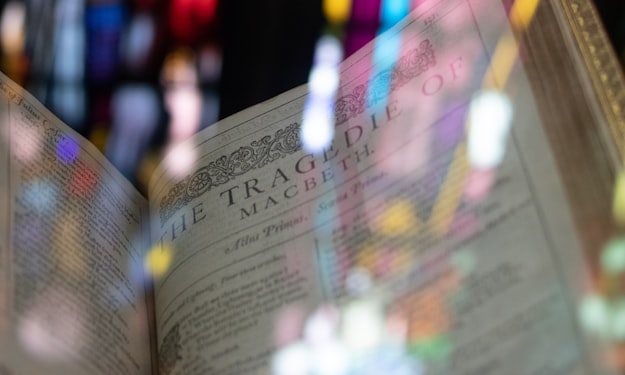
"The Enduring Legacy of Shakespeare's Exploration of the Human Experience in Aesthetics"
The works of William Shakespeare have had a profound impact on literature, theater, and culture. However, Shakespeare's influence extends beyond these areas and can be seen in the field of aesthetics as well. Shakespeare's understanding of human nature and his portrayal of it through his characters provides insight into the nature of beauty, art, and the human experience.
By Dawnell Despi3 years ago in Geeks