
Sphinx (1981) — Inside the $10M Disaster That Bombed at the Box Office
Franklin J. Schaffner’s Sphinx (1981) spent lavishly on Egyptian locations and a $1M tomb set but earned barely a fraction back. A look at the budget, production choices, critical reaction, and why the film failed.

A Costly Gamble in the Desert
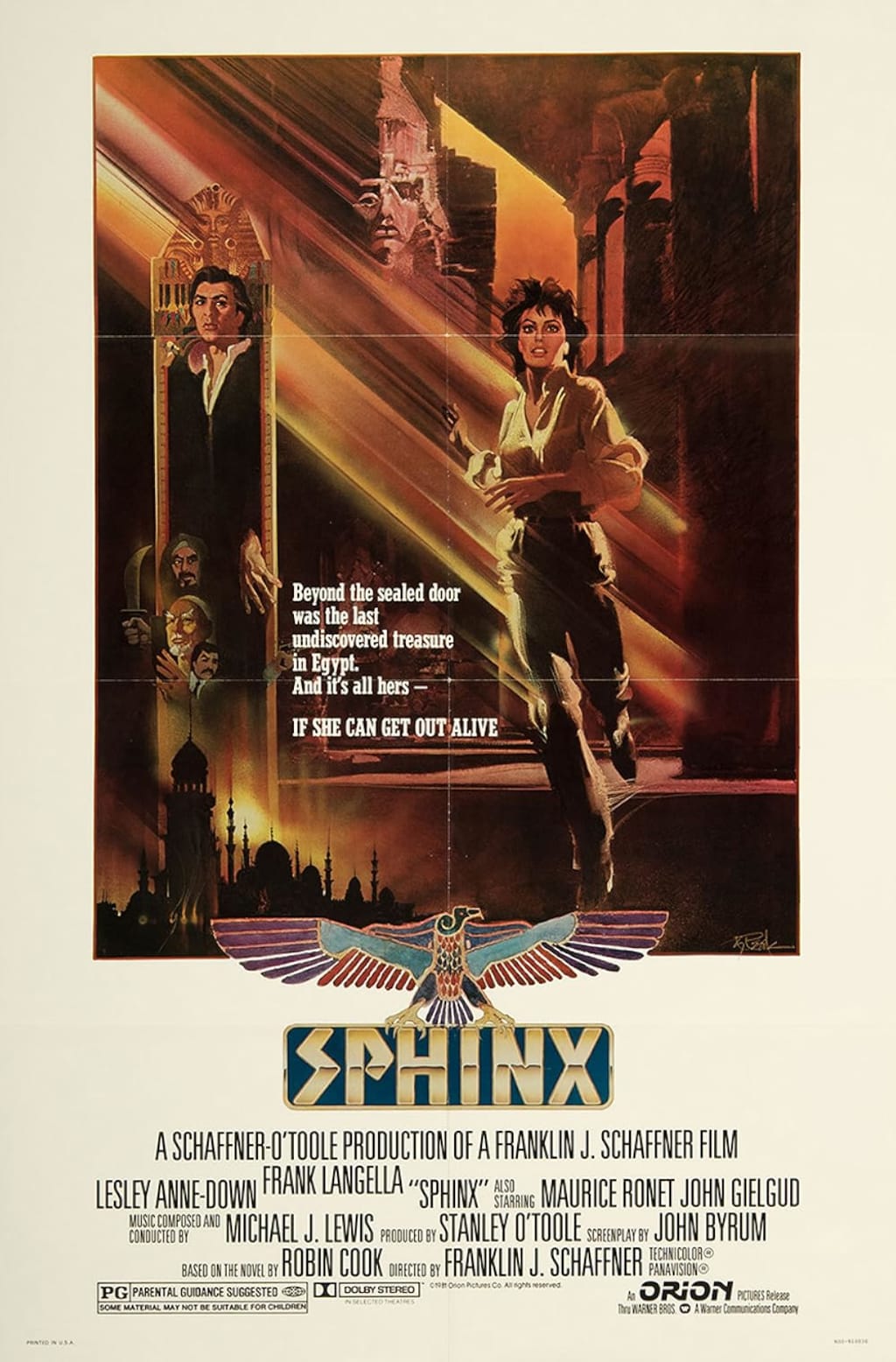
In 1981, director Franklin J. Schaffner — the Academy Award–winning filmmaker behind Patton — turned to pulp adventure with Sphinx. Adapted from Robin Cook’s bestselling novel, the film seemed poised to cash in on the public’s appetite for archaeological thrillers. Instead, it became one of Hollywood’s most memorable flops.
With a reported production budget exceeding $10 million, Sphinx returned only about $2 million worldwide. The gap was catastrophic, especially in an era when even modest hits could recoup their costs on U.S. box office alone. For MGM and Schaffner, it was a humiliating defeat.
⸻
Lavish Locations and Expensive Sets
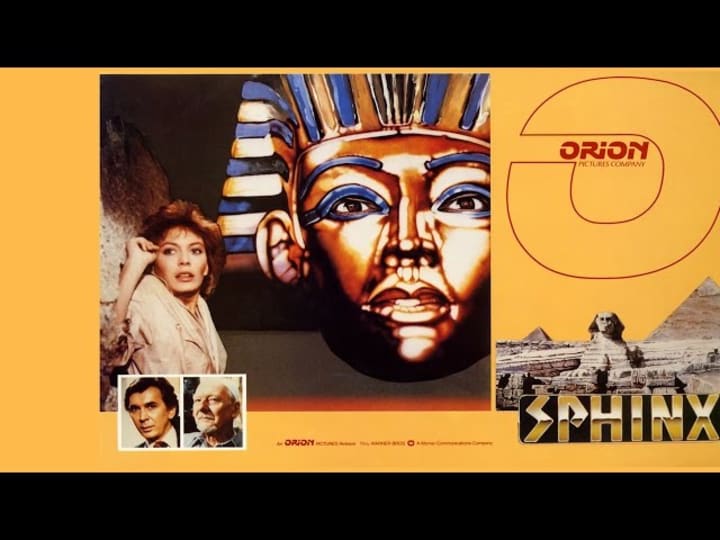
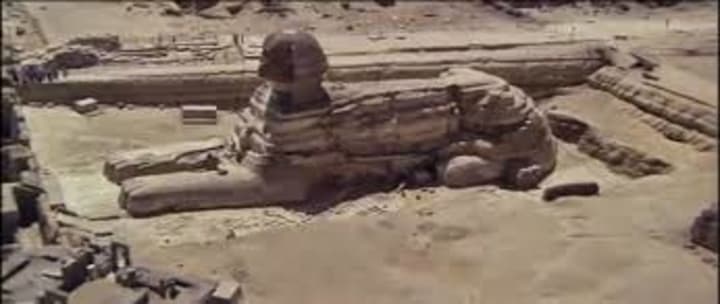
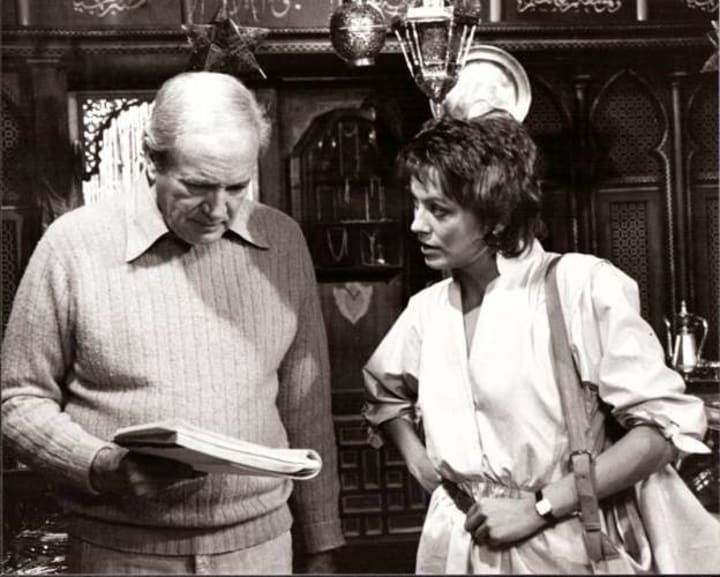
Much of the film’s budget was eaten up by location shooting and set construction. Sphinx was filmed in Egypt, with key sequences in Cairo and Luxor, and interior work completed at Mafilm Studios in Budapest. The production spared little expense in pursuit of authenticity.
Most infamously, a massive tomb set was built at a cost of around $1 million — an astronomical sum at the time. Additional interiors ran into the millions, quickly ballooning the budget beyond any reasonable chance of profitability.
On paper, these decisions gave the project prestige. In practice, they became cautionary examples of how overspending on spectacle can doom a movie when the story isn’t strong enough to match. This bad decision was further compounded by a lack of star power. Leslie Ann Down and Frank Langella led a cast that audiences simply were not going to turn out for.
⸻
The Creative Weakness at Its Core
The film’s troubles weren’t just financial. Critics savaged Sphinx upon release, pointing to a flat screenplay, stilted performances, and a sluggish pace.
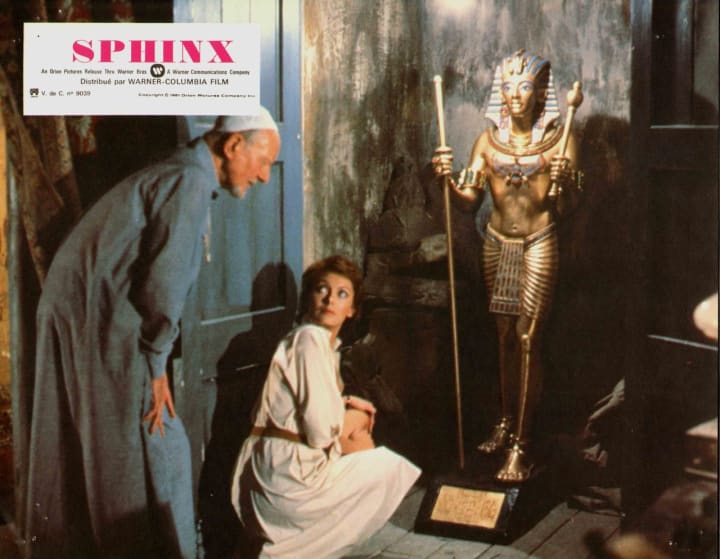
Despite its exotic backdrop, the movie never delivered the thrills of its source material. Reviewers noted that the film was oddly talky, weighed down by exposition, and failed to generate real suspense. One critic memorably complained that the Egyptian settings were “badly and tackily used,” undercutting what should have been Sphinx’s greatest strength.
For audiences expecting an adventure in the spirit of Raiders of the Lost Ark (released the same year), the result was a disappointment.
⸻
Box Office Breakdown: When the Math Doesn’t Add Up
The financial math was brutally simple.
• Budget: Over $10 million
• Worldwide gross: Roughly $2 million
• Losses: Tens of millions once marketing and distribution costs are factored in
Without positive reviews or word-of-mouth, Sphinx had no chance to build momentum at the box office. MGM’s marketing campaign tried to sell it as a thrilling archaeological mystery, but audiences quickly learned that the movie lacked the excitement its ads promised.
The result: one of the year’s most conspicuous failures.
⸻
Why Sphinx Failed
Several interlocking factors doomed the film:
• Misallocated budget: The producers spent heavily on sets and locations, but the core script remained weak.
• Ill-fitting adaptation: Robin Cook’s novel had plenty of exposition, which the screenplay failed to streamline. The movie ended up bogged down instead of energized.
• Poor timing: Released just months after Raiders of the Lost Ark, Sphinx suffered by comparison to a vastly superior archaeological adventure.
• Critical drubbing: With reviews labeling it dull, awkward, and forgettable, the movie couldn’t count on repeat audiences.
⸻
A Hollywood Lesson in Style vs. Substance
For Hollywood historians, Sphinx is a reminder that money alone cannot buy cinematic success. Big budgets and elaborate sets may impress investors, but audiences respond to story, character, and pacing first.
Schaffner’s film had the resources to be a grand spectacle, but it never found its narrative pulse. The result is a movie remembered less for its thrills than for its costly missteps.
More than four decades later, Sphinx endures not as a hidden treasure but as a cinematic cautionary tale — proof that even the grandest tomb can be empty.

About the Creator
Movies of the 80s
We love the 1980s. Everything on this page is all about movies of the 1980s. Starting in 1980 and working our way the decade, we are preserving the stories and movies of the greatest decade, the 80s. https://www.youtube.com/@Moviesofthe80s
Keep reading
More stories from Movies of the 80s and writers in Geeks and other communities.
Windwalker (1980): The Forgotten Western Told in Cheyenne and Crow
A Western That Broke the Rules When people think of 1980s Westerns, they usually recall revisionist works like Heaven’s Gate or nostalgic star vehicles. Few remember Kieth Merrill’s Windwalker (released in 1980, though often grouped with early 80s films), a modestly budgeted historical drama with one extraordinary claim: with the exception of an English-language narration, every line of dialogue is spoken in Cheyenne and Crow. Subtitled for mainstream audiences, Windwalker dared to put Native voices front and center — a choice virtually unheard of in Hollywood at the time.
By Movies of the 80s4 months ago in Geeks
Silver Screen Magic with Mae West
American actress and singer Mae West became a popular film actress during the Great Depression. She started entertaining in vaudeville, then performed on Broadway, and finally went to Hollywood. She signed up with Paramount Pictures and made her debut in the 1932 film “Night After Night.” She also starred in musicals, comedies, and crime dramas. The American Film Institute named her one of the best classic Hollywood actresses.
By Rasma Raisters6 days ago in Geeks
Grant Gustin's Chances Of Returning As The DC Universe's Flash Have Just Increased After New Update
The Flash has yet to be cast for the new DC Universe, and after a new update, the rumors of Grant Gustin's return as Barry Allen in the new franchise have gained strength once again. Gustin made history by playing Barry for The Flash's nine seasons. The actor also starred in multiple Arrowverse crossovers, becoming one of the franchise's fan-favorites.
By Dena Falken Esq4 days ago in Geeks
Ludacris and Nelly draw backlash over bookings at MAGA-coded music festival
Ludacris and Nelly headlining a mostly right-wing event is good for them. It’s also great for the genre of hip hop. The two rap veterans have showcased their talents on other stages. Why can’t they perform for mostly MAGA folks and grab that bag?
By Skyler Saunders4 days ago in Beat


Comments
There are no comments for this story
Be the first to respond and start the conversation.