
SECRETS, SHADOWS, AND SLUGS: UNRAVELING THE ENIGMA OF 'HARRY POTTER AND THE HALF-BLOOD PRINCE'
Stepping into a darker, more emotionally nuanced world, 'Half-Blood Prince' attempts to balance the spectacle of the wizarding world with the relatable struggles of growing up, solidifying its place as a crucial and often debated chapter in the 'Harry Potter' saga.

Introduction:
'Harry Potter and the Half-Blood Prince,' the sixth installment in the globally beloved film franchise, arrived in 2009, nestled between the burgeoning darkness of 'Order of the Phoenix' and the apocalyptic anticipation of 'Deathly Hallows.' More than just a bridge between two climactic battles, 'Half-Blood Prince' delves into the complexities of adolescence, the insidious nature of evil, and the vital importance of memory. The film, directed by David Yates for the second time, finds Harry grappling with the legacy of Lord Voldemort, the mysteries surrounding Severus Snape, and the blossoming, often awkward, realities of teenage romance. Stepping into a darker, more emotionally nuanced world, 'Half-Blood Prince' attempts to balance the spectacle of the wizarding world with the relatable struggles of growing up, solidifying its place as a crucial and often debated chapter in the 'Harry Potter' saga.
Plot:
As Lord Voldemort tightens his grip on both the wizarding and Muggle worlds, Albus Dumbledore intensifies his efforts to prepare Harry for the inevitable confrontation. He introduces Harry to the memories of others who knew Tom Riddle in his youth, seeking to uncover the key to Voldemort's immortality: Horcruxes. These fragmented pieces of Voldemort's soul, hidden within various objects, must be destroyed to weaken the Dark Lord. Simultaneously, Harry uncovers an old, annotated potions textbook belonging to someone calling themselves the Half-Blood Prince. The book is filled with useful spells and potions recipes, significantly boosting Harry's potions skills, but also containing dangerous, unknown magic.
Meanwhile, Hogwarts is under threat from within. Draco Malfoy is tasked by Voldemort with a secret mission: to assassinate Dumbledore. Snape, in an Unbreakable Vow with Draco's mother, Narcissa, promises to assist him. This oath places immense pressure on Draco, who falters under the weight of his duty.
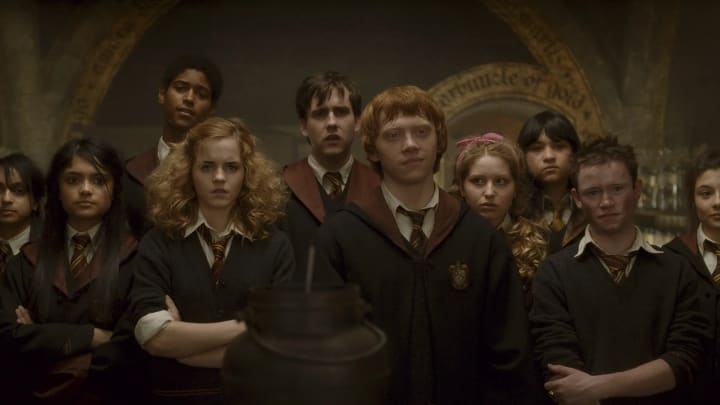
Romance blossoms and festers amongst the students. Harry finds himself increasingly drawn to Ginny Weasley, while Ron and Hermione navigate their long-simmering feelings, complicated by Lavender Brown's clingy affection. The awkwardness, jealousy, and heartbreak are portrayed with surprisingly deft humor.
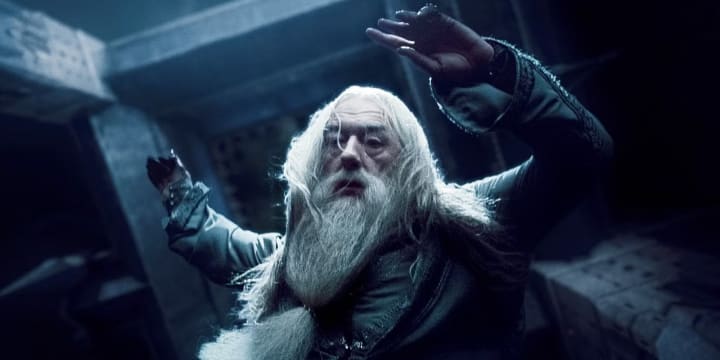
The climax arrives when Dumbledore and Harry venture to a cave to retrieve a Horcrux. Severely weakened after drinking a potion protecting the locket, Dumbledore is confronted at Hogwarts by Draco Malfoy. Unable to bring himself to kill Dumbledore, Draco is disarmed by Snape, who then delivers the killing blow. As Snape flees with the Death Eaters, Harry, fueled by rage and grief, confronts him, only to discover Snape is the Half-Blood Prince.
The narrative is punctuated by moments of levity, particularly in the romantic subplots, providing a crucial counterpoint to the growing darkness. The film's ending, however, leaves viewers with a profound sense of loss and the daunting realization that the final battle is looming.
Cast:
Daniel Radcliffe continues his portrayal of Harry Potter, capturing his growing maturity and internal struggles with admirable nuance.
Rupert Grint delivers a strong comedic performance as Ron Weasley, while also showcasing the character's insecurities and burgeoning bravery.
Emma Watson's Hermione Granger balances intellect and emotional vulnerability.
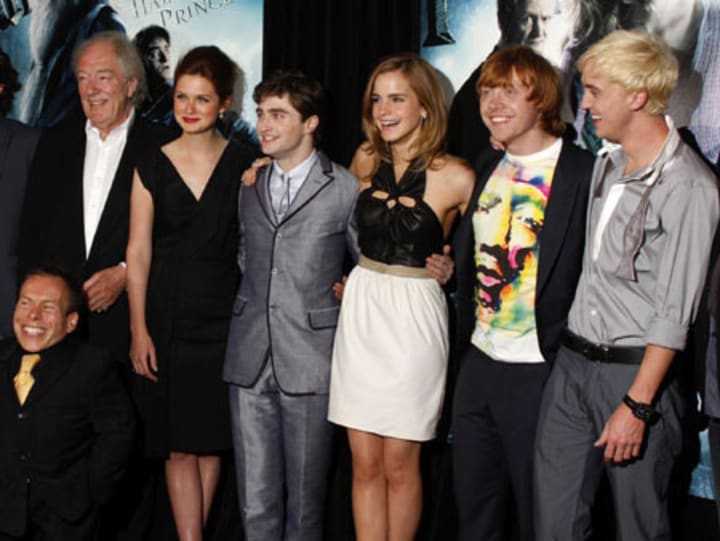
Michael Gambon's portrayal of Dumbledore is arguably his strongest in the series, showcasing both his wisdom and his inner turmoil.
Alan Rickman, as Severus Snape, delivers another masterclass in ambiguity, further deepening the enigma surrounding his character.
Tom Felton shines as Draco Malfoy, convincingly portraying his internal conflict and the immense pressure he faces.
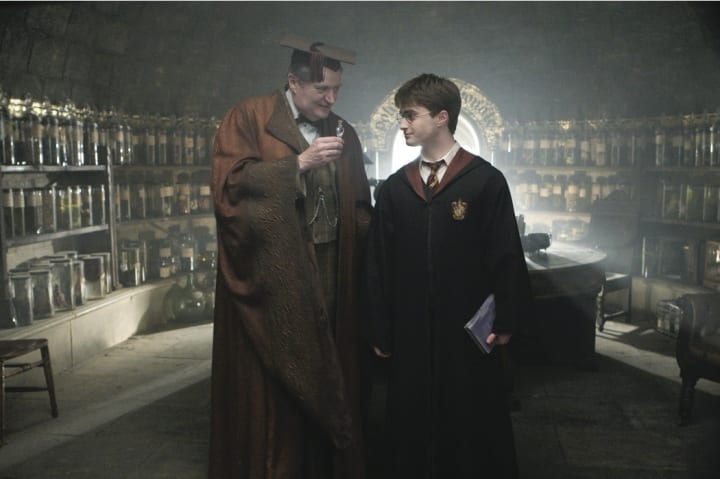
Jim Broadbent joins the cast as Professor Horace Slughorn, a charismatic but flawed potions master, adding a delightful layer of complexity.
Bonnie Wright as Ginny Weasley finally gains more screen time and a more significant role, showcasing a spark of independence and a captivating chemistry with Radcliffe.
Reviews:
'Harry Potter and the Half-Blood Prince' received generally positive reviews from critics and audiences alike. Many praised the film's darker tone, the development of the characters, and the strength of the performances, particularly from the central trio and Alan Rickman. The visual effects were also lauded for their spectacular and seamless integration into the narrative.
However, some critics felt the film focused too heavily on the romantic subplots, at the expense of the central plot. Others argued that the pacing was uneven, with some scenes feeling rushed while others lingered unnecessarily. A common criticism was the omission of key plot points from the book, particularly the backstory of Voldemort’s parents, which was deemed important for understanding his motivations. Despite these criticisms, 'Half-Blood Prince' was largely considered a successful adaptation, capturing the essence of the book while delivering a visually stunning and emotionally resonant cinematic experience.
Production:
The film was directed by David Yates, who had also directed 'Order of the Phoenix' and would continue to direct the remaining films in the series. David Heyman and David Barron returned as producers. Pre-production began even before 'Order of the Phoenix' was released. Warner Bros. financed the film with an estimated budget of $250 million.
Writing and Casting:
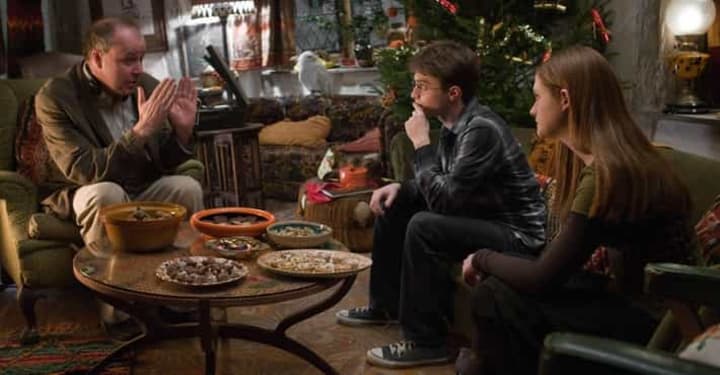
Steve Kloves returned as screenwriter, adapting J.K. Rowling's novel. While Kloves generally adhered to the book's main plot points, he made necessary cuts and alterations for cinematic pacing and clarity. One significant change was the reduction of Voldemort's backstory, a decision that proved controversial among fans.
Casting remained consistent with previous films, with the main actors reprising their roles. The addition of Jim Broadbent as Professor Slughorn was a casting coup, bringing a seasoned actor to the ensemble. The younger actors continued to grow into their roles, delivering increasingly nuanced performances.
Principal Photography:
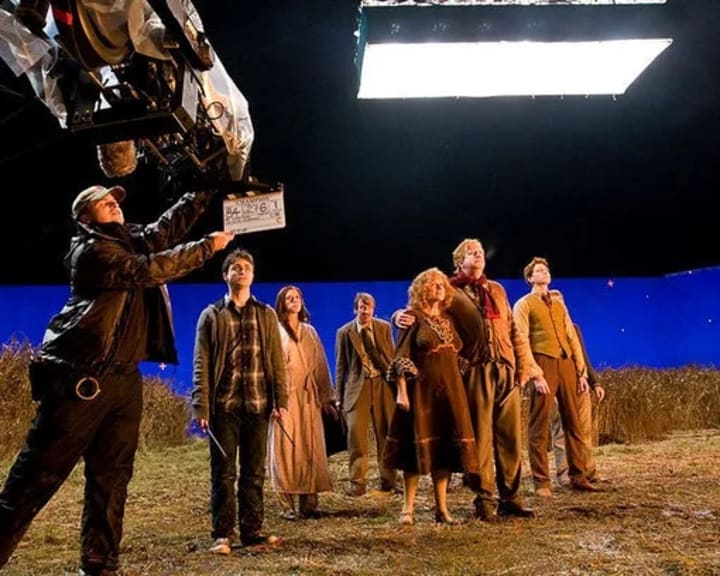
Principal photography began on September 24, 2007, and concluded on May 17, 2008. Filming took place at various locations in the United Kingdom, including Leavesden Film Studios, where the iconic Hogwarts sets were housed. The exterior shots of Hogwarts were filmed at Alnwick Castle and Gloucester Cathedral.
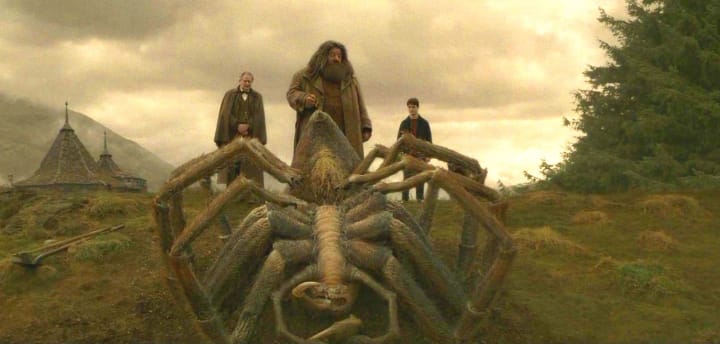
During filming, there were numerous challenges, including maintaining secrecy about plot points and managing the growing media attention. According to cast interviews, the atmosphere on set was generally relaxed and fun, despite the darker themes of the film. One humorous anecdote involved Rupert Grint struggling to kiss Emma Watson convincingly, leading to multiple takes and much laughter from the crew. Daniel Radcliffe, known for his playful nature, often engaged in practical jokes on set, helping to lighten the mood during long and demanding shooting days.
Production Design:
The production design of 'Half-Blood Prince' is notably darker and more atmospheric than previous films. Stuart Craig returned as production designer, creating elaborate sets that reflected the growing sense of unease and impending conflict. Hogwarts is presented in a more somber light, with shadows playing a significant role in creating a sense of foreboding.
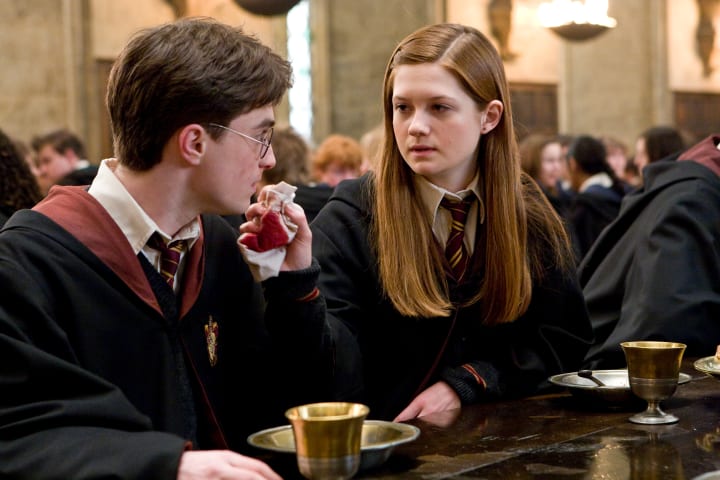
The costumes, designed by Jany Temime, also reflect the evolving tone of the series. The students' uniforms are more worn and less pristine, reflecting the hardships they are facing. The costumes for the Death Eaters are increasingly menacing, emphasizing their allegiance to Voldemort. The Yule Ball, though a moment of fleeting joy, is visually stunning with elegant gowns and formal wear that contrast sharply with the surrounding darkness.
Sound Design & Music:
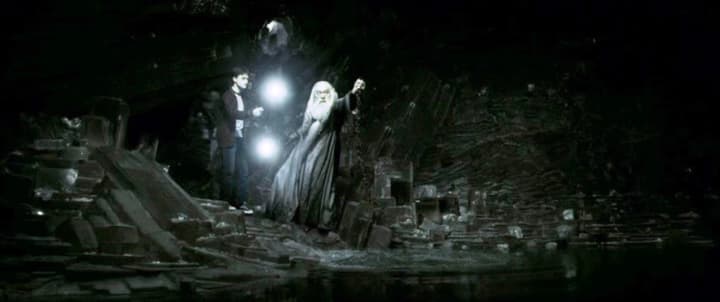
The sound design of 'Half-Blood Prince' is crucial in creating the film's eerie and suspenseful atmosphere. The use of subtle sound effects, such as whispers and creaking doors, heightens the sense of unease. The louder, more dramatic sound effects, such as the crackling of spells and the roar of Inferi, add to the intensity of the action sequences.
Nicholas Hooper returned as composer, creating a musical score that is both haunting and beautiful. The score incorporates familiar themes from previous films while also introducing new motifs that reflect the darker themes of 'Half-Blood Prince.' The music effectively underscores the emotional depth of the characters and the growing sense of dread.
Visual Effects:
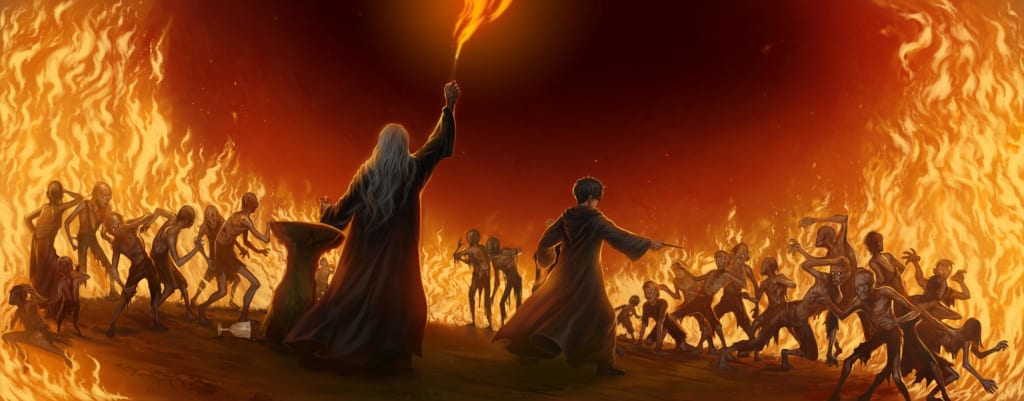
The visual effects in 'Half-Blood Prince' are a significant improvement over previous films in the series, showcasing the advancements in CGI technology. The effects are seamlessly integrated into the narrative, creating a believable and immersive wizarding world. The Inferi sequence in the cave is particularly impressive, with the CGI creatures appearing genuinely terrifying. The Quidditch scenes are more dynamic and visually exciting than ever before, with the players soaring through the air with incredible speed and agility. The destruction caused by the Death Eaters at Hogwarts is rendered with stunning realism, conveying the scale of the conflict.
Influences:
'Harry Potter and the Half-Blood Prince' draws influence from various cinematic, literary, and historical sources. The film's darker tone and exploration of moral ambiguity are reminiscent of classic noir films. The romantic subplots and coming-of-age themes are influenced by teen dramas. The overall narrative arc, with its themes of good versus evil and the importance of sacrifice, draws inspiration from classic mythology and literature. Some have even pointed to the historical context of World War II, with its themes of rising fascism and the fight against oppression, as an underlying influence on the 'Harry Potter' series.
Scientific Knowledge :
While 'Harry Potter' is primarily a fantasy series, it does incorporate some elements of science and technology. The use of potions and spells, for example, can be interpreted as a magical analogue to chemistry and physics. The Pensieve, which allows characters to view and relive memories, can be seen as a metaphorical representation of memory storage and retrieval. While these elements are presented in a fantastical context, they do touch upon real-world scientific concepts.
Marketing, Release & Box Office:
The marketing campaign for 'Harry Potter and the Half-Blood Prince' was extensive, utilizing trailers, posters, television commercials, and online promotions. The release date was originally scheduled for November 2008 but was pushed back to July 2009, much to the disappointment of fans. Warner Bros. justified the delay by citing the need to maximize profits during the summer blockbuster season.
The film premiered in London on July 7, 2009, and was released worldwide on July 15, 2009. It was a massive box office success, grossing over $934 million worldwide, making it the second-highest-grossing film in the series at the time of its release. The film's marketing campaign effectively generated immense hype, contributing to its impressive box office performance.
Critical Responses:
'Harry Potter and the Half-Blood Prince' ultimately resonated with both critics and audiences, despite some reservations. The film's darker tone, strong performances, and stunning visual effects were widely praised. While some felt the romantic subplots were excessive or that certain plot points were omitted, the film was generally considered a successful adaptation, capturing the essence of the book while delivering a compelling and visually captivating cinematic experience. The film's success solidified the 'Harry Potter' series as a cinematic phenomenon, paving the way for the climactic final chapters.
About the Creator
Xavier
Global news reporter covering science, tech, environment, Entertainment & sports. Delivering balanced insights to inform and inspire readers worldwide. Sometimes a poet.
History of The Three Stooges (Part I: The Beginnings and Columbia Pictures - 1920s-1936)
I have been itching to write about The Three Stooges on Vocal for close to two years, but I couldn't figure out how to do it. I wanted to do it by third Stooge, but that's a bit complicated. I know this much. I was about eight or nine years old when I first saw The Three Stooges. I remember one of my local channels had the Stooges on for hours, and I tried my damnedest to be up for those shorts. I remember that the Family Channel actually had an hour of the Stooges on from 11PM to midnight, and it was the entire library on during that time.
By Clyde E. Dawkins4 days ago in Geeks
Book Review: "The Palace"by Gareth Russell (Pt. 5)
This review covers chapter 18 to the end of the book *** Chapter 18 covers the reign of Queen Anne, the final queen of the Stuart household and mostly seems to look at the idea that she could barely marry, she had lots of miscarriages and in the end the only child she had lived to eleven years' old and so, she had no heir. There were many questions of Queen Anne's marriage, from her husband participating in homosexual affairs to the ideas put forward in the film The Favourite in which it is Queen Anne who is homosexual and promiscuous. Whatever it was, I definitely feel sorry for Queen Anne - everything must have hurt by the end of her reign, too many pregnancies and miscarriages meant her health was declining quickly towards the end. It's quite sad.
By Annie Kapur2 days ago in Geeks



Comments
There are no comments for this story
Be the first to respond and start the conversation.