
"Robot" series, by Isaac Asimov, review.
Jehoshaphat!
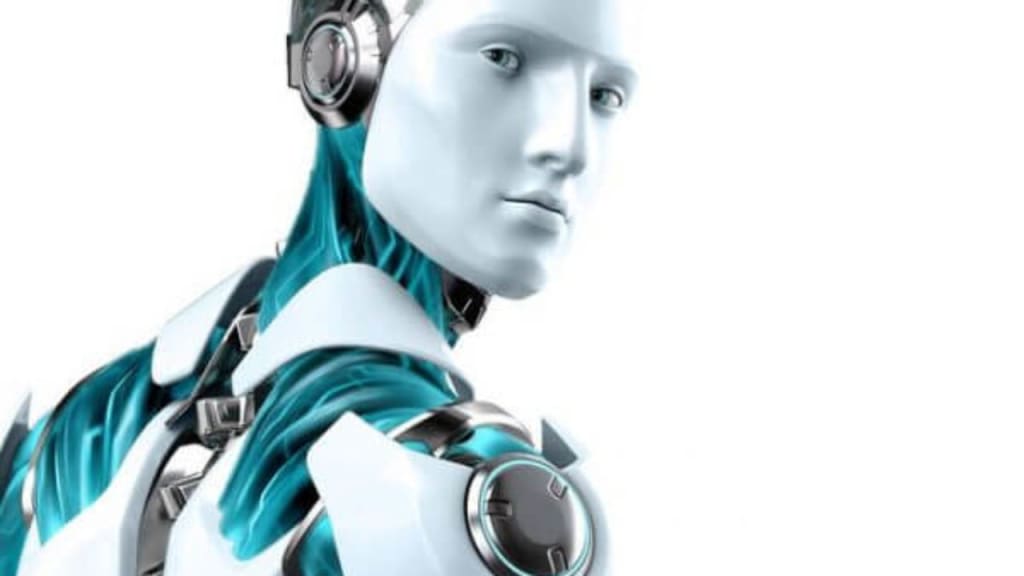
What will technological advancements mean for humanity? What does it even mean to be human? These questions and a lot more are explored in the "Robot" series, written by one of the best science fiction authors of all time, Isaac Asimov. The series was published between 1950 and 1990 and is part of the larger "Foundation" universe. The core series is comprised of five books, with some other short stories like "Mirror Image" and "The Positronic Man" novel. They are great if the core series isn't enough, but ultimately they are not essential. Let's dive into the main books!
I, Robot
"I, Robot" is a collection of connected short stories published in 1950. It is the first book in the series, and it manages to set up an interesting world inhabited by increasingly intelligent and sometimes threatening robots. The three laws of robotics are introduced early on, and each story demonstrates that the seemingly simple laws have a variety of interesting effects that are not immediately apparent. The laws are as follows:
"A robot may not injure a human being or, through inaction, allow a human being to come to harm. A robot must obey orders given to it by a human being, except where such orders would conflict with the First Law. A robot must protect its own existence as long as such protection does not conflict with the First or Second Law."
Each story in this book, except maybe for "Robbie", feels like a puzzle, presenting interesting challenges. It tempts the reader to deduce the strange robotic behavior from the three laws.The explanation is sometimes tricky but always satisfying.
Susan Calvin is the character that links all of the stories together. She is a strong female character, which is great for the year 1950. Susan almost makes up for the distinct lack of female characters in some other of Asimov's novels (for example, his first "Foundation" novel).
Caves of Steel, The Naked Sun, The Robots of Dawn
"Caves of Steel" is the first proper novel in the series and marks the first appearance of detective Elijah Baley and his partner R. Daneel Olivaw. The two of them are arguably some of the most important characters in the whole Foundation universe.
The novel is a mix between a classical detective story with a really well written mystery and a vibrant sci-fi setting with consistent worldbuilding, describing the new living arrangement of humanity on earth: megacities enclosed in steel domes, hence the name of the book.
The next two books in the series follow the same formula: Elijah Baley and R. Daneel solve mysteries in increasingly tense situations, accompanied by worldbuilding that slowly moves the overarching plot, the brewing conflict between the "Spacer worlds" and Earth. The location changes as Elijah visits the planets of Solaria in "The Naked Sun" and Aurora in "The Robots of Dawn," each with weird societies and social customs.
Robots and Empire
"Robots and Empire" is the final installment in the series, and it ties the series to Asimov's greater Foundation universe. It takes place twenty years after Elijah's passing and follows R. Daneel trying to resolve the conflict between Earth and the Spacers while being contrived by the three laws. In order to surpass these limitations, Daniel invents and then adapts the zeroth law of robotics, which seems dangerous at first but is a logical extension in hindsight.
In conclusion, the series is a great introduction to Isaac Asimov and sci-fi in general. The mysteries are always well written and easily solvable and logical with hindsight, but the main focus of the books is the world inhabited by robots.
It's definitely worth a while to read!
About the Creator
Keep reading
More stories from Dorin Ceolac and writers in Geeks and other communities.
"Animal Farm" made one major mistake.
"Animal Farm" is one of George Orwell's best-known novels, second only to "1984". The novel describes how the animals from a farm in England rebel against their human farmer and try to create an animal society where every animal is equal and has a good life. However, things go horribly wrong and the animals end up even worse than before the revolution. It is an allegory for the events of the communist revolution in Russia and Stalin's dictatorship. It's recommended that you read the book before continuing with this article.
By Dorin Ceolac4 years ago in Geeks
Silver Screen Magic with Mae West
American actress and singer Mae West became a popular film actress during the Great Depression. She started entertaining in vaudeville, then performed on Broadway, and finally went to Hollywood. She signed up with Paramount Pictures and made her debut in the 1932 film “Night After Night.” She also starred in musicals, comedies, and crime dramas. The American Film Institute named her one of the best classic Hollywood actresses.
By Rasma Raisters6 days ago in Geeks
The Conspiracists Is Less About Secrets and More About Us
Conspiracy theories used to live on the fringes. Today, they thrive in comment sections, podcasts, and algorithm-fed echo chambers. The Conspiracists steps directly into this cultural minefield—not to mock it, glorify it, or neatly explain it away, but to sit uncomfortably inside it. What emerges is a film that feels eerily familiar, disturbingly intimate, and surprisingly human.
By David Cookabout 13 hours ago in Geeks


Comments
There are no comments for this story
Be the first to respond and start the conversation.