
"Richard II" by William Shakespeare
A Reading Experience (Pt. 30)

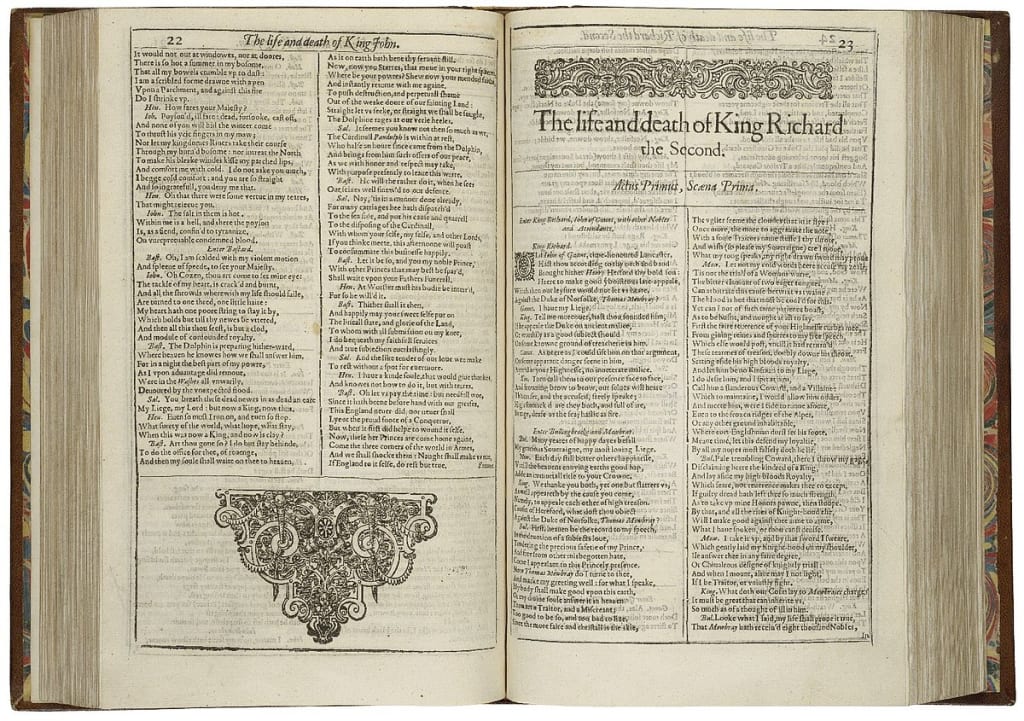
It’s been quite a while since I first read Shakespeare’s “Richard II” and to be honest, it’s not even my favourite Shakespeare play but what it did do is it changed the way I thought about Shakespeare forever. The way in which I first discovered it was pretty simple. My favourite play by Shakespeare that I tended to read over and over was and still is, “Richard III” and when I went to go and pick it up from the library, I decided to take the other Richard home with me as well. My first experience of reading “Richard II” was something that was so important, I got it down in my diary at the age of fourteen. “I cannot believe it, Shakespeare writes a character that is both good and bad at the same time and I can’t decide whether I should like him and feel sorry for him or absolutely despise him because of what he did to his cousin…” It goes on. I also couldn’t decide whether it was really a deposition or whether it was really an abdication. It was a complex problem that only intense re-readings could solve. It completely changed my perception of the Shakespearean character because until then, I was able to categorise characters as good and bad - now though, I was dealing with Richard II and he seemed to be both.
My favourite character in the whole play is obviously the doomed King of England himself and this is mainly because there are these insane long speeches he gives about death, about his country and being home from war, about his kingship and even about digging his own grave. King Richard II’s biggest attribute is the fact that he is constantly an overwhelming character. He is so interesting to read. From the very beginning, he is well aware that his position in England is that of absolute authority as he constantly reminds his subjects that he was born to command them. He goes through the play giving these very enigmatic speeches in order to present that he is the character of interest. Sometimes we pity him, sometimes we see him as the grand leader of the English People. But most of the time we see him as the most conflicted character in all of Shakespearean Literature. This is because King Richard II’s main downfall is his almost bipolar nature towards his own leadership and crown. In the first scene, he knows he’s the king and is aware about his position. But halfway through whilst making a speech about digging his own grave with his weeping eyes, he comes across as pitiful. But then again, earlier on in the act he is seen as strong because no man can threaten the man appointed by the Lord - by which he understands his ‘divine right’ to be king. But when he gives up the crown in Act 4, it is almost as if he wishes he never was the king and this was all a big mistake. He represents the entire conflict of the play and even the historical conflict of England which was whether we can really know if a monarch is right for the country even though we are a country with a monarchy that lays claim to majesty (and by my knowledge, the only one left as of the 21st century or something…).
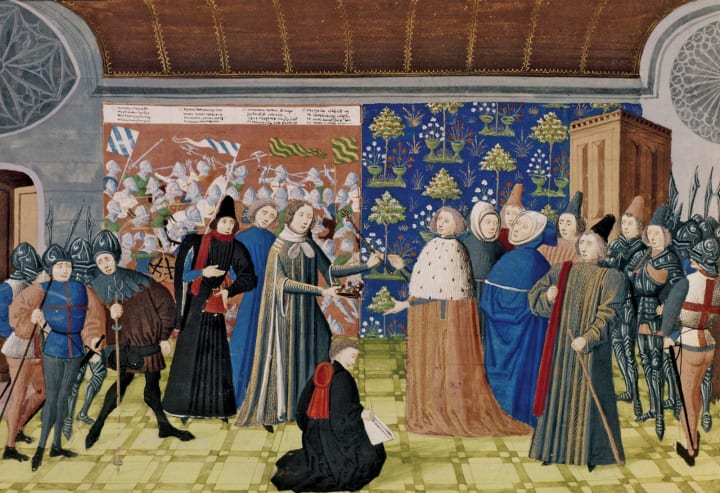
A key theme in the book is the way in which the king’s rule seems to impact the other characters in a negative way. The negative associations with his reign may make the audience feel slightly sorry for him, but it is not a good image when it comes to his other subjects. First of all, in order to go to war, King Richard II needs money and since he doesn’t have any, after John of Gaunt dies, Richard takes his. John of Gaunt’s money was supposed to go to his son, Henry (soon Henry IV). This is why Henry returns to England early from exile, to ask Richard why he took the inheritance. When Richard refuses to acknowledge this and challenges Henry, Henry takes up arms against his cousin and unfortunately for the king, Henry wins. That is another negative point of Richard’s reign in which he is made to look weak and meaningless as king to his subjects. He is now Henry’s political prisoner. When it comes to the deposition scene, Richard is made to look stronger through his speech, but through his actual words - he is made to seem like he has done terrible things so he must give away all these positions, titles and ‘stuff’ that he had whilst he was king. Yet another negative image. The collective image that the other characters have of Richard by the time he dies is not a good one, but when he dies obviously Henry almost canonises him and scorns the man who killed him, even if done in good intent. Henry will see this negative shadow cast over his short reign.
This play meant so much to me and still does. To this day, I have spent a lot of time teaching this play to students even though it is not on the syllabus because I think it is important to see that Shakespeare’s heroes can be completely conflicting between themselves and we can be entirely uncertain of the way in which they will live or die and what exactly their outcome will be. My latter readings of the book included analysing exactly what I thought Richard wanted people to remember from his reign because he seemed to have an obsession with legacy. In my readings of other books, I became more and more interested in the Platangenet house and Richard II’s reign from the Peasant Revolt of 1381 onwards. The best thing about Shakespeare’s Richard II though is that he is completely conflicted about his reign, even when it is completely over and in ruins.
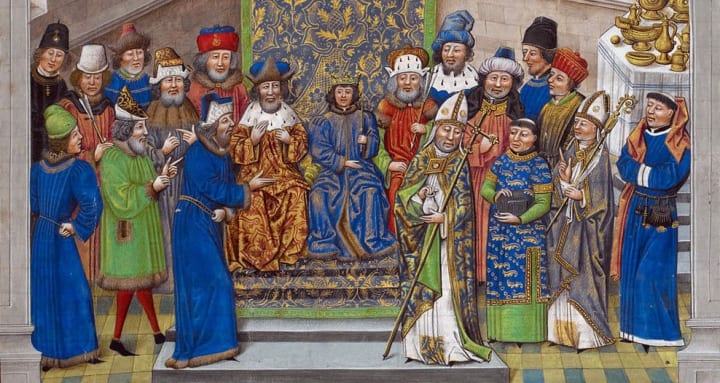
I think more people should read this book and more teachers should teach it. When I taught it to my students, often they stated how much they enjoyed it because the story and rivalry is so interesting and Richard’s character changes a lot throughout the course of the acts. I think that this play still though, has its place in the hearts of many because of the fact it is the most complex of the history plays and has the most immersive and emotional main character. In my next re-read of this play, I’d like to discover more about the theory that Richard II is a lot like Marlowe’s Edward II in style, mannerisms and even in the way he says certain words and phrases.
About the Creator
Annie Kapur
I am:
🙋🏽♀️ Annie
📚 Avid Reader
📝 Reviewer and Commentator
🎓 Post-Grad Millennial (M.A)
***
I have:
📖 280K+ reads on Vocal
🫶🏼 Love for reading & research
🦋/X @AnnieWithBooks
***
🏡 UK
Keep reading
More stories from Annie Kapur and writers in Geeks and other communities.
"Castle Rackrent" by Maria Edgeworth
Within this text, a number of striking personalities can be seen. First and foremost we have the personality of the first generation guided by Sir Patrick, a man of little means and of normally few words apart from a more godly and patriarchal view in a William Faulkner fashion. Sir Patrick is declared a ‘spend-thrift’ and is often the most concerned about the view of others upon himself as a moral human being towards them. A Machiavellian trait, this is thought to have continued in the lineage of the family. Sir Murtagh is the second generation and he is described as a ‘fiend’ and often a ‘litigating fiend’. Here we see the morality of the family descend ever so slightly and so, the reader is given insight into the decline and fall of this rather extensively proud and historical family of old, Irish faith. Within the third generation the reader meets Sir Kit - a deplorable human being, a gambler, a spender and an abusive husband to his wife. Here the reader can clearly see a massive decline from what was the historical past of Sir Patrick in which the spend-thrift culture was clearly visible to all. Sir Kit seems to be overtly concerned about himself and does not care what others think of him. This is most likely a delusion of grandeur since he has come from a family that is both respected and historical and, as he is the third generation, must feel as if he is entitled to respect and is automatically virtuous for his purity of family. Finally we have the furthest generation away from the firast which is the fourth generation of Sir Condy. Sir Condy is a man that is often considered the morally better of the four, the more likeable of them all and yet, the most susceptible to suggestion out of them all. He is constantly manipulated and duped, turned and twisted. His naivety is his downfall and therefore, he too has similar faults to his predecessors - that he cannot see something approaching right in front of him and that he has very little self-control. But in the way that the older generations have no self-control because of various needs such as: saving money, fiendishness and machiavellianism, gambling addiction and spending money relentlessly - Sir Condy has no self-control because of the way in which other characters tend to want to control or overpower him.
By Annie Kapur6 years ago in Geeks
Silver Screen Magic with Mae West
American actress and singer Mae West became a popular film actress during the Great Depression. She started entertaining in vaudeville, then performed on Broadway, and finally went to Hollywood. She signed up with Paramount Pictures and made her debut in the 1932 film “Night After Night.” She also starred in musicals, comedies, and crime dramas. The American Film Institute named her one of the best classic Hollywood actresses.
By Rasma Raisters7 days ago in Geeks
The 48 Laws of Power
The 48 Laws of Power by Robert Greene is one of the most talked-about and controversial books on power, influence, and human behavior. First published in 1998, the book has gained a massive following among readers interested in psychology, leadership, strategy, and personal success. Loved by some and criticized by others, this book leaves a strong impression and sparks deep discussion about how power works in the real world.
By John Smith6 days ago in Geeks


Comments
There are no comments for this story
Be the first to respond and start the conversation.