
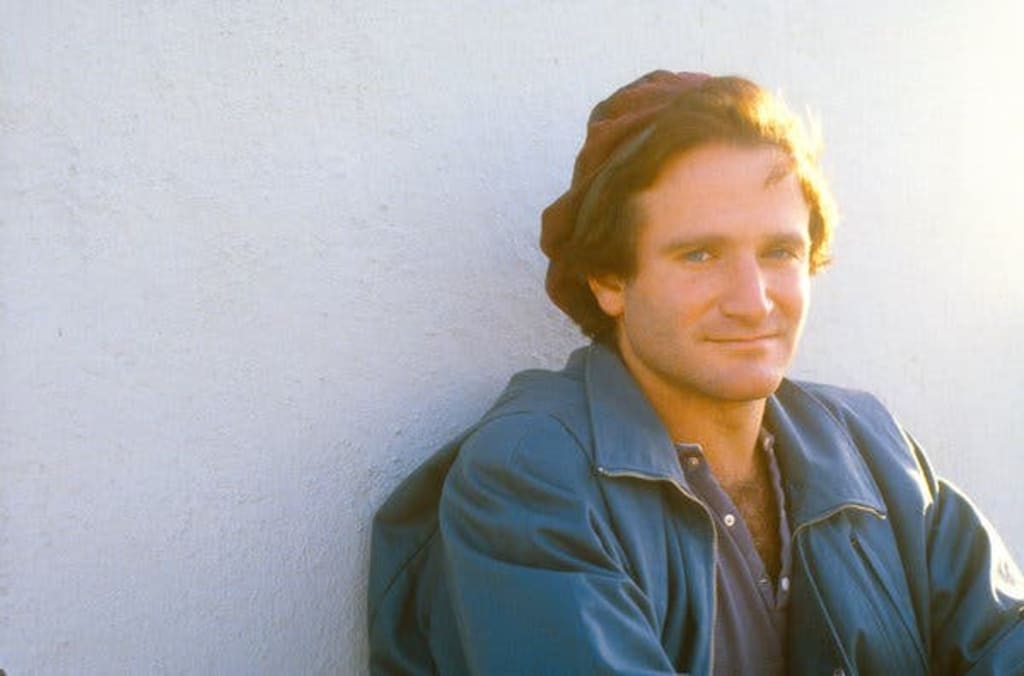
Robin Williams may have touched more hearts through his work than any other actor. When he died seven years ago, those hearts were broken.
The outpouring on social media looked like a global campaign to bring him back.
Even the United States Department of Defense released a statement saying it, “mourns the loss of Robin Williams. Robin was a gifted actor and comedian, but he was also a true friend and supporter of our troops.” Robin had performed for the troops many times and helped wounded soldiers, without most of his friends or the public ever knowing because he never talked about it.
His millions of fans tried to reconcile the constant, supernova explosion of comedic energy they had known for decades with the depression assumed to be the cause of his suicide.
Public conversations began calling for awareness of mental health issues and action in improving the treatment of them.
Dave Itzkoff, in his biography Robin, writes that the true culprit behind Robin’s death remained hidden until the autopsy. Robin had been suffering from Lewy body dementia, described by the Mayo Clinic as, “the second-most common type of progressive dementia after Alzheimer’s disease”.
Investigators found no evidence of his intention to commit suicide. No note, nothing suspicious in his internet search history, and he had not mentioned suicide or suicidal thoughts to loved ones.
He had been suffering from delusions and confusion. The day of his death he put several of his expensive watches in a sock and took them to a friend’s house, asking that they keep them safe and explaining his paranoia regarding someone attempting to steal them. He went home and offered his wife a foot rub, as he often did. He rummaged around in the closet and found an I-Pad and went to bed to read. Then he was gone.
Remembering An Astonishing Life
Robin Williams got his start at the Comedy Store, doing stand-up so powerful and hilarious that comedy legends like David Letterman later joked that he considered leaving show business because no one compared to Robin.
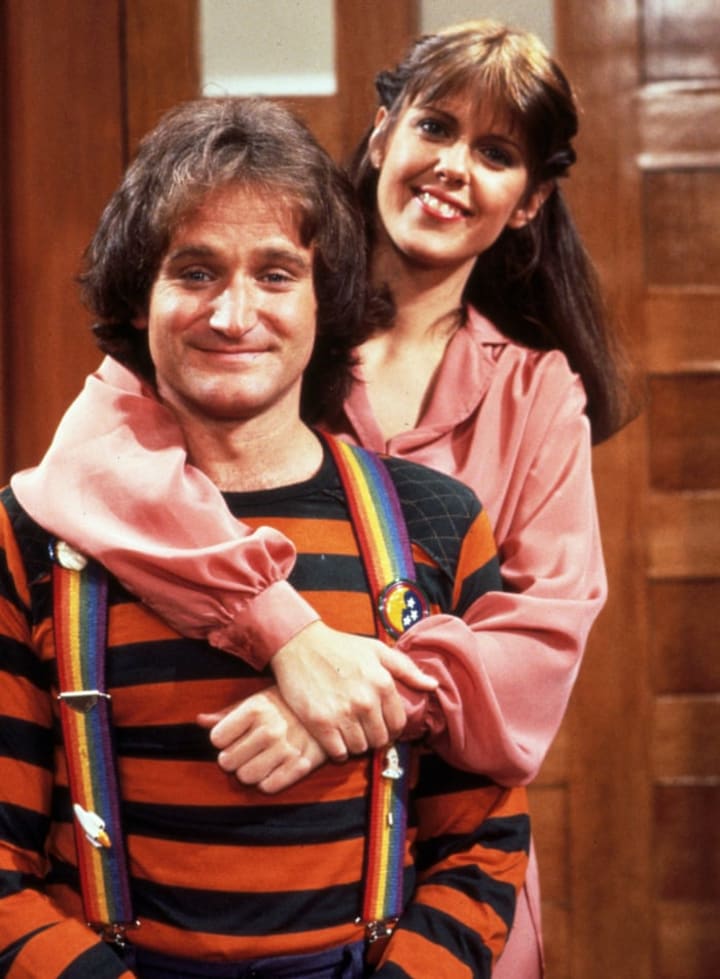
After a few spots on shows like The Richard Pryor Show and Laugh-In, Robin leapt onto the national stage as Mork from Ork, a character he portrayed on Happy Days.
The character’s popularity led to a spinoff called Mork & Mindy. The series, about a space alien dropping into the life of a regular American woman, lasted only 4 seasons (1978–82), though it currently enjoys a seemingly endless life in reruns.
It also introduced the dynamic comedy of Robin Williams to the world, as “Nanu Nanu” was added to the English language.
In the midst of his run on Mork & Mindy, Robin starred in his first two movies — Popeye (1980) and The World According to Garp (1982).
Popeye was a poorly received musical version of the old cartoon character, directed by Robert Altman. Robin’s co-star was Shelley Duvall, who portrayed Olive Oyl.
The World According to Garp is a cult classic and predecessor to similar films like Forrest Gump. It spans the entirety of the title character’s life as he grows up, falls in love, makes mistakes, and meets ordinary and extraordinary people.
In both of these early film roles, we see Robin’s draw to unique characters in distinctive films that make writing a logline difficult.
A mostly forgotten film that deserves some attention is the 1983 comedy The Survivors. In this movie, Robin teamed with the Hollywood legend Walter Matthau (The Odd Couple, The Bad News Bears, Grumpy Old Men).
Robin was in line for a blockbuster in the late 1980’s, according to IMDb. Growing up as a comic book fan, he eagerly accepted the role of the Joker in the 1989 Batman, starring Michael Keaton. The role had been offered to Jack Nicholson, who was hesitant to take it until he found out Robin wanted the role.
Even with losing out on the iconic role, Robin made some serious traction as a film star in Good Morning, Vietnam. The film was based on a true story. Robin demonstrated his astounding range as an actor in his first critically acclaimed movie role. He was hilarious on the microphone and, with subtlety, showed the heartbreak his character felt as he tried to cheer up young men who were on their way to die.
By this time, Williams was becoming a fan (and host) favorite on talk shows, where live audiences could see his brain work in real time like a super computer set to funny.
He appeared on the Dick Cavett Show twice. He was Johnny Carson’s guest nine times and David Letterman’s 41 times.
Conan O’Brien, reflecting on the star after his death, spoke about Robin’s generosity. During a difficult time in O’Brien’s life, Robin decided to cheer him up by sending him a bicycle. It was decorated “like a Mardi Gras parade”. Robin also appeared on O’Brien’s show in the early days, when the appearance benefitted the show far more than Robin.
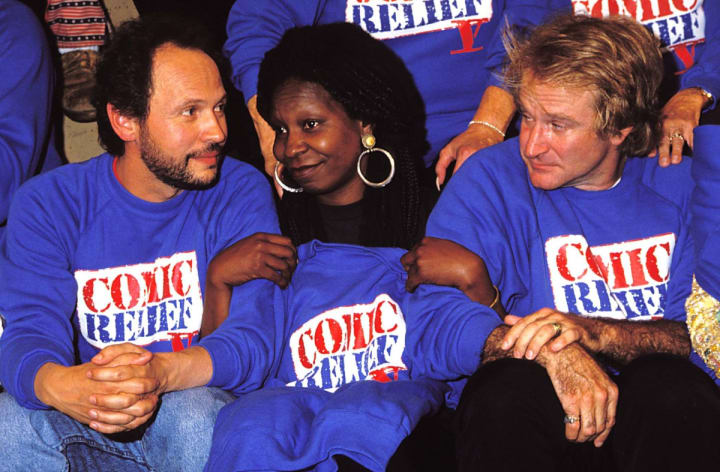
Along with these talk show appearances and presenting on award shows like The Academy Awards, Robin was joining friends Billy Crystal and Whoopi Goldberg in repeated appearances on Comic Relief USA fundraisers. Along with giving Robin a chance to shine, the charitable broadcasts raised tens of millions of dollars for charities helping those in poverty.
The premise of a promotional video from Disney called Back to Neverland, was that Walter Cronkite found a Disney super fan, Robin Williams, outside the studios. He invited Robin in to see how Disney made their animated films. Cronkite asked Robin which was his favorite Disney classic, and Robin told him it was Peter Pan.
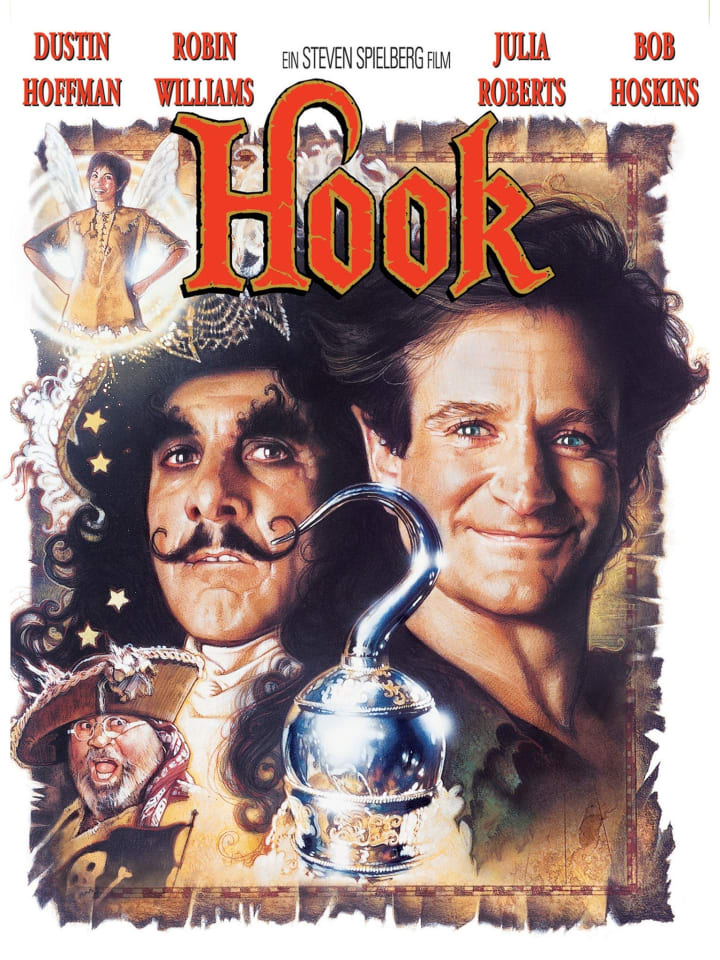
Steven Spielberg came calling and offered Robin a chance to play a grown-up version of Peter Pan in Hook. (Spielberg’s first choice for the role had been Michael Jackson.) In the story, one of my favorites as a kid, Robin has been Peter Pan all his life, but forgot as he grew up. When mean old Captain Hook (Dustin Hoffman) kidnaps Peter’s kids, he must return to Neverland with Tinkerbell (Julia Roberts) and remember who he is — and crow!
In part because his kids were young during these years, Robin did a run of kid’s shows and family movies that gave him permanent residence in the hearts of millions of kids who are now grown up.
He appeared on Sesame Street in 1991. The next year he contributed his voice to FernGully: The Last Rainforest and the tremendous Disney classic Aladdin. He also thrilled young audiences with his performances in Jumanji, where he worked with then child actress Kirsten Dunst, and Flubber, a remake of 1961’s The Absent-Minded Professor.
Headlines like the Los Angeles Times’ “The Genie Has a Gripe With Disney” broke the story that Robin was going public with his disagreement with Disney over the marketing of Aladdin.
“We had a deal,” Robin said on an NBC show. “The one thing I said was I will do the voice. I’m doing it basically because I want to be part of this animation tradition. I want something for my children. One deal is, I just don’t want to sell anything — as in Burger King, as in toys, as in stuff.”
The disagreement seemed to center on Robin’s belief that Disney violated their agreement by using his voice to sell merchandise, though Disney denied it. The elephant in the room was that Robin had been paid $75,000 for the role in a movie that made over $200 million in the U.S. alone.
Disney sent him a painting from later in Picasso’s career to try and mend the relationship. Robin played around with the idea of never working for Disney again, but changed his mind later.
Robin’s biggest success in the 1990’s was the blockbuster Mrs. Doubtfire. The story was about a married couple with children who were in the midst of a divorce — a setup that mirrored Robin’s own life. In order to be around his kids, Robin’s character dressed as an elderly woman and took a job as a nanny and housekeeper at his own house.
Robin’s most critically acclaimed performance came in 1997’s Good Will Hunting. Robin had flexed his dramatic-actor muscles earlier in The Dead Poets Society, Awakenings, and The Fischer King, but it was his role as Sean that won him the Oscar.
Good Will Hunting is in a category with the classic novel To Kill a Mockingbird — both are perfect works of art that came very close to never seeing the light of day.
The problem was that the two leads connected with the film, Matt Damon and Ben Affleck, lacked the star power to sell the movie. Affleck’s biggest role prior to Good Will Hunting was playing the lead in Kevin Smith’s Chasing Amy, while Damon had played a small role in the same Smith film as well as Courage Under Fire.
Good Will Hunting was made because Robin Williams agreed to be in it.
When Christopher Reeve and His Family Needed Him, Robin Was There
One of Robin’s closest friends was Christopher Reeve, known best for his portrayal of Superman. The two had considered each other brothers since their days at Juilliard.
In 1995, Reeve went to Virginia to ride his horse in a training event over the Memorial Day weekend. Reeve had fallen in love with horseback riding after learning how for a role, and had gone on to compete.
That Saturday, his horse threw him and Reeve landed on his head, leaving him paralyzed.
Robin rushed to the hospital. Reeve later recalled that it was a particularly bleak moment as he awaited surgery. Then entered a man, wearing a surgical mask and gown while speaking in a Russian accent. The man said that he was Reeve’s proctologist and he needed to examine him immediately. Reeve said he knew he was either on too many drugs, or it was his friend Robin Williams making him laugh during the darkest moment of his life.
When Reeve’s money ran out, Robin paid for his treatment. He installed an elevator in his own home so that Reeve could visit. He sought out works of art that could hang on the wall in Reeve’s line of sight to add some beauty to his days.
Robin’s kindness was not limited to his celebrity friends. He paid to put the children of employees and acquaintances through private school.
Robin played the many memorable roles I have written about as well as dozens more that won’t fit in this article, including some very interesting ones he took after a creative pivot around the year 2000.
Perhaps the role that is closest to summing up the real Robin Williams is Patch Adams. He shared many similarities with that character. He was kind, he wanted to help people, he wanted to make people happy, and his story ended in tragedy.
About the Creator
Otis Adams
Otis Adams is an essayist, fiction writer, and poet. He enjoys and writes about chess, boxing, and television history.
Please consider supporting Otis's work at Patreon.com/OtisAdams.
Keep reading
More stories from Otis Adams and writers in Geeks and other communities.
Silver Screen Magic with Mae West
American actress and singer Mae West became a popular film actress during the Great Depression. She started entertaining in vaudeville, then performed on Broadway, and finally went to Hollywood. She signed up with Paramount Pictures and made her debut in the 1932 film “Night After Night.” She also starred in musicals, comedies, and crime dramas. The American Film Institute named her one of the best classic Hollywood actresses.
By Rasma Raisters3 days ago in Geeks
Emma Watson, Sir Lenny Henry and Sir Elton John lead British Diversity Awards
The prizes will be handed out at a glittering ceremony in London on March 25 2026 and Harry Potter actress/activist Watson will compete with Henry and John for the top gong of Media Personality of the Year with the musician competing alongside his husband David Furnish.
By Dena Falken Esqabout 19 hours ago in Geeks




Comments
There are no comments for this story
Be the first to respond and start the conversation.