
"Reclaiming the Rite: Female Empowerment in Modern Religious Horror"
In the name of womanhood, I condemned you!

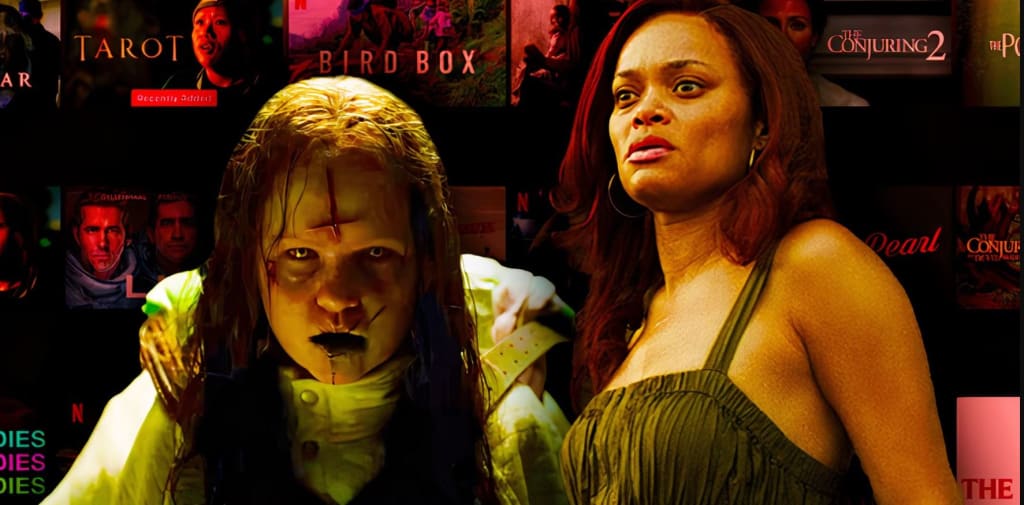
In recent years, religious horror cinema has seen a powerful shift, placing women at the forefront of battles traditionally waged by priests and religious figures. This shift challenges the conventions of Christian-centered exorcism narratives, transforming the genre into a space where female empowerment takes center stage. Instead of relying solely on the authority of the church, these films delve into deeper personal struggles, family trauma, and internal battles, with women often leading the charge.
A striking example of this evolution is found in Deliverance. At its core, Deliverance is about more than just spiritual possession—it’s about the trauma and devastation that ripples through a family. Rather than the traditional exorcism spectacle led by clergy, the film focuses on the personal, emotional demons that arise from intense family conflicts. Here, the battle isn't fought with holy water or crucifixes, but with the painful truth of unresolved issues. By doing so, the Christian church is symbolically removed from the exorcism narrative. Instead of relying on the church’s ritualistic solutions, the characters face their own inner demons, ones created not by supernatural forces, but by life’s devastating circumstances.
In this film, religious horror becomes a personal journey rather than a structured, ritualistic one. The source of evil isn’t an external demonic force seeking to be expelled by church representatives; instead, the film portrays trauma and familial tension as a kind of possession in itself. This shift in narrative focus allows the characters—especially the women—to reclaim control over their lives, their emotions, and ultimately, their ability to fight the forces that haunt them.
Another film that exemplifies this is The Exorcist: Believer, which revisits the iconic characters from the original Exorcist. In the 1973 classic, Chris MacNeil, the mother of the possessed Regan, is portrayed as a largely passive figure. She’s constantly shown crying behind closed doors, powerless to save her daughter as priests step in to fight the battle. Fast forward to Believer, and we see a striking change in Chris’s role. This time, she steps into the arena, directly confronting the demon that once terrorized her daughter. Though her attempt to communicate and negotiate with the demon fails, the significance of her involvement is undeniable.
Chris’s transformation from a grieving, passive mother to an active participant in the exorcism speaks volumes about the changing representation of women in religious horror. It’s not a triumphant victory, but it’s a fight she chooses to engage in—an important distinction from her previous role. In this new wave of religious horror, women are no longer sidelined as tearful bystanders. They are warriors, fighting not only external evil forces but the societal expectations that have kept them in the shadows.
What’s particularly interesting about these films is that they seem to go against the grain of traditional Christian exorcism narratives. In the past, these stories often centered on the Church’s authority, with male priests serving as the ultimate saviors. The exorcism ritual was a battle between the Church and the Devil, where the demon was expelled through the power of religious rites. But in Deliverance and Believer, the focus has shifted to personal empowerment, with women taking on leadership roles in the battle of good versus evil. Their strength doesn’t come from their relationship with the church, but from their internal resilience, trauma, and determination to overcome seemingly insurmountable odds.
This shift has disappointed some who expected these films to adhere to the traditional structure of religious horror, where the Christian church plays a central role in the battle. Instead, these films are carving a new path, one that elevates female characters to positions of strength, making them central figures in the fight against evil. It’s no longer about male priests reciting Latin verses to cast out demons. Now, it’s about women confronting their own inner darkness and traumas, standing their ground, and fighting not only for survival but for the right to control their narrative.
In this contemporary wave of religious horror, women are no longer passive figures seeking rescue—they are the ones leading the charge. By stepping away from the church’s traditional exorcism rituals and focusing on the personal battles that women face, these films are reclaiming the genre as a space for female empowerment. It’s a fascinating shift, and one that is reshaping the landscape of horror cinema, turning it into a battleground for both literal and metaphorical demons, with women front and center in the fight.
Şunu dedin:
About the Creator
Nazgol Rasoolpour
An emerging researcher with a passion for horror narrative. My focus revolves around the captivating subgenres of religious horror and techno horror.
Keep reading
More stories from Nazgol Rasoolpour and writers in Geeks and other communities.
The Pitfalls of Adaptation: Deviating from Lore in Iconic Book Series
The adaptation of beloved book series into TV shows or films often sparks intense debates, especially when creators deviate from the original lore and narratives that made these works iconic in the first place. Fandoms surrounding franchises like Anne Rice's Vampire Chronicles and J.R.R. Tolkien's Lord of the Rings are deeply rooted in the nuances of the source material, and any perceived straying from these can lead to a backlash from fans.
By Nazgol Rasoolpourabout a year ago in Geeks
Silver Screen Magic with Mae West
American actress and singer Mae West became a popular film actress during the Great Depression. She started entertaining in vaudeville, then performed on Broadway, and finally went to Hollywood. She signed up with Paramount Pictures and made her debut in the 1932 film “Night After Night.” She also starred in musicals, comedies, and crime dramas. The American Film Institute named her one of the best classic Hollywood actresses.
By Rasma Raisters7 days ago in Geeks
Smart phones, Humans and Aliens.
WARNING. I will be tapping into one of your favorite creative tensions: The absurdity of humans worshipping their glowing rectangles as if they were tiny oracles. There’s something deliciously poetic about that contradiction, and it lends itself beautifully to an instructive proviso.
By Novel Allen4 days ago in Poets


Comments (2)
Hey! I liked this
I would also want to add the recent exorcism movie with Russle Crow, when his daughter was heavily involved in his " Exorcism" ritual